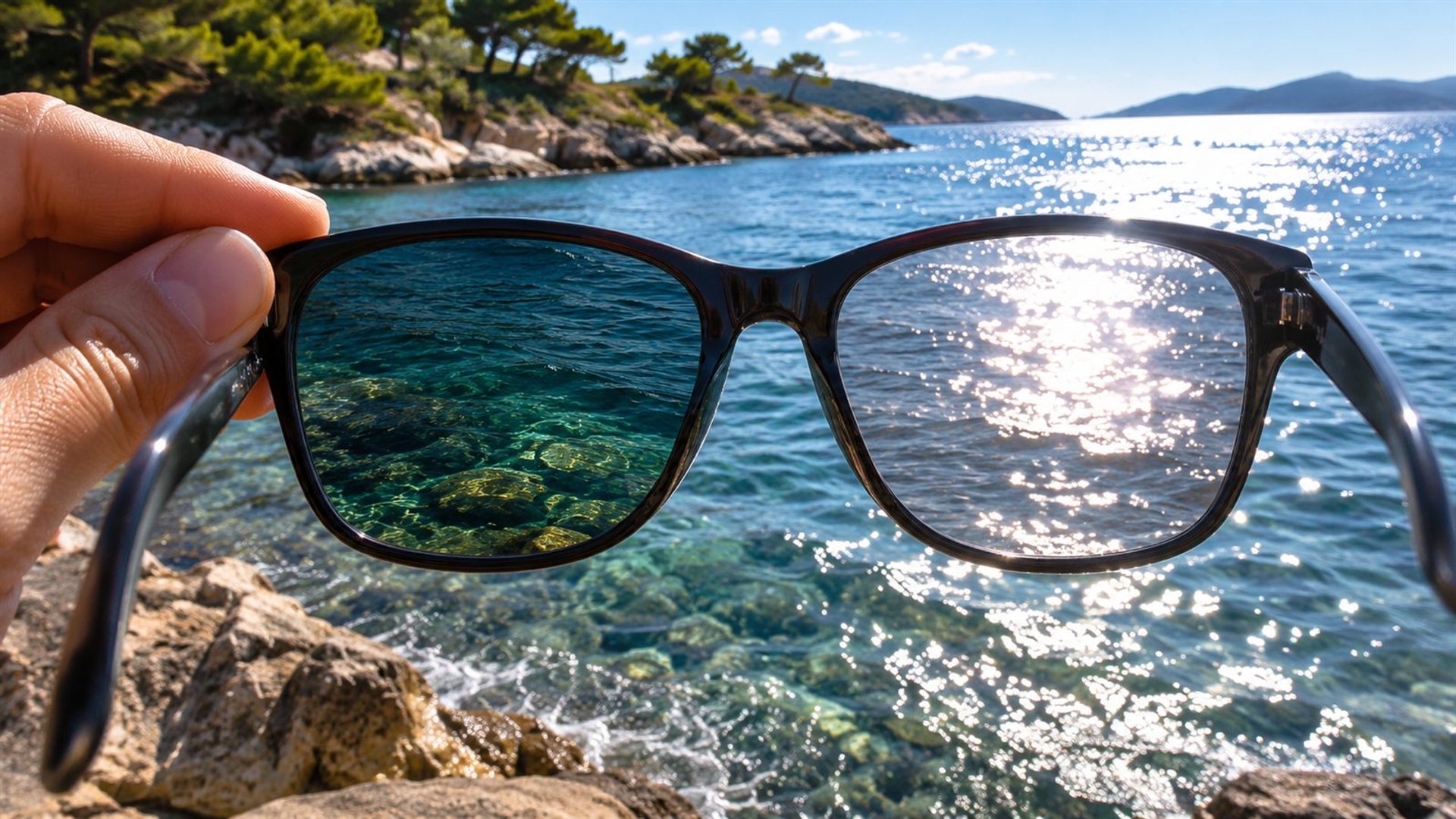
How to tell if sunglasses are polarized: look through one lens at a bright LCD screen or reflected glare, then rotate the glasses about a quarter-turn. A marked change in brightness is a useful sign that a polarizing filter is present. It is a home check, not a laboratory certification. If the result is unclear, ask an optician to test the lenses and check the maker's documented specification.
What does polarization do?
Polarizing lenses reduce a component of reflected light. That can make glare from horizontal surfaces, such as water or a sunlit road, less distracting. A dark lens is not necessarily polarized: tint reduces overall brightness, whereas polarization selectively filters light according to its orientation. A grey or brown appearance alone is therefore not evidence.
It helps to separate three claims before testing: polarization, tint and ultraviolet protection. A lens can be dark without filtering glare in the same way as a polarizer. A polarizer can reduce reflected glare without the wearer knowing whether it meets a particular UV specification. The visual tests below address the first question only. Read the product documentation or ask a qualified optical professional about the other two.
How do you use an LCD screen to test the lenses?
Set a phone, tablet or computer with an LCD display to a bright, plain screen. Hold the sunglasses in front of it at a comfortable distance, and look through one lens. Slowly rotate the glasses through approximately 90 degrees while keeping the screen in view. At one angle, the image may become substantially darker; when rotated back, it brightens again. That changing effect is the clue.
ZEISS explains the LCD and second-polarizer tests in its lens guidance. The filter in the screen and the filter in the glasses interact as their axes change. A dramatic blackout can be convincing, but do not treat one imperfect screen as a final verdict. Display technologies, screen protectors, brightness settings and viewing angle differ. Try a second screen if the first does not give a readable result.
Do not press the lenses against the display. Fingerprints, scratches and a cracked screen are avoidable. Hold the frame by its temples and move it slowly so you can compare the same part of the image at each orientation. If one lens behaves differently from the other, confirm that you are viewing through comparable areas and ask an optician about the discrepancy.
Can reflected glare give a second check?
Yes. Look at glare on a hand mirror, water or another safely viewed reflective surface. Keep your head steady and rotate the glasses while looking through one lens. If the reflected brightness changes distinctly as the filter turns, that supports the presence of polarization. Avoid using a moving road scene, a bright sun reflection or any situation that makes the test unsafe. The point is a controlled comparison, not a dramatic setting.
The reflection method is less tidy than a screen because the angle of light and surface changes easily. A weak change does not automatically prove that the lenses lack polarization. Move to a more consistent reflection or have the pair checked professionally. Do not stare at the sun through any sunglasses to test a claim: that is neither needed nor a meaningful way to establish lens protection.
What about comparing two pairs of polarized glasses?
If you already own a pair whose specification is known, look through it and the unknown pair together, then rotate one pair about 90 degrees. Two polarizing filters at opposing orientations can make the view much darker. This can be useful when no LCD screen is available. Hold the lenses apart carefully so frames and coatings do not scrape each other, especially if either pair has a delicate finish.
Remember that the known pair must really be polarized; otherwise the comparison tells you little. A printed label can help identify the product, but it may be detached from a used or exchanged frame. For a high-value pair, compare the exact model number with the manufacturer's specification and have an optician inspect it when authenticity or lens replacement is uncertain.
Does a successful test prove UV protection?
No. Polarization and UV filtering are different properties. The test reveals how the lenses interact with oriented light; it does not measure how much ultraviolet radiation they block. The American Optometric Association advises checking sunglass protection rather than judging by appearance alone. For specific UV performance, rely on reliable product documentation or an optical professional's equipment.
This distinction matters when shopping. A pair can feel comfortable in bright light because it is dark, yet the darkness says little about its UV specification. A lens can pass an at-home polarization test and still require separate verification of its UV claims. If the sunglasses are intended for daily outdoor wear, request the maker's lens information before buying rather than assuming all benefits travel together.
Can polarized sunglasses make a screen harder to read?
Yes. The same interaction that makes an LCD screen useful for testing can make certain displays appear dim or patterned while the glasses are worn. The effect depends on the screen, its orientation and the lens. This does not mean the sunglasses are defective. It does mean that you should check compatibility with any display you must read clearly during work, travel or driving.
Test in a safe, stationary situation. Look at dashboard or device screens at the normal viewing position, then turn your head slightly and compare. If vital information disappears at common angles, that pair may not suit the task even if it offers welcome glare reduction. Do not test while actively driving. Choose a lens based on the environments in which you will use it, not merely the strength of the screen-darkening trick.
How should you assess a VERTU sunglass listing?
VERTU's x BYWP Modern Aviator Sunglasses listing describes a modern aviator design but, in the product description checked for this article, does not establish a polarized-lens specification. Do not infer polarization from the aviator silhouette or marketing language. Ask VERTU for the lens specification of the exact pair or use the simple tests as a preliminary check.
By contrast, the official VERTU Polarized Aviator Sunglasses page explicitly lists “Lens Type: Polarized.” These are distinct products. If the frame has been reglazed, repaired or bought second-hand, the original product listing may not describe the currently installed lenses. Check the actual lenses and any service history. A product name helps identify a claim, but the individual pair in your hands is what you wear.
What should you do if the result remains ambiguous?
Repeat the test with a second LCD and a stable reflective surface, then review the exact model's official documentation. If the effect is still uncertain, take the glasses to an optician for a check. That is especially sensible when paying for a stated lens feature or when the lenses may have been replaced. Keep the receipt, model number and any lens card so you can compare the claim with the fitted product.
Do not try to “improve” a questionable lens by applying a film, polishing it or exposing it to heat. Those actions will not establish polarization and can damage coatings. The next step is verification, not alteration. If a new pair is advertised as polarized but the product information and the test conflict, contact the seller with the exact SKU and a clear account of what you observed.
Frequently asked questions
Can dark sunglasses be non-polarized?
Yes. Tint and polarization are separate properties. Colour and darkness are not reliable tests.
Does a screen need to turn completely black?
No. A strong change can be a useful sign, but the degree of darkening varies with the screen, angle and lens. Try more than one method if uncertain.
Can an optician test polarization?
Yes. Ask an optical professional when a home check is inconclusive or you need confirmation of a purchased lens specification.
Does polarization guarantee safer driving?
No. Glare reduction may help in some conditions, but screen visibility, tint, fit and road conditions also matter. Test the pair safely before relying on it for driving.
Conclusion
The practical answer to how to tell if sunglasses are polarized is to rotate the lenses in front of an LCD or stable glare source and look for a clear brightness change. Repeat the test if the first result is uncertain, and use the maker's documentation or an optician for confirmation. Keep UV protection as a separate question; compare the precise lens claim on a verified product such as VERTU Polarized Aviator Sunglasses before buying.