A diamond watch needs two purchase checks at once: the gemstones and the timepiece beneath them. Verify what the seller actually states about the stones, inspect setting security and workmanship, identify the movement or connected system, and confirm after-sales support. A large carat figure or striking photograph tells you little about individual grades, comfort or repair. Ask for written specifications before committing.
What does “diamond watch” actually describe?
The term can mean a watch with a few diamond hour markers, a gem-set bezel, a paved case or a design with stones across several surfaces. These are materially different purchases. First identify which components carry diamonds and whether they are natural or laboratory-grown. Ask whether a stated weight describes one stone, a group of stones or the total across the watch. Do not treat a decorative name as a gemological report.
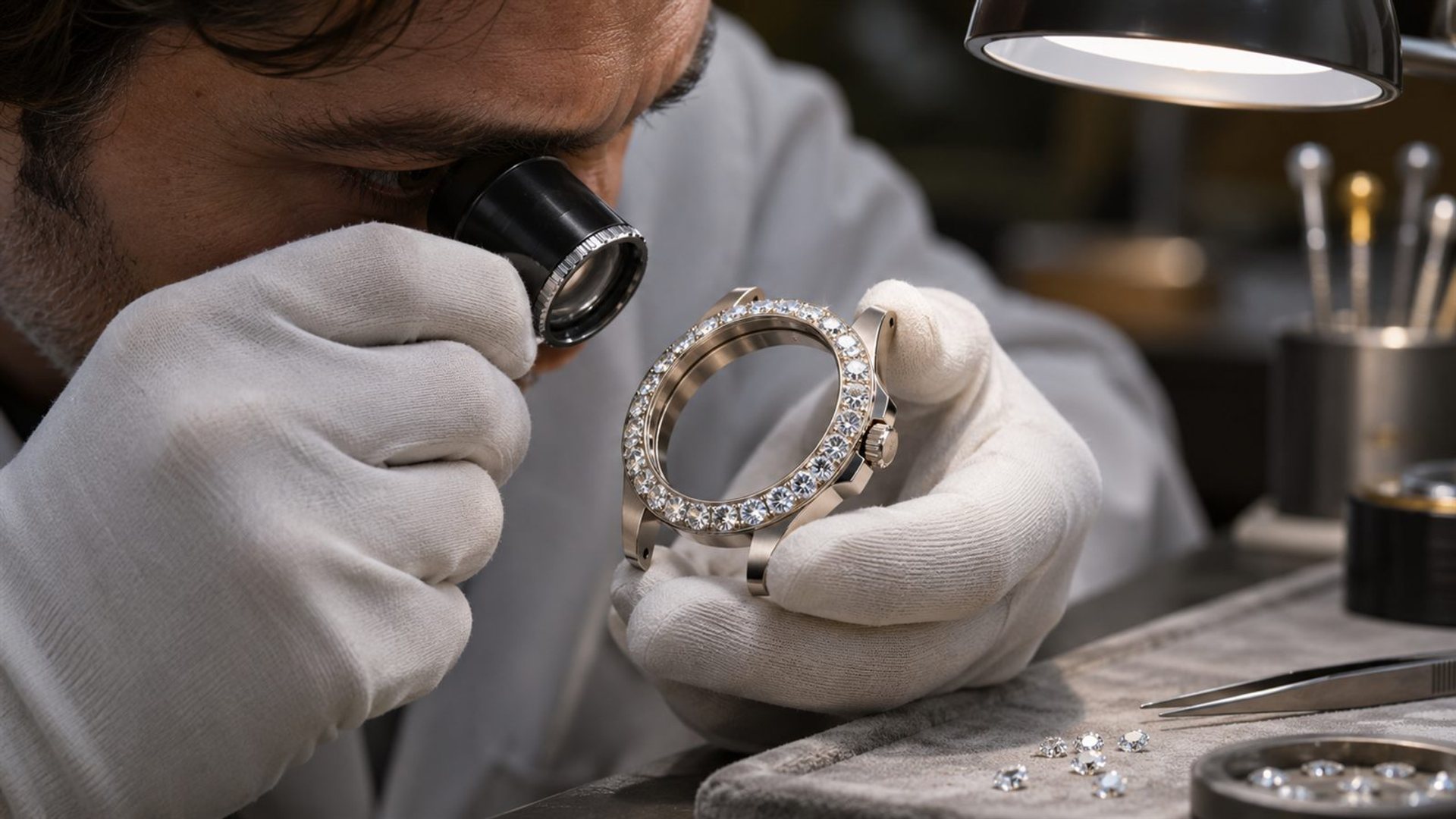
Stone count and total weight alone do not tell you cut, colour or clarity. A large group of small stones can have the same total carat weight as a much smaller group of larger stones while appearing entirely different on the wrist. The GIA buying guide introduces the 4Cs as a framework for understanding diamond quality. Applied to a watch, it is a prompt to ask what is documented for the actual stones rather than a reason to assume every small stone has an individual report.
Which diamond claims need documentation?
Ask the seller to put the stone description in writing: natural or laboratory-grown, approximate count, total stated weight, and any quality range or treatment disclosure. If the watch features a significant individual stone, ask whether an independent report exists and verify that its details match the piece. For many small mounted stones, individual reports may not be available or practical. In that case, request the maker's own specification and understand its limits.
GIA explains its diamond-report process and notes that grading reports concern unmounted stones. This distinction matters when reviewing a finished, gem-set watch. A seller may have documentation for a centre stone but not each tiny pavement stone. Do not mistake the absence of a report on every small stone for proof of poor quality; equally, do not accept an unsupported grade claim as established fact.
Keep photographs, purchase documents and any certificate together. If a report number is supplied, verify it through the issuing laboratory's official service. If the description is vague, ask for clarification before discussing resale or insurance. Neither a certificate nor a brand name guarantees future value; the purpose is to know what you are buying and what the seller will stand behind.
How can you assess the setting?
Examine the watch in clear, even light and, if possible, with magnification supplied by a qualified jeweller. Look for consistent alignment, secure-looking prongs or channels, and stones that do not sit visibly higher than their neighbours without a design reason. Ask whether a setting inspection is offered and who may perform repairs. Do not press on stones or attempt to test them by scraping; an owner can create damage while trying to detect it.
Consider daily contact. A high-set bezel or gem-set crown may catch a cuff or glove differently from a flat case. Even a robust watch can have delicate jewellery elements. Ask how often the maker recommends checking stone security and what to do if a stone feels loose or a setting catches fabric. The sensible response is to stop wearing the watch and seek professional assessment, not to bend metal back into place.
What is the movement or connected system?
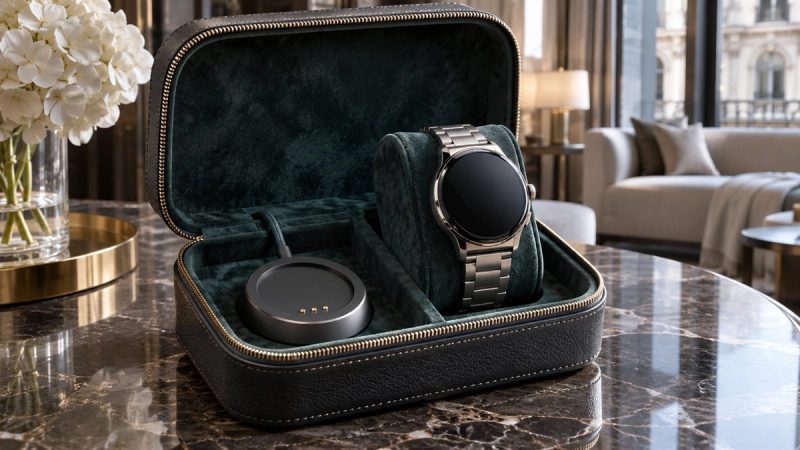
Ask whether the watch is mechanical, quartz or connected, and identify the exact calibre or electronic platform where available. Gem setting is a separate craft from timekeeping. A beautifully paved case does not establish mechanical manufacture, long battery life or app compatibility. Decide first which watch functions you want: a traditional winding ritual, low-attention timekeeping or connected features that require software and charging.
Check the actual model's setting, charging and support instructions. A connected gem-set watch may require specialist work on both its electronics and decorative case. A mechanical model may require careful movement servicing without disturbing stones. Ask the maker who handles each type of work and how the watch is protected in transit. The answer can be more valuable to ownership than another photograph of the bezel.
Does the case material matter?
Yes, but only when correctly identified. “Gold-coloured”, plated, solid gold and other finishes describe different constructions. Ask which components use the stated material, whether the setting metal differs from the case and what care it requires. If a watch includes several decorative materials, find out which surfaces can be polished and which should not be treated casually. Never infer solid precious metal from a warm colour or a product name.
Inspect the underside and strap connection as carefully as the decorated face. These areas determine comfort and may reveal wear on a pre-owned watch. If the watch is used, seek a professional condition report that separates surface marks, missing stones, case work and movement function. A seller's phrase “excellent condition” is not a substitute for a documented assessment.
How should you judge wearability?
Try the watch with the clothing you expect to wear. Gem-set pieces may be wider, taller or heavier than an unadorned model in the same collection. Check whether the case slides beneath a cuff, whether the crown is easy to operate and whether any raised setting brushes the skin or catches fabric. A watch that photographs spectacularly can remain uncomfortable for a full day.
Ask about strap or bracelet adjustment. If a decorated bracelet must be resized, determine whether its structure permits this and whether removed elements are preserved. Do not assume a generic jeweller can alter a proprietary or electronic watch safely. If an item is intended for occasional wear, decide whether it still justifies its service and storage requirements.
What do VERTU diamond watches illustrate?
VERTU's official Fusion Hamlet Diamond Watch listing describes a gem-set connected watch, including a stated count of more than 500 diamonds. That official claim identifies the intended product design; it does not supply independent grades for every stone. The page also presents a display-led watch, so it should not be described as a mechanical calibre without separate evidence.
The VERTU Fusion Watch collection contains different configurations. Do not carry the Hamlet edition's stone count, materials or availability over to another Fusion model. If considering the Hamlet piece, ask VERTU for current configuration documentation, diamond disclosures, service route and region-specific purchasing terms. A published product page may change; verify the precise SKU before deciding.
What should the purchase file contain?
Keep the invoice, model and serial details, written stone description, relevant independent report numbers, warranty terms, service contact, photographs of the watch at purchase and any adjustment record. These materials help establish what was delivered and simplify later repair or insurance conversations. If a seller promises an appraisal, ask who prepares it and what it actually assesses.
For a pre-owned watch, add provenance, disclosed service history and an inspection by a competent professional. Confirm that decorative work has not affected water resistance or the watch's function. If provenance or condition cannot be established, price should not be justified by a story that cannot be checked. Buying confidently means understanding evidence and uncertainty together.
Frequently asked questions
Does a higher carat weight mean a better diamond watch?
No. Total weight describes quantity, not individual quality, setting security or watch performance. Compare documented stones and the complete watch.
Should every diamond have a GIA report?
Not necessarily. Small mounted stones often lack individual reports. Ask which stones, if any, have independent documentation and what the maker states for the rest.
Can I wear a gem-set watch every day?
Possibly, depending on its setting, fit and your routine. Ask the maker about care and inspect the piece regularly for loose stones or snagging.
Is a diamond smartwatch a mechanical watch?
No. Decorative stones do not determine the timekeeping system. Check the exact watch's movement or connected platform.
Conclusion
Buy a diamond watch only after the gem claims, setting, underlying watch, fit and service path are clear. Request written details rather than inferring quality from sparkle or price. A VERTU example such as the Fusion Hamlet Diamond Watch shows how decorative craft and connected technology can meet, while leaving exact stone documentation and current ownership terms to verify for the individual purchase.