Polarized sunglasses for driving can cut reflected glare from roads and vehicle surfaces, but they are only useful if you can still read your instruments, see signals and judge changing light. Before buying, check the lens category and UV documentation, test dashboard displays in a parked vehicle, and confirm the frame stays comfortable and secure. Polarization alone does not make a pair suitable for every car or condition.
What can polarization help with on the road?
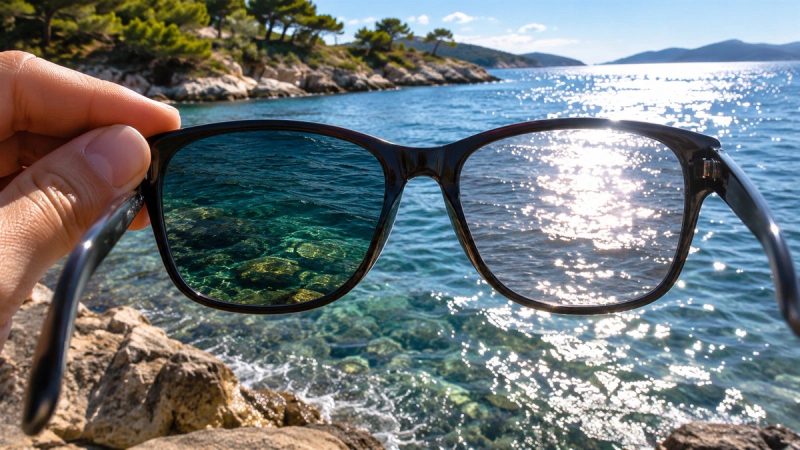
Bright reflections from wet pavement, a low sun and other horizontal surfaces can make a drive uncomfortable. A polarizing filter reduces some of that reflected light. ZEISS explains the glare-reduction benefit and also notes that some displays can become difficult to see. That trade-off is why a driving lens should be assessed in the vehicle, not only under shop lighting.
Think about the route you actually drive. A long midday motorway journey, a short trip through tunnels and a late-afternoon commute present different light conditions. A lens that feels pleasant in one scene might be too dark in another. Your decision should account for visibility across the whole journey and the need to remove or change glasses when conditions shift.
Can you read the dashboard through the lenses?
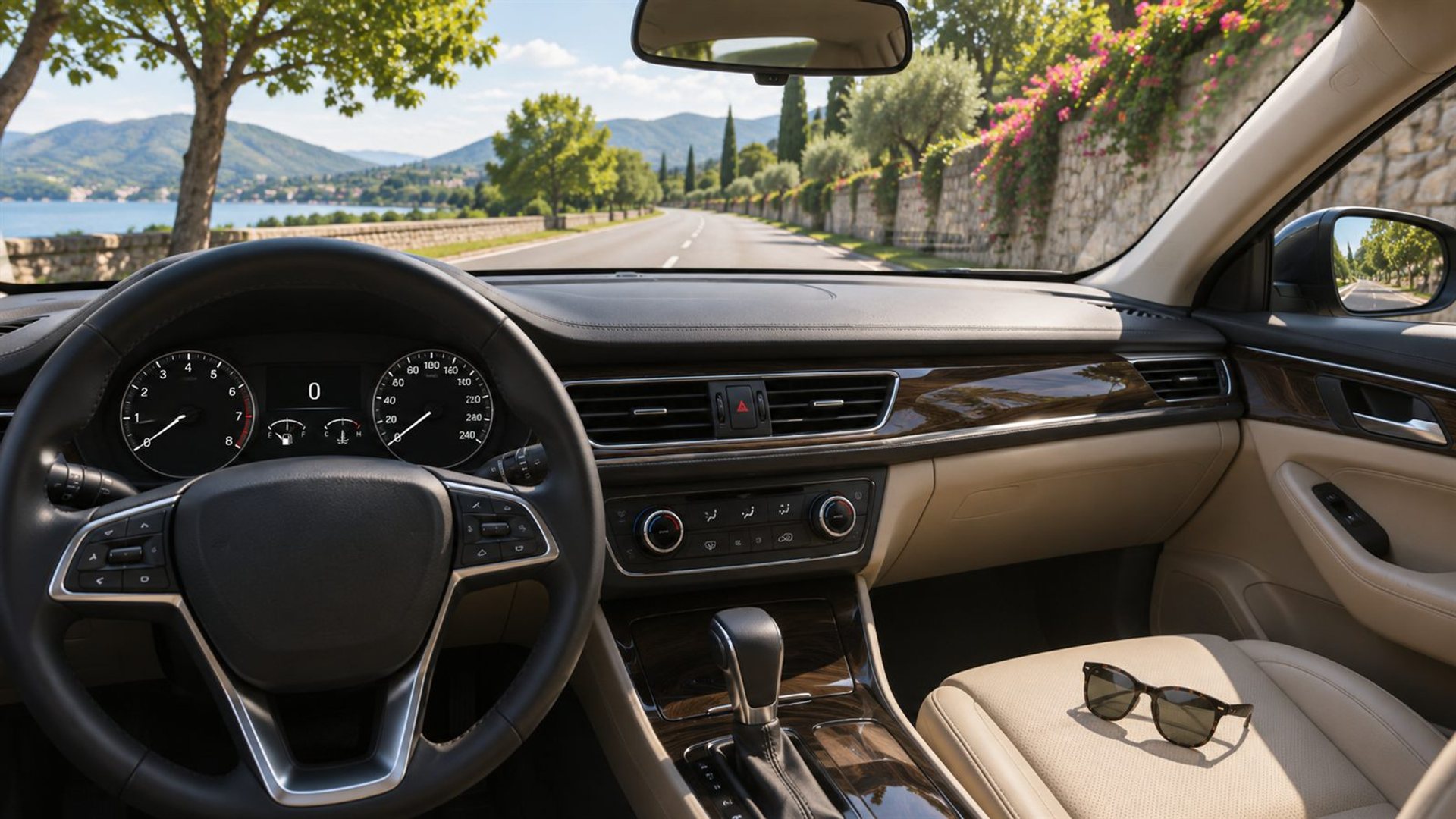
Check this before using the glasses on the road. In a parked car, put on the pair at your normal seating position. Read the speed display, navigation, climate screen, warning icons and any head-up display. Turn your head slightly as you would when checking mirrors. If information disappears, darkens sharply or changes colour at common angles, the glasses may be unsuitable for that vehicle's display layout.
Polarization interacts with the technology and orientation of some screens. ZEISS specifically cautions about LCD readability in some vehicles. A salesperson's demonstration with a different phone or screen does not settle what you will see in your car. Make the check with the exact dashboard, seat position and lens pair you plan to use.
Do not test visibility while driving. If you already own the pair and notice missing information during a trip, stop safely before changing eyewear. Keep a suitable alternative accessible. An attractive reduction in road glare is not a reason to accept poor visibility of essential instruments or signals.
Which lens tint categories matter for driving?
Polarization is separate from tint darkness. Lens categories describe how much visible light passes through, and very dark lenses can be inappropriate on roads. A Ray-Ban information booklet identifies category 4 as unsuitable for driving and road use. Check the marking and the instructions for the specific pair rather than assuming a darker lens offers better protection.
Daylight can change quickly when entering a tunnel, passing beneath trees or driving into rain. A lens that is comfortable in bright sun may hide detail as the scene dims. Do not use ordinary sunglasses for night driving. If you often drive at twilight, discuss a suitable clear or specifically prescribed lens with an eye-care professional. This article is a buying checklist, not a prescription for an individual's vision.
Is UV protection the same as polarization?
No. Polarization concerns reflected visible light; UV protection is a separate specification. A pair can pass a simple polarization test without establishing how much UV radiation it blocks. The American Optometric Association recommends adequate UVA and UVB protection. Read the maker's stated UV information and have uncertain lenses assessed by an optician rather than relying on a dark colour or a “polarized” sticker.
When comparing products, ask for the exact lens specifications in writing. If the lenses were replaced after purchase, the original frame listing may no longer describe what is fitted. Keep the model number and any lens documentation with your purchase record. The cost of a frame, its brand and its tint are not substitutes for that evidence.
Does lens colour change the decision?
Colour can affect how a wearer perceives contrast and traffic information, but the right choice depends on the lens and the individual. Do not infer driving suitability from a fashionable hue. Look through the actual lenses at traffic signals, road markings and your dashboard while parked in daylight. If a colour makes important distinctions hard to see, choose another option regardless of the frame's appeal.
Mirrored coatings, gradients and anti-reflective treatments are other design choices. None proves polarization, UV performance or suitability for a particular road. Ask what each feature does and whether it changes the view you need. A gradient may look useful for dashboard visibility, yet that effect should be checked in your own vehicle rather than assumed from a product photograph.
How important are fit and coverage?
Even a technically suitable lens can fail as everyday driving eyewear if it slides down the nose or obstructs a side glance. Check that the frame is secure when you turn your head, does not press painfully beneath a cap or headset, and leaves comfortable peripheral vision. Your view through a windscreen includes more than the central road: mirrors, pedestrians and instruments all matter.
Try the glasses at their intended wearing position. A frame that sits too high or low can change which part of a gradient lens you use when reading the dashboard. A heavily curved lens may feel different from a flatter aviator style. If you use prescription eyewear, confirm that the driving pair supplies the correction you need and ask an eye-care professional about the relevant lens design.
How should you evaluate VERTU sunglasses?
The official VERTU Polarized Aviator Sunglasses product page explicitly lists a polarized lens. That establishes the advertised feature of that product, but it does not replace a check of its lens category, UV documentation, fit or compatibility with your vehicle displays. Review the exact colour and configuration before buying, then test a pair safely while the car is parked.
VERTU also lists x BYWP Modern Aviator Sunglasses. The product description reviewed for this article does not explicitly state that its lenses are polarized, so do not transfer the specification from the Polarized Aviator product to the BYWP collaboration. Ask for current lens details by SKU. The visual resemblance of two aviator frames does not make their lenses interchangeable.
What is a sensible pre-drive checklist?
First, verify that the specific pair is labeled and documented for the use you have in mind. Second, check the category and UV claims separately. Third, sit in your parked vehicle and read all essential displays with your head in normal driving positions. Fourth, look through the lenses at road signs and signals from a safe stationary position. Fifth, check comfort and secure fit with the seat, headrest and any headwear you normally use.
Keep the possibility of changing conditions in mind. The best pair for a bright open road may need to come off in a tunnel or when dusk arrives. Make that change only when it is safe to do so. If you have persistent difficulty with glare or contrast, ask an eye-care professional for advice tailored to your vision and driving tasks.
Frequently asked questions
Are polarized lenses always better for driving?
No. They can reduce reflected glare, but they may make particular displays hard to read. Check the precise lens and vehicle together.
Can I drive in category 4 sunglasses?
No. Category 4 lenses are identified as unsuitable for road use and driving in the cited product guidance. Follow the markings and instructions for the exact pair.
Do polarized sunglasses protect against UV automatically?
Do not assume so. Verify UV protection as a separate product claim, ideally with documentation or an optical professional.
Should I test the pair while driving?
No. Check dashboard and signal visibility while the vehicle is parked; change glasses only when it is safe.
Conclusion
The right polarized sunglasses for driving reduce distracting glare while preserving the information you need to drive. Check lens category, UV documentation, displays, colour, coverage and fit before treating a polarized label as enough. Use a parked-vehicle test and obtain model-specific specifications; the VERTU Polarized Aviator Sunglasses listing is one starting point for a pair whose polarization claim is explicit.