A luxury smartwatch should be judged twice: as an object you want to wear and as connected technology you can rely on. Check the exact phone compatibility, battery routine, software support, fit, material execution and service route before buying. Price and craftsmanship matter, but they cannot rescue a watch that will not pair with your phone or perform the functions you actually need.
What makes a luxury smartwatch worth considering?
The category joins a watch case, strap, display and finishing choices to software, sensors and communications. Buyers may be drawn by a distinctive silhouette or material, yet ownership also depends on charging, updates and app access. A useful purchase decision therefore begins with everyday tasks. Do you want discreet notifications, travel information, activity reference, voice interaction or simply a digital dial in a carefully made case? Name the function before admiring the specifications.
There are already many rankings of luxury connected watches. This guide takes a different route: it is a due-diligence list for the model you have shortlisted. It does not claim that one watch is best for every owner. A collector who values case design may accept more charging; a frequent traveller may prioritise a working phone connection and readable information. The same product can be a good fit for one and a poor one for another.
1. Will it work with your actual phone?
Compatibility is the first gate. Check the watch model, your phone model, current operating-system version, required companion app and region. “Works with iOS and Android” may conceal different feature sets or minimum versions. Apple's setup guidance shows how even a familiar watch family relies on specified phone and software combinations. Those requirements apply to Apple products, but the principle is general: read the current requirements for the exact device.
Confirm the features you would miss if they were absent. Calls, messaging, contact syncing, voice control, navigation or payments may differ by platform and market. TAG Heuer's pairing guide distinguishes compatibility among Connected generations, a reminder that a brand name alone is not enough. If a sales page does not answer your exact pairing question, seek written confirmation before purchase.
2. How much charging will your routine tolerate?
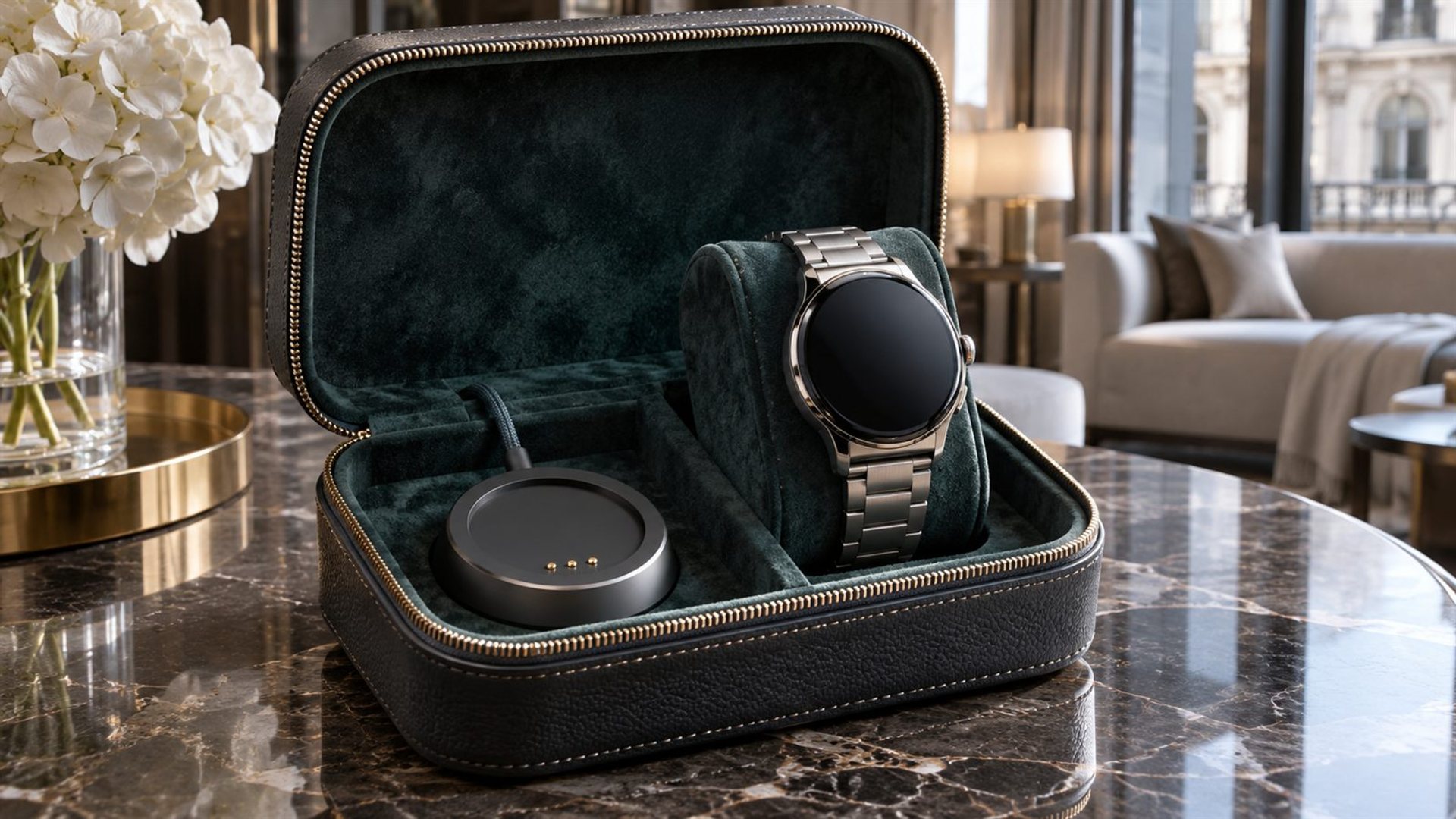
Battery claims are usually measured under stated test conditions. A bright display, frequent notifications, navigation or calls can change actual runtime. Ask how long the exact watch lasts under a use pattern close to yours, what charger it requires and how fast it replenishes. If travel matters, consider whether a proprietary dock is easy to replace and whether you can obtain one in another market.
Compare claims only when their conditions are comparable. Garmin's MARQ announcement gives a stated maximum in smartwatch mode for its own collection; it is not a universal premium-watch benchmark. Ask what happens when the display is always on or location tracking is active. A watch that needs charging nightly may be entirely suitable if it spends every night on your bedside table.
3. Do the materials justify the purchase?
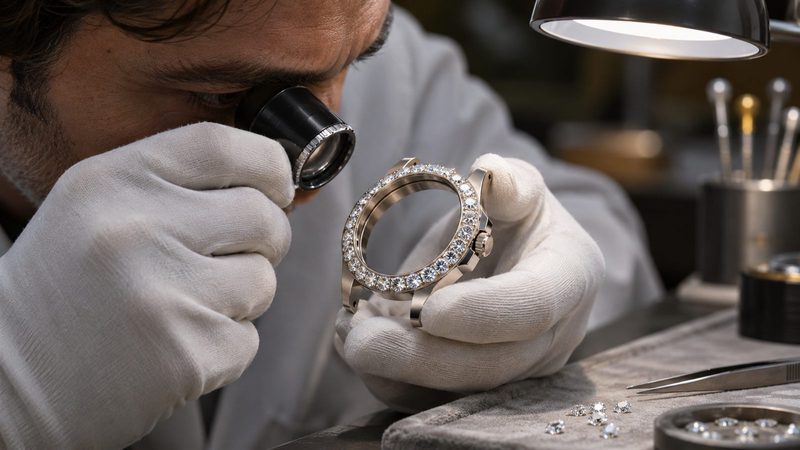
Examine the case, crystal, strap, clasp and finishing in person when possible. A product description may say “sapphire” or “titanium”, but you need to know which component uses the material and how it feels on your wrist. A heavy or thick case can be impressive in a photograph and awkward beneath a cuff. Check the surfaces that touch skin, the edge of the case and the ease of changing or maintaining the strap.
Material value is not merely a list of prestigious nouns. Ask how the case is finished, whether a strap is replaceable, how a decorative element affects repair, and whether the display remains legible in bright light. Try the watch during normal hand movement. It should sit securely without sharp pressure. A visually distinctive object earns its place when its construction also supports repeated use.
4. What will software support look like after purchase?
A connected watch has a life after the unboxing. Ask how updates are delivered, which features depend on an account or app, and whether the manufacturer has published a support period. If no period is stated, do not assume indefinite service. Review what happens when you change phones, reset the watch or move markets. The ability to reinstall and pair the companion app matters as much as the initial demonstration.
Also distinguish hardware features from software availability. A listed microphone, sensor or network component does not prove that a particular app or service works in your region. Read current feature notes and ask the seller to demonstrate the functions that motivate your purchase. An elegant watch that can only show a fraction of its advertised features on your phone may not meet your intended use.
5. How does it fit your wrist and wardrobe?
Measure more than case diameter. Case length, thickness, strap taper and lug geometry can change how a watch sits. Try it under a shirt cuff and with your usual outerwear. Note whether the display is legible at a glance and whether controls can be used without pressing the case into your hand. A watch chosen for daily wear needs to feel right during typing, travel and formal settings, not only while standing at a counter.
Consider alternatives within the same product family. A different strap or finish can change the character of a connected watch considerably. Ask which configurations are current and which can be serviced or replaced. Do not assume a limited finish has identical lead times or parts support to a standard configuration. Fit and upkeep are part of luxury ownership.
6. Who will service the electronic and decorative parts?
Ask where the battery, display, seals, strap and decorative case components can be assessed. A local watchmaker may be skilled with mechanical watches yet unable to service a sealed connected device. An electronics repairer may lack the parts or finish matching for a crafted case. Clarify the authorised route, warranty conditions, likely lead time and how the watch is handled if one component is unavailable.
Request the terms in writing for your market. A global product page does not necessarily establish identical service, shipping or returns everywhere. Think ahead to an eventual battery issue or damaged strap. A well-supported product is easier to own than one whose after-sales path remains vague, even when the latter looks more dramatic in an image.
7. What is your real next step after trying it?
Try to complete a short demonstration with your own phone where possible: pair, receive a notification, inspect the display outdoors, use a control and put it beneath a cuff. Confirm how to charge it and how to recover from a lost connection. If the store cannot pair your phone, obtain a precise compatibility statement and a return policy that lets you test the promised function responsibly.
Write down the three functions you would use weekly and the two ownership burdens you would dislike most. Rank the shortlisted watches against those five points. This prevents a dazzling material or temporary offer from becoming the whole decision. A buyer's guide is useful only if it helps you reject a model as well as select one.
Where do VERTU watches fit?
The VERTU Agent Watch has a documented transparent crystal case, tonneau silhouette and digital watch faces in the official listing. Those verified design details make it relevant to a buyer who values a distinctive connected watch. The VERTU Grand Watch collection offers another VERTU path. Compare the exact version's compatibility, charging and support terms against the checklist rather than treating the brand or shape as proof of function.
These products do not have a mechanical movement merely because their cases echo watchmaking design. Avoid comparing them with a traditional automatic watch on the wrong criteria. If connected features are essential, ask VERTU for the current model's phone requirements and market-specific service terms. If mechanical craft is your main goal, a connected watch may be a different purchase entirely.
Frequently asked questions
Is an expensive smartwatch automatically more capable?
No. Price may reflect materials and design, while software functions still depend on the exact hardware, app, phone and market. Verify the functions you need.
Can a luxury smartwatch replace a mechanical watch?
It can fill a daily wrist role, but it offers a different ownership experience involving charging and software support. The better choice depends on what you value.
Should I buy before checking phone compatibility?
No. Check your exact phone and operating-system version first, along with any feature limitations.
What should I ask about after-sales service?
Ask who handles battery, display, seal and strap work, where service occurs, which parts are supported and what the current warranty covers.
Conclusion
Choose a luxury smartwatch only after it passes your compatibility, charging, materials, fit, software and service checks. A striking case should deepen the pleasure of a device that already works for your life. Compare the precise configuration and its current terms, then use the VERTU Grand Watch collection as one connected-watch starting point if its verified features match your shortlist.