Learning how to fill a fountain pen for the first time starts with identifying its filling system. Fit the correct cartridge, use the specified converter or follow the instructions for an integral filling mechanism; these are different routes. Prepare a protected work surface, choose compatible fountain-pen ink and follow the instructions for the exact pen rather than experimenting with a decorative turning part.
Key Takeaways
- Identify the filling system before opening an ink bottle or fitting a cartridge.
- Check cartridge or converter compatibility for the exact pen; a similar appearance is not confirmation.
- Follow one complete filling route and avoid mixing instructions from different mechanisms.
- For VERTU Marengo, use the documented cartridge route or obtain the instructions for the specified converter; its prayer-wheel tailpiece is not a filling piston.
Identify the system before you add ink
Find the model name and the filling section of its instructions. Look for a cartridge, a removable converter or an integral mechanism. If the pen is a gift and the paperwork is missing, ask the maker or seller to identify it from the exact reference and a photograph. Do this before trying to turn, pull or immerse a part.
A cartridge is a replaceable ink container fitted as directed by the pen's instructions. A converter is a separate filling accessory used with bottled ink on compatible pens. An integral filling mechanism belongs to the pen itself. These descriptions help you recognise the choices; they do not establish that any particular accessory will fit your pen.
LAMY's fountain-pen FAQ, for example, distinguishes cartridge, converter and piston filling systems. That is a useful demonstration of why the mechanism comes first. Its descriptions apply to the relevant LAMY equipment, rather than establishing a universal cartridge connection or converter movement.
Prepare a simple first-fill workspace
Use a clear, well-lit surface with a protective layer you do not mind marking. Set out the pen, the correct ink supply, the instructions, a soft lint-free cloth and a sheet of suitable writing paper. Keep the cap in a secure place. Leave other inks and loose accessories aside so you can follow one route without confusing parts.
Choose ink specifically intended for fountain pens and accepted by the manufacturer. For a cartridge route, confirm the required cartridge type before opening it. For bottled filling, check both the ink and the approved filling accessory. Avoid selecting a cartridge simply because it appears narrow enough to enter the barrel.
Check whether the manufacturer calls for preparation or rinsing before the first fill. If so, follow its method and allow the parts to dry as directed. Do not add solvents, household cleaning products or an improvised soak to a new pen. If no preparation instruction is supplied, ask rather than taking the whole pen apart.
Route one: fit a compatible cartridge
- Confirm the cartridge. Match the specified type and check that it is intended for this pen. Keep its identification for the next purchase.
- Open the pen as directed. Follow the manual's access method. Hold the designated sections, keeping fingers away from pressure on the nib.
- Remove only what the instructions identify. If there is a fitted accessory or transit item, establish what it is before moving it.
- Fit the cartridge in the stated orientation. Use the manual's seating method. Do not force an uncertain connection or puncture the cartridge separately.
- Reassemble the pen. Check that the barrel closes as the instructions describe, without trapping or forcing the ink container.
- Start writing as directed. Give the feed the opportunity to receive ink, then try a few gentle lines on the prepared paper.
If the cartridge does not seat or the barrel does not close normally, stop and recheck compatibility. Increasing force is not a useful way to resolve uncertainty about a new pen. Keep the cartridge and pen together for the seller to identify, explaining where the fitting process stopped.
Route two: use the specified converter
If your pen supports a converter, identify the exact compatible accessory and its operating method. Some instructions describe a turning action, while others describe a different movement. Follow the complete procedure supplied for that converter and pen, including how it attaches, which part enters the ink and how filling is completed.
Arrange the bottle securely before starting. Keep the written instructions visible so you do not have to leave an open bottle while looking up the next step. Use the stated immersion position rather than dipping the whole grip or barrel. After filling, remove excess ink from the permitted surfaces using the method the manufacturer describes.
Do not combine the beginning of one brand's converter instructions with another brand's final step. Likewise, do not assume that a turning detail at the end of a pen operates a converter inside it. If the supplied accessory or mechanism differs from the diagram, pause and ask for the correct instructions.
Route three: an integral filling mechanism
If the pen has an integral mechanism, use its model-specific procedure from the outset. Pelikan's piston-filling instructions show one manufacturer's documented route. Establish which control operates your own pen and the direction and limits of movement. Do not fit a cartridge simply because the pen has an accessible barrel, or twist a cap or tailpiece in search of a piston.
For a first fill, the most useful preparation is a clear diagram showing the parts you are expected to move. If the model cannot be identified, keep it unfilled until it can. This is particularly sensible for an inherited pen, where a decorative detail or unfamiliar construction can be mistaken for a filling control.
Filling the VERTU Marengo Fountain Pen
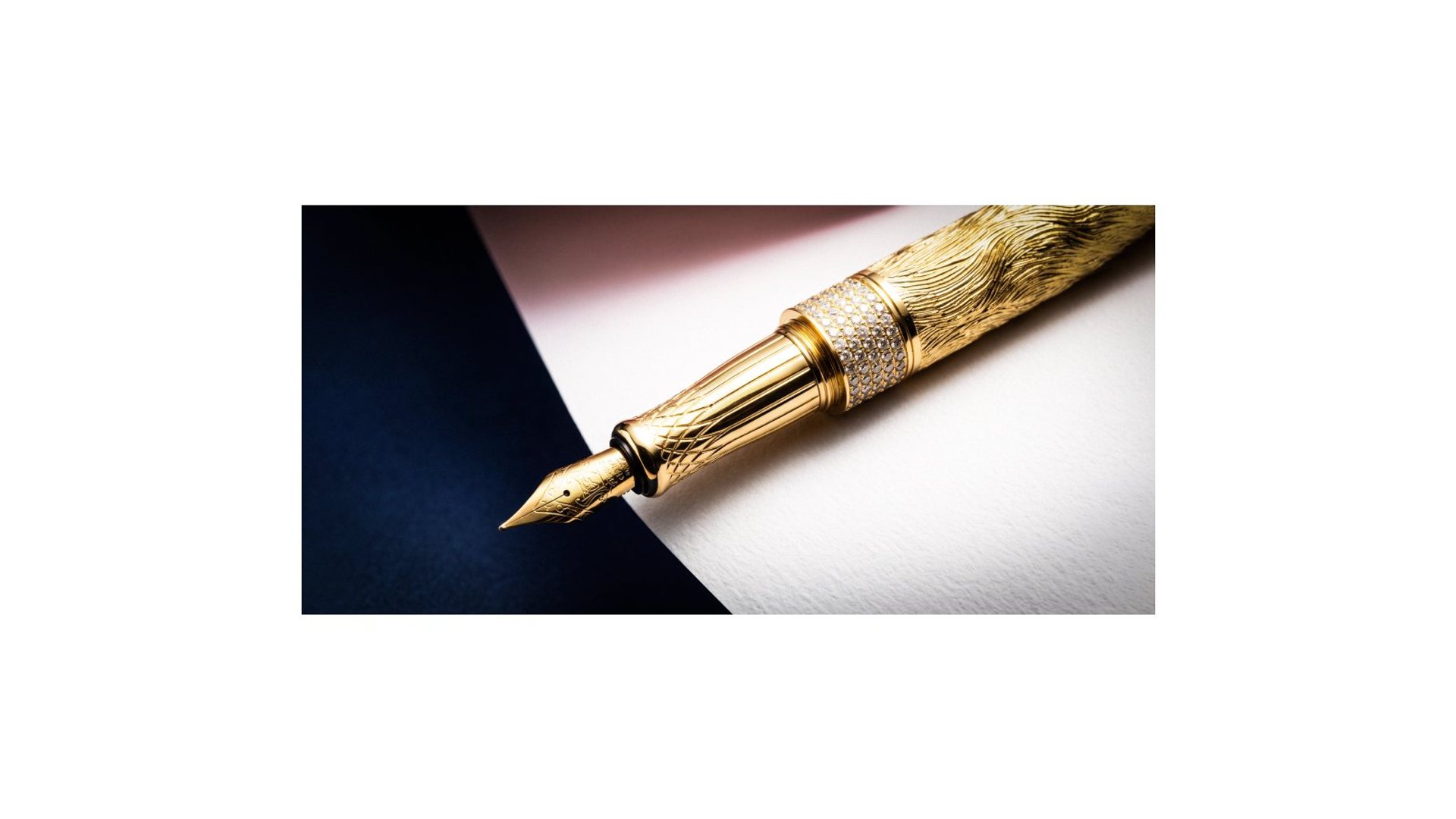
The VERTU Marengo Fountain Pen has a documented cartridge filling route. VERTU's current product listing also mentions a converter. For a straightforward first fill, confirm the cartridge intended for your pen; if you prefer bottled ink, obtain confirmation of the exact converter and its fitting instructions for your set.
Marengo's turning tailpiece recalls a prayer wheel. It should not be interpreted as an integral filling piston. Keep the decorative tailpiece separate from the ink-filling procedure and use the access and filling directions for the writing system. Do not turn it experimentally to draw ink into the pen.
VERTU's care guidance calls for fountain-pen ink and advises against mixing inks. Keep the first fill simple by choosing one compatible ink supply. Also ask what accessories are included in your particular order rather than assuming that a photograph or another set's contents establishes what you received.
Check the writing before troubleshooting the filling
Write a few short lines using a light, comfortable hand. Check that you are holding the nib in its normal writing position and that the paper is suitable for the intended use. Do not press harder to compensate for a pen that has not started. Record whether it produces no ink at all, starts and stops, or writes normally but looks different on the page than expected.
If ink does not arrive, return to the relevant instructions. Confirm that the cartridge is correctly seated or that the approved converter was filled and fitted as directed. Avoid shaking, squeezing, opening unfamiliar parts or trying a new ink mixture as an immediate response. Ask the seller for advice if the documented checks do not resolve it.
When you finish, recap and store the pen according to its care guidance. Keep the cartridge or ink identification with the purchase information. If you later change inks, follow the cleaning instructions first; VERTU's guide to cleaning between inks can help frame that separate maintenance task.
Frequently Asked Questions
Do I need bottled ink for my first fill?
Not if your pen uses a compatible cartridge. Choose the documented route for the pen and the supplies you have; bottled filling requires the appropriate mechanism or approved converter.
Can any cartridge or converter fit?
Do not assume compatibility from appearance. Confirm the exact accessory for the pen before fitting it, and stop if the connection or barrel closure does not behave as the instructions describe.
Can I use Marengo's turning tailpiece to fill it?
No. Its prayer-wheel design is not an instruction to operate an ink piston. Use Marengo's documented filling route and obtain the correct directions for your cartridge or converter.
Conclusion
A successful first fill begins with the correct system and compatible supplies, followed by a calm sequence and a simple writing check. Approach how to fill a fountain pen for the first time through the exact pen's instructions, and keep Marengo's decorative tailpiece separate from its ink-filling procedure.