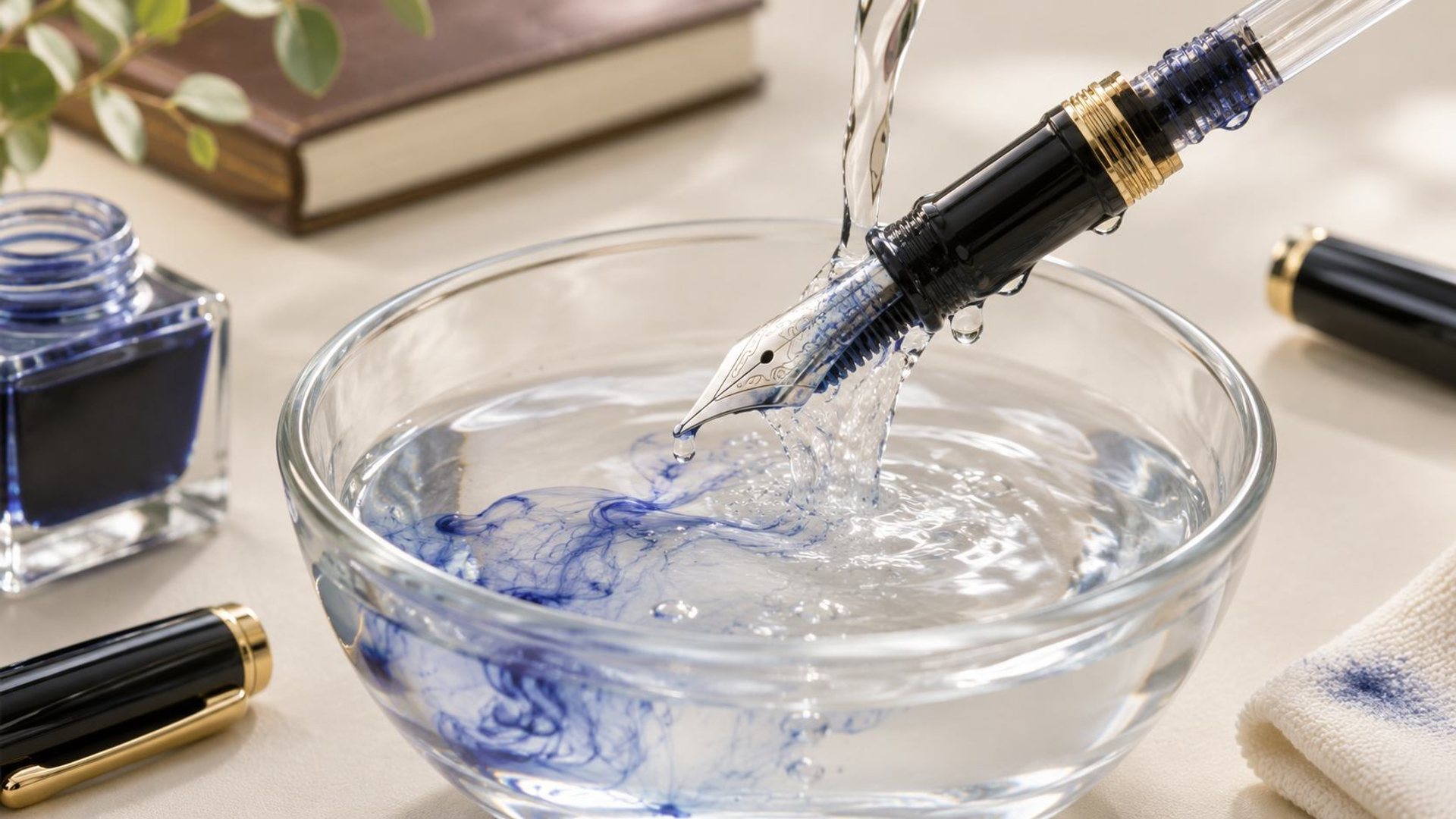
How to clean a fountain pen between inks: empty the old cartridge or converter, flush the removable writing section with clean water according to the maker's instructions, and let it dry before filling with a different ink. Stop if a component resists removal or if the pen has a decorative finish that must stay dry. A colour change is a useful moment to clean the feed because residual ink can mix with the new colour or dry in the channel.
What should you check before taking the pen apart?
Identify the exact filling system first. A cartridge pen, converter pen and piston filler are not disassembled in the same way. Check the maker's instructions for which section is removable and whether the nib unit is meant to be handled by the owner. Protect the desk, wash your hands after handling ink, and keep a soft cloth nearby. Plain clean water is the default starting point for ordinary fountain-pen ink; do not assume household detergent, alcohol or a jewellery cleaner is safe for the feed or finish.
If you are changing between unusual ink formulations or the pen has been unused for a long time, consult the ink and pen makers before proceeding. Pigmented, shimmer or document inks may leave residues that call for model-specific care. A stubborn blockage is a service question, not a reason to force the nib.
How do you flush a cartridge or converter pen?
- Remove the old supply. Unscrew the barrel as the maker directs. Take out the empty cartridge or detach the converter without pulling on the nib.
- Protect decorative parts. Keep the cap, barrel, metal trim and any set stones away from the flushing water unless the manufacturer explicitly permits wet cleaning.
- Flush the writing section. Run clean water through the feed by the method approved for that pen. A converter can often draw in and expel water repeatedly. Continue until the water runs substantially clear.
- Check the outlet. Gently blot the nib on a lint-free cloth or paper towel. If old colour still appears, repeat the flush rather than immediately loading the new ink.
- Dry before refilling. Allow the components to dry as the maker directs, then install the compatible cartridge or converter and test on ordinary paper.
LAMY's fountain-pen FAQ advises thorough rinsing before a colour change and describes flushing an encrusted feed with water. Its instructions apply to suitable LAMY designs; the removal and drying procedure for another brand must follow that brand's guidance.
How clean is clean enough for a colour change?
Do not judge only by the water in the cup. Blot the nib after flushing and check whether a strong trace of the previous ink remains. A faint tint may persist briefly in the first lines, particularly when moving from a dark ink to a pale one. If colour accuracy matters for a letter, signature or artwork, test on scrap paper before using the pen for the final document.
Do not promise that a particular number of flushes will work for every feed. Ink saturation, drying time and the pen's internal channels differ. Repeated gentle flushing is preferable to scraping the feed or bending the nib. If flow remains poor after sensible cleaning and drying, stop and seek the maker's support.
What should you avoid?
| Temptation | Why to pause | Safer next step |
|---|---|---|
| Soak the whole pen | Decorative metal, adhesives and trim may not tolerate immersion | Clean only the approved writing section |
| Use soap or alcohol | It may affect the feed, seals or finish | Start with clean water and maker guidance |
| Pull the nib out | Alignment and fit may be damaged | Remove only parts intended for user service |
| Refill while wet | Water may dilute the new ink | Allow adequate drying and test the first lines |
What changes for the VERTU Marengo Fountain Pen?
The VERTU Marengo Fountain Pen is listed with a custom German SCHMIDT writing system, an approximately 0.5 mm writing line and cartridge or converter filling on its current product page. Its gold-plated brass exterior and zirconia details are separate from the ink path; do not immerse or polish them simply because the feed needs cleaning. VERTU advises rinsing the feed with clean water every two to three ink fills and allowing it to air-dry. Confirm the instructions for your exact edition and supplied filling parts before disassembly.
Marengo's product page also advises keeping the pen capped, storing it in its case in a cool, dry place and avoiding direct contact with perfume, alcohol and hand sanitiser. Those finish-care points matter during cleaning: a cloth dampened for the feed should not be used indiscriminately on the decorated barrel. If ink reaches a joint or the pen will not start after a normal flush, contact VERTU support rather than attempting to take apart decorative components.
When should you clean rather than just refill?
Clean when changing colour, when flow becomes inconsistent, after an extended period without use or when the maker's routine interval arrives. If you use the same compatible ink frequently and the pen writes normally, follow the maker's interval rather than repeatedly dismantling it. Keep a note of the ink brand and colour if you rotate pens; that helps distinguish an ink issue from a mechanical one.
Frequently asked questions
Can I clean a fountain pen with tap water?
Follow the maker's water guidance. Clean water is a common starting point, but water quality and the pen's materials vary. Do not add detergent without model-specific approval.
Do I have to remove the nib?
Usually not for a routine ink change. Remove only the components the manufacturer identifies as user removable.
Can I switch colours without flushing?
You may get a mixed transitional colour and residual ink in the feed. A flush is the more predictable choice when the new colour matters.
What if the pen still skips after cleaning?
Check that the correct cartridge or converter is seated, allow the feed to prime, and test with suitable paper. Seek authorised support if the problem persists; do not bend the nib.
To clean a fountain pen between inks, identify its filling system, flush only the approved writing section with clean water, let it dry and test the new ink before an important page. Treat a decorated pen's exterior as a separate care problem.