

Key Takeaways
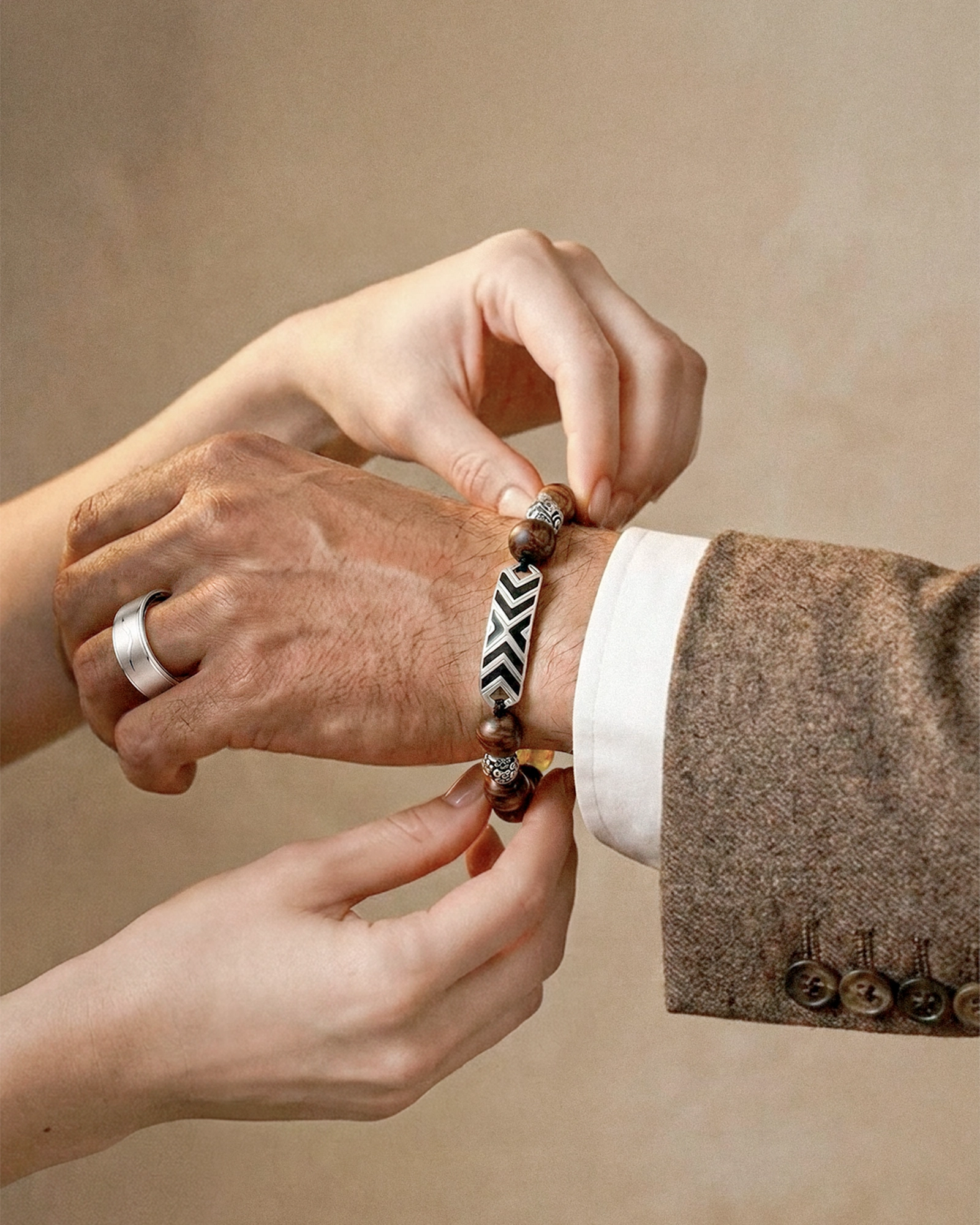
Stealth Cold Storage: High-end encrypted jewelry transforms cold storage into wearable art, mitigating physical coercion ("wrench attack") risks through everyday discretion.
Bank-Grade Hardware Enclaves: Leading luxury crypto wearables utilize CC EAL6+ certified Secure Element chips, keeping private keys completely offline and isolated during NFC tap-to-sign transactions.
The Phygital Evolution: Traditional luxury houses and Web3 pioneers are merging physical craftsmanship (18k gold, precious gems) with immutable digital product passports and on-chain provenance.
Holistic Security Setup: True encrypted jewelry acts as an integrated signing node, supporting multi-signature configurations and seedless multi-factor recovery for high-net-worth portfolios.
Introduction
Welcome to an emerging frontier where high jewelry meets digital sovereignty. For early adopters and high-net-worth investors holding substantial digital assets, managing self-custody has long been a stark tradeoff between uncompromising security and personal aesthetic. Industrial plastic dongles, metallic seed plates, and bank vaults offer technical safety, yet they lack elegance and fail to fit naturally into an active, jet-set lifestyle.
As digital wealth scales into seven and eight figures, a fundamental question arises: how can crypto whales secure their private keys without compromising on style, comfort, or physical safety?
The answer lies in the rapid rise of encrypted luxury jewelry—a sophisticated category of wearables that embeds tamper-resistant security architecture directly into fine rings, pendants, and bespoke cufflinks. In this guide, we examine the market trends driving this convergence, dissect the underlying cryptographic hardware, and provide a clear framework for evaluating luxury cold storage options.
Why Crypto Whales Need a New Approach to Security
The Growing Threat Landscape
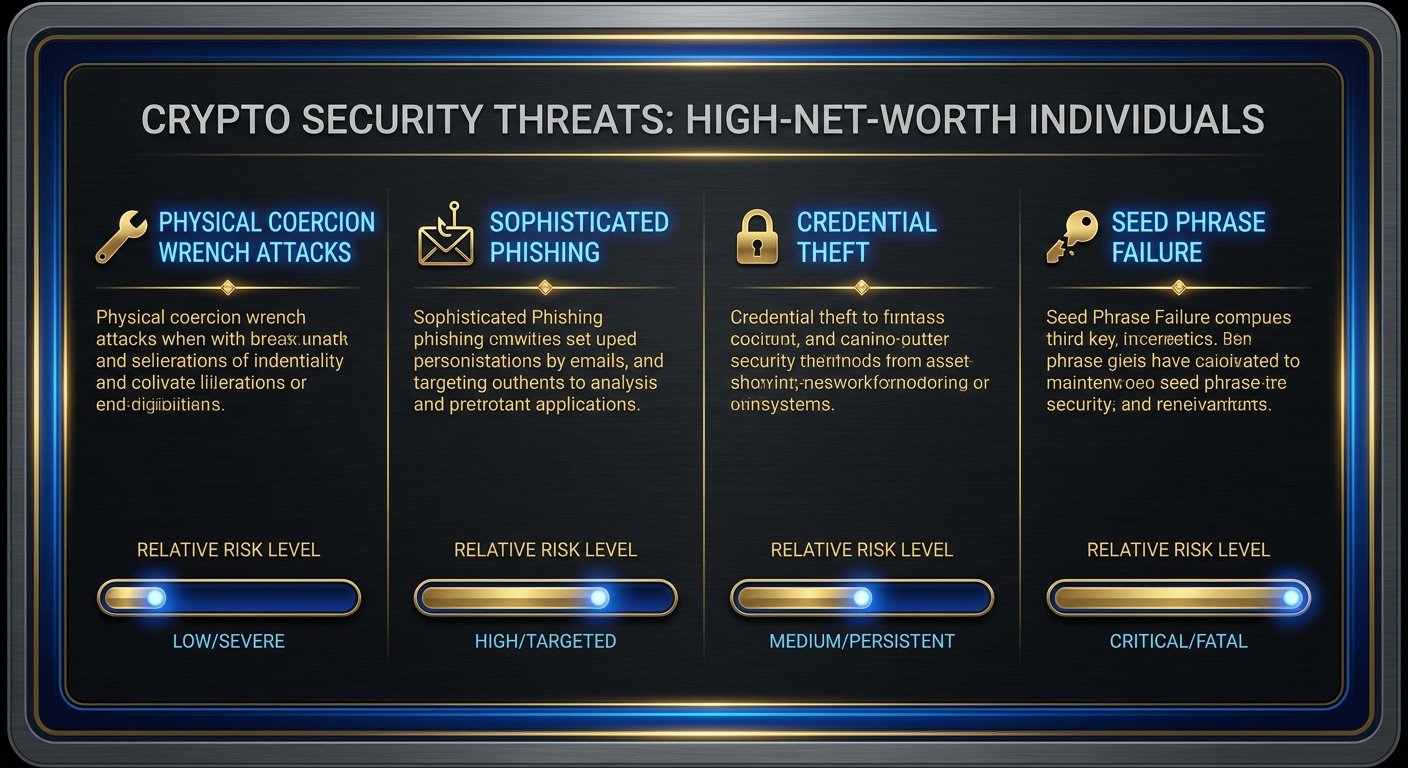
The security dynamic for high-value cryptocurrency holders has evolved dramatically. In the early days of Web3, threat vectors were predominantly digital: automated exploit scripts, basic phishing links, or compromised browser extensions. Today, organized threat actors employ highly targeted social engineering, spear-phishing campaigns, and sophisticated credential-theft operations tailored specifically to verified on-chain whales.
Public blockchain ledgers make wealth visible. When an address associated with significant liquidity interacts with decentralized protocols, sophisticated analytics tools index that activity in real time. Consequently, high-net-worth individuals face targeted attacks that exploit the human layer long before attempting to breach cryptographic algorithms.
The Wrench Attack Problem
The transparency of public blockchains introduces a distinct physical risk vector commonly referred to in security circles as the physical coercion or "$5 wrench attack." When an attacker knows a target holds millions in liquid digital assets, physical intimidation bypasses even the strongest 256-bit encryption.
Carrying a visible hardware wallet or storing obvious plastic signing devices in a travel briefcase immediately signals the presence of crypto assets to onlookers, hotel staff, or customs officials. By contrast, luxury wearables blend seamlessly into daily wardrobe routines. A signet ring crafted from 18k solid gold or a gemstone pendant appears to the untrained eye as an understated piece of personal jewelry, concealing its cryptographic functionality in plain sight.
Beyond Paper Backups
Fragile paper seed backups and cumbersome steel recovery plates remain a major point of operational failure for wealth preservation. Paper degrades, succumbs to moisture, and risks destruction during fires or transit. Metal plates, while fireproof, are conspicuous items that invite suspicion if discovered during routine physical searches.
To maintain continuous control over high-value wallets without relying on fragile physical records, investors require durable, portable cold storage alternatives. Wearable encrypted jewelry provides a continuous, body-worn signing portal that stays with the owner across international borders, offering immediate access while eliminating obvious physical telltales.
The Rise of Luxury Encrypted Jewelry
Two Worlds Converging
We are witnessing the acceleration of the "phygital" luxury movement—an industry shift where master physical craftsmanship converges with immutable digital encryption. Luxury goods have historically derived value from scarcity, provenance, and tactile perfection. By pairing fine metallurgy with micro-scale cryptography, high-end wearables satisfy both the desire for status and the imperative of personal security.
This convergence is gaining significant momentum among discerning investors who view their personal accessories not merely as adornments, but as functional tools of digital identity and asset custody.
Authentication-Focused Luxury Pieces
The movement began when heritage luxury houses recognized the power of micro-chip integration for anti-counterfeiting and provenance. Venerable brands including Bvlgari, Suzanne Syz, and Tiffany & Co. pioneered the inclusion of encrypted Near-Field Communication (NFC) tags and blockchain-backed digital certificates in exclusive collections.
Collector's Note: In high jewelry, embedded NFC tags linked to public ledgers allow buyers to instantly verify provenance, gemstone origin, and ownership history via a smartphone scan, establishing a tamper-proof barrier against secondary market counterfeits.
While these early authentication-focused pieces proved that fine jewelry could house micro-electronics without sacrificing aesthetic integrity, they primarily functioned as read-only verification tokens rather than active key custody devices.
Functional Crypto Wallet Wearables
The second wave of encrypted jewelry represents a leap from passive authentication to active transaction signing. Modern functional wearables—such as the Tangem Ring and the UKey Seed Ring—integrate full hardware wallet capabilities into sleek ceramic and precious metal bands.
Concurrently, the emerging "crypto wallet necklace" trend has gained traction among executives and founders. These pendants house secure microchips that connect wirelessly to mobile devices, allowing users to authorize million-dollar transfers or sign smart contracts with a subtle touch of their jewelry against a secure smartphone interface.
The Technology Behind Encrypted Jewelry
How NFC Hardware Wallets Work
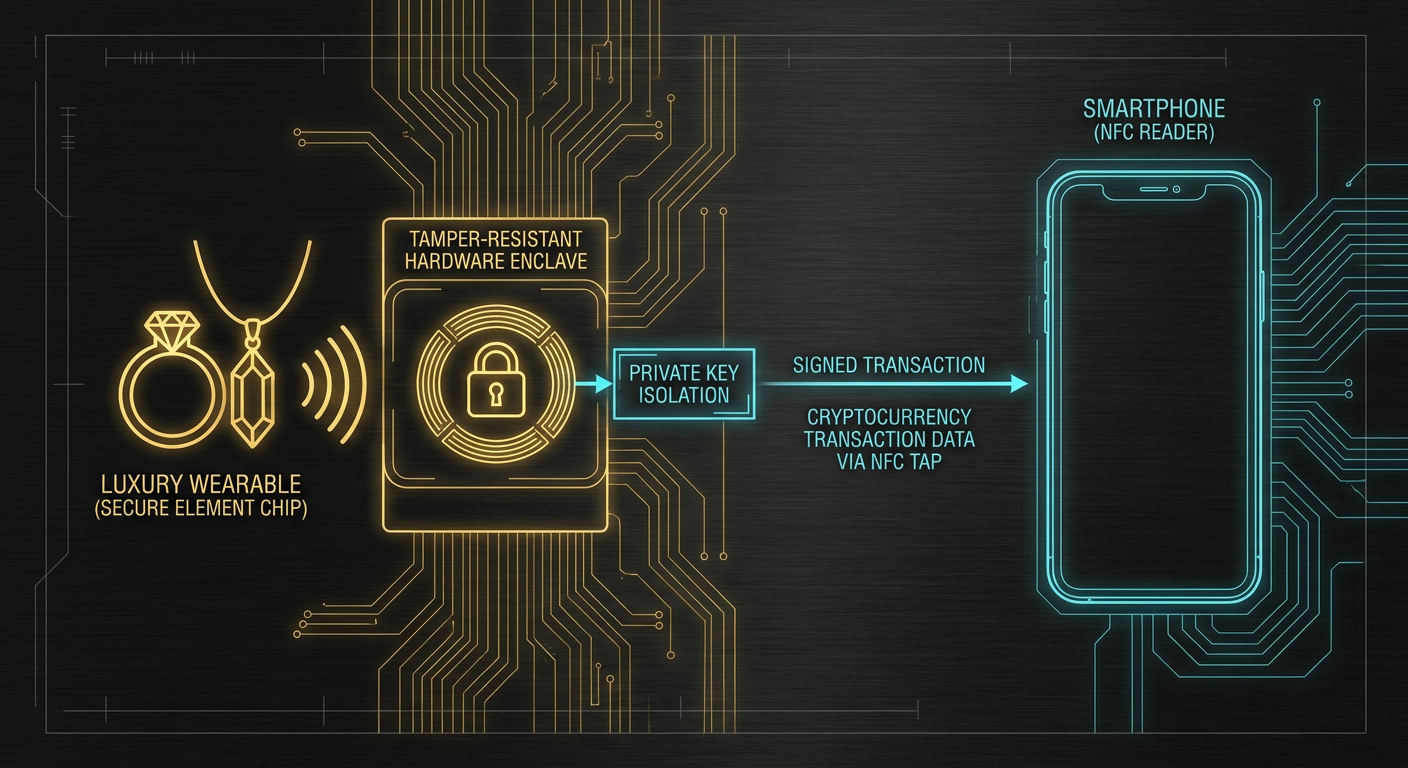
Encrypted jewelry relies on Near-Field Communication (NFC) technology operating at the 13.56 MHz frequency to communicate with host devices. Unlike Bluetooth or Wi-Fi, NFC requires close physical proximity—typically less than two centimeters—eliminating the risk of long-range wireless interception.
When authorizing a transaction, the process follows a strict offline isolation protocol:
The user prepares a transaction within a paired mobile application on their smartphone.
The smartphone transmits the unsigned transaction data payload to the wearable via an NFC tap.
The internal Secure Element chip inside the ring or pendant processes the signature locally using isolated cryptographic algorithms.
The wearable transmits only the completed cryptographic signature back to the smartphone.
At no point during this exchange do the private keys leave the physical enclave of the jewelry.
Understanding CC EAL6+ Certification
The cornerstone of any credible encrypted wearable is the security rating of its microchip. Discerning buyers must insist on chips certified under Common Criteria Evaluation Assurance Level 6 Augmented (CC EAL6+).
[ Unsigned Payload ] NFC Tap ► [ CC EAL6+ Secure Chip ]
(Isolated Internal Signing) Broadcast Transaction ◄ NFC Return Signed Signature
CC EAL6+ represents the highest commercially available security rating for silicon hardware, matching the rigorous testing standards applied to biometric passports, electronic national IDs, and nuclear power control systems. Chips with this certification feature physical anti-tamper shields, bus encryption, active environmental monitoring (detecting voltage or temperature manipulation), and advanced countermeasures against side-channel analysis.
Blockchain Certificates and Digital Product Passports
Beyond transaction signing, encrypted jewelry leverages blockchain-backed digital product passports (DPPs). Accelerated by regulations such as the European Union’s Digital Product Passport framework, high-end pieces link physical serial numbers to immutable smart contract tokens.
This dual-layer architecture ensures that the physical piece and its digital counterpart are cryptographically bound. Transferring ownership of the jewelry on-chain simultaneously updates the official registry of authentic craft, creating an unbroken chain of custody across generations.
What to Look for in Encrypted Jewelry
Security Certifications That Matter
When evaluating high-end encrypted jewelry, form factor must never overshadow cryptographic rigor. A beautiful gold ring containing an uncertified microchip provides a false sense of protection.
How to Verify: Prior to purchase, request the manufacturer’s hardware documentation confirming independent CC EAL5+ or CC EAL6+ certification. Ensure the firmware is open-source or audited by reputable third-party cybersecurity firms, such as Kudelski Security or CertiK.
Key technical requirements to confirm include:
EAL6+ Secure Element: Verifiable silicon architecture isolated from general processors.
EAL / FIPS Validation: Federal Information Processing Standards compliance for random number generation (TRNG).
Zero Wireless Footprint: Absence of internal batteries, Bluetooth radios, or cellular antennas that could introduce remote attack surfaces.
Material Quality and Craftsmanship
Encrypted jewelry must withstand the physical rigors of daily wear while maintaining its signal transparency. Precious metals such as 18k yellow gold, platinum, and liquid metal alloys offer exceptional durability, but they can attenuate radio frequency signals if not engineered correctly.
Master jewelers overcome this challenge by pairing noble metals with high-tech materials like biocompatible zirconia ceramic, sapphire crystal, or titanium. These materials allow NFC signals to pass unimpeded while protecting delicate internal micro-circuitry from water immersion, shock, and thermal stress. Furthermore, hypoallergenic properties ensure comfort during extended travel across diverse climates.
Integration with Your Existing Crypto Setup
A luxury wearable should complement—rather than fragment—your existing custody architecture. Consider how the piece interacts with your broader operational security:
Feature Dimension | Evaluation Criteria |
|---|---|
Wallet Compatibility | Native support for major interfaces (MetaMask, WalletConnect, Rabby, Rainbow). |
Multi-Signature Support | Ability to act as a physical co-signer in Gnosis Safe or enterprise MPC setups. |
Key Recovery Options | Availability of seedless multi-card/multi-wearable backup sets or Shamir Secret Sharing. |
Cross-Chain Versatility | Multi-curve support (secp256k1 for Bitcoin/EVM, ed25519 for Solana/Sui). |
The Future of Phygital Luxury
Web3 Wearables and Digital Identity
As Web3 architecture matures from simple token transfers into decentralized identity (DID) systems, encrypted jewelry is evolving into a physical key for global living. Tomorrow's high-net-worth individual will use a single wearable ring not only to authorize crypto transfers, but also to verify sovereign digital identity, unlock token-gated private clubs, and access VIP airport lounges without presenting physical paper documents.
By binding cryptographic identity to physical luxury, the industry is establishing a new paradigm where personal style and digital sovereignty reinforce one another.
A Broader Look at the Luxury Ecosystem
To understand how high-end encrypted wearables fit into a complete lifestyle, it is instructive to look at pioneers bridging artisan heritage with Web3 architecture. Brand houses like VERTU have demonstrated how physical craftsmanship can seamlessly unify with digital security and lifestyle support.
Originally renowned for pioneering luxury mobile devices built with sapphire crystal screens and hand-stitched exotic leathers in England, VERTU’s modern evolution illustrates a broader industry pattern. Rather than treating security as an isolated hardware feature, they integrate dedicated Secure Element enclaves across personal tech devices and wearables, linking them directly to the VERTU COR Chain luxury Web3 ecosystem.
In this integrated approach, a wearable hardware wallet or secure device serves three concurrent roles:
Physical Trust Anchor: Isolating cryptographic keys within a physical enclave crafted from precious materials.
Access Gateway: Granting instant entry to token-gated digital environments and encrypted communication channels.
White-Glove Support: Connecting the owner directly to 24/7 human concierge services via dedicated hardware keys, blending high-tech self-custody with personalized real-world assistance.
This holistic model shows that for true luxury collectors, hardware security is most compelling when embedded within a comprehensive ecosystem of service, discretion, and fine materials.
Practical Guidance for Crypto Whales
For investors ready to incorporate high-end encrypted jewelry into their wealth preservation strategy, consider these practical steps:
Conduct a Threat Audit: Identify whether your primary vulnerability is digital (phishing) or physical (coercion/travel visibility). Match your wearable selection to your lifestyle exposure.
Adopt Multi-Signature Workflows: Use your encrypted ring or necklace as one signing key in a 2-of-3 or 3-of-5 multi-sig setup, ensuring that physical loss of the wearable cannot compromise your entire portfolio.
Verify Cold Recovery Paths: Ensure your wearable utilizes a secure multi-device backup protocol or encrypted backup cards stored in separate geographic locations.
Prioritize Proven Metallurgy: Select pieces crafted from hypoallergenic titanium, high-density ceramics, or expert-engineered gold that offer IP68 water resistance and scratch protection for decades of use.
Conclusion
The evolution of crypto security from industrial plastic dongles to bespoke encrypted jewelry represents a maturity milestone for the digital asset industry. Security no longer demands aesthetic sacrifice or awkward physical visibility.
By combining bank-grade CC EAL6+ Secure Element enclaves with fine jewelry craftsmanship, crypto whales can exercise sovereign custody over their digital wealth with complete discretion. As physical craftsmanship and Web3 infrastructure continue to converge, high-end encrypted wearables stand as the definitive future of luxury self-custody—where ultimate security is worn with quiet confidence.
Disclosure: This article references VERTU.com resource pages. Editorial judgment and technical objectivity remain the priority.
![How to Scan Receipts and Documents with Your Phone [Full Guide]](https://cdn.sanity.io/images/e0gp1l2g/production/0db13feec1d5e72b8a8a5f976d1f3e86619c9228-3840x1860.webp?w=180&h=180&q=78&auto=format&fit=crop)
![How to Scan Receipts and Documents with Your Phone [Full Guide]](https://cdn.sanity.io/images/e0gp1l2g/production/0db13feec1d5e72b8a8a5f976d1f3e86619c9228-3840x1860.webp?w=800&h=450&q=82&auto=format&fit=crop)
![Top 10 Two-Tone Carbon-Fibre Watches for Men [2026 List]](https://cdn.sanity.io/images/e0gp1l2g/production/18870799ba33fab0e038968359cd5772d7d7db30-1024x576.webp?w=800&h=450&q=82&auto=format&fit=crop)
![Top 10 Luxury Watches with Digital Complication Displays for Men [Latest]](https://cdn.sanity.io/images/e0gp1l2g/production/c4f6bf8c080f291c39f7cc85c7344ecff2fd3799-1024x553.webp?w=800&h=450&q=82&auto=format&fit=crop)