

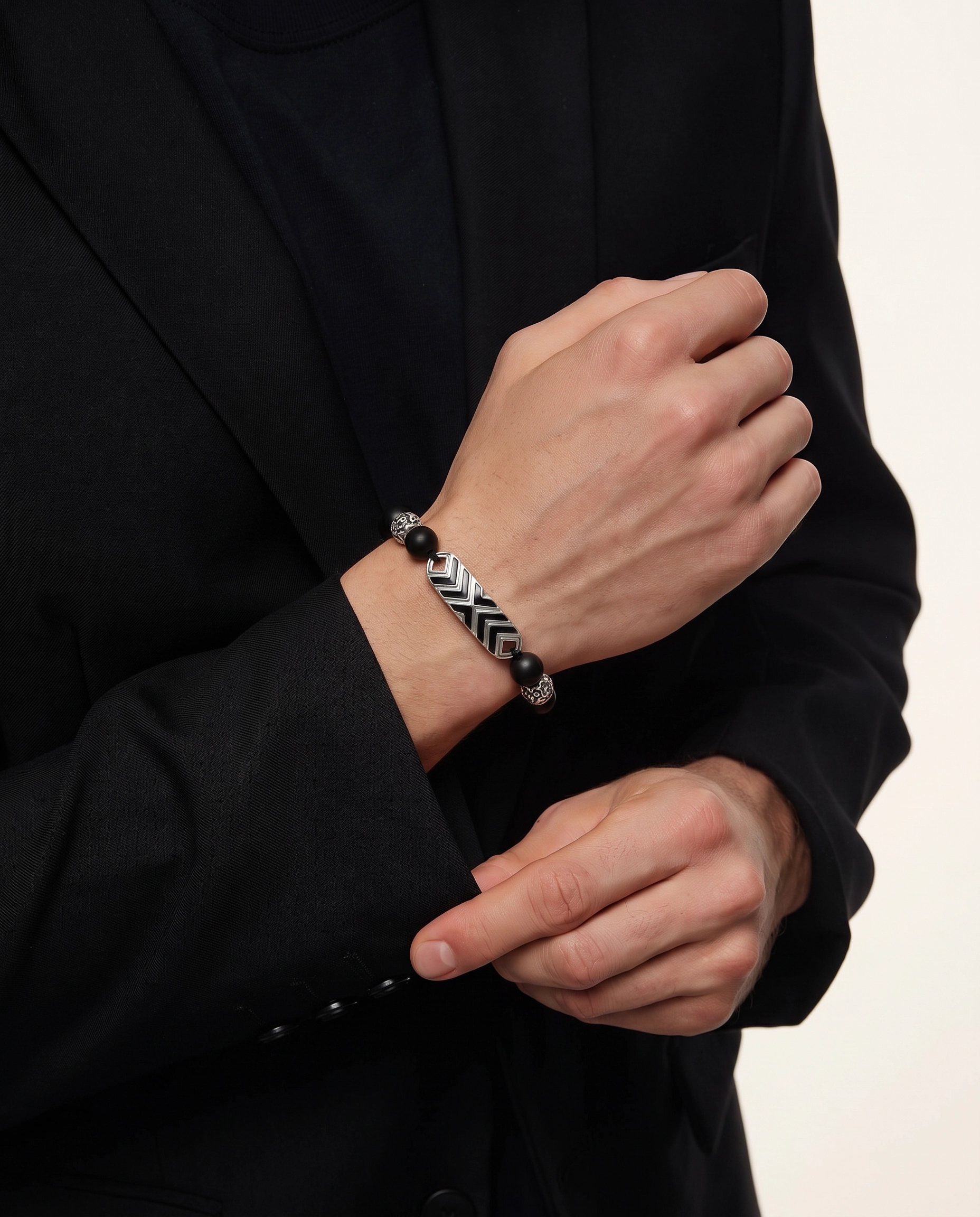
- Self-Sovereignty on the WristRunning a blockchain node on a wearable transforms a timepiece into a personal verification endpoint without relying on third-party cloud RPCs.
- Light Client ArchitectureSimplified Payment Verification (SPV) light nodes require only 50–70 MB of storage, relying on Merkle proofs to verify state while keeping battery and RAM footprint minimal.
- Hardware-Grade Key IsolationPrivate signing keys must be anchored in a tamper-resistant Secure Element (SE) hardware chip separate from the primary smartwatch operating system.
- Haute Horology Meets Web3Luxury brands like VERTU prove that titanium, sapphire crystal, and 24/7 concierge services can seamlessly coexist with self-sovereign cryptographic participation.
Introduction
The promise of true digital independence has finally reached the wrist — and it no longer means compromising on elegance. For years, running a blockchain node meant configuring noisy server racks, maintaining dedicated desktop rigs, or relying on centralized cloud providers that undermine the very ethos of decentralization. Today, hardware efficiency and lightweight cryptographic protocols have converged to create a new paradigm: self-sovereign network participation directly from a luxury wearable.
Running a node on a wearable is now a realistic ambition, not a sci-fi fantasy. As microprocessors become more power-efficient and zero-knowledge verification frameworks mature, smartwatches have evolved from passive notification screens into active, self-contained endpoints of decentralized trust.
This guide walks you through what's possible, what it takes, and how to do it securely and tastefully — ensuring your digital sovereignty matches your refined aesthetic standards.
Why Your Wrist Is the New Frontier for Blockchain
The wrist represents the most intimate, personal computing surface in modern life. Unlike smartphones that sit in pockets or laptops left on desks, a wearable device maintains continuous contact with its owner. Bringing blockchain verification to this surface establishes an unbroken bridge between individual physical presence and decentralized digital networks.
From breakthroughs in embedded hardware to visionary light-node frameworks, the technology needed to turn a timepiece into a cryptographic guardian has arrived. Owning your own node means owning your data, your identity, and your place in the network — without relying on exchanges, third-party RPC providers, or vulnerable cloud services.
The Landmark Developments Changing the Game
Recent technical milestones have fundamentally rewritten what constrained hardware can accomplish:
- Embedded Layer-1 ValidationDemonstrating that full consensus protocols can run natively on silicon chips, Minima's embedded Layer-1 architecture proved that blockchain nodes no longer require gigabytes of system memory or continuous AC power.
- Hardware Terminals & Wearable NodesInnovations like the dGEN1 hardware terminal, alongside rising developer interest in wrist-worn light clients, signal a fast-moving frontier where dedicated Web3 devices and luxury wearables intersect.
- Consensus EfficiencyOptimizations in compact block filtering (such as Neutrino) and succinct cryptographic proofs allow small devices to verify chain state in real time without heating up or draining battery life.
Why Decentralized Participation Matters to You
For high-net-worth individuals, tech leaders, and privacy-conscious users, centralized infrastructure poses a subtle but persistent risk. When you interact with Web3 applications through public RPC nodes or custodian wallets, third-party servers log your IP address, track your transaction timing, and create potential censorship choke points.
Direct node participation eliminates these intermediaries. Self-sovereignty, privacy, and direct network interaction flow naturally when your wrist verifies its own transactions. Wearables make always-on participation effortless and discreet — allowing you to confirm network state with a subtle glance rather than pulling out a phone or opening a laptop.
Understanding Which Node Type Actually Fits on a Wearable
Before attempting to deploy a node to a wearable device, it is essential to understand the architectural landscape. Not all nodes are created equal — and only one specific architectural pattern truly fits on a watch.
Full Nodes vs. Light Nodes vs. Archive Nodes
Blockchain networks rely on several distinct node tiers, each tailored to different compute, memory, and bandwidth budgets:
- Archive NodesStore the complete historical state of every transaction and contract storage slot since genesis. Requiring multiple terabytes of high-speed NVMe storage and continuous gigabit connections, archive nodes are strictly out of the question for wearable form factors.
- Full NodesDownload, validate, and store every block and current state UTXO or account balance. While full nodes provide maximum trustlessness, they require hundreds of gigabytes of disk space and significant bandwidth — making them impractical for standard smartwatch batteries.
- Light Nodes (SPV)Simplified Payment Verification (SPV) light clients do not store full transaction histories or execute smart contract bytecode locally. Instead, as detailed in Stanford's research on SPV light clients and Merkle proofs, light nodes download and verify only consecutive block headers. They request specific cryptographic inclusion proofs from peer full nodes as needed, reducing local storage to a few dozen megabytes.
Why Light Nodes Are the Practical Choice
Light nodes represent the sweet spot for luxury smartwatches and embedded wearables:
- Minimal FootprintStoring only block headers requires roughly 50–70 MB of flash storage, leaving plenty of room for watch faces and native apps.
- Low Memory & CPU DrawVerifying block header hashes and Merkle roots consumes negligible RAM and minimal CPU cycles, preventing battery drain and thermal throttling.
- Cryptographic GuaranteesInstead of trusting a centralized server, the light node independently verifies mathematical proofs. According to a16z Crypto's analysis on light client protocols, light clients maintain strong cryptographic security by checking that incoming Merkle branches match the header root of the longest canonical chain.
A Step-by-Step Guide to Running a Node on a Wearable
Transforming your smartwatch into a discreet guardian of your digital identity requires a systematic approach. The goal is to establish local verification capability while offloading heavy data synchronization to background helpers.
Choose Your Wearable Platform and Enable Developer Access
Begin by selecting an open, developer-accessible wearable platform such as Wear OS:
Navigate to Settings > System > About on your smartwatch.
Tap Build Number seven times until the system displays a confirmation message enabling Developer Options.
Access Developer Options and enable both ADB Debugging and Wireless Debugging.
Connect your watch and development machine to the same secure Wi-Fi network, then pair them using
adb pair <ip>:<port>andadb connect <ip>:<port>.
Build a Minimal Client and Pair with a Light-Client Backend
To maintain battery longevity and smooth watch UI performance, adopt a modular architecture:
- Keep the On-Watch App SimpleDevelop a lightweight native application focused strictly on block header intake, header validation, and cryptographic signature prompts.
- Offload Heavy SyncingPair the smartwatch client with a background helper on your smartphone or your private home server. The companion helper continuously fetches block headers and Merkle inclusion proofs from the broader P2P network, serving them to the watch over an encrypted local Bluetooth or Wi-Fi tunnel.
Provision Credentials and Test Power Reliability
Once the lightweight client is installed on the watch:
- Hardware-Backed KeysEnsure key generation and cryptographic signing tasks are routed through the device's hardware secure element.
- Power & Screen-Off TestingConfigure background execution policies so the node service survives ambient screen-off states without being killed by OS battery optimizations.
- Reconnection VerificationVerify that the light client cleanly resumes header synchronization whenever the watch reconnects to Wi-Fi or Bluetooth after an outage.
Practical Features to Put On-Watch
A luxury wearable node should emphasize high-value, glanceable interactions rather than dense data tables:
- Block-Header VerificationA subtle visual indicator showing the latest canonical block height verified locally by your watch.
- Self-Sovereign Balance ChecksCryptographically proven account balances queried directly against verified headers.
- On-Wrist Signed MessagesQuick cryptographic message signing for physical access control, event entry, or private authentication.
- Hardware Approval PromptsRich confirmation popups displaying transaction destination and value before signing.
Security First: Protecting Keys on a Device You Wear
A wearable device is uniquely exposed to physical loss, theft, or environmental exposure. Consequently, hardened security is non-negotiable when deploying cryptographic node capabilities to your wrist.
Keeping signing keys inside a tamper-resistant secure element, strictly separated from the main operating system, is the cornerstone of wrist-borne key management.
Why Hardware-Backed Key Management Matters
Running a node on a general-purpose smartwatch OS introduces software attack vectors. If an attacker gains unauthorized access through a malicious application or firmware vulnerability, software-stored keys could be extracted.
A hardware Secure Element (SE) solves this challenge by isolating private keys inside a dedicated, hardened silicon chip. The main application processor requests a signature by passing the transaction hash into the Secure Element; the SE validates the user's PIN or biometric authorization internally and returns only the completed signature. The raw private key material never leaves the secure chip under any circumstances.
Best Practices for a High-Risk Endpoint
To maintain enterprise-grade security on a wearable device, implement the following operational safeguards:
- Biometric & PIN ProtectionEnforce mandatory PIN or biometric authentication before the Secure Element releases a signature.
- At-Rest Encryption & TLS TransportEncrypt all cached block headers at rest using hardware-backed keys, and mandate TLS-encrypted channels for all network transport between watch, phone, and peers.
- Separate Approval from SigningThe main watch OS formats and displays the transaction details, but signing power remains strictly gated inside the isolated hardware chip.
The Luxury-Tech Convergence: Blockchain Meets Haute Horology
As decentralized technology matures, luxury watchmakers and vanguard technology houses are weaving blockchain capability directly into fine timepieces and signet rings. The union of horological elegance and cryptographic substance represents the final piece of the wearable node movement.
How Top Brands Are Integrating Blockchain
The luxury industry's adoption of Web3 extends far beyond superficial aesthetic branding:
- Digital Product PassportsEmbedded NFC and cryptographic chips link physical timepieces to immutable, tamper-proof blockchain certificates of authenticity and ownership history.
- Embedded Cold WalletsHigh-end timepieces feature integrated hardware vaults capable of storing private keys off-grid.
- Tokenized Ownership & ProvenanceCollectors can trade, verify, and insure rare timepieces on-chain, backed by cryptographic proof embedded in the physical device itself.
Choosing a Wearable That Matches Your Lifestyle
Pioneering luxury timepieces demonstrate how high craftsmanship and decentralized technology harmonize:
- Franck Muller EncryptoDesigned with a laser-etched QR code for cold-wallet receiving and offline private key storage embedded within a hand-finished dial.
- Jacob & Co. Bitcoin TimepiecesIntricate mechanical movements celebrating cryptocurrency heritage through bespoke sapphire crystal and precious metal craftsmanship.
- VERTU Bespoke SmartwatchesRepresenting the apex of this convergence, VERTU bridges artisanal heritage with self-sovereign digital infrastructure. Crafted from hand-finished titanium, sapphire crystal, and exotic leathers, VERTU smartwatches feature dedicated hardware-backed key custody, Web3 connectivity, and integrated 24/7 global concierge services.
By housing a light-node verifier and secure-key enclave within a piece of bespoke luxury horology, devices like VERTU elevate blockchain participation into a refined statement of personal independence — backed by white-glove lifestyle support wherever you travel.
Conclusion
Running a node on a wearable is not only feasible — it's the most elegant statement of digital self-ownership available today. By combining Simplified Payment Verification (SPV) light-client architecture with hardware-backed security enclaves, your smartwatch can quietly uphold the network from your wrist without sacrificing battery life, performance, or style.
The future of luxury technology isn't an either/or trade-off between substance and style — it's both. As haute horology continues to embrace decentralized cryptographic primitives, wearing your own node becomes the ultimate modern luxury: absolute digital sovereignty, rendered in timeless craftsmanship.
![How to Scan Receipts and Documents with Your Phone [Full Guide]](https://cdn.sanity.io/images/e0gp1l2g/production/0db13feec1d5e72b8a8a5f976d1f3e86619c9228-3840x1860.webp?w=180&h=180&q=78&auto=format&fit=crop)
![How to Scan Receipts and Documents with Your Phone [Full Guide]](https://cdn.sanity.io/images/e0gp1l2g/production/0db13feec1d5e72b8a8a5f976d1f3e86619c9228-3840x1860.webp?w=800&h=450&q=82&auto=format&fit=crop)
![Top 10 Two-Tone Carbon-Fibre Watches for Men [2026 List]](https://cdn.sanity.io/images/e0gp1l2g/production/18870799ba33fab0e038968359cd5772d7d7db30-1024x576.webp?w=800&h=450&q=82&auto=format&fit=crop)
![Top 10 Luxury Watches with Digital Complication Displays for Men [Latest]](https://cdn.sanity.io/images/e0gp1l2g/production/c4f6bf8c080f291c39f7cc85c7344ecff2fd3799-1024x553.webp?w=800&h=450&q=82&auto=format&fit=crop)