Introduction
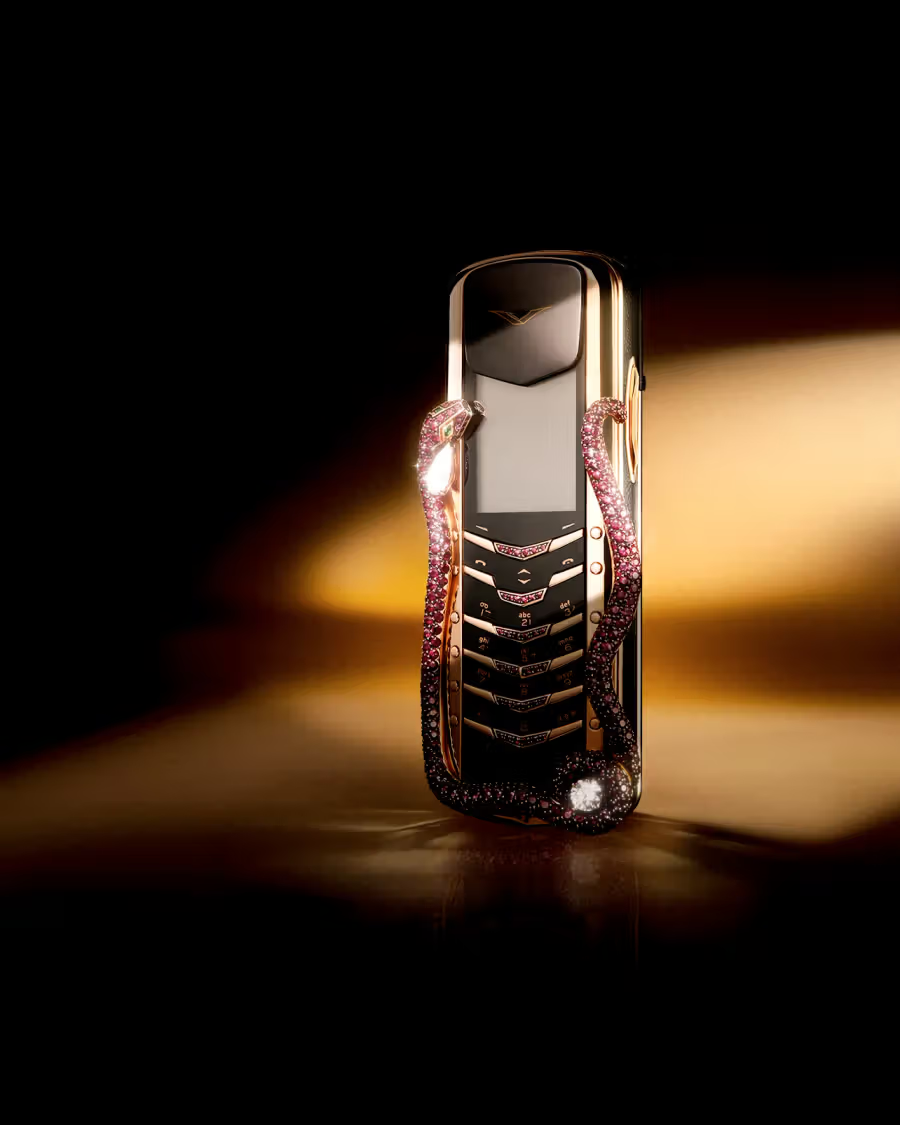
This guide is for buyers (and the advisors who protect them) commissioning a bespoke 18k gold smartphone with a football-tournament-inspired design around the 2026 World Cup cycle. Use it as a pre-brief: before you approve sketches, before you pay deposits, and definitely before anything crosses a border.
The fastest way to use it is to read each section as a filter:
Design paths help you avoid short-lived motifs and IP problems.
Materials and craftsmanship standards help you distinguish a collectible build from an expensive costume.
Licensing, compliance, and import help you avoid preventable seizures, delays, or a phone that performs poorly on networks.
Budgeting and aftercare help you protect the asset once it’s in your hand.
When people say “Customized 18k gold phone for World Cup,” the phrase usually hides three different scopes:
- Aestheticsengraving, color, strap/leather texture, and a motif that nods to football.
- Constructionchanging external components (backplate, frame, buttons) with precious metal work.
- Certification and paperworkensuring the modified device is still lawful to import, sell, and reliably use.
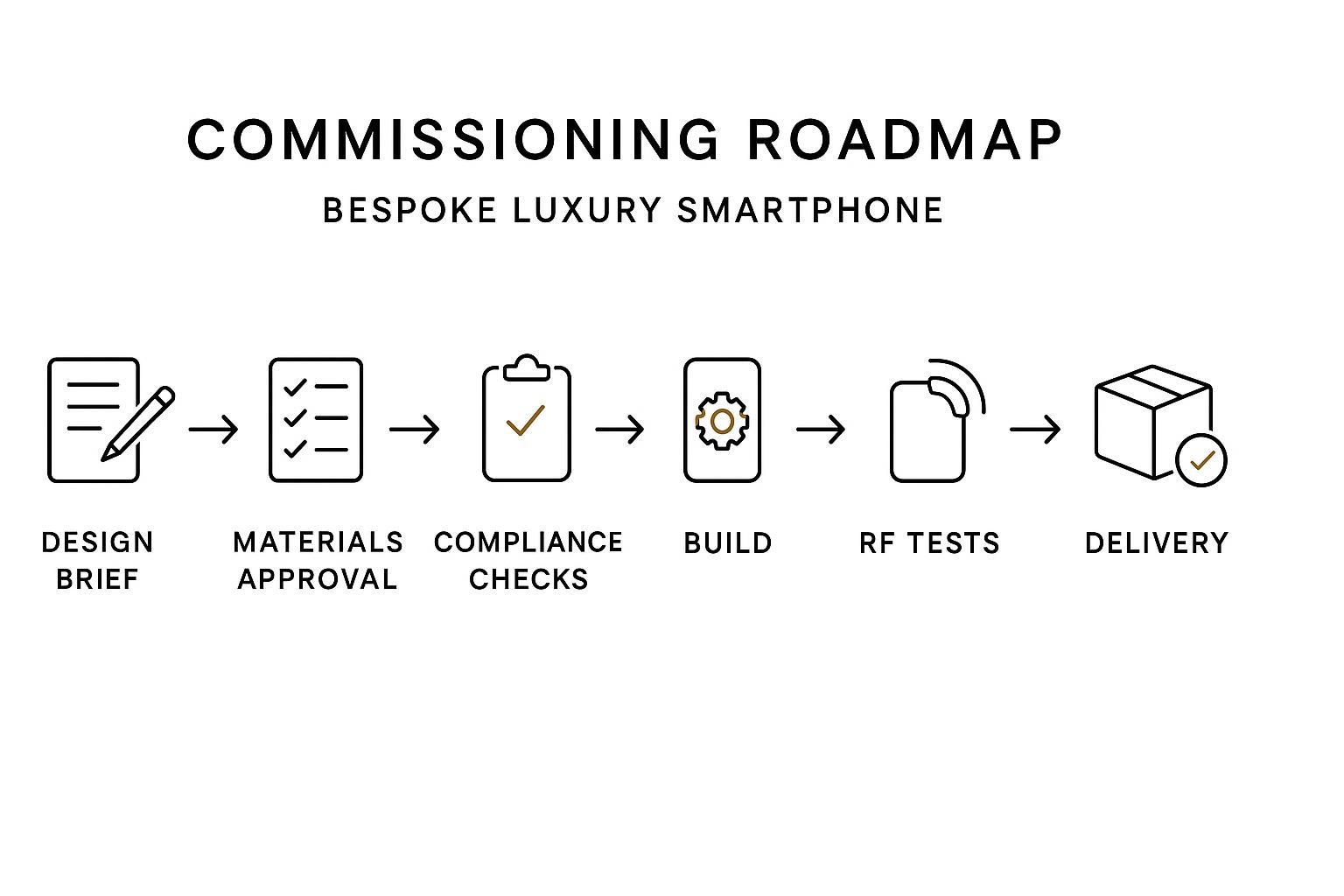
Timing matters. Bespoke builds often stall not at the workshop bench, but at approvals: design sign-off, material availability, and compliance checks. If your goal is delivery before peak match travel, you want final design approval early, and you want compliance and import steps scheduled as first-class tasks, not afterthoughts.
Design paths for lasting appeal
This is where your primary keyword shows up again: a customized 18k gold phone for World Cup season is only “timely” once; it should still look credible a decade later.
World Cup themes without IP risks
If you want a tournament connection that holds value, treat “World Cup-inspired” as a design mood, not a license.
Avoid official tournament IP unless you have written, verifiable licensing. FIFA explicitly runs brand protection for tournament marks and related commercial rights (FIFA’s brand protection guidance). In practical terms, that means you should assume the following are high risk unless licensed: official names, logos, emblems, trophy imagery, and anything that reads like an official edition.
Instead, brief your designer with lawful, original cues:
Abstract geometry derived from pitch markings (center circle, penalty arc, net grid).
Material texture that references a football without copying any branded pattern.
Color restraint that nods to host cities or personal symbolism rather than official palettes.
How to verify: Ask the maker to provide a written statement that the design uses no FIFA marks, team crests, or protected tournament artwork, and that all graphics are original creations.
Materials palette and restraint
Gold can look loud fast. Collectible work is usually quieter.
A reliable palette for a bespoke gold smartphone tends to be limited to two or three materials with clear roles:
18k gold for the parts that carry “weight” visually and physically (frame elements, backplate accents).
Titanium (or another high-strength metal) where you need stiffness without bulk.
Sapphire for scratch resistance on touch surfaces and covers, when engineered correctly.
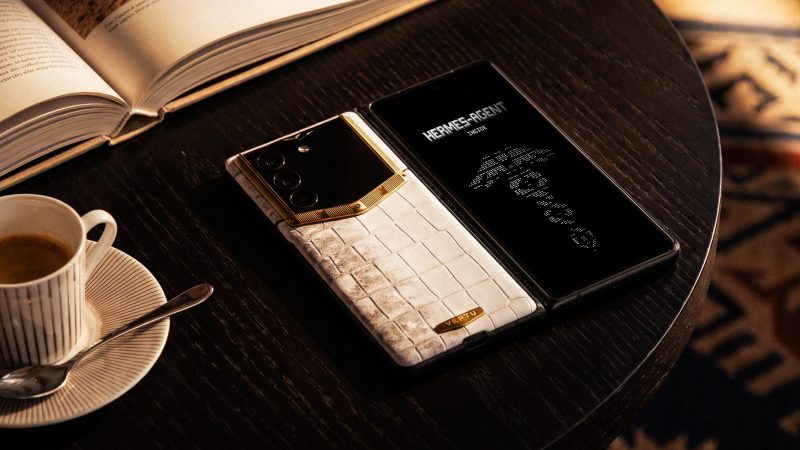
Leather as the tactile layer, ideally chosen for long-term patina and easy maintenance.
Restraint also reduces risk: fewer mixed materials means fewer joints, fewer galvanic-corrosion surprises, and fewer things that need special declarations.
Personalization that ages well
Personalization is where many commissions lose resale value. The goal is to encode identity without pinning the piece to a single moment.
The safest forms of personalization:
Monogramming inside the case (not as a billboard).
Dates and coordinates in micro-engraving (only visible under a loupe).
Motifs that are personal first (a family crest that you own the rights to, a private symbol), and football second.
Be cautious with:
Large player names, team crests, or slogans.
Overly literal “2026” markings on the exterior.
Materials and craftsmanship standards
This section covers the “bespoke gold smartphone” problem buyers run into most often: the outside looks right, but the 18k gold phone hallmarks and paperwork don’t hold up.
18k solid vs plating and hallmarks
“18k” can mean two very different things.
Solid 18k gold means the component is an alloy that is 75% gold throughout.
Gold plating means a base metal with a thin gold layer on top; it can look correct at delivery and degrade quickly at contact points.
If a maker uses terms like “vermeil,” note that the U.S. Federal Trade Commission defines how that word can be used in marketing, including what qualifies as vermeil under the jewelry guides (the FTC Jewelry Guides (16 CFR Part 23)).
For a bespoke gold smartphone, you’re not buying a ring; you’re buying wear surfaces. So ask for clarity on each part:
Which components are solid 18k.
Which are 18k-coated.
Where the marks/hallmarks will be placed (and whether they are visible only during service disassembly).
How to verify: Request macro photos of hallmarks/marks on the exact component set you’ll receive, plus an assay or material report for precious metal parts.
Titanium, sapphire, and gemstone basics
A premium build is defined by interfaces: where hard materials meet softer ones, and how they survive impact and temperature change.
Titanium helps keep structural integrity without making the device uncomfortably heavy. Ask which grade is used and how it’s finished (brushed vs polished) because finish determines visible wear.
Sapphire is highly scratch resistant, but edge design and mounting matter. Poorly engineered sapphire can chip at corners or stress points.
Gemstones add risk as much as beauty. The questions are not “which stone,” but “how is it set,” “how serviceable is it,” and “what happens after one impact.”
If gemstones are included, your verification package should include stone identity and treatment disclosure, plus setting diagrams for serviceability.
Workshop QC, serials, and documents
Treat provenance like you would for a watch.
Ask for:
Serial or unique identifier for the finished device and for the customized components.
A build sheet that lists materials by part (frame, backplate, buttons, leather inlay).
A photo log from component fit through final inspection.
A clear statement of what work was performed (cosmetic only vs structural alterations).
If the maker can’t provide basic identifiers, assume resale and insurance will be painful.
Licensing, compliance, and import
If you’re buying in the U.S., the phrase “import duty luxury phone US” is not about the percentage. It’s about avoiding delays and making sure your paperwork matches the physical build.
FIFA IP boundaries and lawful options
If you want the look without the legal exposure, brief it as a World Cup themed phone in mood only: football geometry, material texture, and personal symbolism, with no official marks.
For buyers, the practical rule is simple: do not pay for “official” language you can’t verify.
FIFA publishes brand protection information that signals active enforcement around tournament IP (see FIFA’s brand protection guidance). If a seller claims licensing, request the license scope and the rightsholder name, and have counsel review it.
A practical litmus test: if the design needs an official logo or official wording to “work,” it’s probably too close.
Lawful options tend to look like this:
Football-inspired geometry and textures.
References to cities in plain text (not official marks) when used descriptively.
Private symbols you own or have permission to use.
RF impact, FCC/CE, and safe modification
Most customization mistakes are aesthetic. The expensive mistakes are RF.
Phones are regulated RF devices. In the U.S., the FCC’s equipment authorization framework governs how RF devices are approved and marketed (FCC Equipment Authorization (RF devices)). If you modify housings, antennas, shielding, or internal layout, you can change performance and compliance.
For buyers, “safe modification” means:
Prefer external component customization that does not alter antenna geometry or RF shielding.
Keep electronics and radio modules within their intended tolerances.
Ensure the device remains identifiable (FCC ID, labels, documentation) where applicable.
If you want an extra check, the FCC explains how consumers can use an FCC ID to look up RF exposure information for phones (FCC guidance on cell phones and SAR). For a bespoke build, the larger point is that the maker should be able to tell you exactly what’s changed, and what has not.
Customs duties, HTS, and CITES leather
If you’re importing into the U.S., you want the import plan written before the shipment leaves the workshop.
Start with the official CBP guidance. CBP’s commercial importer guide explains the process and expectations for documentation (CBP’s Importing into the United States guide), and CBP also maintains entry summary guidance (CBP entry summary process).
Classification and duty are driven by HTSUS, published by the U.S. International Trade Commission (the USITC Harmonized Tariff Schedule (HTSUS)). Your broker will typically handle this, but you should still understand the consequence: the same object can trigger different documentation and rates depending on how it is classified.
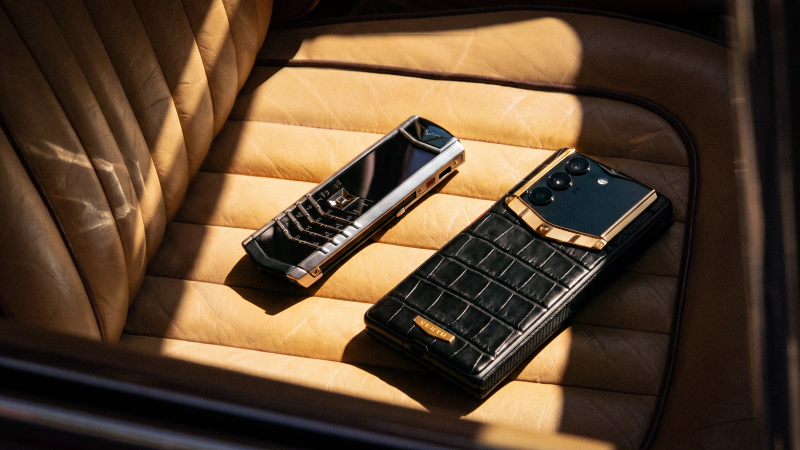
Leather deserves its own diligence. If the project uses exotic leather (certain crocodilian, python, and other species), you may trigger CITES requirements. The U.S. Fish and Wildlife Service explains CITES applicability and permits (USFWS CITES permit requirements), and wildlife products typically require declaration via Form 3-177 (USFWS Form 3-177 (wildlife declaration)).
A conservative, buyer-friendly approach is to specify non-CITES leather unless there is a strong reason not to. It reduces port friction.
Key TakeawayIf you’re commissioning a customized 18k gold phone for World Cup travel, treat import and wildlife compliance as part of the design brief, not paperwork at the end.
Budgeting and buying checklist
Price drivers and realistic ranges
Prices can vary wildly, and publishing “ranges” without verified quotes often misleads more than it helps. What you can evaluate, reliably, are the drivers:
Gold weight and complexity (solid components, machining time, finishing).
The base device and its service path (availability of parts, update/support expectations).
Sapphire and gemstone work (material, cutting, setting, replacement policy).
Compliance and documentation (RF testing, import paperwork support).
Aftercare (warranty terms, SLA, international service logistics).
If an offer is dramatically lower than peers, it’s usually because the “gold” is plating, the documentation is thin, or aftercare is vague.
Verification package to request
Ask for a verification package before final payment. Keep it simple and non-negotiable:
Material declarations for each customized part (what is solid 18k, what is coated).
Macro photos of marks/hallmarks where applicable.
Serial/identifier mapping: device identifiers matched to paperwork.
A build sheet + final QC sign-off.
A statement of RF-sensitive areas not modified.
Import-support documents (commercial invoice quality, materials list).
If leather is exotic: CITES permits and USFWS declaration readiness.
Collector’s note: The best commissions read like a watch dossier. If the maker treats documentation as an annoyance, treat that as a signal.
Timeline, warranty, and insurance
You want three dates in writing:
Design lock (when changes stop).
Build completion (when the device is assembled and QC’d).
Delivery window (including customs clearance).
Then you want the warranty split into parts:
Coverage for materials and craftsmanship (gold work, leather, gemstone settings).
Coverage for electronics and radio function (especially if any casing changes occur).
Clear exclusions (impact damage, liquids, third-party service).
Insurance is not only about replacement value. It’s also about claim proof. That’s why the verification package matters.
Ownership and aftercare
Concierge, repairs, and SLAs
A bespoke phone becomes stressful when support is vague. The best practice is to choose an ownership model that can handle three realities: travel, time zones, and discreet escalation.
That means you want:
A single point of contact for repairs and logistics.
Clear SLA language (acknowledgement time, diagnostics time, parts lead time).
A documented “what happens if it breaks abroad” pathway.
Even if you never use it, the presence of a real service relationship changes your risk profile. This is also where it’s reasonable to take lessons from luxury houses that treat aftercare as part of the product. VERTU, for example, frames its ownership experience around concierge-style support and structured service pathways in its customization guidance (Custom Luxury Phone Guide: Personalization That Matters). The point isn’t the brand. The point is the standard: aftercare should be designed, not improvised.
Travel insurance and privacy hygiene
For World Cup travel, your phone is both a valuable object and a privacy surface.
Practical privacy hygiene:
Disable automatic Wi‑Fi and Bluetooth joining.
Use a travel eSIM strategy that you understand (and that your security team approves).
Keep a clean travel profile: fewer apps, fewer accounts, fewer notifications on lock screen.
If you want a travel-oriented checklist, VERTU’s World Cup privacy guidance is a useful baseline to adapt to your own security policy (Secure communication phones for World Cup VIPs 2026 guide).
Care for gold, sapphire, and leather
Daily care is mostly about preventing abrasion and chemical exposure.
18k gold is durable but can scratch. Clean gently with mild soap and lukewarm water, then dry with a microfiber cloth. Avoid chlorine, harsh cleaners, and storing the device loose with keys.
Sapphire resists scratches, but grit can still mark coatings and edges can chip on impact. Wipe with a clean microfiber cloth; avoid abrasive cleaners.
Leather needs stability: keep it away from heat and prolonged moisture, and follow the maker’s specific care guidance for that leather type.
How to verify: Ask the maker for a one-page care card that matches the exact leather and finish you chose, plus a recommended service interval for inspection of gemstone settings (if any).
Conclusion
Key takeaways and how to evaluate offers confidently
Treat “World Cup-inspired” as a design mood, not a license. Avoid official tournament IP unless it’s provably licensed.
Separate aesthetics from structure from compliance. A beautiful build that compromises RF performance is a poor outcome.
Insist on a verification package: identifiers, build sheet, material declarations, and clear aftercare.
Plan import and leather compliance early using authoritative guidance from CBP, USITC, and USFWS.
Immediate next steps before placing a commission
Write a one-page brief: design mood, materials, personalization, and what you will not accept (IP marks, thin documentation, vague warranty).
Ask the maker for a draft verification package and sample paperwork before you pay a deposit.
Confirm the service model: repair pathway, SLA, and what happens during international travel.
If importing to the U.S., align with a broker early and confirm the documentation format they want.
Disclosure: This article references VERTU pages. Editorial judgment remains the priority.