You don’t buy a custom luxury phone the way you buy a mainstream flagship.
At this level, the decision isn’t “Which specs win?” It’s “Will this device feel inevitable in my life—and will it still feel luxurious after month six?”
Personalization can deliver that. But only if you treat it as more than decoration.
Key TakeawayReal personalization is functional. It changes how the phone feels in your hand, how it ages, how confidently you use it, and how cleanly it can be serviced—without drama.
What personalization really means in luxury mobile
In mainstream phones, “customization” tends to be shallow: a color, a storage tier, maybe an engraving.
In luxury mobile, personalization is closer to commissioning a watch or a piece of jewelry. The value is created in three places:
1) Physical design (what you touch, every day)
Materials. Stitching. Edge geometry. Weight balance. Surface friction. Button feel.
These details decide whether the phone becomes effortless—or whether it becomes a beautiful object you tolerate.
2) Identity and rarity (what can be proven)
If “limited,” “collector,” or “bespoke” is part of the value, it needs to be verifiable: identifiers, documentation, and clarity on what was made-to-order.
3) Ownership experience (what happens after delivery)
Setup support, service access, and realistic aftercare.
A luxury device that can’t be supported is not luxury. It’s theater.
VERTU’s guide to custom luxury phone design treats these layers as inseparable—and that’s the right standard to use for any purchase you’re serious about.
Bespoke vs. premium options: the one question that ends the confusion
“Bespoke” is a word that gets borrowed.
Some brands use it to mean “you chose from a menu of expensive finishes.” Others mean “we commissioned parts of the build to your specification.”
Ask this verbatim:
What part of this phone is made-to-order for me, and what part is selected from predefined options?
If the answer is vague, you’re not looking at bespoke. You’re looking at a premium catalog.
Pro TipDon’t accept adjectives like “premium,” “aerospace,” or “exclusive.” Ask: what material, what grade, where is it used (structural vs trim), and what documentation proves it?
The personalization menu (VERTU’s official material categories)
A decision-stage buyer doesn’t need a long gallery. You need a map.
VERTU organizes its official customization themes in the Official Custom Mobile Phone Store around material character:
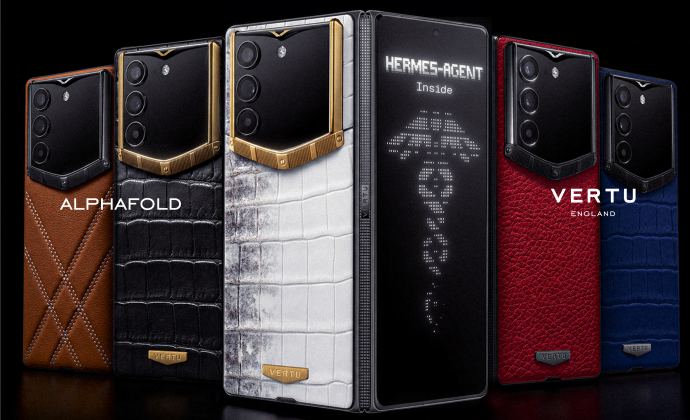
- Exotic Leathersbold pattern, natural variation, unmistakable texture
- Premium Calfskinclassic, refined, tactile—quiet luxury done properly
- Bespoke Editionsrarity-forward configurations built for collectors
- Precious Metalsgold plating and accents, warmth and prestige (when it matches your taste)
This is also where “personalized luxury smartphone” choices become practical. Materials aren’t just visual— they behave differently in daily carry.
A quick needs assessment (30 seconds, but it saves you regret)
Answer these honestly:
Do you carry the phone bare or in a case?
Is your life mostly climate-controlled, or do you live in humidity/heat/cold?
Is this a primary work device, or a second line?
Do you want the phone to disappear into black tie—or show a hint of identity?
What kind of aging feels acceptable: patina, softening, micro-scratches?
Once you know your “normal,” the material decision becomes straightforward.
How a bespoke phone should be built (the process you should expect)
A real bespoke process is a sequence, not a mood-board.
In VERTU’s overview of the bespoke build process, the journey is presented as:
Initial consultation (model selection, finishes, personalisation details)
Material sourcing (high-grade materials selected for your configuration)
Hand assembly (craft execution and finishing)
Personalisation (engraving/initials/motifs where applicable)
Rigorous testing (functionality confirmed before completion)
Whether you’re buying VERTU or another custom phone design, you should be able to see these stages clearly. If the seller can’t describe the process without turning it into poetry, that’s a signal.
VERTU Bespoke Personalisation: how to use it without overcustomizing
If you’re commissioning through VERTU, think of VERTU Bespoke Personalisation as a way to make the device yours without turning it into a billboard.
A good rule: personalize with meaning (a date, coordinates, a family symbol) rather than obvious branding. It reads as private confidence, not display.
Your one-page commissioning brief (copy/paste)
Most “bad bespoke” outcomes happen because the buyer shows up with taste, but no constraints.
VERTU’s custom luxury phone design guide recommends a two-part brief. Here’s a version you can actually use:
Part A — Lifestyle & risk
Where you travel most (countries/cities)
What you consider sensitive (business, family, public profile)
What “failure” looks like for you (missed calls, locked-out accounts, service delays)
Part B — Tactile preferences
Leather vs metal vs ceramic feel
Weight preference
Grip preference
Engraving: yes/no, and what it should mean (initials, date, coordinates, crest)
If you want a “bespoke phone” to feel truly yours, this brief matters more than the marketing.
The verification protocol (before you personalize anything)
Luxury phones attract imitations. And personalization can be irreversible.
So treat authenticity like a workflow.
VERTU’s Original VERTU Phone: Authenticity Checklist lays out a clean sequence:
Step 1: Before you pay
Request the IMEI/serial identifiers up front.
Verify them through official channels.
If a seller refuses to share verifiable identifiers before payment, stop.
Step 2: When it arrives
Match identifiers across device → packaging → documentation.
Treat mismatches as disqualifying.
Step 3: In the first 24 hours
Confirm the phone works as intended and you can access the service layer you expect.
Document everything while you still have leverage.
Don’t rush engraving or irreversible setup until checks pass.
⚠️ Warning“Too good to be true” pricing plus urgency is not a deal. It’s a transfer of risk—onto you.
US reality check: don’t let a beautiful device fail the basics
For US buyers, the most expensive mistake is simple: falling in love with a device that doesn’t behave reliably on your carrier.
Before you finalize any order—especially pre-owned or imported—treat these as gates:
- Carrier acceptancerun the carrier’s BYOD/IMEI compatibility check.
- Voice readinessconfirm that voice calling works properly on your carrier (don’t assume “LTE data” means “voice-ready”).
- Travel behaviorif you move between the US, Europe, and the Gulf/Asia corridors, confirm what “global” support actually means in practice.
This isn’t glamorous. It’s the difference between “luxury ownership” and “a beautiful problem.”
Service is part of the object: how to evaluate concierge like a professional
A luxury phone often sells an invisible benefit: the promise that someone else absorbs friction.
But “24/7” is a claim until you test it.
VERTU’s guide on how to evaluate a 24/7 concierge service recommends judging the service like a private firm:
- Accessis there a direct, single-step path to a human team?
- Scopecan they handle complexity, not just bookings?
- Executiondo they close the loop, not just acknowledge the request?
- Discretionhow do they handle identity, itineraries, and retention?
The 48-hour proof test
Run three requests before you commit emotionally:
One urgent, time-bound request (a same-week reservation or travel change)
One nuance-heavy request (taste-bound alternatives that still meet your standards)
One sensitive request (something you’d only ask if you trusted the channel)
If the service can’t handle those cleanly, it won’t improve when your week is messy.
A decision framework: how to choose a custom luxury phone without being seduced
At decision stage, you don’t need more inspiration.
You need deal-breakers.
Use this framework to keep the process honest:
What you’re deciding | What “good” looks like | Proof you can request | Who it’s for |
|---|---|---|---|
Customization depth | Made-to-order elements are clearly defined | Written scope: made-to-order vs predefined | Buyers who want authorship |
Material truth | Placement and grade are specific | Spec sheet + care notes | Daily carriers |
Provenance | Identifiers are consistent everywhere | IMEI/serial match across docs | Collectors + resellers |
Aftercare | Repair path is clear and realistic | Warranty terms + service coverage | Frequent travelers |
Service layer | Human access + closed-loop execution | A real test request | High-tempo lifestyles |
Next steps: move from “I like it” to “I’m confident”
Write your one-page brief (lifestyle/risk + tactile preferences).
Decide your priority: discreet daily carry vs collector-grade statement.
Verify provenance and service path before you lock in personalization.
If VERTU is on your shortlist, start by browsing the VERTU Official Custom Mobile Phone Store and use the categories to clarify what you actually want.
Disclosure: This article references VERTU pages. Editorial judgment remains the priority.
![Top 10 Tourbillon Watches for Men [2026 Latest]](https://cdn.sanity.io/images/e0gp1l2g/production/8cb6bc45133cf9453382fc7d074465af588bb610-1800x1080.webp?w=800&h=450&q=82&auto=format&fit=crop)