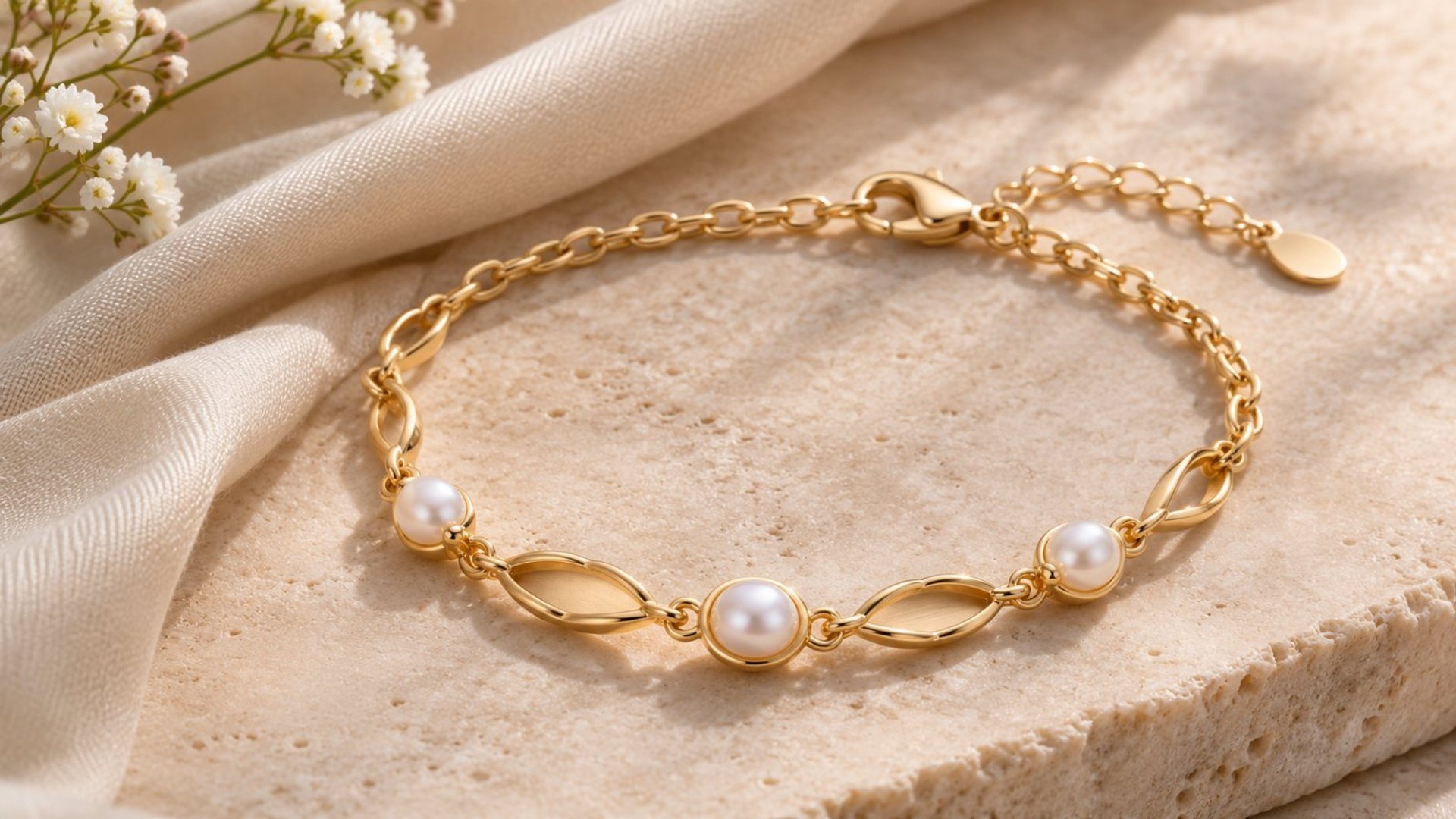
A smart bracelet for sensitive skin should be assessed by every material that touches you, not just the decorative metal named on the product page. Fit, friction, moisture and time worn also matter. If a bracelet causes an itchy or painful rash, stop wearing it and seek a clinician's advice when the reaction persists or recurs. “Hypoallergenic” on a label is not a personal guarantee, and a smart bracelet adds a device body, charging contacts or sensors that also deserve inspection.
Start with the contact point, not the product name
Look at the underside of the bracelet, its clasp, links, adjustable chain, decorative settings and any device module. Which surfaces actually rest against the wrist? A maker may advertise a precious-looking finish while a different metal, coating or component touches the skin. Ask for the full contact-material list, including the base metal, plating, clasp and any adhesive or polymer backing. If that information is unavailable, do not assume the unspecified parts are compatible with your known sensitivities.
The American Academy of Dermatology notes that a rash beneath jewellery or a watch can be a clue to contact dermatitis. It also notes that several metals, not only nickel, may be involved. This is a reason to take a recurring reaction seriously, not a way to identify the culprit at home. A dermatologist can evaluate persistent or repeated symptoms and advise on appropriate testing.
Distinguish allergy from irritation in your buying questions. An allergic reaction involves a particular substance; pressure, trapped moisture or rubbing can irritate skin even without an allergy. The practical response is still to stop wearing a piece that hurts, observe where contact occurs and seek proper assessment if symptoms do not settle. Do not cover a rash with the same bracelet to test your tolerance, and do not treat a marketing claim as a medical result.
What do bracelet material descriptions actually tell you?
“Gold-plated” tells you there is a surface finish, but not the full composition of the part beneath it or the other components in the bracelet. Plating can wear with time and use. If you know you react to a particular metal, ask whether it is present in the base, clasp or any exposed setting, and whether the maker has tested the finished piece for release of that metal. Do not assume a gold colour or a 14K plated description means the entire bracelet is solid gold or free from nickel.
“Stainless steel” describes a family of alloys, not one universal formulation. It can be durable and practical, but the alloy designation and exposed finish matter to someone with a documented sensitivity. “Nickel-free” is a claim to verify for the whole assembled item, not merely one decorative face. Likewise, “hypoallergenic” can be used broadly in marketing. Ask what the claim covers and whether the seller can provide a material declaration relevant to your allergy.
Non-metal straps may reduce exposure to a metal you know you cannot wear, yet they bring their own questions about dyes, adhesives, breathability and cleaning. Leather, textile and polymer differ in feel and maintenance. A breathable strap that dries between uses may be preferable to one that stays damp, but no category is automatically comfortable for every person. If a smart device requires a specific strap for sensor contact, check the maker's fit guidance before changing it.
The American Academy of Dermatology's nickel-allergy guidance discusses jewellery and watches as common exposure routes and advises clinical review for recurrent or severe symptoms. Its examples help frame what to ask, but a material that works for someone else may still not suit you. If you have a diagnosed allergy, bring the precise substance name to the seller or service team rather than asking simply for a “sensitive skin” option.
Fit and wear habits can change the experience
A bracelet that slides repeatedly may rub; one that presses firmly can trap moisture and leave uncomfortable marks. Try it at the position where you actually wear it, then move the wrist through typing, carrying a bag and putting on a sleeve. Check whether the clasp or decorative face turns underneath. For a smart bracelet, ask how closely the device must sit to function as intended, because an attractive loose fit and useful sensor contact may call for different adjustments.
Remove jewellery when your skin needs a break, and allow the bracelet and wrist to dry after routine exposure to sweat or water, following the maker's care instructions. Do not assume every smart bracelet can be rinsed or soaked. If lotions or fragrance are part of your routine, let them settle before putting the bracelet on and watch whether residue collects beneath the contact areas. Cleaning products can irritate skin and may damage plated, pearl or stone-set pieces; follow product-specific guidance.
It helps to keep a small record if irritation recurs: the bracelet worn, hours of wear, location of the mark, activity and any recent cleaning product. This is an observation log, not a diagnosis. It can help you describe the pattern to a dermatologist and identify which component needs closer scrutiny. If the reaction involves blistering, infection or ongoing pain, seek medical evaluation rather than experimenting with coatings or improvised barriers.
Evaluating the VERTU LUMINA AI Bracelet
The current VERTU LUMINA AI Bracelet product page lists natural white mother-of-pearl, zircon and mirror-polished 14K gold-plated stainless steel. It describes a flexible chain with an adjustable wearing range of 140–200 mm. These facts make material and fit questions concrete, but they do not establish that LUMINA is nickel-free, hypoallergenic or suitable for someone with a specific allergy. The current VERTU product knowledge base contains no additional LUMINA material declaration to support those claims.
If you are considering LUMINA, ask VERTU which surfaces touch the wrist, whether the clasp and chain share the stated finish, and whether a full alloy or allergen declaration is available for the exact version. Try the actual piece if possible. The LUMINA fit guide offers a starting point for size and drape, but a range on paper cannot prove comfort against your skin. Ask what after-sales options apply if the piece causes discomfort; do not presume a return or replacement term without checking the current policy.
Care is part of skin comfort too. The bracelet combines plating, pearl and stones, so avoid assuming a generic disinfectant or soak is appropriate. Our LUMINA care guide explains why gentle, model-specific cleaning advice matters. LUMINA's wellness functions are for general lifestyle awareness; they do not diagnose allergies, monitor a rash or replace medical advice.
A practical buying checklist
- Ask for complete contact materials. Include the base metal, plating, clasp, sensor housing and any strap or backing.
- Match claims to your known sensitivity. “Nickel-free” or “hypoallergenic” needs a clear scope, especially if you have a diagnosed allergy.
- Try the real fit. Check movement, pressure points and whether the device can sit as intended without discomfort.
- Understand care. Ask how the entire assembly should be cleaned and dried, and which products to avoid.
- Clarify service and returns. Get the current policy for the market and exact configuration before purchase.
For a gift, the safest assumption is that the recipient knows their own skin history better than the buyer. Keep material information and current exchange terms accessible. A thoughtful choice gives the wearer room to decide whether the piece feels right through an ordinary day; it does not make a medical promise on their behalf.
Frequently asked questions
Is gold-plated jewellery safe for sensitive skin?
There is no universal answer. Plating, base metal, clasp and wear condition all matter, as does the individual's allergy history. Ask for a full material declaration if you know what you react to.
Can a smart bracelet cause irritation without a metal allergy?
Yes. Pressure, rubbing, moisture and products trapped under the device can contribute to irritation. Stop wearing it if a rash appears and seek medical advice if symptoms persist or recur.
Does “hypoallergenic” mean I cannot react?
No. The term does not guarantee personal tolerance. Check the specific contact materials and the basis of the maker's claim.
Should I keep wearing a bracelet to see if my skin adjusts?
No. If it causes an itchy or painful rash, remove it. A recurring or persistent reaction warrants assessment by a qualified clinician.
Conclusion
The best bracelet for sensitive skin is the one whose actual contact surfaces, fit and care routine work for the individual wearer. Read beyond the headline material, ask precise questions and treat a reaction as useful information. A considered purchase starts with a complete account of what touches the wrist and ends with a comfortable choice, not an unsupported promise.