A robot vacuum can save time or become another appliance that needs rescuing. The difference is rarely headline suction. It is whether the navigation fits the home's thresholds and clutter, whether the dock fits the maintenance routine and whether cameras, microphones and cloud maps fit the household's privacy expectations.
Match the machine to the home
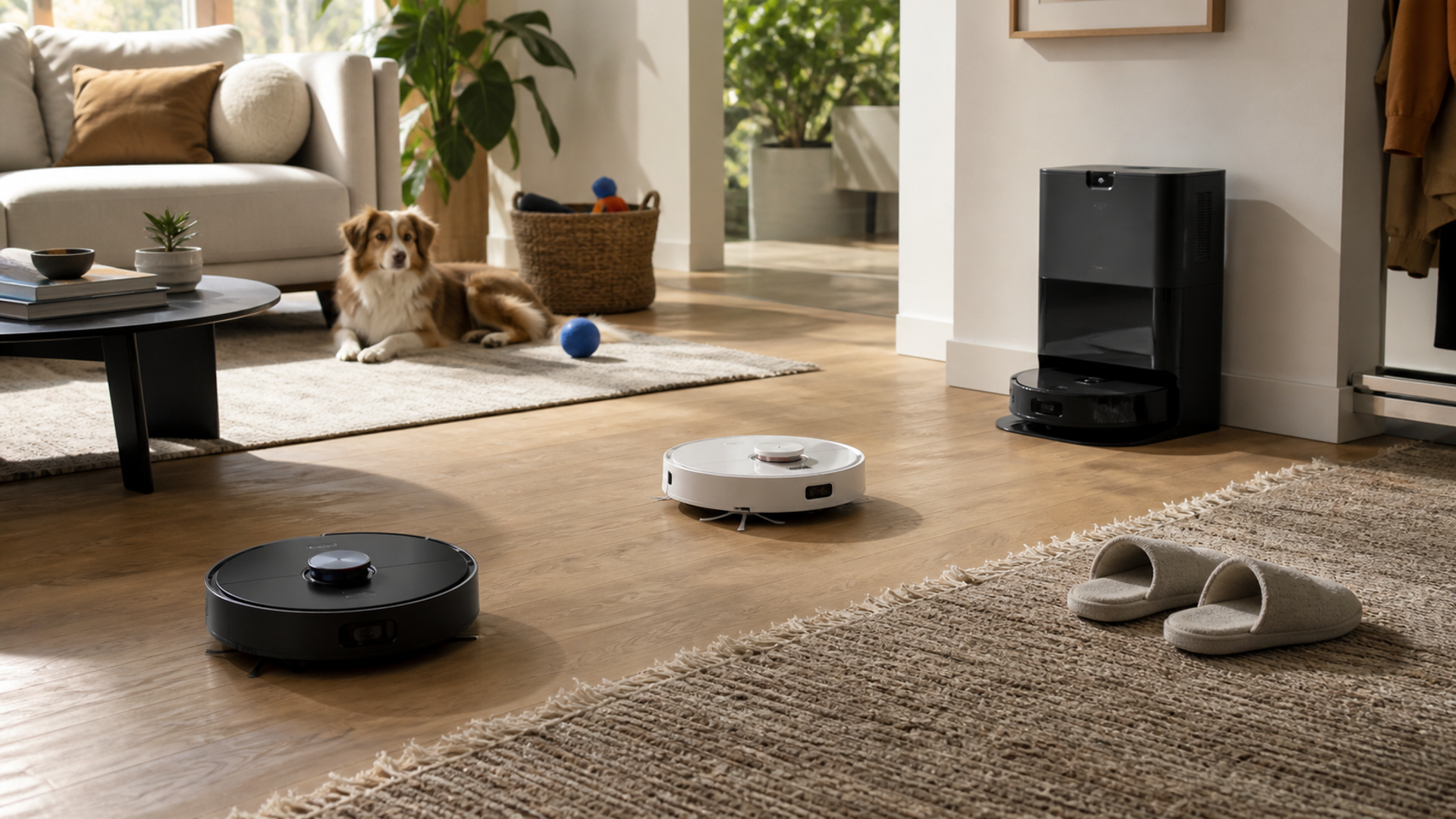
Choose by home layout first, then obstacle handling, dock workload, consumable availability, privacy controls and local support. Camera-rich navigation may help in a cluttered home, while a simpler lidar system may be preferable where visual monitoring is unwanted.
| Decision factor | Lidar-focused robot | Camera-assisted robot | Full-service dock system |
|---|---|---|---|
| Navigation | Strong repeatable mapping in structured rooms | Better visual obstacle classification when implemented well | Depends on the robot but adds scheduled automation |
| Privacy | Avoids an optical view of the room | Requires clear image processing and account controls | Adds cloud-connected maintenance and usage data |
| Pet and child clutter | Needs floors prepared before each run | May identify cables, toys and accidents | Reduces cleaning chores but cannot remove obstacles |
| Mopping | Basic pads suit light maintenance | Model-specific lifting and edge behaviour matter | Automatic washing and drying reduce manual handling |
| Maintenance | Bins, brushes and sensors need frequent attention | Camera and sensors need cleaning as well | Dock bags, tanks and trays become the main routine |
| Home complexity | Best for one-level predictable layouts | Useful for mixed furniture and changing obstacles | Best when floor area justifies a large permanent dock |
This best robot vacuum 2026 matrix is the article's working value object. Read the rows together: the decisive failure mode depends on this topic's evidence, operating context and reader objective.
What manufacturer evidence can prove
Evidence 1. iRobot's current Roomba range illustrates that navigation, vacuuming and dock features vary substantially within one brand, so model-level verification is necessary.
Evidence 2. Roborock publishes a privacy policy covering data practices for connected products, but buyers still need to inspect the exact model's camera, mapping and account settings.
Evidence 3. Narwal's product range demonstrates the shift towards combined vacuum, mop, wash and dry docks, which trades less daily handling for a larger maintenance station.
Reader-visible sources checked for this article:
irobot.com — reader-visible current or official evidence
us.roborock.com — reader-visible current or official evidence
narwal.com — reader-visible current or official evidence
For best robot vacuum 2026, these sources establish only the claims inside their documented scope. Recheck every changeable specification, availability condition, price, policy or service term in the relevant market before acting.
Calculate the ownership workload
On navigation, popularity is not enough. The evidence for option one is that strong repeatable mapping in structured rooms. Option two means better visual obstacle classification when implemented well. Option three is rational where depends on the robot but adds scheduled automation. Recheck any changeable term immediately before commitment.
The decision changes at privacy. Choose the first path only if avoids an optical view of the room; move to the second when requires clear image processing and account controls; use the third when adds cloud-connected maintenance and usage data. Save the downside that would make this row fail.
For pet and child clutter, the first route works when needs floors prepared before each run; the second requires may identify cables, toys and accidents. The control for the third is reduces cleaning chores but cannot remove obstacles. Verify this row against the exact product, property, account or environment before it can reverse the decision.
The mopping row exposes a practical boundary. Route one assumes basic pads suit light maintenance, while route two is defensible only when model-specific lifting and edge behaviour matter. Route three depends on automatic washing and drying reduce manual handling. If that evidence is absent, keep the more reversible option.
Read maintenance as a stop/go test: bins, brushes and sensors need frequent attention supports the first option; camera and sensors need cleaning as well supports the second; and dock bags, tanks and trays become the main routine supports the third. Record which source proves the condition and when it was checked.
A buyer can resolve home complexity without starting from a brand preference. Ask whether best for one-level predictable layouts; compare that with whether useful for mixed furniture and changing obstacles; then use best when floor area justifies a large permanent dock as the third route's safeguard. An unknown condition stays unknown.
Facts that would reverse the current choice
Reversal control 1 — Navigation. Before choosing Lidar-focused robot, write down how the decision changes if “Strong repeatable mapping in structured rooms” proves false. Do the same for Camera-assisted robot and “Better visual obstacle classification when implemented well”. Keep the Full-service dock system route available until “Depends on the robot but adds scheduled automation” is verified. This control belongs to best robot vacuum 2026; update it from the cited source or exact supplier rather than copying a generic checklist.
Reversal control 2 — Privacy. Before choosing Lidar-focused robot, write down how the decision changes if “Avoids an optical view of the room” proves false. Do the same for Camera-assisted robot and “Requires clear image processing and account controls”. Keep the Full-service dock system route available until “Adds cloud-connected maintenance and usage data” is verified. This control belongs to best robot vacuum 2026; update it from the cited source or exact supplier rather than copying a generic checklist.
Reversal control 3 — Pet and child clutter. Before choosing Lidar-focused robot, write down how the decision changes if “Needs floors prepared before each run” proves false. Do the same for Camera-assisted robot and “May identify cables, toys and accidents”. Keep the Full-service dock system route available until “Reduces cleaning chores but cannot remove obstacles” is verified. This control belongs to best robot vacuum 2026; update it from the cited source or exact supplier rather than copying a generic checklist.
Reversal control 4 — Mopping. Before choosing Lidar-focused robot, write down how the decision changes if “Basic pads suit light maintenance” proves false. Do the same for Camera-assisted robot and “Model-specific lifting and edge behaviour matter”. Keep the Full-service dock system route available until “Automatic washing and drying reduce manual handling” is verified. This control belongs to best robot vacuum 2026; update it from the cited source or exact supplier rather than copying a generic checklist.
Reversal control 5 — Maintenance. Before choosing Lidar-focused robot, write down how the decision changes if “Bins, brushes and sensors need frequent attention” proves false. Do the same for Camera-assisted robot and “Camera and sensors need cleaning as well”. Keep the Full-service dock system route available until “Dock bags, tanks and trays become the main routine” is verified. This control belongs to best robot vacuum 2026; update it from the cited source or exact supplier rather than copying a generic checklist.
Reversal control 6 — Home complexity. Before choosing Lidar-focused robot, write down how the decision changes if “Best for one-level predictable layouts” proves false. Do the same for Camera-assisted robot and “Useful for mixed furniture and changing obstacles”. Keep the Full-service dock system route available until “Best when floor area justifies a large permanent dock” is verified. This control belongs to best robot vacuum 2026; update it from the cited source or exact supplier rather than copying a generic checklist.
Draw a floor plan before a shortlist
Measure low furniture, door thresholds, narrow gaps and the space required around a dock. Count the rooms with cables, tasselled rugs, pet bowls or toys. A premium robot that cannot pass a threshold or repeatedly traps itself under a cabinet will deliver less value than a simpler model that completes the route reliably.
Treat privacy as a product feature
Identify whether the robot uses cameras, whether images leave the device, whether remote viewing is available and how maps are stored or deleted. Use a unique account password and strong authentication when offered. Place no-go zones around sensitive areas and consider whether a camera-equipped appliance should operate when guests, staff or children are present.
Price the dock, not just the robot
Automatic emptying, water refilling, mop washing and drying can reduce contact with dirt, but they add bags, tanks, detergent rules and tray cleaning. Check the expected frequency and local availability of filters, brushes, pads, bags and cleaning solution. A long consumables chain can become the ownership bottleneck.
Test with the worst room
Run the return-window test in the room with the most obstacles, darkest flooring, reflective surfaces and mixed rugs. Include a night run if that is part of the plan. Observe whether the robot completes, returns to the dock, resumes after charging and leaves acceptable edges. Save the map only after the household agrees to the privacy settings.
Four household profiles
A minimalist apartment
A compact lidar robot with a small dock may provide the best balance. Prioritise quiet operation, threshold clearance and easy storage over a complex wash station. Define the fact that would reverse this recommendation before committing.
A pet household
Obstacle recognition, hair-resistant brushes, accessible spares and a dock that controls odour matter more than peak suction claims. Test around bowls and favourite sleeping areas. Define the fact that would reverse this recommendation before committing.
A large staffed home
A full-service dock can standardise daily floor care, but staff still need a written consumables and privacy routine. Decide who owns maps, accounts and maintenance alerts. Define the fact that would reverse this recommendation before committing.
Action checklist
Measure thresholds and furniture clearance.
Choose a permanent dock location.
List recurring floor obstacles.
Check camera and microphone hardware.
Read map and image controls.
Confirm consumable prices and supply.
Test the worst room during returns.
Inspect edge and rug performance.
Assign a maintenance owner.
Delete maps and accounts before resale.
Continue the decision
The linked VERTU articles expand adjacent parts of the best robot vacuum 2026 decision. They do not substitute for the external evidence above.
The practical shortlist
Choose by home layout first, then obstacle handling, dock workload, consumable availability, privacy controls and local support. Camera-rich navigation may help in a cluttered home, while a simpler lidar system may be preferable where visual monitoring is unwanted.
Keep the best robot vacuum 2026 decision reversible until its material cost, safety, access, privacy and compatibility facts are verified. Unknown evidence stays unknown; it is never silently scored as favourable.