

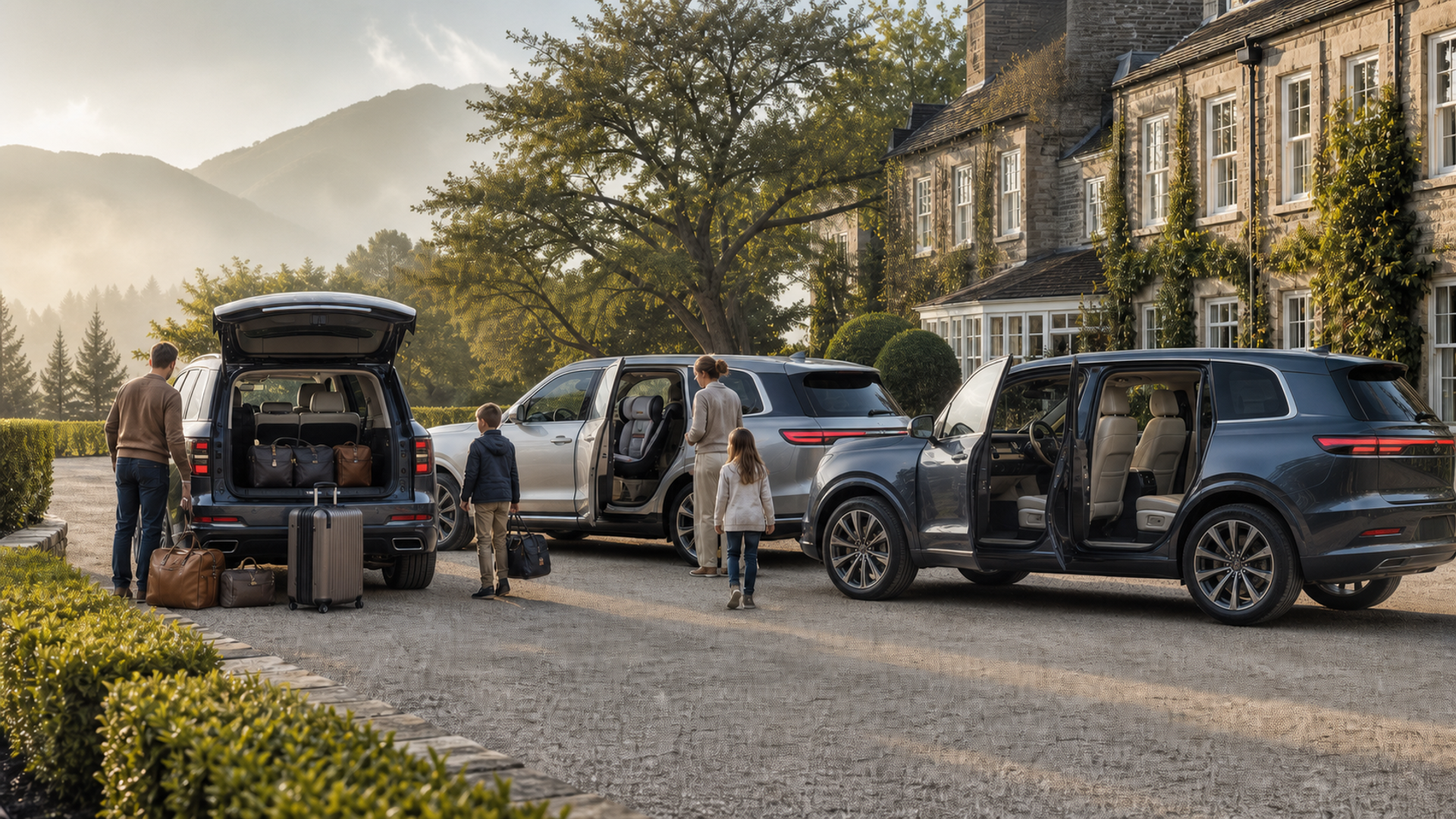
For the broadest luxury family brief, start with the Mercedes-Benz GLS or BMW X7. Choose the Range Rover Long Wheelbase Seven Seats when adult third-row comfort and rear-cabin luxury outrank urban manoeuvrability; the Volvo XC90 when seven-seat flexibility and a more restrained format matter; and the Audi Q7 when practical packaging and everyday placement take priority.
The right answer cannot be found in a “seven seats” badge. A family SUV must carry the people, child restraints and luggage required at the same time. Many published cargo figures describe the vehicle with the third row folded, which is of limited help to a family that actually needs seats six and seven. Garage length, door opening space, kerb height and access to a child in the second row can matter more than horsepower.
This guide therefore compares five luxury SUVs by family fit rather than prestige. It does not declare a safety winner, because that requires harmonised, current independent crash data and the exact market specification. It asks a more immediate question: which vehicle creates the fewest compromises in the way your household really travels?
Luxury family SUV decision matrix
| Model | Seating and packaging evidence | Strongest family use | Principal compromise | Best for |
|---|---|---|---|---|
| Mercedes-Benz GLS | Manufacturer positions it as a seven-seat large luxury SUV | Broad three-row comfort, long journeys and mixed adult/child use | Large exterior dimensions; exact cargo fit must be tested | Families wanting a full-size all-rounder |
| BMW X7 | Up to seven seats with a flexible three-row cabin | Driver appeal combined with family space and premium cabin | Third-row/luggage balance varies by configuration; physically large | Owner-drivers who still need genuine three-row ability |
| Range Rover LWB Seven Seats | Manufacturer describes seating for seven adults | Adult third-row use, chauffeured trips and high rear-cabin ambience | Length, weight, parking and access constraints | Families prioritising passenger luxury over compactness |
| Volvo XC90 plug-in hybrid | Seven seats; cited 244 litres with all rear backrests up | Restrained visual format, occasional third row and clear cargo planning | All-seats-up luggage remains limited; charging only helps if used | Families that want a less imposing seven-seater |
| Audi Q7 | Seven seats; 722 litres with third row folded and up to 1,980 litres maximum | Flexible daily use, child-seat access and useful two-row cargo | Published 722-litre figure does not apply with all seven seats in use | Practical premium family duty |
Manufacturer cargo methods and seat configurations differ. The matrix is a screening tool; the final decision requires the family's own child restraints, pushchair and luggage.
Use the three-row rule: people first, luggage second, garage third
Begin with the maximum number of occupants carried at least once a month, not the average school-run load. If six people travel to the airport several times a year, the vehicle must work with six people and their bags. Folding the third row to achieve the brochure's large cargo figure is not an available solution.
Next, list the bulky objects: pushchair, sports equipment, cabin cases, pet carrier or mobility device. Hard objects determine fit more than total litres because they cannot conform to a narrow opening or sloping tailgate.
Finally, measure the home environment. Record garage opening width and height, internal length, ramp angle and the side space needed to open a rear door with a child seat installed. Include roof boxes or bicycle carriers if they are part of the plan. A superb long-wheelbase SUV that cannot be loaded safely at home is not the best family car.
Only after these three checks should performance, trim and entertainment options lead the discussion.
Mercedes-Benz GLS: the broad all-rounder
The GLS is the obvious starting point for a family that wants a traditional full-size luxury SUV with three usable rows. Mercedes-Benz UK's current GLS page presents it as a seven-seat model and places substantial emphasis on passenger space and long-distance luxury.
Its strength is breadth. The GLS can serve as an executive vehicle during the week and a high-capacity family car at weekends without the deliberately limousine-like character of the Range Rover LWB. The higher seating position and large cabin can help mixed-age groups, although step-in height should be tested by younger children and older relatives.
The main penalty is scale. Test narrow streets, multi-storey ramps and the actual school pickup area, not just an open dealership route. A surround-view system can reduce stress, but it does not make the vehicle physically smaller.
The third row should be evaluated with the second row in a realistic child-seat position. Check whether access requires disturbing an installed restraint and whether the person entering can do so without climbing over trim. Also load the luggage required with all occupied seats raised. Mercedes specifications vary by configuration, so this guide does not substitute an uncited universal cargo figure.
Choose the GLS when the household genuinely benefits from a large all-rounder and has the parking environment to support it.
BMW X7: the owner-driver's three-row choice
The X7 offers a similar full-size proposition with a stronger emphasis on the person driving. BMW UK's X7 page describes seating for up to seven and a flexible cabin, depending on configuration.
That configuration point matters. Second-row seating arrangement affects the number of occupants, centre-aisle access and child-restraint strategy. Captain's chairs can make the third row easier to reach but reduce nominal capacity; a bench may be essential for a seven-person household. Verify what is available in the intended market and derivative.
For long family journeys, the X7 deserves a ride test from every row. A driver may prefer one wheel and suspension combination while third-row passengers prefer another. Larger wheels can alter ride and tyre-replacement considerations, so appearance should not be the only criterion.
BMW's website can present luggage information in configuration-dependent forms. Rather than rely on an ambiguous headline, bring the pushchair and cases. Test the tailgate opening and ensure a frequent-use item can be removed without unloading everything else.
Choose the X7 when the owner still wants a responsive, driver-centred experience but requires a legitimate three-row cabin. If rear passengers and luggage always take precedence, compare it closely with the GLS and Range Rover before deciding.
Range Rover LWB Seven Seats: passenger luxury with a size penalty
The long-wheelbase seven-seat Range Rover is the most passenger-luxury-focused option in this group. Range Rover's official model page describes the vehicle family and its passenger-focused luxury configuration; seating and rear amenities remain specification-dependent.
That manufacturer positioning makes it particularly relevant when the third row will carry adults rather than only children. The cabin can also suit a household that uses a professional driver and wants the rear environment to remain an important part of the ownership experience.
But the long wheelbase must earn its place. Measure the garage and turning spaces before being persuaded by the cabin. Test how far the tailgate projects when open, whether passengers can exit in a narrow bay and how the vehicle behaves on the routes used every day. A large turning camera view is useful, but wall and kerb clearance remain physical facts.
Do not assume “seven adults” means seven adults plus seven large cases. Passenger space and cargo space compete. Run the airport load test with the third row raised and the second row in its normal position.
Choose the Range Rover LWB Seven Seats when adult passenger comfort is a repeated need and the household accepts the external-size trade. It is excessive when the third row is used twice a year and city parking defines daily life.
Volvo XC90: a restrained family format
The XC90 is the least visually imposing of these five while retaining a seven-seat brief. Volvo UK's XC90 plug-in hybrid page lists seven seats and, usefully, publishes 244 litres of cargo volume with all rear backrests up and up to 1,941 litres in the maximum cargo configuration.
The 244-litre all-seats-up figure is particularly valuable because it exposes the real compromise: seven occupants leave a relatively modest luggage area. That does not make the XC90 unsuitable. It tells buyers to test the exact pushchair or cases and consider whether a roof box is part of occasional travel.
The plug-in hybrid adds another decision. It delivers its intended benefit only if the household can charge it regularly and uses routes that suit the electric capability. A charging cable also needs a storage plan when the luggage bay is busy. Buyers who cannot charge should not select the powertrain merely for the badge or official test figure.
The XC90 works for families that want occasional seven-seat capacity, a calmer visual presence and transparent planning around luggage. Its third row must still be physically tested by the intended occupants. Choose it when restraint and flexibility matter more than maximum adult space in row three.
Audi Q7: practical premium family duty
The Q7 remains a strong pragmatic answer because its proportions and packaging are familiar rather than theatrical. Audi UK's current Q7 page lists seven seats and emphasises family access. It quotes 722 litres with the third row folded and up to 1,980 litres with the rear seating folded.
Those figures demonstrate strong two-row cargo usefulness, but the seat state must remain attached to the number: 722 litres is not the capacity with seven seats occupied. A family using all three rows should perform the same all-seats-up luggage test required for every other vehicle here.
The Q7's advantage is that it can be easier to place in daily life than the largest long-wheelbase alternatives while still covering occasional third-row duty. Test second-row movement with the chosen child restraints. Manufacturer statements about access cannot confirm that a particular restraint can remain installed while the seat moves.
Choose the Q7 when most journeys use four or five seats, the third row is valuable but not always occupied, and a large two-row luggage area matters. A family carrying six or seven people every day should compare its third-row room directly with the GLS, X7 and Range Rover LWB.
Take your child seats and luggage to the test drive
A useful family test day is operational, not ceremonial. Ask permission to install the actual approved child restraints and follow both the vehicle and restraint instructions.
Check the following:
Seat-position approval: confirm which seating positions support the restraint type and anchorage required.
Access: verify whether third-row entry is possible without removing or disturbing an occupied restraint.
Front-seat effect: place rear-facing restraints behind the normal driver and front passenger positions.
Buckle reach: ensure an adult can secure each child correctly without routing errors or trapped webbing.
Pushchair fit: load it with all seats in the configuration used for the journey.
Airport load: add the real number and size of cases; do not replace them with soft dealership bags.
Visibility and motion: have likely third-row occupants assess the view, ventilation and ride on imperfect roads.
Garage operation: if possible, arrange a home test for door opening, charging access and tailgate clearance.
This is not an independent safety test. It is a compatibility and usability check. Do not use a seat position unless the relevant manuals approve it.
Powertrain and journey pattern still matter
Once packaging passes, select the powertrain around real use. Urban mileage, towing, charging access, tax treatment and long-distance frequency can change the answer by market.
A plug-in hybrid is most coherent when charged frequently. A large petrol or diesel powertrain may suit some high-mileage or towing patterns where offered, but cost and regulation require current local verification. Do not import conclusions from one country into another.
Ride quality should be tested on the proposed wheel size and with passengers. Tyre cost, spare-wheel arrangements and roadside support matter on family trips. Likewise, verify towing limits against the exact derivative and trailer rather than the model name.
For a broader comfort and capability comparison, see our best luxury SUVs for 2026. Households ready to plan around charging can compare the separate luxury electric SUV guide. This article remains focused on family packaging, not body-style prestige or propulsion ideology.
Final verdict
Choose the Mercedes-Benz GLS for the broadest full-size family-luxury brief and the BMW X7 when the owner-driver experience shares equal priority with three-row flexibility. Choose the Range Rover LWB Seven Seats when adult third-row comfort and rear-cabin ambience justify its size. Choose the Volvo XC90 for a more restrained seven-seat format with a clear all-seats-up luggage reality, and the Audi Q7 for practical two-row cargo capacity with occasional third-row use.
Then challenge the shortlist with your own constraints. Install the actual child seats, raise every required seat, load the pushchair and cases, and park the vehicle at home. The best luxury family SUV is the one that passes those simultaneous tests without asking the family to fold away the seat or leave behind the luggage that justified buying it.
Related VERTU reading
Sources and verification
Sources were checked for this 3 August 2026 publication package. Terms and specifications can change; recheck the linked source before acting.
![How to Scan Receipts and Documents with Your Phone [Full Guide]](https://cdn.sanity.io/images/e0gp1l2g/production/0db13feec1d5e72b8a8a5f976d1f3e86619c9228-3840x1860.webp?w=180&h=180&q=78&auto=format&fit=crop)
![How to Scan Receipts and Documents with Your Phone [Full Guide]](https://cdn.sanity.io/images/e0gp1l2g/production/0db13feec1d5e72b8a8a5f976d1f3e86619c9228-3840x1860.webp?w=800&h=450&q=82&auto=format&fit=crop)
![Top 10 Two-Tone Carbon-Fibre Watches for Men [2026 List]](https://cdn.sanity.io/images/e0gp1l2g/production/18870799ba33fab0e038968359cd5772d7d7db30-1024x576.webp?w=800&h=450&q=82&auto=format&fit=crop)
![Top 10 Luxury Watches with Digital Complication Displays for Men [Latest]](https://cdn.sanity.io/images/e0gp1l2g/production/c4f6bf8c080f291c39f7cc85c7344ecff2fd3799-1024x553.webp?w=800&h=450&q=82&auto=format&fit=crop)