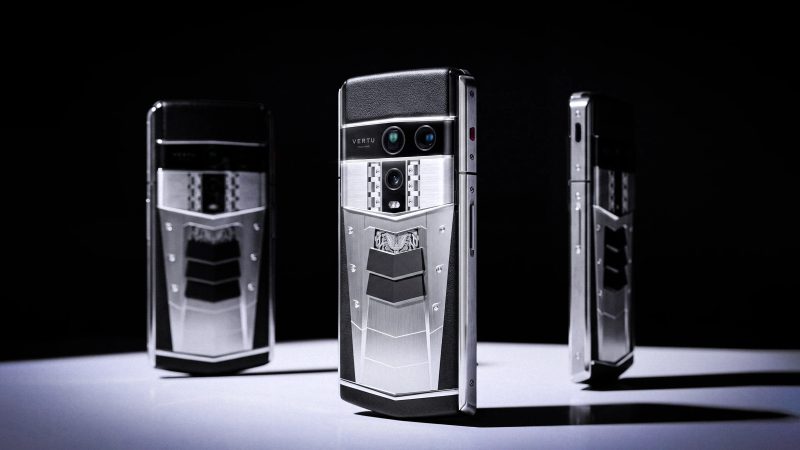
Luxury technology is easy to admire in a showroom. The harder question is what happens when your life stops being showroom-friendly.
Your flight is rerouted at 11:40 p.m. You land in a country where you don’t speak the language. Your driver cancels. The restaurant you promised your guests is fully booked. The bag with the only charger you trust is missing. And you have zero appetite for “please hold.”
In moments like that, hardware doesn’t save you. People do.
This is why the real status marker in luxury tech isn’t a spec sheet. It’s whether the brand can put a capable human on your side, at any hour, anywhere you happen to be.
Key TakeawayFor globally mobile UHNW buyers, the value of 24/7 concierge service for tech buyers is risk reduction: time saved, fewer failed plans, and support that survives time zones.
The hidden problem with luxury tech: hardware can’t cover high-stakes moments
Most premium devices compete on measurable things: materials, cameras, displays, performance. Those matter, but they’re not the full cost of ownership for luxury buyers.
The real cost is the friction you can’t schedule.
The opportunity that disappears while you wait for business hours.
The itinerary that breaks because one vendor fails.
The “minor” travel snag that becomes a security issue because it’s handled badly.
The administrative mess of making five calls, across three time zones, to fix one problem.
A luxury buyer doesn’t need more apps. They need continuity. One point of contact. Someone who can take responsibility for the chain of events.
What “24/7 concierge service” actually means (and what it isn’t)
A concierge is not a chatbot that reads you opening hours. It’s closer to personal assistance with real coordination.
American Express puts it plainly: a concierge service offers personal assistance across a wide range of needs, and modern concierge companies deliver services “24*7” for affluent clients.American Express: what a concierge service does (24*7)
At a practical level, a real 24/7 concierge service usually includes:
- Requests that require coordinationreservations, tickets, transportation, scheduling.
- Requests that require judgmentrecommendations that match your taste, not just what’s popular.
- Requests that require follow-throughconfirmations, changes, plan B, escalations.
What it is not:
A guarantee that every request is possible.
A way to avoid paying for what you book or buy.
A replacement for your team. It’s support that removes time sinks and reduces failure points.
NerdWallet’s take on concierge value is refreshingly honest: a concierge can help you secure hard-to-get reservations, tickets, or tours, but it’s not magic. You still pay for what you buy, and outcomes can’t be guaranteed.NerdWallet’s overview of American Express concierge
That realism matters in luxury, because trust is the product.
The value is human, not features
A luxury smartphone concierge sounds like a perk. For the right buyer, it’s a system.
Here’s what you’re buying when the service is serious.
1) Time-zone independence
The first advantage is obvious but underappreciated: time.
If you travel often, “I’ll handle it tomorrow” is how plans die. A genuine 24/7 concierge service means a broken itinerary can be repaired while you sleep, not after you’ve lost the table, the room, the tickets, or the window.
2) Discretion and privacy by design
UHNW buyers don’t just want convenience. They want discretion.
A good concierge service doesn’t treat your request like a ticket in a queue. It treats it like private service. That affects the channels used, the language, the documentation, and how much detail is shared with third parties.
Pro TipIf you care about discretion, ask one question before you buy: “Who, specifically, will see my request and my personal details, and how is that controlled?” The answer should be clear, not vague.
3) Escalation that works
Luxury isn’t defined by how a service behaves when everything goes well. It’s defined by what happens when it doesn’t.
In high-stakes moments, escalation is the feature:
Can the concierge reach decision-makers, not just front desks?
Can they present options with tradeoffs, not just “we tried”?
Can they execute quickly, across vendors?
This is where the “human” part becomes non-negotiable. AI can draft an email. It can’t reliably negotiate exceptions, read the room, or coordinate multiple moving parts under pressure.
4) Continuity (someone who remembers what you mean by “my usual”)
The most luxurious service isn’t the most complex. It’s the most consistent.
A private advisor model is valuable because the service gets better over time:
preferences and constraints are remembered
standards are understood (not explained repeatedly)
the concierge learns what “acceptable” looks like for you
For a globally mobile owner, continuity is the difference between “support” and “ownership experience.”
The global factor: why coverage and local execution matter
Luxury tech buyers don’t live inside one city. They move.
Global service isn’t just a slogan. It has real components:
- Availability across regionsnot “we’re global,” but operationally global.
- Multilingual competenceso you’re not forced to become the translator for your own emergency.
- Local executionpartners and capability on the ground.
VERTU explicitly frames its concierge as “Private Service · Global Privileges · Member Care” and highlights “24/7 Assistance” as part of the ownership experience.
On its 24/7 concierge overview, VERTU also emphasizes personalized assistance with global access and multilingual support, positioning the service for users who need help across countries and time zones.VERTU 24/7 concierge with personalized assistance and global access
That “global” framing matters because the failure modes are global:
last-minute visa friction
airport fast-track needs
cross-border itinerary changes
time-sensitive event access
hotel upgrades and logistics that fall apart when you’re not there to push
A decision framework: how to evaluate a luxury smartphone concierge
If you’re choosing a luxury tech ecosystem that includes private service, don’t evaluate concierge as a feature.
Evaluate it like you would a security system or an insurance policy: by its response under stress.
The four questions that separate real concierge from “premium support”
Who answers at 3 a.m.?
Not “is it 24/7,” but how it’s staffed and routed. Is it human-first? Is it tiered? Is it an on-call rotation? A credible program can explain this without overpromising.
What are the service categories, in plain language?
A serious program should be able to say what it handles: travel, hospitality, sourcing, access, business support. If everything is described as “bespoke,” you learn nothing.
How is global execution actually achieved?
Ask whether requests can be executed across regions and languages. “Global” should mean more than “we have a phone line.”
What are the boundaries?
The most trustworthy concierge services are clear about what they won’t do and what they can’t guarantee.
Red flags (especially for UHNW buyers)
The service reads like a list of adjectives, not capabilities.
There’s no mention of escalation or continuity.
“Global” is claimed, but regions/languages aren’t specified.
The brand can’t explain privacy handling in a way that sounds designed, not improvised.
What “luxury smartphone concierge” looks like in practice
Luxury concierge on a smartphone works when access is frictionless. One action. No hunting through menus.
That’s the point of the category: the phone becomes the entry point to private service when time matters.
Here is one official example you can watch to understand the access concept in context:
An example of service scope and global network (VERTU)
If you’re considering a luxury ownership ecosystem that includes concierge, you want two things:
the brand’s official promise (how they frame the service)
the specific categories (what they say they can help with)
VERTU publishes a structured view of its concierge promise as “6 privileges and 27 services,” spanning areas such as elevated travel, hospitality, sourcing and lifestyle curation, leisure and entertainment, and business/education/security support.
That kind of structure is worth looking for because it forces specificity. You can quickly map your own life against the service model:
If your year includes constant international travel, travel and hospitality support becomes the core value.
If you care about event access and reservations, “access” is not a metaphor. It’s a workflow.
If you manage sensitive itineraries, discretion and escalation are as important as availability.
VERTU also positions its concierge as part of a broader luxury ownership experience, pairing private service with a global privileges model.
Objections (and the honest answers)
“I already have an assistant. Why do I need this?”
If your assistant is excellent, concierge isn’t a replacement. It’s capacity.
The value shows up when:
you’re traveling and your assistant is offline
you need local execution in a place your team doesn’t operate
you want a private service channel that doesn’t require looping in multiple vendors directly
Concierge is most valuable as a pressure-release valve: it protects your team’s attention, and it protects your own.
“Can’t AI do this now?”
AI can help you decide. It can draft. It can summarize options.
But the core of concierge value is coordination and accountability. Real-world tasks still require humans: verifying, negotiating, confirming, escalating, and fixing what breaks.
Some luxury brands are blending AI assistance with human service. VERTU’s own content positions VIP concierge services on smartphones as a combination of high-touch support and modern AI-enabled workflows.VIP concierge services on smartphones (VERTU, 2026)
The decision question isn’t “AI or human.” It’s whether the system has the right handoff between the two.
“Is this just marketing?”
It can be, if the promise is vague.
Treat concierge as something you evaluate, not something you believe.
Ask for:
examples of request categories
how access works (one-touch vs multi-step)
what happens when a request fails
The best programs will tell you what they can’t do. That’s how you know they’re real.
“I don’t want to share personal information.”
Then you should never buy a service that pressures you into it.
A mature concierge model should allow you to set boundaries: what’s shared, what’s not, and what channels are acceptable.
If a brand can’t speak clearly about privacy and discretion, it’s not private service. It’s support with a premium label.
FAQ: 24/7 concierge service for luxury tech buyers
Is 24/7 concierge service the same as 24/7 customer support?
No. 24/7 customer support typically focuses on product issues and troubleshooting. A concierge service focuses on life and travel coordination: bookings, access, recommendations, and follow-through.
What kinds of requests are realistic for a luxury smartphone concierge?
Think reservations, travel coordination, transportation, itinerary changes, ticket sourcing, and special-item sourcing. The practical range depends on the provider’s scope, partners, and escalation.
Does a concierge guarantee access to sold-out tables or events?
No reputable concierge should guarantee outcomes. The value is effort, expertise, and speed, not magic.
What’s the most important feature: global network or private advisor?
If you travel, global execution is critical. If you want the service to improve over time, continuity via a private advisor model is critical. The best programs combine both.
Next steps
If you’re evaluating luxury tech where private service is part of the ownership promise, use a simple test:
Describe one real scenario from your life that tends to break plans, then ask how the concierge handles it end-to-end.
If the answer is concrete, you’re in the right category.
If you want to see how 24/7 private service and global privileges are positioned in an ownership ecosystem, start here: VERTU Concierge: 24/7 Assistance
If you want a more detailed breakdown of service categories, VERTU’s own “6 privileges and 27 services” overview is the clearest map: VERTU’s ‘6 privileges and 27 services’ concierge promise
Disclosure: This article references VERTU pages. Editorial judgment remains the priority.