Key Takeaways
- Mother-of-pearl is nacre lining the inside of some mollusk shells; a pearl is a distinct formation produced within a mollusk.
- They are related materials, but a shell inlay is not automatically a pearl bead or pearl jewellery.
- Both can be genuine natural materials, while imitation products also exist. Read the full product description.
- The name alone does not establish quality, origin, treatment, craftsmanship or value.
Mother-of-pearl and pearl are related, but they are not the same thing. Mother-of-pearl—also called nacre—is the lustrous inner lining of certain mollusk shells. A pearl is a separate formation created within a mollusk. Both may contain nacre, which helps explain their sheen, yet their shape, structure and use in jewellery differ. When comparing a shell inlay with pearl jewellery, check what the piece actually contains and how the seller describes it.
What is mother-of-pearl?
Mother-of-pearl is the iridescent nacre that lines the inner surface of some shells. It can be cut or shaped into decorative components such as inlays, dials, beads or panels. The visible piece may show changing colour and sheen as light meets the layered surface. Natural variation is expected, so two genuine pieces need not have identical pattern or tone.
Mother-of-pearl describes a shell material, not a pearl placed in a setting. It may be used as a flat or curved decorative element within a larger object. Ask whether the listing refers to a solid shell component, a veneer, a composite or an imitation material if construction matters to your choice.
What is a pearl?
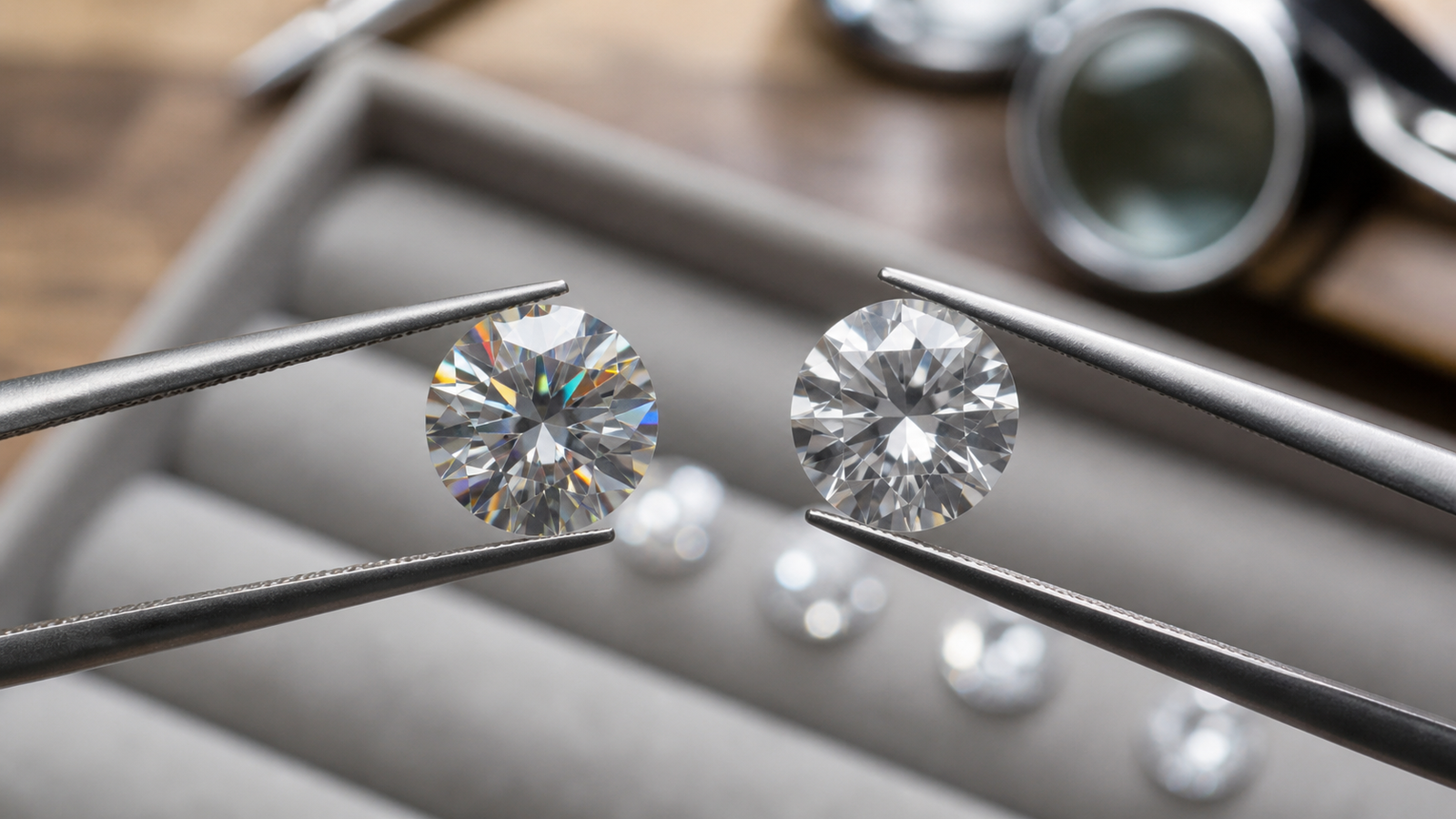
A pearl is a separate gem formation produced by a mollusk. Pearls can be natural or cultured; cultured pearls form with human assistance, but are genuine pearls rather than imitations. Their appearance and quality are assessed through factors such as size, shape, colour, luster, surface, nacre and matching when pieces are paired. These characteristics vary from pearl to pearl.
Some cultured pearls are formed around a nucleus and acquire nacre layers; other cultured pearls are largely nacre. The precise structure depends on the pearl type and formation method. A seller should identify the product accurately rather than using “mother-of-pearl” as a loose synonym for any pearl material.
Mother-of-pearl vs pearl at a glance
| Question | Mother-of-pearl | Pearl |
|---|---|---|
| What is it? | Nacre lining the inside of certain shells | A separate mollusk-produced gem formation |
| Typical jewellery form | Inlay, panel, dial or shaped shell component | Bead or formed gem used in earrings, necklaces and rings |
| Can it be cultured? | The shell material itself is not described as a cultured pearl | Yes; cultured pearls are genuine pearls |
| Does the name establish quality? | No; inspect material, finish and construction | No; evaluate the pearl and its disclosed characteristics |
The comparison is about the object and how it is used, not a simple ranking. A well-made shell inlay may be exactly right for a design, while a pearl may be selected for its form and luster. Neither label on its own tells you whether a piece is well made or fairly priced.
Why do the terms sound so similar?
Nacre is central to both. The inner shell layer is commonly called mother-of-pearl, and nacre also forms much of the structure and surface of many pearls. That shared material creates a related visual effect: reflected light can appear soft, layered or iridescent. But the location and structure differ. In mother-of-pearl, nacre is part of the shell lining; in a pearl, it forms a distinct object inside the mollusk.
This is why a product photo can be misleading. A pale, glossy surface does not prove that an item is a pearl, and a pearl-like shape does not prove that the object is a natural or cultured pearl. Ask for the exact material description and whether the component is shell, pearl, composite or imitation.
What should I check in a jewellery listing?
- Read the material name in context. Does it say mother-of-pearl inlay, cultured pearl, imitation pearl or a shell component?
- Ask what part of the item uses the material. A dial, pendant face or decorative panel may be shell, while the central bead or accent may be a pearl.
- Look for treatments and origin claims. Do not infer natural origin, colour treatment or geographic source from a photograph or poetic product name.
- Check dimensions and construction. A small inlay and a pearl bead create different visual presence and wear considerations.
- Compare workmanship and documentation. Setting, finish, matching and seller disclosure may matter more than the material label alone.
The US Federal Trade Commission’s Jewelry Guides address accurate consumer terminology for pearls and imitation products. For a significant purchase, ask the seller to clarify ambiguous wording in writing and keep the product description with your receipt.
Does one cost more or last longer?
There is no universal answer. Price depends on the exact material, size, quality, design, labour, brand and construction. A pearl is not automatically more valuable than a mother-of-pearl component, nor does a higher price prove superior quality. Compare like with like and ask what is included in the price.
Care also depends on the finished piece. GIA advises that pearls can be scratched and may be affected by heat and chemicals; mother-of-pearl is also an organic nacreous material that deserves gentle handling. Follow the maker’s instructions for the complete item, particularly if shell or pearl is set beside plated metal, adhesives or other gemstones. Do not assume a cleaning method for one loose component is safe for an assembled jewellery piece.
Frequently Asked Questions
Is mother-of-pearl the same as a pearl?
No. Mother-of-pearl is nacre lining certain shells; a pearl is a distinct formation produced inside a mollusk. They are related because both may involve nacre, but they are not interchangeable terms.
Are pearls made of mother-of-pearl?
Many pearls contain nacre, the same material commonly called mother-of-pearl when it lines a shell. Their structure and form differ: nacre in a shell is not itself a pearl.
Is mother-of-pearl real or imitation?
Mother-of-pearl can refer to genuine shell nacre, while imitation materials also exist. Read the full listing and ask the seller to confirm the component’s material and construction.
Which is more valuable, pearl or mother-of-pearl?
Neither category is always more valuable. Price depends on the exact material, quality, size, design, workmanship and seller; compare documented pieces rather than labels alone.
How can I tell what a jewellery listing means?
Check whether the description names a shell inlay, cultured pearl or imitation product, and ask which component uses the material. A photograph or iridescent finish cannot confirm the item’s identity.
Conclusion
Mother-of-pearl and pearl share a connection through nacre, but they describe different forms: shell lining and a separate mollusk-produced gem. When comparing jewellery, verify the exact component, construction and seller disclosure. Then judge the finished piece by its design, workmanship and documented characteristics—not by a material name alone.