Key Takeaways
- Freshwater pearls grow in freshwater mussels; Akoya, Tahitian and South Sea are saltwater cultured pearls.
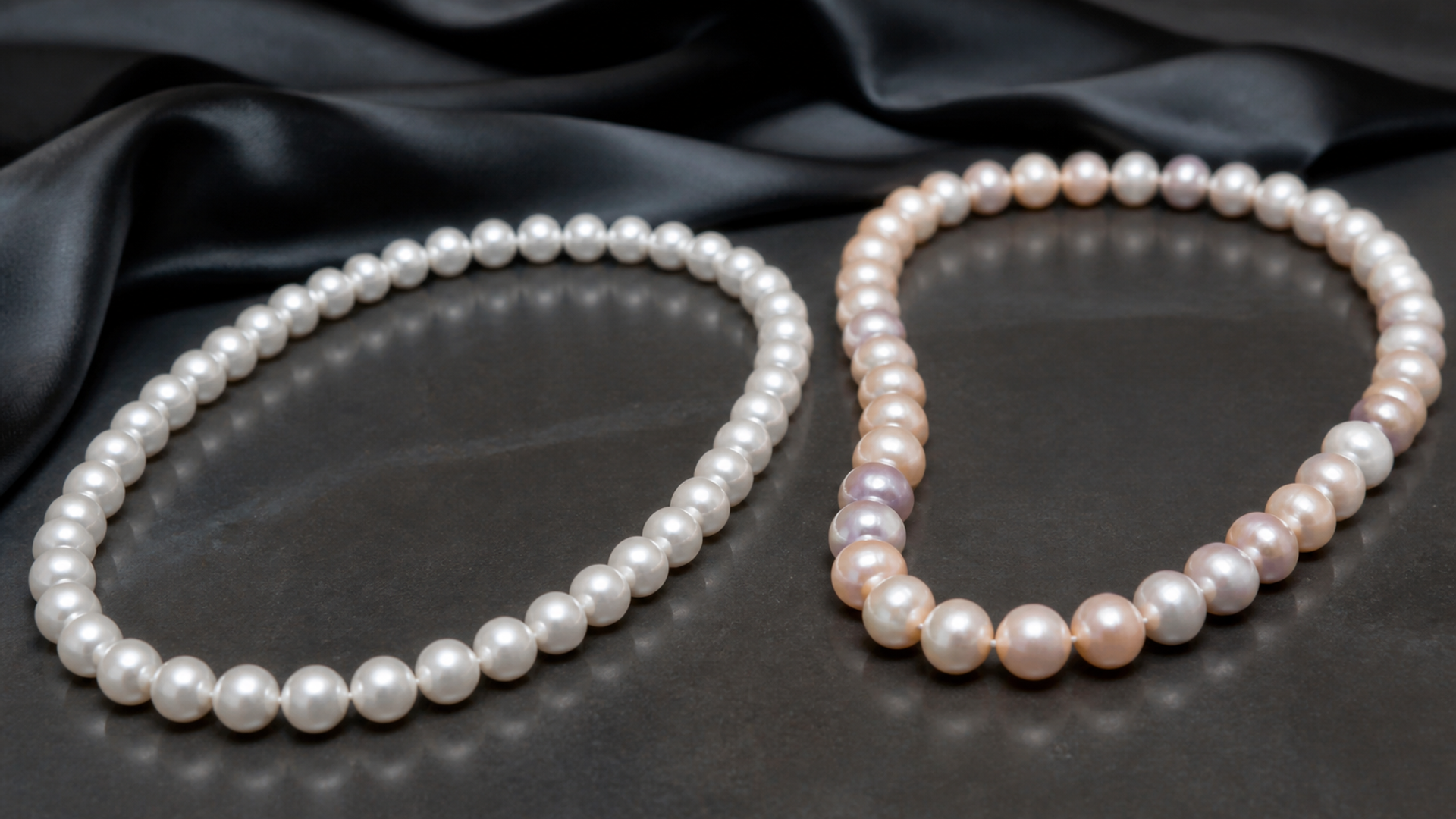
- Typical colour and size ranges overlap, so a photograph cannot establish type by itself.
- Luster, surface, nacre, shape and matching determine how an individual piece looks and wears.
- Mother-of-pearl is shell material, not a finished pearl bead.
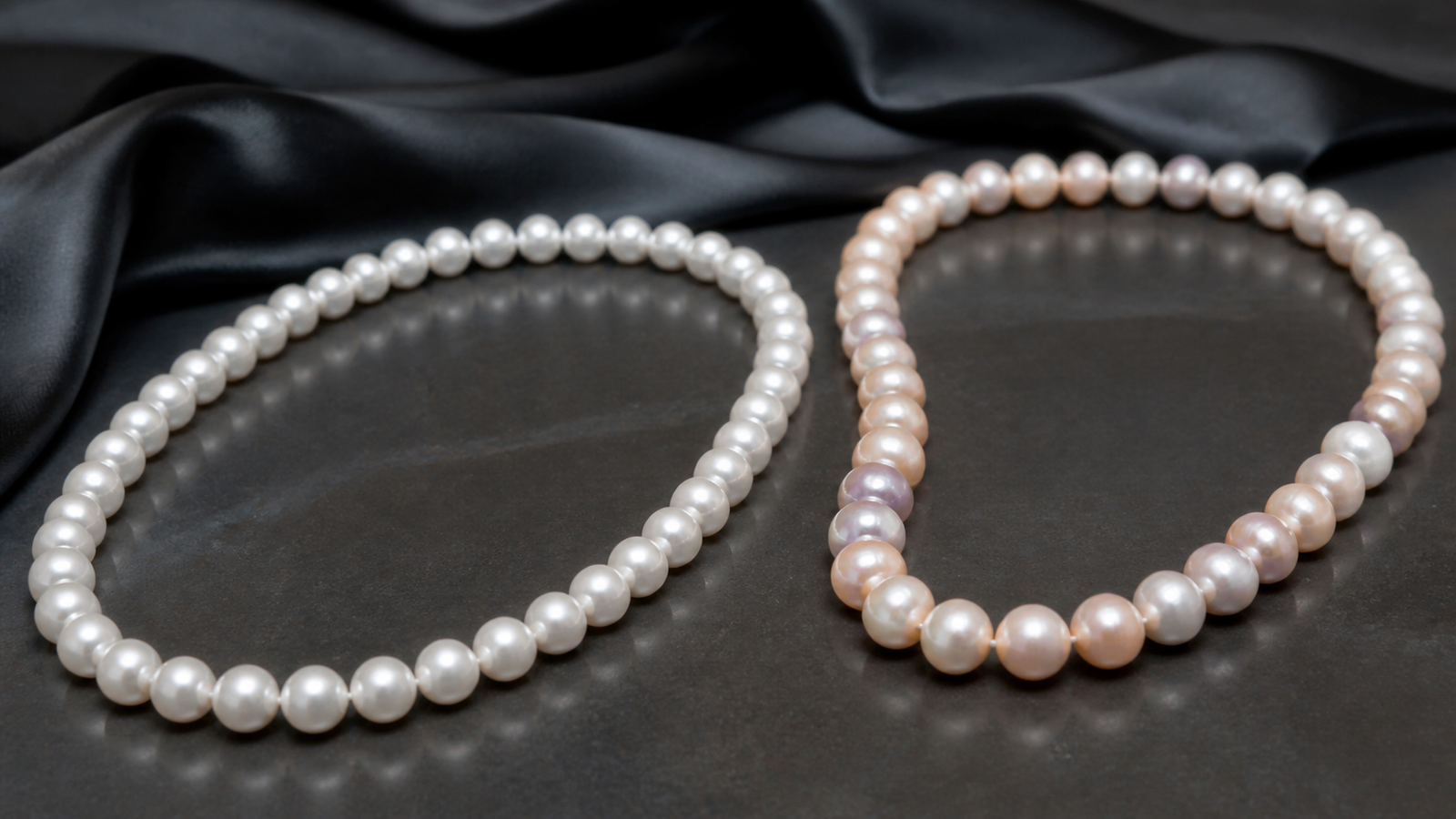
Types of pearls in the cultured market fall into four major groups: freshwater, Akoya, Tahitian and South Sea. Freshwater pearls offer broad variation; Akoya are often associated with crisp white luster; Tahitian with naturally dark tones; and South Sea with larger white or golden pearls. The VERTU materials collection is a broader starting point for material-led design, while this guide concentrates on identifying pearl types and judging actual pieces.
What does “cultured pearl” mean?
A cultured pearl is produced by a living mollusk after human intervention begins the growth process. It is a real pearl, distinct from a plastic or glass imitation. The word “cultured” matters on a sales label: it describes how the pearl was produced, not a low-quality grade. Natural pearls form without that intervention and are a separate category. Most jewellery shoppers will encounter cultured pearls, but an unusually broad claim of “natural” deserves appropriate evidence.
The Gemological Institute of America's four-type comparison groups freshwater pearls separately from the three familiar saltwater types. That classification is more dependable than trying to name a pearl from its colour alone. An attractive white bead might belong to more than one category, and a non-round shape is not exclusive to freshwater pearls.
Freshwater pearls: variety in shape and colour
Freshwater cultured pearls are grown in mussels rather than marine pearl oysters. Their wide variety makes them useful for understated studs, mixed strands and less formal designs. Common body colours include white, pink, peach and lavender, although treatment and lighting can alter what a listing appears to show. Shape can range from round and near-round to expressive irregular forms; neither a round appearance nor a lower price proves type.
Freshwater does not mean imitation. It also does not automatically mean a lesser pearl. A well-matched, lustrous freshwater pair may be more compelling than a poorly matched or dull example from a more prestigious category. Compare the actual surface and reflection before assuming that a label determines beauty. GIA has also warned that the marketing phrase “freshwater Akoya” can mislead: a freshwater pearl does not become Akoya because it resembles one.
Akoya pearls: the classic reflective strand
Akoya cultured pearls are saltwater pearls commonly associated with round forms, white to cream body colour and sharp, mirror-like luster. This makes them a familiar choice for a traditional strand or matched earrings. Their characteristic look is a useful shopping reference, but the quality of one Akoya pearl still varies by luster, surface and nacre. A category name is never a guarantee that every bead in a strand is equally reflective.
Look at the strand as a single object. Do the reflections stay consistently sharp from one pearl to the next? Are sizes and colours harmonious? Are visible surface marks concentrated in places you will see when worn? A well-matched group can have a calmer, more deliberate effect than a group of individually attractive but inconsistent pearls. Ask whether the description covers all beads or only a centre pearl.
Tahitian pearls: naturally dark does not mean only black
Tahitian cultured pearls are saltwater pearls associated with French Polynesia and the black-lipped oyster. They are sometimes called black pearls, yet their naturally occurring body colours can range through gray, green and brown, with varied overtones. The name “Tahitian” is a pearl type, not a promise that a particular pearl is jet black or comes from the island of Tahiti itself.
View dark pearls against both light and dark backgrounds. A photograph made under concentrated lighting can exaggerate a green or purple overtone. In person, turn the pearl and note whether its luster stays lively across the surface. Ask whether colour has been treated or enhanced and whether the description covers the whole piece. An even dark strand and a deliberately varied strand are different design choices; neither is automatically superior.
South Sea pearls: scale and a softer glow
South Sea cultured pearls are saltwater pearls associated with white or golden-lipped oysters and production in Australia and parts of Southeast Asia. They are often larger than Akoya pearls and are commonly seen in white, silver and golden tones. Size and colour make them visually distinctive, but a large white pearl is not necessarily South Sea, and every South Sea pearl is not uniformly round or flawless.
A larger pearl gives surface features more room to show. Inspect the full rotation, not just the face photographed by a seller. Balance size against luster, nacre and finish; a smaller pearl with a pleasing, coherent surface may suit a piece better than the largest one available. For earrings, weight, setting and how the pair sits on the ear deserve attention alongside millimetres.
Comparing Quality Across Types of Pearls
Type sets expectations; quality describes the piece in front of you. The GIA pearl buyer guide identifies seven value factors: size, shape, colour, luster, surface quality, nacre quality and matching when more than one pearl is used. Luster deserves particular attention because bright, sharp reflections are central to a pearl's appearance. Surface marks should be judged by number, severity and visibility rather than by an unrealistic demand for absolute perfection.
Nacre quality matters to appearance and durability. A chalky, dull look or visible nucleus can be a warning sign in a bead-nucleated pearl, although a buyer should not pretend to grade nacre precisely from a small online image. For a strand, check whether the pearls make sense together in size, colour and luster. For a single pendant, matching is less relevant, while shape and how it hangs may matter more.
Compare listings with a short set of questions: What cultured type is claimed? What is the measured size range? Are colour and surface shown under neutral lighting? Is any treatment disclosed? What is the return window for inspecting the actual piece? The US Federal Trade Commission's jewellery guidance explains why sellers should identify cultured pearls clearly rather than relying on a type name alone to convey every material fact. The same material-first questions help when browsing the VERTU rings collection; check each product's actual materials rather than applying pearl terminology to an unrelated design.
Is mother-of-pearl a pearl?
No. Mother-of-pearl is the iridescent nacre lining of certain mollusk shells; a pearl is a separate formed object. Both can have appealing iridescence, and both can appear in jewellery, but a shell inlay is not a round or baroque pearl merely because it shares nacre. This distinction matters when reading design copy. Ask whether a piece contains a pearl bead, shell inlay or another pearlescent material. The current product knowledge base did not provide enough detail to use the proposed VERTU LUMINA AI Bracelet as a verified pearl example, so no product material claim is made here.
Frequently Asked Questions
Are freshwater pearls real pearls?
Yes. Freshwater cultured pearls are real pearls grown in freshwater mussels after human intervention. They are distinct from imitation beads made of other materials.
Are all Tahitian pearls black?
No. Tahitian pearls occur in a range of dark body colours, often with visible overtones. Assess the individual pearl rather than treating “black pearl” as an exact colour specification.
Are South Sea pearls always the largest?
No. They are often large, but size ranges overlap among pearl types. Measure the particular pearl and judge its luster, surface and nacre as well as its diameter.
Can colour alone identify a pearl type?
No. Similar colours occur across categories and can be affected by lighting or treatment. A trustworthy description or suitable gemological report is more useful than a photograph alone.
What should I compare in a pearl strand?
Compare luster, surface, nacre, size, shape, colour and matching across the whole strand. Ask for clear images and a return route that lets you inspect the item in person.
Conclusion
Freshwater, Akoya, Tahitian and South Sea are useful names for four different cultured-pearl traditions, but they do not replace inspection of the piece you will own. Begin with type, then judge luster, surface, nacre and matching in appropriate light. A clear description should tell you what the pearls are and how the finished jewellery was selected. For related material choices, see VERTU's accessories collection and verify the details of any individual product before purchase.