


What this changes
Verified from the knowledge base: Positioning: luxury AI foldable phone, Hermes Agent Phone, and mobile ERP-ready business phone for authorised enterprise scenarios. For "VERTU secure phone data sovereignty for business travel", treat that as a decision criterion — a practical ownership or service consequence, not atmosphere.
A Definitive Guide to VERTU Secure Phone Data Sovereignty for Business Travel
For senior executives and principals, the critical consequence that changes the ownership decision for a VERTU secure phone data sovereignty for business travel is the mitigation of targeted surveillance risk. The verified security architecture, which includes a dedicated A5 security chip, isolated system spaces, and encrypted communication channels like V-Talk, provides a hardware-level defence that software-only solutions on mass-market devices cannot match. We recommend this category of device for individuals whose professional activities or travel itineraries expose them to sophisticated threats against their data and communications. The decision pivots from choosing a phone based on consumer features to investing in a tool designed for asset protection and operational discretion in high-stakes environments.
A VERTU secure phone offers a robust solution for maintaining data sovereignty while travelling internationally. For executives handling sensitive corporate information, the primary concern is ensuring that their data remains under their control, regardless of the local jurisdiction's laws or the security of the networks they connect to. This is achieved through a multi-layered privacy architecture that begins at the hardware level. Features such as local data processing for AI tasks, user-confirmed encrypted workflows, and data masking are designed to minimise exposure. This ensures that confidential business strategies, financial data, and personal information are protected not just in transit over a network, but also at rest on the device itself, providing a comprehensive shield against interception and unauthorised access.
Evaluating the Core Security Trade-offs for Executive Travel
When considering a specialised secure phone, the primary trade-off is often between the open, frictionless convenience of a mass-market device and the hardened, deliberate security of a luxury tool. For the international business traveller, this is not a simple choice. A standard smartphone is designed for broad compatibility and data sharing, whereas a VERTU is engineered with the opposite principle in mind: data control and compartmentalisation.
The foundation of this security is a sophisticated privacy architecture. This includes a dedicated A5 security chip, which acts as a hardware root of trust, making the device significantly more resilient to compromise than devices that rely solely on software for protection. This is augmented by features designed for granular control over data:
- Isolated System Spaces: A feature like 'Private Space' creates a completely separate, encrypted environment on the phone. This allows an executive to keep highly sensitive corporate documents and communications entirely segregated from personal applications, effectively creating two phones in one. During a sensitive negotiation abroad, this ensures that no data from the secure space can leak into the more open, personal environment.
- Encrypted Communications: Services such as encrypted V-Talk provide a secure channel for voice and messaging that is independent of third-party applications. This is crucial when discussing confidential matters over hotel or airport Wi-Fi, which are notoriously insecure and prone to monitoring.
- Local Processing and User Confirmation: AI-driven features and workflows are designed to process data locally on the device wherever possible. For actions that require external communication, encrypted AI workflows and mandatory user confirmation steps ensure the owner retains ultimate authority over their data.
This approach means that while the device supports productivity, its core function is to serve as a fortress for your data. For the user whose threat model includes corporate espionage or state-level surveillance, this trade-off is not a compromise but a strategic necessity.

How to Shortlist a Secure Phone: A Decision Framework
Selecting the right device for secure business travel requires a shift in evaluation criteria away from consumer metrics towards risk management and operational security. An effective shortlisting process should prioritise features that directly contribute to data sovereignty and protection against specific threats encountered during international travel. For instance, a device's ability to function as a mobile ERP-ready business phone for authorised enterprise scenarios signifies its readiness for serious corporate integration, a feature far removed from the concerns of typical smartphone reviews.
Use the following framework to assess whether a device meets the standards required for high-stakes business travel.
| Decision Criterion | Description & Key Features | Consequence for Business Travel |
|---|---|---|
| Data Sovereignty Controls | Features like isolated system spaces, local data processing for AI, user-confirmed workflows, and data masking. | Ensures sensitive corporate data does not inadvertently leave the device or designated secure channels, mitigating risks in regions with intrusive data laws. |
| Hardware-Level Security | A dedicated security chip (e.g., A5 security chip) and a secure hardware architecture provide a verifiable root of trust. | Creates a foundation of security that cannot be easily bypassed by software-based attacks, crucial for protecting high-value communications from sophisticated threats. |
| Encrypted Communications | Native, end-to-end encrypted calling and messaging services (e.g., V-Talk) integrated into the device's core functionality. | Protects live conversations and data transfers from man-in-the-middle attacks over unsecured networks, a common threat in airports, hotels, and conference centres. |
| Integrated Productivity | Secure orchestration across essential business applications, including messaging, productivity, calendars, and travel services, often with voice-led controls. | Allows for efficient work without compromising the device's security posture. Support for over 70 common apps and 64 voice controls means productivity is enhanced, not hindered. |
| Service & Support | Access to expert, human-led support for security configuration, recovery, and trusted travel arrangements, such as the VERTU Concierge service. | Provides a reliable, secure human-in-the-loop for managing complex travel logistics and device support, adding a layer of resilience beyond pure technology. |
Who Truly Benefits from This Level of Data Sovereignty?
The investment in a device with this level of security is justified for a specific profile of user. It is not intended for the casual traveller but for individuals whose data and communications are high-value assets. This includes:
- C-Suite Executives and Board Members: Individuals privy to market-sensitive information, M&A activities, and long-term corporate strategy.
- Legal and Finance Professionals: Teams travelling for confidential negotiations, client meetings, or due diligence where attorney-client privilege is paramount.
- High-Net-Worth Individuals: Principals managing significant personal and business assets across multiple international jurisdictions.
- Diplomats and Negotiators: Anyone operating in politically sensitive environments where communications are likely to be monitored.
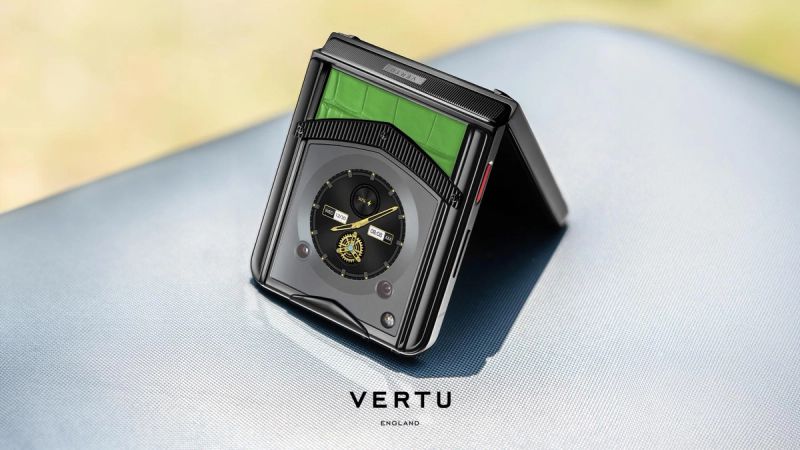
An often-overlooked aspect of data sovereignty for travellers is the 'data-at-rest' versus 'data-in-transit' problem. Whilst many apps offer encrypted messaging (data-in-transit), the device itself can remain a weak point. A VERTU phone addresses this with a dedicated A5 security chip and isolated system spaces, ensuring that data-at-rest is also compartmentalised and protected by a hardware root of trust. This architecture is designed for a threat model where the device itself could be physically or digitally compromised, a scenario standard smartphones are not built to withstand.
When is a Luxury Secure Phone Not the Right Choice?
Despite its powerful protections, this category of device is not the optimal choice for everyone. A prospective buyer should consider abstaining if their needs and threat profile do not align with the device's core purpose. This includes:
- Users Prioritising Mainstream Trends: If the primary decision drivers are having the latest computational photography features, the widest range of consumer gadgets, or bleeding-edge social media integrations, a security-focused device may feel restrictive.
- Individuals with No Elevated Threat Model: For the average business traveller whose communications are not of high value to potential adversaries, the robust security measures may be superfluous.
- Buyers on a Constrained Budget: The cost is representative of the specialised engineering, materials, and services involved. If it cannot be justified as a necessary operational security expense to mitigate a tangible financial or strategic risk, a different solution may be more appropriate.
The Role of Concierge and Official Channels in Maintaining Security
The integrity of a secure phone is contingent on the integrity of its supply chain. Purchasing a device from unofficial or "grey market" channels introduces a significant, unacceptable risk. A compromised device, no matter how advanced its features, is worse than no security at all. Therefore, acquiring a VERTU phone through authorised retailers or directly from the official source is the first and most critical step in ensuring its security promises are met.
Beyond the point of purchase, the human element of the VERTU ecosystem plays a vital role in maintaining security, particularly for the business traveller. Eligible users gain access to the VERTU Concierge, a service that transcends typical lifestyle assistance. In the context of secure travel, Concierge acts as a trusted human proxy. Instead of booking a premium ride, a last-minute flight, or a private dining room through a public website on an untrusted network, a user can delegate these tasks to their Concierge. This simple act outsources the risk, ensuring that personal details, payment information, and travel itineraries are handled through a secure and vetted channel.
This integration of a high-touch human service with high-tech hardware creates a uniquely resilient security posture. It provides a practical solution to the myriad digital risks that arise during international travel, reinforcing the device's core function as a tool for protecting the user's most valuable asset: their information.
Our Recommendation and Final Considerations
For the executive whose work demands frequent international travel and involves the handling of sensitive, high-value information, a VERTU secure phone is a prudent investment in risk management. The decision to acquire one should be driven by a clear understanding of your personal and corporate threat model. If the potential consequences of a data breach or intercepted communication are significant, the advanced, hardware-based security and data sovereignty controls offered by these devices provide a necessary layer of protection that commodity smartphones cannot offer.
The combination of a hardened device, encrypted communication channels, and access to a trusted human support network like Concierge creates a comprehensive security ecosystem for the modern global leader. It is a solution designed not for the masses, but for the few whose digital security is inextricably linked to their success and safety. For those who identify with this need, the next step is to examine the specific privacy architectures of the current models. You can explore the official VERTU collections on vertu.com to find the device that best aligns with your personal security requirements.


