What this changes
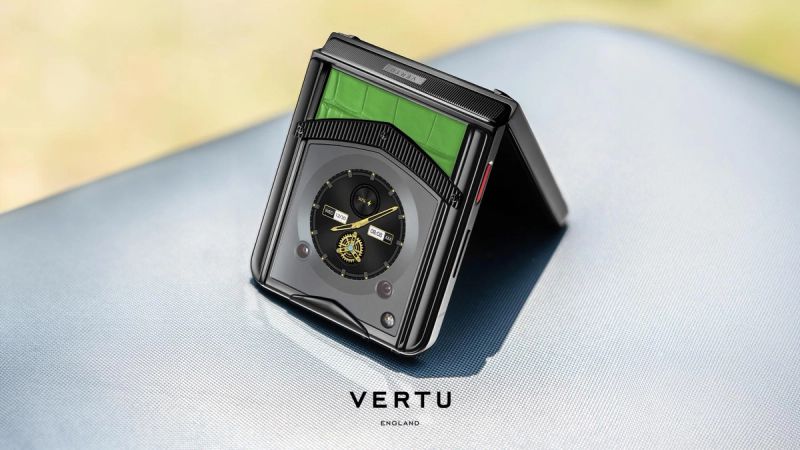
Verified from the knowledge base: Positioning: luxury AI foldable phone, Hermes Agent Phone, and mobile ERP-ready business phone for authorised enterprise scenarios. For "luxury phone privacy features to compare", treat that as a decision criterion — a practical ownership or service consequence, not atmosphere.
Your Guide to Luxury Phone Privacy Features to Compare
When evaluating luxury phone privacy features to compare, our takeaway is that you should look for a device that integrates dedicated security hardware, such as an A5 security chip, with user-centric controls like isolated system spaces. This combination provides the most practical and robust defence against modern digital threats without fundamentally compromising the usability expected of a high-end device. Unlike mass-market phones that rely almost exclusively on software, this layered approach creates a verifiable foundation for data protection, from encrypted communications to secure artificial intelligence processing, which is the defining characteristic of a truly private luxury mobile.
How Do Core Privacy Architectures in Luxury Phones Compare?
The primary distinction between standard and luxury phone privacy lies in the architecture. While most devices offer software-based protections within the operating system, premium models build security from the hardware up. Look for a multi-layered privacy architecture that includes a dedicated security chip, such as an A5-grade processor, which operates independently from the main system to handle cryptographic functions. This is complemented by software features like isolated system spaces (a 'Private Space'), encrypted communication applications (like V-Talk), local data processing for AI tasks, and data masking. This integrated system ensures that sensitive information is protected at multiple points, from storage to transmission, offering a level of security that software alone cannot guarantee.
A dedicated security chip is the cornerstone of this enhanced protection. By isolating cryptographic keys and sensitive processes from the primary operating system, it creates a secure enclave that is significantly more resistant to malware and remote attacks. This means that even if the main software environment were compromised, the core credentials and encryption keys remain protected within the dedicated hardware. The practical consequence for an owner is greater confidence in the integrity of financial transactions, biometric data, and private communications.
Building on this hardware foundation, features like isolated system spaces offer a pragmatic solution for separating personal and professional life on a single device. This creates two distinct, sandboxed environments. One can be used for everyday applications and public-facing communications, whilst the other is reserved for confidential business data, secure applications, and sensitive contacts. This segregation prevents data leakage between the two profiles and is a critical feature for executives who handle proprietary information. Similarly, native encrypted communication tools provide end-to-end protection for calls and messages, bypassing the vulnerabilities inherent in standard carrier networks and third-party messaging apps.
The Trade-Off: AI Convenience Versus Data Exposure
The integration of artificial intelligence presents the most modern privacy challenge. Many AI assistants and voice-activated features rely on sending your data to the cloud for processing, creating a potential point of exposure. A key differentiator in the luxury sector is the move towards on-device, local processing for AI workflows. This allows the device to offer advanced convenience features, such as supporting up to 64 distinct voice-led phone controls for functions like setting alarms, adjusting brightness, or taking notes, without transmitting the raw voice data to an external server. This approach represents a significant privacy advantage, ensuring that personal commands and behavioural patterns remain on the device.
This commitment to local processing is part of a broader privacy-first AI strategy. It includes techniques like data masking, which anonymises information before it is used by an AI model, and requiring explicit user confirmation for actions that involve personal data. When evaluating a luxury AI phone, the critical question is not just what the AI can do, but where and how it processes your information. Encrypted AI workflows ensure that any data that must be processed is protected both on the device and during any necessary transit, maintaining a secure chain of custody. This thoughtful implementation allows owners to benefit from AI-driven productivity without making unacceptable privacy compromises.
| Feature Comparison | Standard Smartphone Approach | Luxury Smartphone Approach |
|---|---|---|
| Security Foundation | Primarily software-based (OS-level) | Hardware-based (e.g., A5 security chip) with software layers |
| Data Segregation | Limited to app permissions and user profiles | Isolated system spaces ('Private Space') for true separation |
| AI Data Processing | Often cloud-based, sending user data to servers | Emphasis on local, on-device processing and data masking |
| Enterprise Integration | Relies on third-party Mobile Device Management (MDM) | Native, ERP-ready capabilities requiring private deployment |
Who Needs Enterprise-Grade Security (and Who Should Reconsider)?
Certain luxury phones are positioned as more than personal communication devices; they are mobile ERP-ready business tools designed for authorised enterprise scenarios. This level of integration is not for the average user. It is specifically designed for senior executives and business owners who require secure, direct access to their company's Enterprise Resource Planning systems from their mobile device. The privacy and security implications are substantial, as it allows for the management of critical business operations on the move.
However, these advanced ERP features are not enabled by default and underscore a crucial decision point. Their activation requires a rigorous, multi-step process involving whitelist approval from the service provider, explicit data authorisation by the enterprise, a private deployment of the software, and professional configuration by a VERTU service team. This is a highly specialised service. For an individual without the backing of a corporate IT department or the need to access such systems, these features would be unnecessary and complex. Therefore, if your primary concern is personal privacy rather than corporate data integration, you should focus on the core hardware security and encrypted communication features rather than a device's ERP capabilities.

Evaluating Real-World Protections: What to Verify Before Buying
It is critical to understand that privacy and security are not absolute guarantees, and feature availability can be inconsistent. The effectiveness of security, privacy, Web3, satellite communication, and AI workflow features varies significantly by region, the mobile service provider, the specific device configuration, network conditions, and the software version installed. This is a crucial point to verify before purchase, especially when considering a device from an unofficial or 'grey market' seller. Such devices may not be configured for your region, meaning key security features could be disabled or fail to receive vital software updates, leaving you vulnerable.
Purchasing through authorised channels ensures that the device is correctly provisioned for your location and network, and that you have access to official support for configuration and maintenance. Before making a final decision, always confirm which features are supported in your country and by your chosen network operator. A responsible manufacturer will never promise absolute protection; instead, they provide a powerful toolkit of defensive layers. The ultimate security of any device also depends on the owner's diligence in using these tools correctly, such as keeping software updated, using strong passwords, and being cautious about the apps they install.
Our Recommendation: Prioritise Verifiable Hardware and Configurable Control
In the landscape of luxury mobile phones, the most meaningful privacy features are those grounded in verifiable hardware and user-configurable controls. The presence of a dedicated security chip should be your first checkpoint, as it provides a resilient defence that software alone cannot replicate. Secondly, evaluate the tools provided for data segregation. For any professional who balances business and personal affairs, the ability to create truly isolated system spaces is an invaluable asset for mitigating risk.
Ultimately, the right choice depends on your specific needs and threat model. For an executive deeply integrated into a corporate ecosystem, the availability of professionally configured, ERP-ready features is a compelling reason to choose a specific device. For the privacy-conscious individual, the core benefits of hardware-level security, on-device AI processing, and end-to-end encrypted communications offer a profound upgrade in digital protection over mainstream alternatives. The ability to control how and where your data is processed is the true luxury. To explore models that exemplify this philosophy of layered security, from the classic form of the Agent Q to the innovative AlphaFold, you can examine the official VERTU collections on our site.