IMAX is not one screen size or one projection system. It is a production-and-presentation ecosystem that can involve 15-perforation 65mm camera film, 70mm projection prints, dual-laser or single-laser digital projectors, older xenon digital systems, expanded aspect ratios, remastering and an IMAX sound installation. Two tickets carrying the IMAX name can therefore deliver materially different pictures.
For the IMAX 70mm vs digital IMAX vs Dolby Cinema decision, the short answer is: choose IMAX 70mm when the film was composed for 1.43:1 and you want the rare analogue presentation; choose dual-laser IMAX at a compatible 1.43:1 venue when you want the tall frame with digital stability; choose a good single-laser IMAX when convenience and a 1.90:1 presentation matter more than the full-height frame; and choose Dolby Cinema when HDR contrast, Dolby Atmos and a consistent premium auditorium matter more than maximum IMAX image height. Xenon IMAX remains a legitimate branded presentation, but it is the oldest digital option and should not be confused with laser.
There is no universal winner. The film's master, the auditorium's screen shape, the actual projector, the sound system, sightlines and even maintenance condition all affect the result. The useful question is not simply “Is it IMAX?” but “Which IMAX—or which Dolby Cinema—in this exact auditorium for this exact film?”
Why The Odyssey made the format label matter again
Christopher Nolan's The Odyssey is an unusually clean case study because capture is not the variable. According to the film's official aspect-ratio guide, every frame was shot with IMAX film cameras. The 15-perforation 65mm film ran horizontally through those cameras; in an IMAX 70mm venue, the release print runs horizontally through the projector and presents the 1.43:1 expanded frame.
That means viewers are choosing how the same large-format source is translated into an auditorium. IMAX 70mm preserves an analogue chain and the tallest official presentation. A compatible dual-laser IMAX can also use a very tall screen, but it displays a digital master. Most other digital IMAX presentations use the 1.90:1 IMAX frame. Dolby Cinema uses a separate Dolby Vision and Dolby Atmos presentation whose screen shape can be flat or scope. The film's official guide is careful to say that its online comparison illustrates framing, not real-world screen size, because dimensions and projection setup vary by cinema.
The terminology itself can mislead. Production film is commonly described as 65mm; an additional strip width is used on the 70mm projection print. IMAX employs 15 perforations per frame with horizontal film travel. Conventional 5-perforation 65/70mm is a different format, normally associated with a 2.20:1 image. Kodak's film-format chart shows the difference in capture area and film travel. A booking labelled “70mm” is therefore not automatically “IMAX 70mm”.
IMAX 70mm vs digital IMAX vs Dolby Cinema: the decision matrix
The matrix separates five presentations that are too often collapsed into three. It describes the normal capability of each system, not a promise about every venue or every release.
| Format | Capture or source | Projection | Aspect-ratio potential | Sound | Scarcity | Ticket premium and best fit |
|---|---|---|---|---|---|---|
| IMAX 70mm film (15/70) | Best matched to 15-perf 65mm IMAX capture; The Odyssey was captured entirely this way | Horizontal 70mm film print through an IMAX film projector | Up to 1.43:1 when the print, projector and screen support the full frame | IMAX mix and auditorium system; do not infer the channel configuration from the film label alone | Very rare: needs a maintained film projector, trained projection team, physical print and scheduled film performance | Usually a premium event ticket. Choose for the analogue object, full-height composition and rarity—not because every seat or print condition is automatically perfect |
| IMAX dual-laser / GT laser | Digital master from film or digital capture; can preserve expanded IMAX framing when supplied | Two 4K laser projectors designed for very large IMAX screens | Up to 1.43:1 at a compatible venue for a title delivered that way; otherwise may be 1.90:1 or wider | Normally paired with IMAX's 12-channel laser sound system, subject to venue configuration | Scarce, but no physical print is required | Often priced at the top digital-IMAX tier. Choose for tall-frame capability, brightness, contrast and repeatable digital presentation |
| IMAX single-laser | Digital IMAX master from film or digital capture | One commercial laser projector | Commonly up to 1.90:1; the exact screen and title determine what is shown | Often an upgraded IMAX sound installation; confirm whether the auditorium has the 12-channel system | More widely available than GT dual-laser | Usually a moderate premium. Often the practical balance of strong digital projection, broad access and expanded framing |
| IMAX xenon digital | Digital IMAX master | Older lamp-based dual digital projection rather than IMAX laser | Typically the 1.90:1 digital IMAX presentation when supplied, but auditorium geometry varies | Legacy IMAX auditorium audio; configuration varies | Still present in the installed network, although IMAX says it no longer offers xenon for new signings | A premium may remain despite older projection. Choose only after comparing the exact room, screen and price with local laser or Dolby options |
| Dolby Cinema | A title-specific Dolby Cinema master; source can originate on film or digital cameras | Dolby Vision dual-4K laser projection | Venue and master dependent, commonly a 1.85:1 flat or 2.39:1 scope composition rather than IMAX's 1.43:1 | Dolby Atmos object-based sound with overhead capability | Premium but generally less constrained by film-print logistics; availability is city and release dependent | Often priced as a top premium-large-format ticket. Choose for HDR contrast, black level, Atmos placement and auditorium consistency rather than maximum vertical image |
The premium column deliberately contains no universal surcharge. Exhibitors set local prices, membership discounts and dynamic premiums; a format name does not establish value without the same cinema, date, seat and refund terms for comparison.
IMAX 70mm film: what the rare ticket actually buys
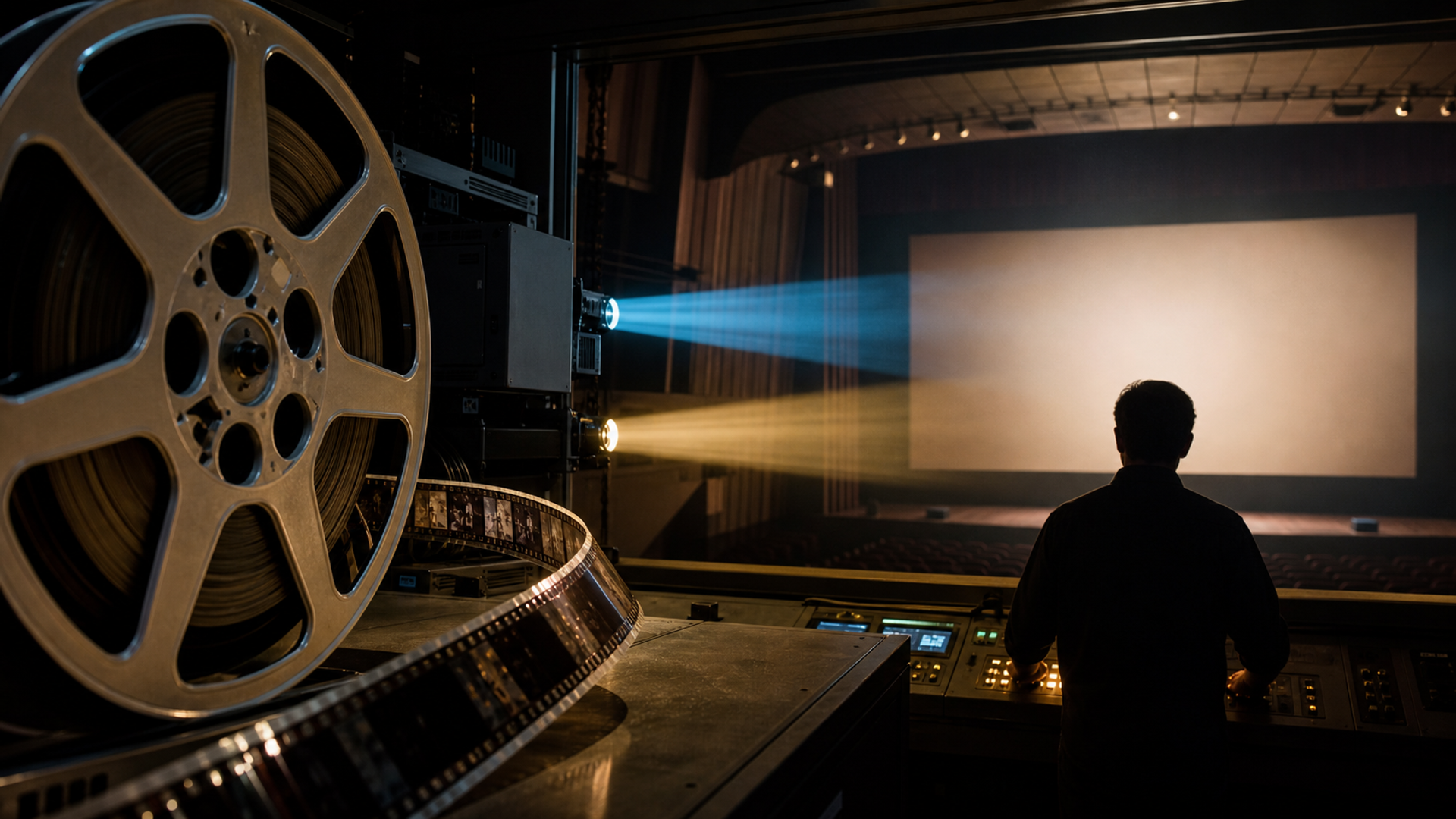
An IMAX 70mm performance is a mechanical event. A large physical print moves through a projector at 24 frames per second, with each frame occupying 15 perforations across the film. The attraction is not a mythical resolution number. It is the combination of a very large image area, photochemical texture, the 1.43:1 composition and the knowledge that the release is being presented through a specialised analogue chain.
The trade-off is operational. Film can show dust, weave or a projection issue; a reel change, alignment problem or damaged section is not made impossible by the premium price. Presentation quality depends on the print, projector, projectionist and room. The official IMAX page for The Odyssey tells viewers to check local exhibitors for current participating theatres and showtimes, which can change by country and date.
Scarcity is real because the system requires more than a tall screen. A venue needs an operational 15/70 projector and the people, booth space and release print needed to run it. That scarcity can make the screening culturally and materially interesting, much as provenance and serviceability affect whether a piece of technology becomes collectible. It still does not make a poor seat better than a well-positioned seat in a strong digital room.
Dual-laser IMAX: the digital route to the tall frame
Dual-laser—often called GT laser—is the digital IMAX option to seek when the film has meaningful 1.43:1 composition and the venue has a correspondingly tall screen. The Science Museum in London provides a useful real-world comparison: its auditorium houses both an original IMAX 70mm projector and an IMAX Grand Theatre system with dual 4K laser projectors and 12-channel sound.
This is not “70mm without film”. It is a different presentation chain. The image is scanned and mastered digitally, then projected by two aligned laser units. That removes print wear and can deliver strong brightness, contrast and colour consistency across repeated performances. It also means the visible texture and motion impression will not be identical to a film print.
Dual projectors alone do not guarantee a 1.43:1 show. The screen must have the appropriate geometry, and the distributor must supply an expanded master for that venue. A dual-laser room showing a 1.90:1 or 2.39:1 title cannot invent extra composition. Conversely, a 1.43:1 screen does not prove that the installed projector can fill it for every release. Check the film and auditorium together.
Single-laser and xenon IMAX are not the same digital format
Single-laser IMAX is the newer, more common multiplex laser option. IMAX's corporate system disclosure describes two laser configurations and attributes sharper imagery, deeper contrast and a wider colour gamut to the laser suite. Single-laser is usually associated with the 1.90:1 expanded IMAX frame rather than the full 1.43:1 GT presentation. For many films and viewers, that is an excellent compromise: the image can be brighter and more consistent than xenon, while the venue is easier to reach than a film or GT-laser site.
Xenon IMAX is the earlier digital generation introduced in 2008. It uses xenon lamps rather than laser light sources. The same filing says IMAX continues to support the installed xenon base but no longer offers the system for new installations. The key buyer implication is simple: “Digital IMAX” does not tell you whether you are buying laser or xenon.
Neither label describes screen dimensions, seat pitch or maintenance. A well-run xenon room with good geometry can be enjoyable; a single-laser room can be compromised by a small screen or poor sightline. The distinction matters because some cinemas charge a similar IMAX premium for both. If the booking page says only “IMAX”, ask the cinema which projector is installed in that auditorium.
Dolby Cinema makes a different promise
Dolby Cinema is not an IMAX substitute with another badge. Its emphasis is a Dolby Vision dual-4K laser system and Dolby Atmos, integrated into a purpose-designed premium auditorium. Dolby Vision prioritises high dynamic range: bright highlights, dark blacks, contrast and colour. Atmos treats sounds as objects that can be placed around and above the audience rather than tying every sound only to a fixed channel.
For a film photographed on IMAX film, Dolby Cinema still begins with a digital master. It will not show a physical 15/70 print, and it may not retain the full 1.43:1 height. That is a framing trade-off, not evidence that the presentation is careless. Filmmakers and mastering teams prepare versions for different screen shapes; the official Odyssey comparison includes multiple ratios for precisely that reason.
Dolby can be the stronger decision when much of the experience depends on night scenes, shadow detail, controlled highlights or spatial sound, or when the available IMAX is an older xenon room. It can also be the more consistent comfort choice. But “Dolby Atmos” on its own is not the same as Dolby Cinema: ordinary auditoriums may offer Atmos without Dolby Vision, the dual-laser projection system or the full Dolby Cinema room design.
How to decode the ticket before paying the premium
Use the listing as the start of the investigation, not the specification sheet.
Read the complete format name. “IMAX 70mm”, “70mm”, “IMAX with Laser”, “IMAX” and “Dolby Cinema” are different promises.
Identify the exact auditorium. A multiplex can have several premium rooms with different screens and projectors.
Ask for the projector type. For IMAX, distinguish 15/70 film, GT dual-laser, single-laser and xenon.
Confirm the presentation ratio for the film. Ask whether the session is 1.43:1, 1.90:1, 1.85:1, 2.20:1 or 2.39:1 rather than inferring it from the brand.
Check sound separately. Confirm IMAX 12-channel, a legacy IMAX configuration or Dolby Atmos; the projection label alone may not answer.
Compare the real surcharge. Price the same date, seat quality and booking terms against the best alternative, including travel time.
Choose the seat for the room. Maximum image area has little value if the only remaining seat creates neck strain or places you far off-axis.
IMAX's own Filmed for IMAX description separates film or certified digital capture, expanded 1.90:1 or 1.43:1 composition and post-production optimisation. That chain is a better mental model than treating the logo as a single technical standard.
The best format depends on what you want to preserve
Choose IMAX 70mm for The Odyssey if the analogue process and full 1.43:1 composition are part of the event for you, the venue is on the current official list, and you can obtain a sensible seat. Choose compatible dual-laser IMAX if preserving the tall frame matters but you prefer digital consistency or cannot reach a film presentation. Choose single-laser IMAX when 1.90:1 expansion, a bright digital image and convenience form the strongest package.
Choose Dolby Cinema when contrast, Atmos and auditorium design outweigh the missing IMAX height, particularly if the local IMAX alternative is xenon. Choose xenon IMAX when its screen geometry, seat and price beat the available alternatives—not because every IMAX ticket belongs in one quality tier.
The durable lesson after The Odyssey is that premium cinema is configuration-specific. Capture, mastering, projection, aspect ratio, sound and auditorium design are separate variables. Read all six, then buy the experience that preserves the part of the film you care about most.