Sapphire versus Gorilla Glass is not a contest with one universal winner. Synthetic sapphire is exceptionally resistant to scratching and has a distinctive premium material story. Gorilla Glass is a family of chemically strengthened cover materials engineered around a combination of drop, scratch, optical and manufacturing requirements. The better phone screen depends on the failure you are most likely to create—and on the complete screen assembly, not the material name alone.
A phone carried in a bag with abrasive particles faces a different risk from a phone regularly dropped onto concrete. A collector who keeps a device for many years values a surface that resists accumulating marks. A field user may value impact survival, lower replacement friction and a lighter assembly. Marketing compresses those scenarios into “harder” or “tougher”, but hardness and toughness are not the same property.
Quick answer:** Choose sapphire when scratch resistance, long-term surface appearance and material character dominate. Choose a modern strengthened cover glass when repeated drop exposure, thinness, weight and broad repair availability dominate. In both cases, judge the exact model’s construction, coatings, edge protection and replacement terms—not only the cover-material label.
The failure-mode decision matrix
| Ownership risk | Sapphire tendency | Modern strengthened cover-glass tendency | Decision question |
|---|---|---|---|
| Fine abrasive scratches over years | Strong resistance from very high hardness | Improved by each glass generation, but still material- and coating-dependent | Is preserving a clean surface the priority? |
| Hard edge impact | Brittle crystal behaviour depends on geometry, thickness and edge support | Chemical strengthening is designed to improve retained strength and drop performance | Is the device frequently dropped onto rough surfaces? |
| Pocket and bag wear | Excellent base-material scratch resistance | May collect marks depending on glass and coating | Will the phone share space with abrasive dust or hard objects? |
| Optical clarity and reflectance | High-quality sapphire can be optically excellent; coatings matter | Current glass families can include anti-reflective optimisation | What does the exact assembly claim and measure? |
| Thin, light industrial design | Higher density and processing difficulty can matter | Mature mass-production paths support thin cover designs | Is minimum mass or thickness important? |
| Curved or complex cover geometry | More difficult and costly to process at scale | Glass families are engineered for diverse shapes | Does the device use curves or a large foldable cover? |
| Repair after breakage | Model-specific and potentially specialised | Broader service ecosystem on mass-market devices | What is the actual replacement path and cost? |
| Collectable material value | Strong craft and rarity narrative | Functional engineering narrative | Is the screen part of the object’s long-term material identity? |
Hardness is not toughness
The Gemological Institute of America identifies sapphire as corundum with Mohs hardness 9. The Mohs scale describes relative resistance to scratching; it is not a linear measure and does not describe how a complete phone survives a fall. A hard material can resist surface abrasion while remaining vulnerable to crack propagation after a concentrated impact or damaged edge.
Toughness concerns resistance to fracture and the energy a material can absorb before a crack becomes catastrophic. Chemically strengthened glass uses ion exchange to place the surface under compression. Peer-reviewed fracture research explains that the resulting performance depends on the surface compressive stress, depth of the compression layer and the size of existing flaws. This is why a cover-glass brand and generation matter: “glass” is not one fixed material.
The correct language is therefore:
sapphire is harder to scratch than typical cover glass;
strengthened glass can be engineered for high retained strength and drop performance;
neither material is scratch-proof or unbreakable in every assembly;
coatings can scratch even when the substrate beneath them is much harder.
Gorilla Glass is a portfolio, not one specification
Corning has produced multiple Gorilla Glass generations and specialised materials. Claims for one version should not be silently transferred to another. Corning’s current Gorilla Armor 2 page, for example, describes a glass-ceramic cover material and reports laboratory drop and scratch performance against defined competitive materials. Earlier Gorilla Glass 5 and Victus pages use different tests, heights and comparison sets.
Those are manufacturer results, not guarantees for every phone. The finished device also includes frame design, edge height, adhesive, display stack, camera openings and sometimes curved geometry. A material that performs well as a test coupon can perform differently when cut, thinned, coated and integrated into a product.
When a product listing says only “Gorilla Glass” without the generation or component, ask for the exact specification. Front cover, rear panel, camera cover and internal protective layers can use different materials.
Sapphire is also an engineered component
Phone and watch sapphire is normally synthetic corundum, produced to deliver controlled optical and mechanical properties. It still requires cutting, polishing, edge finishing, coatings and integration. Thickness and support change impact behaviour. A small camera-cover window is not the same engineering problem as a large edge-to-edge phone display.
Corning’s own older comparison with sapphire argues that sapphire is heavier, more difficult to process and, at comparable thinness in its tests, less favourable in breakage. That source is a competitor’s statement and should be read as such. The useful, independently verifiable part is the trade-off it highlights: scratch hardness, optical transmission, mass, process and fracture behaviour cannot all be reduced to a single score.
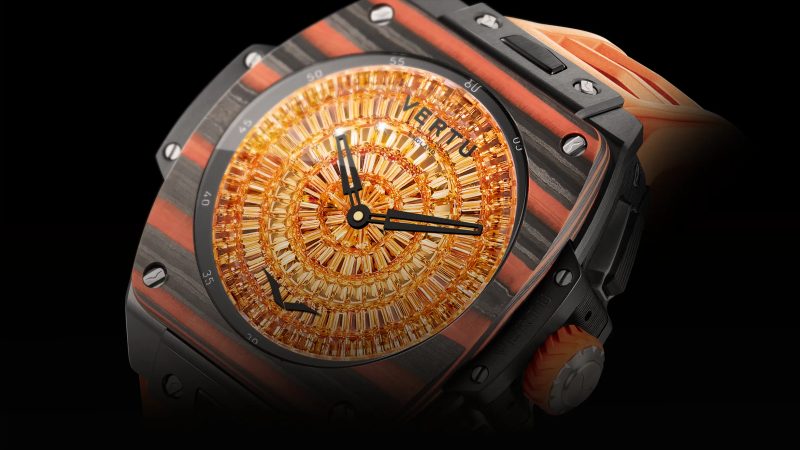
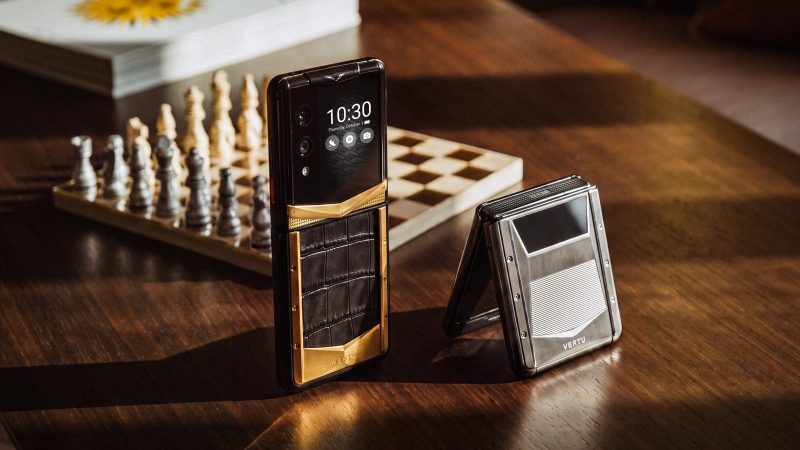
VERTU’s current product knowledge documentation identifies sapphire as relevant to selected device and detail configurations, but specifications remain model-dependent. Readers should verify the exact live product page rather than infer that every VERTU phone uses the same screen construction. VERTU’s existing guide to phones with sapphire screens owns the product-discovery intent; this page owns the material decision.
Scratch exposure: keys are not the whole story
The familiar “keys in a pocket” demonstration is incomplete. Many metal keys are softer than both sapphire and strengthened cover glass. Abrasive mineral particles, grit and damaged coatings can be more relevant. A device used at a beach, workshop or construction site sees a different scratch environment from one carried alone in a clean leather pocket.
Sapphire’s high hardness is valuable for long-term surface preservation. That advantage can matter disproportionately on a luxury device kept for years rather than replaced annually. Still, an anti-reflective or oleophobic coating can show wear before the sapphire substrate. Ask whether visible marks are in a replaceable coating, the base crystal or a factory-applied protector.
A screen protector changes the equation. A replaceable protector can absorb scratches on either substrate, but it also changes touch, reflectance and visual feel. A buyer choosing sapphire specifically for its surface character may not want to cover it; a buyer choosing a glass-screen phone for rugged use may consider a protector an inexpensive sacrificial layer.
Drop exposure: edge design is decisive
Phones rarely fall as perfect flat plates. They strike corners, frame edges, camera rings and rough particles. An exposed glass or sapphire edge concentrates stress. A raised bezel and compliant adhesive can improve the assembly’s chance of survival. A rigid frame can protect geometry but may transmit energy differently.
Ask these questions before trusting a material claim:
Does the frame sit above the cover material when the phone is placed face-down?
Are the edges curved and exposed, or protected by a bezel?
Does the maker publish a test method, surface and device configuration?
Is the claim about the material sample or the finished device?
What does the warranty exclude for accidental impact?
A laboratory drop height without the surface, orientation, sample count and pass criterion is weak evidence. Corning’s current pages specify comparison materials and surfaces for some tests, which is more useful than a generic “many times tougher” phrase. It is still a supplier test, not independent insurance against breakage.
Optics, reflectance and touch
Optical performance includes transmission, colour neutrality, reflectance and the visibility of the display in ambient light. The substrate is only one layer. Anti-reflective treatments, polarisation, adhesive and the display panel itself affect the result.
Corning markets current Armor materials around reduced reflectance as well as durability. Sapphire can also receive anti-reflective coatings and deliver excellent clarity, but the final result depends on the complete optical stack. Compare finished devices side by side at the same brightness, with adaptive colour settings controlled, rather than comparing raw material claims.
Touch performance likewise depends on thickness, coatings, controller tuning and display integration. No general rule says every sapphire screen feels better or worse than every Gorilla Glass screen.
Weight, size and complex geometry
Sapphire has a higher density than common aluminosilicate cover glasses. In a small watch crystal or camera window, the absolute difference may be modest. Across a large phone cover, it can influence mass and processing cost. The manufacturer can compensate by changing thickness, frame material and internal structure, but those choices affect the whole device.
Curved screens, foldable covers and very large panels favour materials and processes that can be formed and manufactured consistently at scale. Sapphire remains compelling where its hardness and material value justify the processing challenge. Strengthened glass remains compelling where thinness, geometry and high-volume integration dominate.
Repair and total ownership cost
Breakage is not the only cost. Ask whether the display and cover are replaced as one bonded module, whether calibration is required and whether parts remain available for the intended ownership period. A rare material can support long-term value while creating specialised repair needs. A widely used glass assembly may be easier to source but still expensive when bonded to an advanced display.
For a luxury phone, obtain the official service route before purchase. Record accidental-damage exclusions, expected turnaround and how the device’s data will be handled during service. A beautiful material becomes a poor ownership decision if the user cannot tolerate the repair path.
The five-question buyer test
Use this test instead of asking which material is “best”.
What failure happens most often in my life? Fine scratches, hard drops, pressure in luggage, workshop grit or long-term coating wear?
How long will I keep the device? Surface preservation matters more over a long ownership horizon.
Will I use a case and protector? Accessories can outweigh a small substrate advantage.
What is the exact assembly? Require the named material, generation, frame protection and component location.
Can I accept the repair path? Compare authorised service, downtime, data procedure and replacement cost.
If scratch exposure and long-term material quality dominate, sapphire has a clear rationale. If repeated drop exposure, low mass and broad service availability dominate, a current strengthened cover-glass assembly can be the more practical choice. The VERTU phone collection should be evaluated model by model against these questions.
Sources and verification
Gemological Institute of America: sapphire care, hardness and toughness
Corning Gorilla Armor 2: current material and laboratory test claims
Peer-reviewed study of fracture toughening in chemically strengthened glass
NIST Ceramics Data Portal: sapphire fracture-toughness references
Sources were checked on 22 July 2026. Corning performance statements are supplier claims tied to named materials and test conditions. Product construction and repair terms can change; verify the exact live model.
Final decision
Sapphire wins the scratch-resistance argument more cleanly than it wins every phone-screen argument. Modern strengthened cover glass wins no universal argument either; its value comes from a deliberately balanced engineering system. Choose the failure mode first, then inspect the exact assembly, coatings, frame and service path. That turns a materials slogan into an ownership decision—and gives both sapphire and Gorilla Glass credit for what each is actually designed to do.