Sterling silver and white gold can occupy a similar cool-coloured palette while differing in precious-metal content, density, hardness, tarnish behaviour, surface treatment, price and repair. Sterling normally describes silver alloyed to a recognised fineness such as 925; white gold is gold alloyed with lighter-coloured metals and may be rhodium plated. Colour alone cannot prove either material, and neither category guarantees allergy performance. The decision starts with marks, alloy disclosure, construction, wear location and a realistic care route.
Similar colour hides different alloys
Choose sterling silver when lower entry cost, visible patina or straightforward polishing fits the piece and use. Choose white gold when gold content, greater material value and a refined fine-jewellery construction justify the price and any replating plan. Choose another alloy or construction when allergies, heavy wear, stone security, colour permanence or repair access make both options a compromise.
| Decision factor | Sterling silver | White gold | Choose another alloy or construction |
|---|---|---|---|
| Composition | Sterling is commonly 92.5 percent silver alloy | White gold is gold alloyed with light-coloured metals | Verify fineness and alloy disclosure |
| Surface | Can tarnish and develop patina | May use rhodium plating over the alloy | Ask whether the surface is plated |
| Wear | Softer pieces can scratch or deform by design | Durability varies with karat, alloy and construction | Inspect thickness and setting |
| Care | Polishing can remove tarnish and some surface marks | Repolishing or rhodium replating may be needed | Avoid over-polishing details |
| Skin | Copper, nickel or other alloy constituents may matter | Alloy and plating condition may matter | Seek specific allergy evidence |
| Value | Material cost is usually lower | Gold content and workmanship raise replacement value | Insure or document where appropriate |
This sterling silver vs white gold matrix is the article's working value object. Read the sterling silver vs white gold rows together: the decisive failure mode depends on this topic's evidence, operating context and reader objective.
Hallmarks and surface treatment reveal the brief
Evidence 1. FTC consumer guidance explains sterling-silver fineness marks and gold karat descriptions, giving buyers a basis for reading labels.
Evidence 2. GIA's white-gold-versus-silver guide distinguishes common 925 sterling markings from gold karat marks and discusses visible and compositional differences.
Evidence 3. White gold may be rhodium plated, so surface colour and future care can differ from the underlying alloy.
Evidence 4. Scratch resistance, deformation and stone security depend on exact alloy, thickness, work hardening and construction—not colour alone.
Reader-visible sources checked for this article:
consumer.ftc.gov — reader-visible current or official evidence
4cs.gia.edu — reader-visible current or official evidence
ftc.gov — reader-visible current or official evidence
For sterling silver vs white gold, these sources establish only the claims inside their documented scope. Recheck every changeable specification, availability condition, price, policy or service term in the relevant market before acting.
Inspect wear where the piece touches life
On composition, popularity is not enough. The evidence for option one is that sterling is commonly 92.5 percent silver alloy. Option two means white gold is gold alloyed with light-coloured metals. Option three is rational where verify fineness and alloy disclosure. Recheck any changeable term immediately before commitment.
The decision changes at surface. Choose the first path only if can tarnish and develop patina; move to the second when may use rhodium plating over the alloy; use the third when ask whether the surface is plated. Save the downside that would make this row fail.
For wear, the first route works when softer pieces can scratch or deform by design; the second requires durability varies with karat, alloy and construction. The control for the third is inspect thickness and setting. Verify this row against the exact product, property, account or environment before it can reverse the decision.
The care row exposes a practical boundary. Route one assumes polishing can remove tarnish and some surface marks, while route two is defensible only when repolishing or rhodium replating may be needed. Route three depends on avoid over-polishing details. If that evidence is absent, keep the more reversible option.
Read skin as a stop/go test: copper, nickel or other alloy constituents may matter supports the first option; alloy and plating condition may matter supports the second; and seek specific allergy evidence supports the third. Record which source proves the condition and when it was checked.
A buyer can resolve value without starting from a brand preference. Ask whether material cost is usually lower; compare that with whether gold content and workmanship raise replacement value; then use insure or document where appropriate as the third route's safeguard. An unknown condition stays unknown.
Facts that would reverse the current choice
Reversal control 1 — Composition. Before choosing Sterling silver, write down how the decision changes if “Sterling is commonly 92.5 percent silver alloy” proves false. Do the same for White gold and “White gold is gold alloyed with light-coloured metals”. Keep the Choose another alloy or construction route available until “Verify fineness and alloy disclosure” is verified. This control belongs to sterling silver vs white gold; update it from the cited source or exact supplier rather than copying a generic checklist.
Reversal control 2 — Surface. Before choosing Sterling silver, write down how the decision changes if “Can tarnish and develop patina” proves false. Do the same for White gold and “May use rhodium plating over the alloy”. Keep the Choose another alloy or construction route available until “Ask whether the surface is plated” is verified. This control belongs to sterling silver vs white gold; update it from the cited source or exact supplier rather than copying a generic checklist.
Reversal control 3 — Wear. Before choosing Sterling silver, write down how the decision changes if “Softer pieces can scratch or deform by design” proves false. Do the same for White gold and “Durability varies with karat, alloy and construction”. Keep the Choose another alloy or construction route available until “Inspect thickness and setting” is verified. This control belongs to sterling silver vs white gold; update it from the cited source or exact supplier rather than copying a generic checklist.
Reversal control 4 — Care. Before choosing Sterling silver, write down how the decision changes if “Polishing can remove tarnish and some surface marks” proves false. Do the same for White gold and “Repolishing or rhodium replating may be needed”. Keep the Choose another alloy or construction route available until “Avoid over-polishing details” is verified. This control belongs to sterling silver vs white gold; update it from the cited source or exact supplier rather than copying a generic checklist.
Reversal control 5 — Skin. Before choosing Sterling silver, write down how the decision changes if “Copper, nickel or other alloy constituents may matter” proves false. Do the same for White gold and “Alloy and plating condition may matter”. Keep the Choose another alloy or construction route available until “Seek specific allergy evidence” is verified. This control belongs to sterling silver vs white gold; update it from the cited source or exact supplier rather than copying a generic checklist.
Reversal control 6 — Value. Before choosing Sterling silver, write down how the decision changes if “Material cost is usually lower” proves false. Do the same for White gold and “Gold content and workmanship raise replacement value”. Keep the Choose another alloy or construction route available until “Insure or document where appropriate” is verified. This control belongs to sterling silver vs white gold; update it from the cited source or exact supplier rather than copying a generic checklist.
Read marks and paperwork
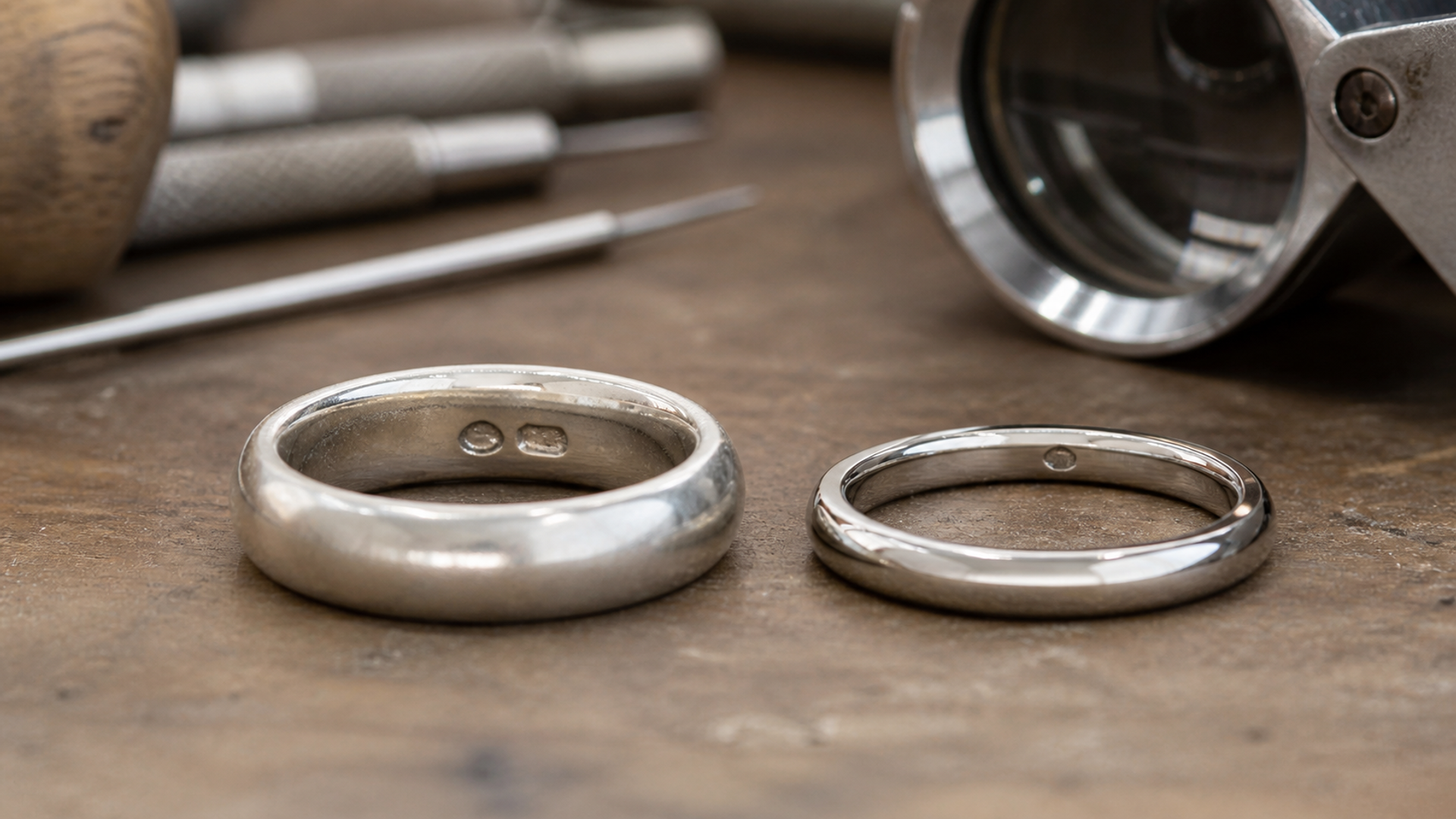
Photograph fineness, maker and country marks and retain the invoice and alloy description. Ask whether white gold is rhodium plated and whether silver has a coating. For this sterling silver versus white gold decision, keep the exact item, setting, date and test condition in one evidence log. Separate a measured result from category shorthand and repeat the check in the intended environment. If marks and disclosure conflict, pause for professional testing. If that reversal condition appears, reopen the decision instead of defending the earlier preference.
Map the wear surface
Identify ring undersides, prongs, chain links, clasps and areas contacting desks, bags or chemicals. Inspect under magnification in neutral light. For this sterling silver versus white gold decision, keep the exact item, setting, date and test condition in one evidence log. Separate a measured result from category shorthand and repeat the check in the intended environment. If the design is too thin for daily load, choose different construction regardless of metal. If that reversal condition appears, reopen the decision instead of defending the earlier preference.
Test care expectations
Ask a jeweller to demonstrate safe cleaning, polishing, replating and repair intervals. Record which finishes or engraving can be lost during service. For this sterling silver versus white gold decision, keep the exact item, setting, date and test condition in one evidence log. Separate a measured result from category shorthand and repeat the check in the intended environment. If the desired appearance needs unacceptable recurring work, reverse the choice. If that reversal condition appears, reopen the decision instead of defending the earlier preference.
Check skin compatibility
List known reactions and request alloy-specific information instead of relying on precious-metal status. Stop wear and seek appropriate advice if irritation occurs. For this sterling silver versus white gold decision, keep the exact item, setting, date and test condition in one evidence log. Separate a measured result from category shorthand and repeat the check in the intended environment. If relevant constituents are undisclosed, choose a documented alternative. If that reversal condition appears, reopen the decision instead of defending the earlier preference.
Model lifetime ownership
Include purchase, resizing, prong work, polishing, plating, insurance and resale or remaking. Compare cost per wear and sentimental repairability. For this sterling silver versus white gold decision, keep the exact item, setting, date and test condition in one evidence log. Separate a measured result from category shorthand and repeat the check in the intended environment. If service access is poor, a theoretically premium metal may be the weaker ownership choice. If that reversal condition appears, reopen the decision instead of defending the earlier preference.
Four jewellery lives, four answers
Occasional statement piece
Sterling silver can deliver scale and craftsmanship at lower material cost. Define the fact that would reverse this recommendation before committing.
Daily fine-jewellery ring
A documented white-gold alloy and maintenance plan may fit long ownership. Define the fact that would reverse this recommendation before committing.
Patina-loving owner
Sterling's changing surface can be part of the appeal. Define the fact that would reverse this recommendation before committing.
Sensitive skin or heavy manual work
Specific alloy evidence and robust construction matter more than category prestige. Define the fact that would reverse this recommendation before committing.
Action checklist
Photograph hallmarks.
Verify fineness.
Ask alloy composition.
Ask about rhodium.
Inspect thickness.
Inspect prongs.
Map abrasion.
Plan cleaning.
Price replating.
Price repair.
Check skin history.
Keep invoice and photos.
Continue the decision
The linked VERTU articles expand adjacent parts of the sterling silver vs white gold decision. They do not substitute for the external evidence above.
The sterling-silver-versus-white-gold verdict
Choose sterling silver when lower entry cost, visible patina or straightforward polishing fits the piece and use. Choose white gold when gold content, greater material value and a refined fine-jewellery construction justify the price and any replating plan. Choose another alloy or construction when allergies, heavy wear, stone security, colour permanence or repair access make both options a compromise.
Keep the sterling silver vs white gold decision reversible until its material cost, safety, access, privacy and compatibility facts are verified. Unknown evidence stays unknown; it is never silently scored as favourable.