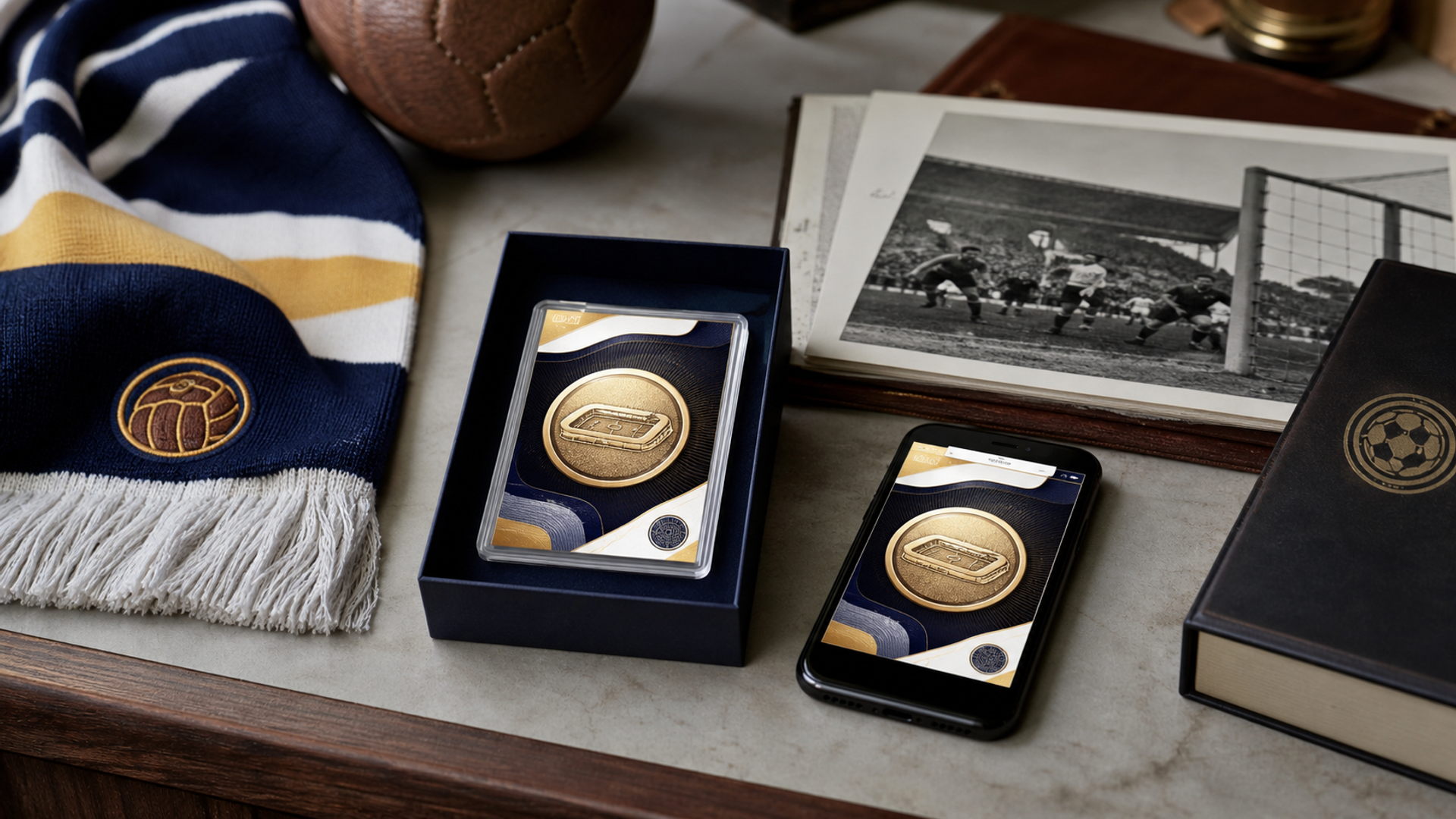
The FIFA Fan ID is best understood as a personalised physical-and-digital World Cup memento with interactive features. It is not a visa, not an entry ticket and not a substitute for the official FWC2026 Mobile Tickets app. That distinction matters because the object looks official enough to be mistaken for a credential.
FIFA describes the Fan ID as available to eligible ticket holders and designed to work in both physical and digital form. Depending on the activation and experience, holders may tap or scan it to reach fan content. Its long-term attraction is therefore less like a stadium pass and more like a numbered programme, accreditation-style keepsake or connected collectible tied to a specific tournament.
What the Fan ID does—and does not do
| Question | Answer | Practical consequence |
|---|---|---|
| Is it the match ticket? | No | Keep the official mobile ticket working on the correct phone |
| Is it a visa or border document? | No | Follow the entry rules for the host country and your nationality |
| Is there a physical version? | Yes, under the official programme | Preserve it as you would a personalised paper or card collectible |
| Is there a digital version? | Yes | Secure the linked account and recovery email |
| Can it unlock fan content? | FIFA says the physical/digital experience can be tapped or scanned | Treat links as an experience layer, not proof of stadium access |
| Is it automatically valuable? | No | Condition, provenance, scarcity and future collector demand remain uncertain |
The current official FIFA Fan ID page and launch announcement are the authoritative references for eligibility and function. Check them again before relying on any feature because programme details can change.
Why the physical-and-digital pair is interesting
Traditional sports memorabilia is usually static: a ticket stub, programme, scarf or pin. A connected collectible adds an account and content layer. That can create a richer provenance trail, but it also creates dependencies that paper collectors did not have to manage.
The physical object can survive after an app or web experience changes. The digital record can preserve context when the physical card is misplaced. Together they may tell a more complete story: who received the item, which tournament it belongs to and how it was experienced. Neither should be assumed to guarantee monetary value.
Collectors should separate three kinds of value:
Personal value: a named record of attendance and memory.
Documentary value: an object tied to a defined event and official programme.
Market value: what another buyer may pay later, which cannot be known in advance.
The first two exist without speculation. The third depends on future demand, transferability, condition and whether personalisation makes the item more or less desirable to another collector.
The provenance pack
If you want the Fan ID to remain intelligible years later, preserve context without exposing sensitive data publicly.
| Keep | Why | Privacy treatment |
|---|---|---|
| Original physical Fan ID | Core object | Do not post high-resolution identifiers publicly |
| Official confirmation email | Establishes programme source and date | Store privately; redact address and account details in any shared copy |
| Match and travel diary | Adds personal context | Record memories, not passport or payment numbers |
| Photographs of the object in use | Connects it to the event | Avoid publishing QR codes or account screens |
| Packaging or carrier | Supports condition and completeness | Store separately if acidic or abrasive |
| A dated note explaining the digital feature | Preserves meaning if the service later changes | Do not record passwords or recovery codes |
This is the same principle used for watch documentation: evidence is stronger when dates, objects and service records form a coherent timeline. The luxury-watch travel documentation checklist explains that evidence discipline in a different collector category.
How to store the physical object
Do not laminate it automatically. Lamination is irreversible, can trap contaminants and may reduce collector interest. First identify the material and how easily the printing scratches. Handle it with clean, dry hands and avoid repeatedly tapping or scanning if that flexes the object.
Use a chemically stable, archival-quality sleeve that does not contain plasticisers likely to migrate. Keep the sleeve flat inside a rigid, acid-free enclosure. Store it away from direct sunlight, high heat and damp conditions. Do not place adhesive tape, rubber bands or PVC directly against the surface.
If the object includes an embedded chip or antenna, avoid bending, punching or placing heavy pressure on it. Keep strong magnets and unnecessary heat away. These precautions are conservative; they protect the physical form whether or not the connected function remains active.
Protect the digital side
A digital collectible is also an account-security task. Use a unique password for the FIFA account, enable the strongest available authentication and retain access to the recovery email. Do not give a buyer or acquaintance your main account credentials in order to “show” the digital item.
Before sharing a screenshot, inspect it for:
QR codes or deep links;
email addresses and account identifiers;
seat, match and travel details that reveal where you will be;
serial numbers or activation data;
notifications visible at the top of the phone.
Share a cropped, redacted view when the purpose is simply to show the design. A collector does not need to expose a live credential to demonstrate ownership.
Fan ID versus the actual matchday credentials
The Fan ID belongs in the souvenir and fan-experience layer. Match access remains in the official mobile ticket. Border entry remains governed by passports, visas or other official travel requirements. Hotel and transport access use their own credentials.
Keeping those layers separate prevents a polished object from acquiring powers it does not have. Before leaving for a match, complete the World Cup mobile-ticket phone checklist. Keep the Fan ID accessible if you want to use its fan features, but do not let it distract from the credential that controls entry.
Is it worth collecting?
Before treating a personalised Fan ID as transferable, read the programme terms. A physical object can be sold in the ordinary sense while a linked account, licence or digital feature may not be transferable. Do not include account credentials in a sale and do not promise that a future owner will inherit online functions. Describe exactly what is included: physical item, original packaging, redacted confirmation and any non-transferable digital context.
If the object is damaged, retain the original material rather than attempting an invisible restoration with household adhesive. A conservator can often learn more from an honest condition record than from a repair that obscures materials and chronology.
It is worth keeping if it records a tournament you attended, a journey you value or a moment you want to document. That conclusion does not require a price forecast. The physical-and-digital design makes it a representative object of how major events are changing: identity, content and memory now sit across both a tangible artefact and an account.
Preserve the object, the official evidence and a short account of what it meant to you. Avoid claims about guaranteed scarcity or investment return. The most defensible collectible is one whose provenance is clear and whose owner did not damage it while trying to manufacture value.