AI phone agent software can place or answer calls and handle a defined task, but results depend on the service, call type and approval rules. Treat a call as delegated work that needs a measurable outcome—not as a guarantee that every conversation will succeed.
What changed with task-based voice agents?
AI Rudder describes CALL-E as a goal-based voice agent designed to listen to interactive voice-response menus, wait, select options and continue a conversation. That is a vendor description of its product, not independent proof that every call completes successfully. A restaurant booking, appointment confirmation or customer-service query may each require different integrations and rules.
What can a calling agent do, and where should it stop?
| Task | Reasonable boundary |
|---|---|
| Ask opening hours | Agent may gather information and report the source |
| Request an appointment | User confirms date, identity details and final booking |
| Change a reservation | User reviews cost or cancellation terms before commitment |
| Discuss a dispute or sensitive matter | Human takes the call |
Disclosure, recording and consent requirements differ by jurisdiction and service. Check the provider's current terms and the rules that apply to the call. Never give a calling agent unrestricted payment credentials or assume it can negotiate a nuanced exception on your behalf.
How does this relate to an AI agent phone?
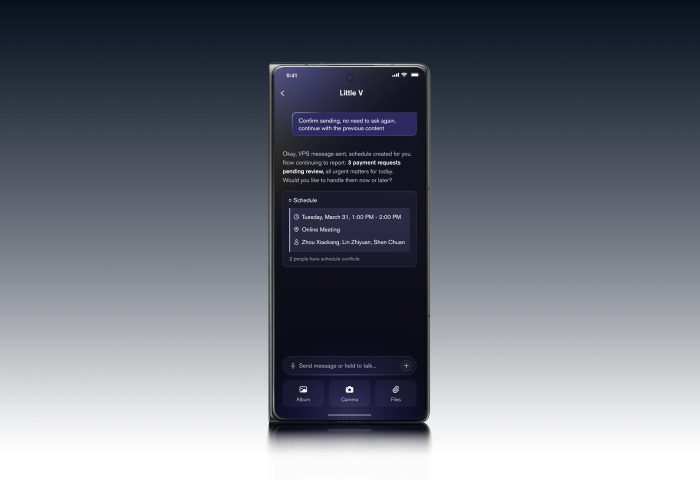
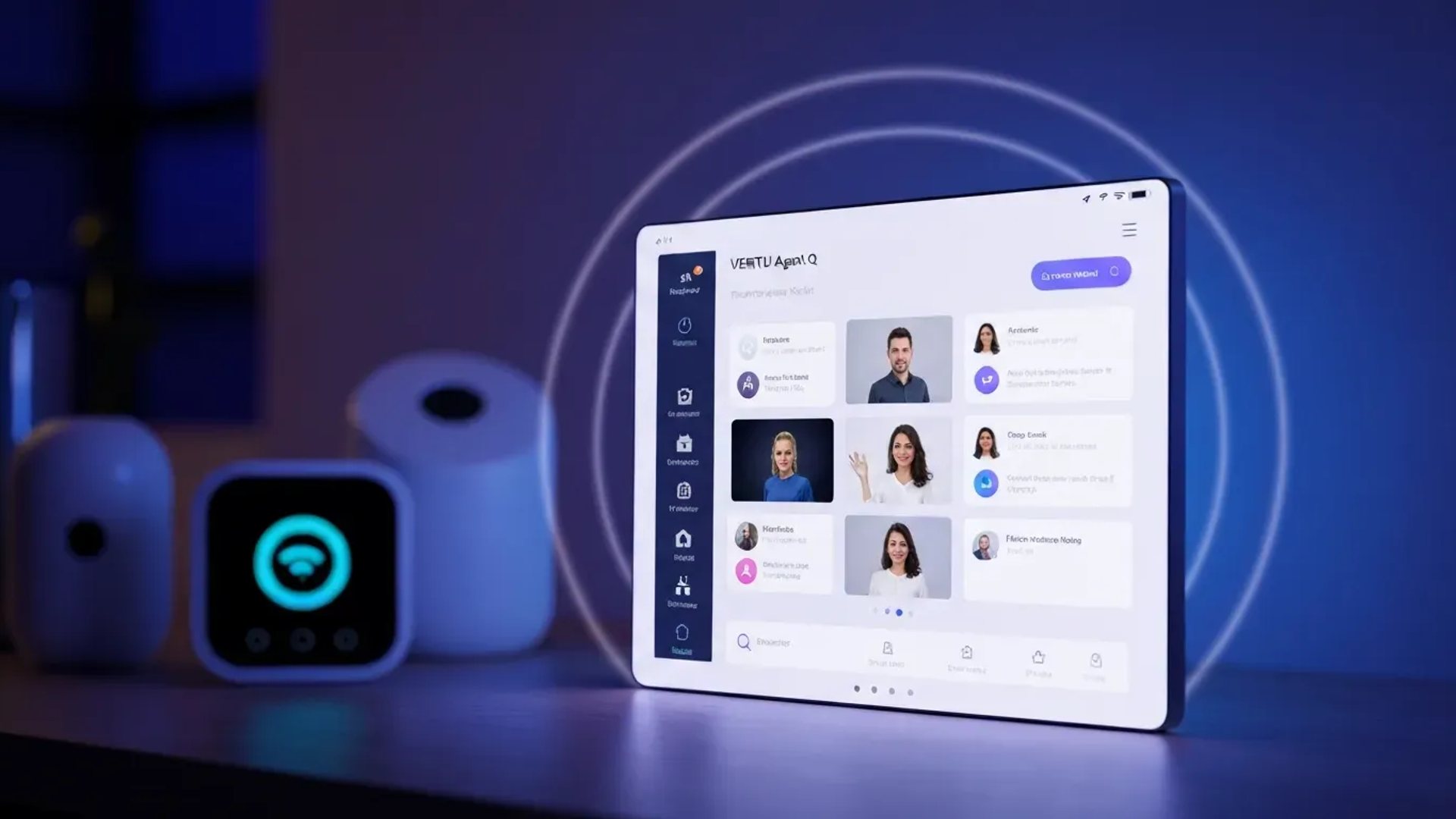
VERTU's Agent Q presents Ruby Talk as a one-touch gateway to AI agents and describes a human concierge alongside agent services. That official description supports a broader assistant-and-human workflow; it does not establish that Agent Q itself uses CALL-E or autonomously makes arbitrary telephone calls. Ask which services, regions and approval steps are supported on the exact device and software version.
How do you set a safe delegation rule?
- State one task and one permitted outcome.
- Limit information shared to what the task needs.
- Set a point at which the agent must ask you before committing.
- Review the returned details against the original source.
- Keep a human route for errors, urgency or ambiguity.
What should you ask a provider?
Ask whether the service identifies itself as AI, whether calls are recorded, how transcripts are retained, whether you can stop a call, and what happens if the recipient asks a question outside the brief. An answer that is vague on those points is a reason to keep the task with a person.
What phone-call tasks can an AI agent handle?
Potentially suitable tasks are narrow, low-stakes requests where the user can verify the outcome. Examples include asking a business for opening hours, checking whether an appointment slot is available, requesting a delivery update or navigating a basic interactive voice-response menu. These are examples of task types, not a promise that every calling agent supports them.
| Task | What the agent may do | Where the user should stay involved |
|---|---|---|
| Ask a public question | Call, ask the stated question and relay the answer | Check the business and source of the information |
| Request an appointment | Find available times if the service permits | Approve the date, personal details and final booking |
| Change a reservation | Ask about options or policy | Approve fees, cancellation terms and any commitment |
| Handle a complaint or sensitive matter | Collect basic routing information | Take over the conversation and make decisions directly |
How is an AI phone agent different from a voice assistant?
A voice assistant typically answers a spoken request, retrieves information or performs a supported device action. A phone agent may carry out a multi-step interaction with another person or an automated phone system. That introduces new questions: what identity is disclosed, whether the call is recorded, what information is shared and what counts as permission to commit the user.
For example, “find out whether the clinic has an opening” is an information request. “Book the first available appointment” grants more authority and may disclose personal information. “Cancel my existing appointment if there is an earlier one” adds a consequential decision. Give the agent only the first task unless you explicitly approve the later actions.
How should you measure whether a call agent saves time?
There is no universal time-saving figure: menus, hold times, language, integrations and human responses vary. For a few low-risk calls, record the time you would normally spend, the agent’s elapsed time, whether the request was completed correctly and how much correction or follow-up you needed. Count only successful outcomes. A faster call that produces a wrong booking is not a time saving.
- State one task, the business to contact and the permitted outcome.
- Set a limit on personal information and spending authority.
- Require a pause before bookings, cancellations or payments.
- Ask for a concise result and any reference number.
- Verify the final detail with the business or confirmation message.
What does VERTU Agent Q provide?
VERTU describes Agent Q as offering Ruby Talk access to AI agents alongside a human concierge. That supports describing an agent-and-human assistance model; it does not establish that Agent Q uses the third-party calling service discussed above or can autonomously call any number. Confirm the supported service, country, approval steps and current terms on the exact device.
Call recording, AI disclosure and consent rules differ by jurisdiction. Check the service provider’s current terms and the rules that apply to both parties before delegating a call. Keep payment credentials, health details and confidential negotiations under direct human control unless you have verified a specific, appropriate safeguard.
What published call-completion and response-time figures can you compare?
One 2026 production-fleet study reported 89,862 completed calls from 90,157 attempts (99.67%) across 71 agents and 57 organisations. Its outcome measures whether a call completed, not whether the agent solved the caller’s task. This is one operator’s dataset, not a universal success rate and not a VERTU product result. See the study and methodology.
A separate 2026 comparison measured time to first audio on scripted calls: five platforms recorded medians from 1,296 to 1,740 milliseconds and 95th-percentile results from 1,768 to 2,259 milliseconds. A different production-call study in the same comparison reported medians from 680 to 850 milliseconds. Methods produced different ranges, so these are study-specific observations, not a service-level promise. See the benchmark methodology. For an actual provider, measure completion, task resolution, transfer accuracy, median response time and p95 response time on the calls you intend to delegate.
Conclusion
AI can make phone calls for you through specific voice-agent services, but an AI phone does not automatically inherit every such capability. Treat calls as delegated actions with consent, a limited scope and human confirmation for consequential decisions.