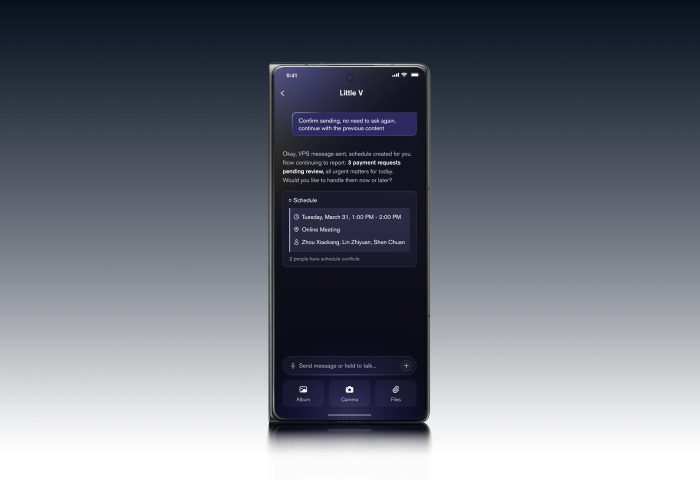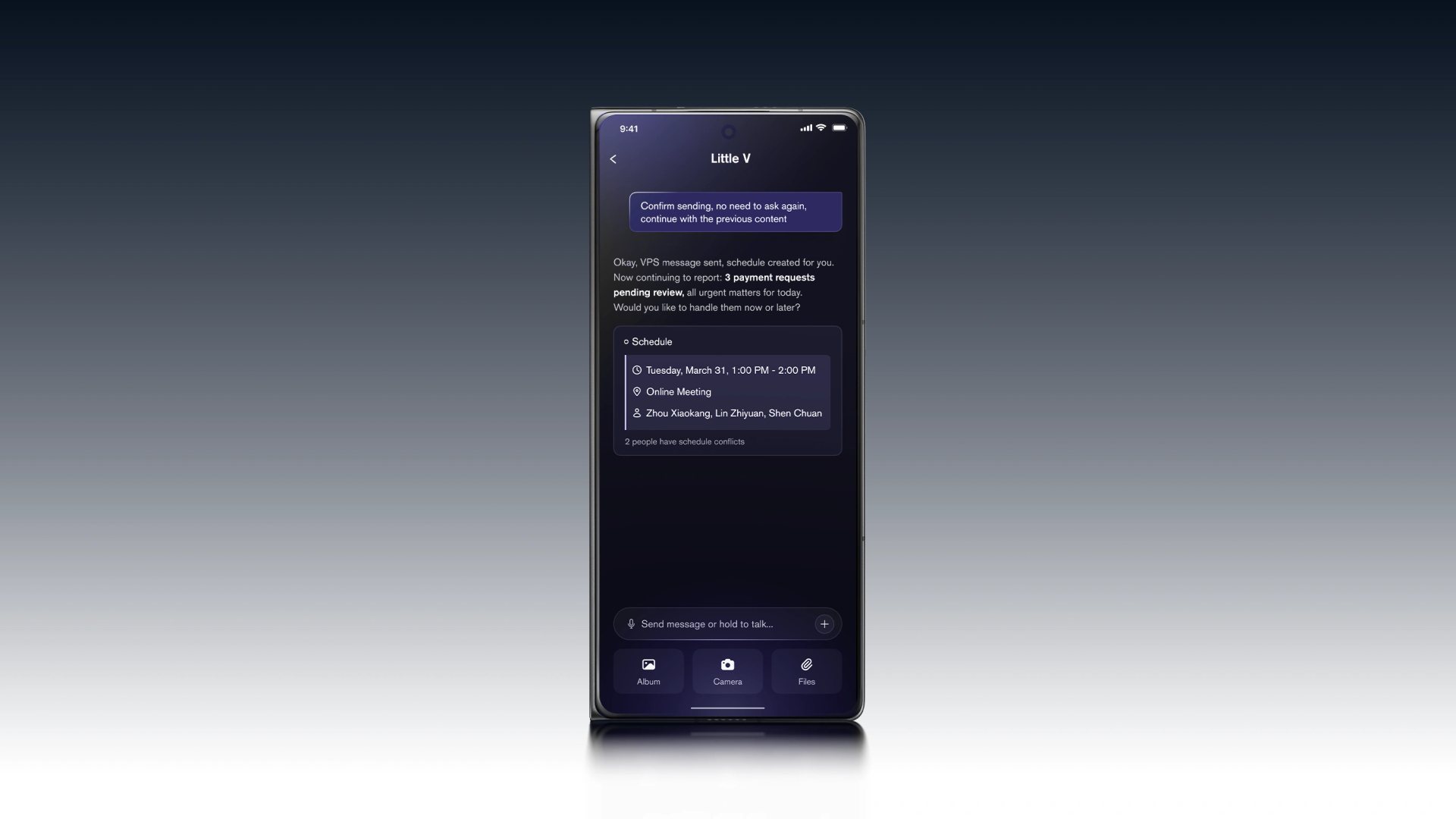
Android AI agent privacy depends on what an agent can see, which apps it can operate and when it must ask before acting. Compared with a conventional assistant that mainly answers or retrieves information, an agent may move through a multi-step task. Review permissions and data flows for the exact feature, device and software version before enabling it.
What changes when an agent works across apps?
An ordinary assistant may answer a question. An agent may read context, open an app and carry out a sequence toward a goal. Google's Android security explanation describes explicit user control, data protection and operational transparency for Gemini Intelligence. Those are Google's stated design principles; they should be checked against the feature and device actually available to you.
What access should you review first?
| Access | Question to ask |
|---|---|
| App automation | Which named apps can the agent operate? |
| Personal context | Which messages, files or account details may be used? |
| Action approval | What requires confirmation before a purchase or booking? |
| Task visibility | Can you watch, interrupt and review the action? |
| Retention | Where are task records stored and how are they deleted? |
Google's multi-step task preview says supported automations begin with a user command, run selected apps in a limited virtual window and allow the user to monitor or stop progress. Availability is limited by device, market, app and rollout. Do not assume those exact controls apply to another provider.
How does a VERTU agent phone fit?
VERTU describes Agent Q as an agent-led phone with Ruby Talk and a human concierge route. Its ALPHAFOLD page describes Hermes Agent and actions subject to approval. These official descriptions identify the product direction; they do not justify assuming that every app, data source or region is supported. Ask for the current permissions screen and service terms on the exact device.
What is a sensible first-use checklist?
- Try a low-stakes task with no payment or sensitive documents.
- Allow only the apps needed for that task.
- Review the proposed action before commitment.
- Watch the task status and test the stop control.
- Remove unused permissions after the task.
When should you keep a person in control?
Use human review for payments, confidential negotiations, travel changes with penalties and any action that could expose another person's private data. Convenience is valuable only when the user can understand and limit the delegated authority.
What changes when an Android AI agent can act across apps?
A useful distinction is the action boundary. A conventional assistant may answer a question or perform a single supported command. An agent may use context, open one or more apps, enter information and continue toward a goal. The extra capability can also widen the privacy surface: the agent may encounter message content, contacts, files, location or account details while completing a task.
| Stage | Privacy question | Control to verify |
|---|---|---|
| Request | What did the user ask the agent to do? | Can the task and permitted outcome be stated narrowly? |
| Context | Which messages, files, contacts or location may be read? | Can access be limited to only what the task needs? |
| App action | Which apps can be opened or operated? | Can the user review app access and revoke it afterward? |
| Commitment | Could the action send, book, buy, delete or share? | Does the agent pause for approval before consequential actions? |
| After the task | Are prompts, transcripts or results retained? | Can the user see, delete or manage task history? |
Google’s published Android and Gemini explanations describe user control and task monitoring for supported features. Availability and safeguards can vary by device, market, app and rollout; consult Google’s Android privacy information and the settings on the device itself. A platform-level description should not be assumed to cover a third-party agent.
How is an Android AI agent different from a regular assistant?
Think of a regular assistant as responding to a request and an agent as potentially carrying out a sequence. For example, an assistant might tell you how to find a booking. An agent might open a travel app, search dates and prepare a booking. The second flow introduces app access and a possible purchase, so it should have a visible review step before final confirmation.
Start with a low-risk task that does not require payment, confidential documents or another person’s sensitive information. Watch the agent work, verify the result in the original app and test how to pause or stop it. Remove temporary permissions when the task is complete.
Which actions should remain under direct human control?
Require personal review before payments, bookings with cancellation charges, sending confidential messages, deleting records or sharing another person’s data. Use a human for negotiations, emergencies and situations where a misunderstanding could create a meaningful cost. Convenience should not silently expand the authority granted in the original request.
VERTU describes Agent Q as offering an agent-led experience with Ruby Talk and access to a human concierge. That is a product description, not proof that every app or workflow is supported. Confirm current permissions, regional availability, approval controls and data-retention terms for the exact service before relying on it.
How can you review an agent before granting access?
- Start with one clearly bounded, low-risk task.
- Check the Android permission screen and the access requested by each connected app.
- Observe whether the agent explains what it is about to read or change.
- Stop before a message is sent, a file is shared, a purchase is made or a record is deleted unless you have reviewed the details.
- After the task, inspect app permissions and clear temporary access or history where the product allows it.
These checks are practical safeguards, not proof that an agent is secure or private. Permissions, processing location, retention and human review are separate questions. Read the service’s current privacy notice and verify the setting on the specific device; software updates and regional releases may change available controls.
How many permissions and how long is agent data retained?
There is no fixed permission count for an Android AI agent: access depends on the agent, connected apps, device version and task. Android’s Privacy Dashboard on supported versions can show recent location, camera and microphone access; Android does not define one universal list for every agent. Check each connected app’s permission screen and stated purpose.
Retention also varies by provider. As one bounded example, Google says Gemini Apps activity is auto-deleted after 18 months by default, with options for 3 or 36 months; when Keep Activity is off, future chats may still be kept for up to 72 hours for service operation and safety, and data reviewed by human reviewers can be retained for up to 3 years. These are Gemini-specific terms, not Android-wide rules. Read Google’s Gemini privacy information and the exact agent’s policy.
Conclusion
Android AI agent privacy is a practical permission problem: define the task, limit app and data access, require confirmation at consequential steps and retain a clear way to stop and review the agent's work.