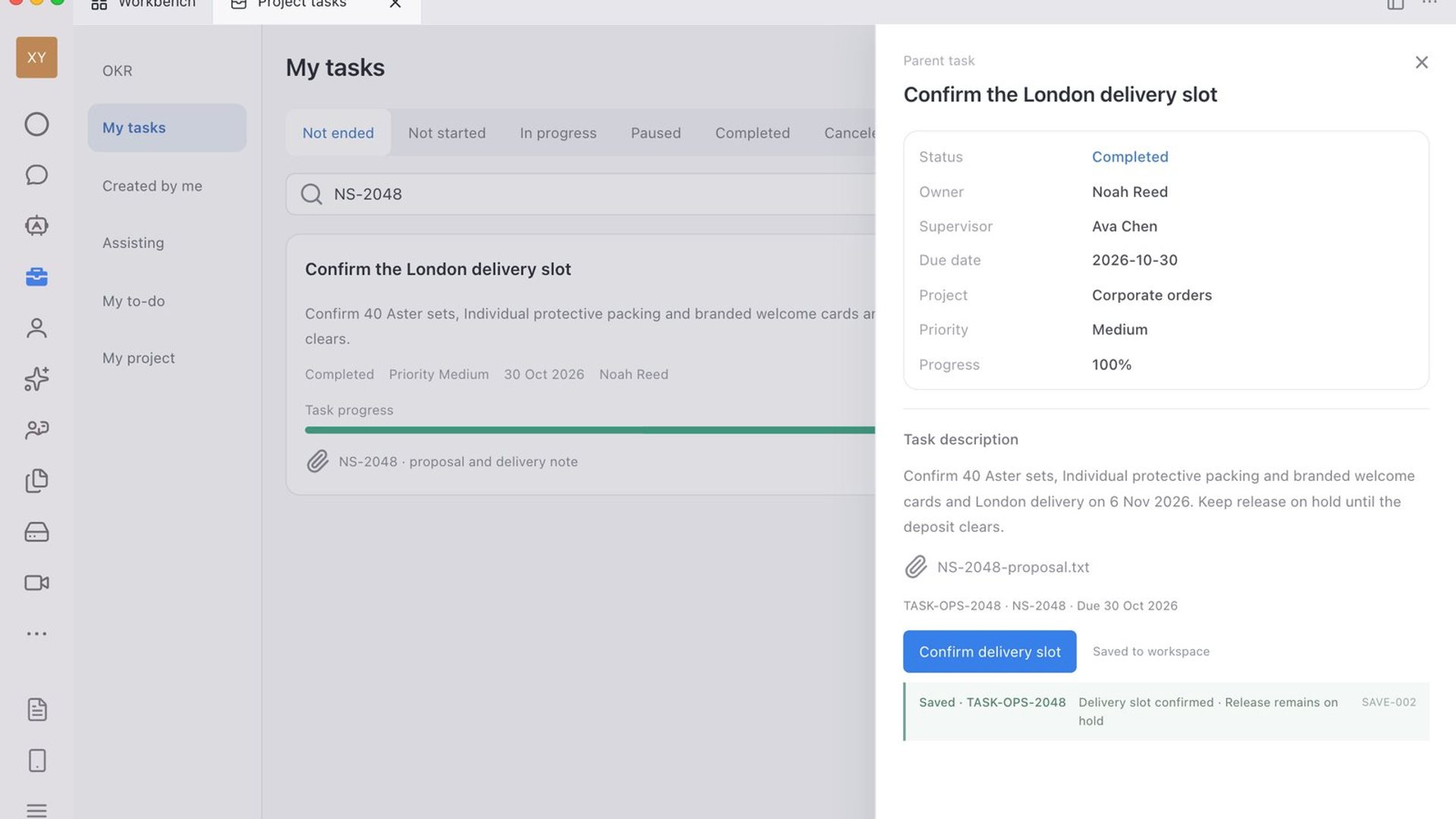
Cloud project management software succeeds when a team can move its live work into a shared environment without losing ownership, decisions or the history behind a status. Selecting a platform is only the first step. This implementation guide explains how to define a project data model, migrate active work, configure access and verify that a cloud workspace actually improves decisions after launch.
Key Takeaways
- Start with a small set of projects and a defined source of truth for each field.
- Move outcomes, milestones, owners and open decisions before importing every old task.
- Test permissions, dependencies, notifications and exports with real user roles.
- Measure whether teams resolve blockers faster after launch, not just whether they log more activity.
What should move to the cloud?
A migration should preserve the information people need to deliver the next outcome. That usually includes the project objective, accepted scope, milestone dates, owners, active dependencies, open risks, decision records and links to source documents. Old comments and closed tasks may be valuable for an audit, but importing everything into a new workspace can bury current work. Define an archive and retrieval plan before deciding what must remain editable.
Choose one current project with several contributors and at least one meaningful dependency. Map each field in the existing system to a destination field and name its owner. If two tools disagree on a date or status, decide which source is authoritative before importing. Without that decision, the new cloud system merely displays the old ambiguity in a new interface.
How should cloud project management rules be set before configuring views?
Define deliverables and acceptance
A task can be marked complete while its deliverable is still unreviewed. Write an acceptance condition for each milestone: what must exist, who reviews it and where the evidence lives. Then make the status labels mean the same thing across the pilot. “In progress” should not conceal a decision that has been waiting for two weeks.
Give each next action an owner
Many colleagues may contribute, but the next action needs a person responsible for moving it forward. Record a reviewer separately where approval is required. If a task has no owner, route it to a named project lead rather than leaving it in a general queue. A clear ownership rule matters more than an elaborate colour scheme.
Document dependencies and decision rights
Link the work that cannot start until another deliverable or approval is complete. Test what happens when a predecessor slips. The team should be able to identify the affected milestone and the person who can decide whether to change scope, timing or resources. A timeline is useful only when it exposes that consequence.

How should a cloud project management team migrate work?
- Inventory. Count active projects, users, attachments, custom fields and integrations. Identify sensitive material and records subject to retention rules.
- Clean. Close duplicates, resolve ambiguous owners and agree on the current milestone dates. Preserve an export of the original state.
- Pilot import. Move one representative project and compare counts, dates, links and access rights against the source. Ask ordinary users to find the next decision without coaching.
- Cutover. Announce the authoritative workspace, make the old location read-only if appropriate, and set a support channel and rollback criteria. Keep an audit trail of changes made during the transition.
Atlassian's cloud migration checklist recommends planning the transition, permissions and post-migration support. Use it as a general migration reference, then verify the requirements of the chosen vendor and your organisation. A clean import is not a successful launch if users cannot complete their normal work the following week.
Test access and continuity with realistic roles
Use a contributor, project lead, executive reviewer and external collaborator if that role exists. Each should see only the projects and files needed for their work. Check who can change deadlines, attach documents, invite new people and export data. Do not assume that access to a project board grants appropriate access to every linked file. Test the document's own permissions as well.
Cloud access usually relies on a network connection. Ask what users can view or edit during an outage and how changes reconcile afterwards. Test mobile and browser layouts where teams actually work. Review notification settings so an urgent blocker is visible without creating a flood of routine alerts.
Connect reports to evidence
A project dashboard should let a reviewer move from a summary to the source task, decision or document. Define when each measure updates and who can correct a mistake. A percentage complete may be easy to calculate but weak as a measure of delivery if the hardest approval is still open. Consider reporting accepted milestones, ageing blockers and decisions awaiting an owner.
The VERTU VPS page shows project tasks and a Business 360 view as part of an AI-native business interface. It may be relevant when leaders need to review authorised project context alongside other business signals. The public page does not establish that a specific project platform can be connected in every deployment. Demonstrate the exact source, permission boundary and action path before relying on it in a launch plan.

What should a 30-day cloud project management acceptance test cover?
Score the outcome, not the number of clicks
Give each pilot measure a target and an owner before users begin. A project lead may own milestone accuracy, an administrator may own access exceptions and an executive reviewer may own decision turnaround. Record both the average and the worst case: a faster routine status update is a weak result if a critical blocker still waits for days. Review a sample of status claims against the source task and supporting document. This prevents the team from rewarding tidy dashboards that conceal uncertain data.
Plan the first month of governance
Set a weekly review of unowned tasks, overdue decisions, broken links and inactive users. Decide who may create new project templates and custom fields. Without light governance, separate teams can reproduce the inconsistency the migration was meant to solve. Keep the rules small enough for a project lead to explain, and revise them when the pilot exposes a genuine exception.
Before cutover, record the time required to prepare a status meeting, the age of the oldest unresolved blocker, the number of decisions without an owner and the amount of rework caused by stale information. After launch, compare the same measures. Ask team members whether they can find the current plan and source evidence without requesting a separate message. Track the effort to maintain permissions, integrations and training.
Define failure criteria as well as success. If critical documents are inaccessible, data cannot be traced to its source or an important integration is unreliable, pause expansion and fix the issue. Export and rollback plans should be tested, not merely written down.
FAQ
Should we import every historical task?
Usually not into the live workspace. Keep what current work requires and preserve historical material according to retention and audit needs. Test retrieval before retiring the old system.
Can a cloud tool fix weak project ownership?
It can make missing ownership visible, but a manager must still assign decision rights and maintain status definitions. Configuration cannot substitute for an agreed operating rule.
How is this different from selecting a project tool?
Selection compares products and trade-offs. Implementation proves that the chosen tool can carry real projects, permissions and source records through a controlled cutover.
Conclusion
Implement cloud project management software by moving a representative project in stages, preserving source evidence and testing how real users handle a slipping dependency or blocked decision. A successful launch gives the team a trustworthy current plan and gives leaders a clear path from a status summary to the work behind it.