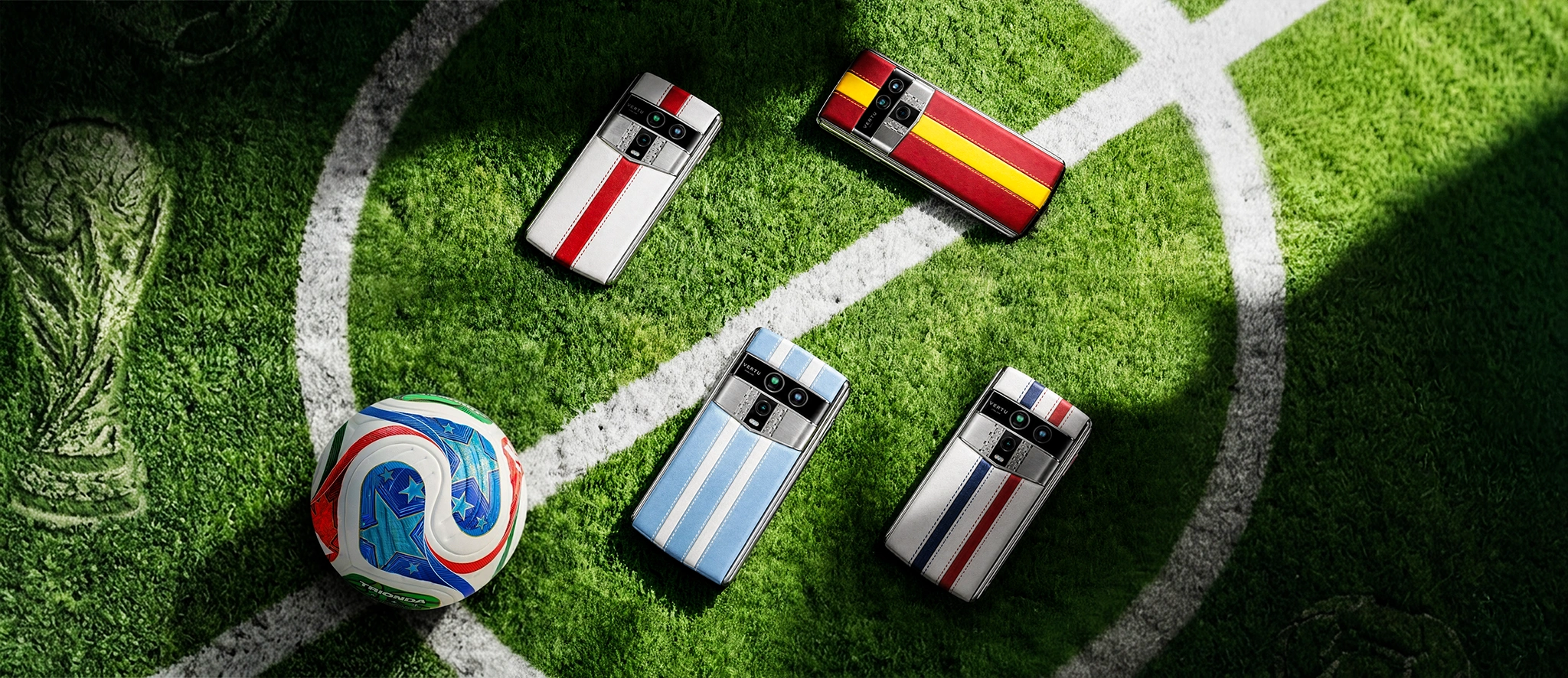
World Cup 2026 won’t just be watched. It will be hosted.
For brands, that distinction matters. A tournament of this scale becomes a moving, multi-city stage where hospitality, private access, and cultural relevance carry more weight than billboard impressions. And as global events tilt toward experience-led commercialization, premium tech branding is shifting with them.
In the smartphone category, this is a quiet correction.
The “premium” story used to be camera modules and performance graphs. In 2026, that still matters—but it rarely closes the deal for people who already own the best mainstream devices. What closes the deal is what the device does for your life when your calendar is dense, your travel is constant, and your privacy cannot be negotiable.
This article is a decision guide: what to look for, what to ignore, and how to evaluate a World Cup luxury campaign (and the smartphone brands behind it) with a buyer’s eye.
Key TakeawayWorld Cup 2026 is a proving ground for luxury technology. The winners won’t be the loudest—they’ll be the most useful, discreet, and operationally credible.
Why World Cup 2026 changes the premium playbook
World Cup 2026 expands the surface area for brands: more matches, more cities, more “moments” to activate. FIFA’s commercial program has also grown accordingly, with a larger inventory and higher sponsorship expectations; SportsPro reports the 2026 sponsorship program has been exceptionally successful and highlights the scale behind it, including the tournament’s expanded format and projected sponsorship revenues in FIFA’s budget framing (SportsPro’s report on FIFA’s 2026 World Cup sponsorship sellout (2026)).
For the buyer, that commercialization has a side effect: a flood of “premium” messaging.
The brands that stand out tend to do three things well:
They use hospitality as a relationship engine, not a perk.
They build experiences that travel well—from private rooms to digital content.
They treat access as a product with logistics, security, and service behind it.
That is precisely where luxury technology can compete: not by shouting “innovation,” but by making high-intent moments feel controlled.
What a “World Cup luxury campaign” really sells
A useful way to think about a World Cup luxury campaign is that it sells three currencies:
1) Status (but with a new etiquette)
Status at global events has become less about conspicuous consumption and more about curation: where you sit, who you meet, what you can access without friction.
A campaign that still feels like mass-market advertising tends to lose high-value audiences. A campaign that feels like private hosting tends to win them.
2) Access (structured, not improvised)
Hospitality programs are typically packaged with clear formats rather than vague promises. SPORTFIVE, for example, describes World Cup 2026 hospitality products as structured experiences—such as “Follow Your Team” (a journey format) and “Final Round Series” (a prestige, top-matches format)—positioned around exclusivity and relationship-building (SPORTFIVE’s overview of FIFA World Cup 2026 hospitality products).
This matters because luxury buyers don’t buy “VIP.” They buy certainty:
guaranteed entry
controlled environments
reliable coordination
3) Time (the rarest perk)
At this level, the most valuable deliverable is often not a gift or a view. It’s the removal of coordination burden: transport, security, reservations, contingencies.
That is why “concierge” has become a serious part of premium positioning. Not as a flourish—but as infrastructure.
The premium smartphone branding shift: from specs to service layers
If you’re buying at the top end of the market, you’re rarely choosing between bad options. You’re choosing between philosophies.
In 2026, the most persuasive premium tech branding tends to move away from “our processor is faster” and toward “our ownership model protects your lifestyle.”
In practice, that means evaluating a luxury smartphone less like a gadget and more like a system:
- Craftmaterials, build discipline, provenance
- Privacy posturenot just features, but default behaviors and trust signals
- Servicewhat happens after purchase, across time zones
- Access ecosystemhow the brand enables experiences (events, travel, privileges)
- Personalizationwhether the product adapts to you, not the other way around
The best premium smartphone brands make these layers legible.
A decision framework: 7 criteria to evaluate a luxury smartphone campaign in 2026
Use this checklist to judge any “luxury smartphone 2026” campaign you see around World Cup season—whether it’s official sponsorship or proximity marketing.
1) Does the campaign have a real service backbone?
Look for evidence of a service model: what is staffed, what is 24/7, how requests are handled, how exceptions are managed.
If you want a reference point for what a service-forward ownership layer looks like, review VERTU Concierge and how it frames private service as a core part of ownership.
2) Is “access” defined as a product, not a slogan?
The more premium the promise, the more precise it should become.
A credible campaign makes it clear whether access means:
hospitality environments
curated watch events
private dinners
member privileges
travel coordination
How to verify: if the campaign can’t describe the experience format, ask what the “package” actually includes (venue type, hosting model, support).
3) Is the premium tech branding discreet enough to fit the audience?
A common mistake is confusing attention with prestige.
Luxury audiences often want to enjoy the event without becoming the event. Campaigns that rely on loud branding, staged hype, or performative “VIP” visuals can signal that the brand doesn’t understand discretion.
4) Does the brand understand multi-city reality?
World Cup 2026 is multi-host, multi-time-zone, and operationally complex.
Your bar should be: can the brand support you across movement?
This is where service matters again, especially in travel scenarios. If the campaign narrative includes lifestyle support, check whether the brand can credibly deliver it. For context on how VIP access is positioned alongside travel logistics, see this VERTU perspective on concierge service for VIP access and luxury travel.
5) Is there a reason the smartphone belongs in the story?
The most sophisticated campaigns don’t treat the phone as merchandise.
They treat it as the control surface for:
secure communication
itinerary changes
approvals and confirmations
access credentials
private coordination
In other words: the smartphone is not a trophy. It’s an operational advantage.
6) Does personalization feel real (or just cosmetic)?
Luxury personalization is not only engraving. It is fit.
A credible offer makes the buyer feel the product is made for their way of moving—materials, configuration, support, and ownership experience.
If you want a clean definition of what “bespoke” should mean in this category, use bespoke luxury smartphone as a baseline for evaluating whether the campaign is substance-first.
7) Are the trade-offs acknowledged, not hidden?
High-end buyers are not afraid of trade-offs. They are afraid of surprises.
A trustworthy campaign signals maturity by addressing:
ecosystem fit
after-sales support
how updates and long-term care are handled
authenticity/provenance safeguards
Collector’s note: The absence of any limitations is not confidence. It’s marketing.
A VERTU-aligned activation concept: “The Private Match-Week Operating System”
A campaign idea that fits the moment (and the buyer) is not “Win a phone.” It’s “Own the week.”
Here is a concept that maps cleanly to luxury tech ownership, without depending on loud stadium branding:
The premise
A member-led program that treats match week as a moving itinerary—where the phone, the concierge, and the access ecosystem work as one.
What it delivers (in buyer language)
A private, single-thread way to coordinate: reservations, security preferences, transport, schedule changes
A controlled hospitality rhythm: pre-match, match, post-match
A “quiet access” standard: fewer hand-offs, fewer public touchpoints, more certainty
Why it works at World Cup scale
Because World Cup week is not one event. It is a chain of events, across venues, across people, across risk.
The best activations are designed as environments—lounges, pop-ups, projections, interactive installations—that create memorable moments and can be executed across host cities (Go2 Productions’ World Cup 2026 brand activation ideas). The Midway SF also highlights the rise of multi-city experiences, private hospitality, and content-centric events built for both in-person guests and digital amplification (The Midway SF on what brands are doing around the 2026 FIFA World Cup).
Where the phone fits (without becoming a spec sheet)
In this concept, the smartphone is the trusted object you keep close:
the private channel
the confirmation layer
the control layer
And the luxury is not the hardware alone—it is the reduction of friction.
Red flags: how premium branding fails at global events
Even well-funded campaigns fail for predictable reasons.
They confuse visibility with relevance
A campaign can be everywhere and still feel generic.
They sell “VIP” without operational credibility
If the brand can’t explain how it will handle exceptions, it’s not premium. It’s optimistic.
They over-index on merch
Limited drops can work, but only when the drop is attached to a service story and a coherent ownership model.
They ignore privacy as a first-order concern
For UHNW buyers, privacy is not a feature request. It is the starting point.
FAQ
Is a World Cup luxury campaign always an official sponsorship?
No. Many brands participate through hospitality, city activations, and proximity marketing that captures the cultural moment without implying official partnership. The key is whether the experience is coherent and credible.
What makes premium tech branding feel “luxury” rather than “expensive”?
Luxury is the combination of restraint, craft, and service. “Expensive” is often just materials or pricing. If the brand cannot explain the ownership experience, it’s usually not luxury.
What should I prioritize in a luxury smartphone in 2026?
Start with your non-negotiables: privacy posture, after-sales confidence, and service availability across time zones. Then evaluate personalization, materials, and the ecosystem you actually want to live inside.
Where does VERTU fit in this landscape?
VERTU’s positioning is ownership-led: craftsmanship plus private service, with a lifestyle layer designed around coordination and access. If your priority is a discreet device backed by a concierge model, it’s a category-defining option to evaluate.
Next steps
If you’re evaluating premium experiences around World Cup season and want a brand-built path that centers discretion, service, and ownership, start here: VERTU World Cup 2026.
If your decision hinges on whether the service layer matches your lifestyle, review VERTU Concierge and use it as your benchmark for what “premium support” should mean.
Disclosure: This article references VERTU pages. Editorial judgment remains the priority.
![Top 10 Tourbillon Watches for Men [2026 Latest]](https://cdn.sanity.io/images/e0gp1l2g/production/8cb6bc45133cf9453382fc7d074465af588bb610-1800x1080.webp?w=800&h=450&q=82&auto=format&fit=crop)