

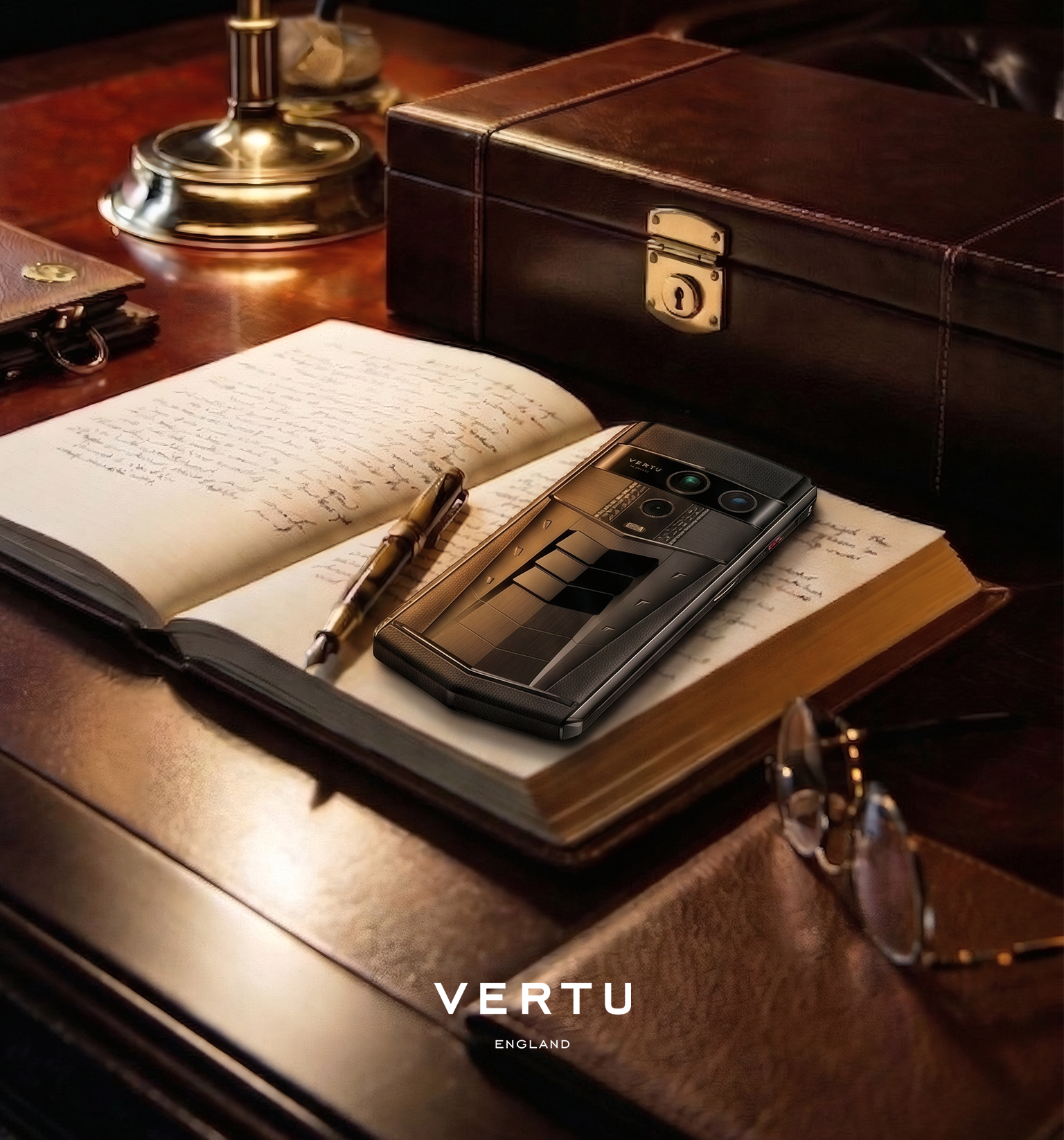
If you’re asking “vertu phone why so expensive?” you’re usually trying to resolve one specific tension: a phone is a fast-moving category, while VERTU pricing behaves like a watch, a bag, or a bespoke object.
Here’s the direct answer.
Key TakeawayVERTU isn’t priced as a spec sheet. It’s priced as handcraft + rare materials + low-volume production + private service, plus the cultural reality that status objects follow different economics than mass-market electronics.
Why VERTU phones are so expensive (and what you’re not paying for)
This section is the fastest way to answer “vertu phone why so expensive” without hand-waving: separate the price into what can be manufactured at scale, and what cannot.
A mainstream flagship phone earns its price through performance, camera systems, and R&D spread across millions of units.
VERTU’s price works differently. It concentrates cost into things that don’t show up in benchmark charts:
- Time in the buildhands, tools, inspection, and accountability.
Materials that are costly to source and costly to work with.
- Low volumefewer units, less cost amortization.
- Serviceaccess, responsiveness, and execution when timing matters.
- Ownership signalan object that communicates taste and belonging.
That’s why the familiar “same chipset, higher price” argument misses the point. It assumes the category rules are the same.
The craft: why hand-assembly changes the cost structure
Handcraft is expensive for a simple reason: you can’t scale it the way you scale automation.
CNET’s look inside Vertu’s build process described phones assembled by hand in England, with detailed checks along the way and a single-person accountability model (including a signature tied to the build). That’s closer to small-batch manufacturing than consumer electronics assembly lines. (See CNET’s 2015 look inside Vertu’s hand-assembly process.)
What that means in practice:
Higher labor cost per device (and it scales linearly).
More inspection per component and per finish.
Stricter rejection of parts that don’t meet cosmetic or dimensional standards.
If your objection is “labor isn’t worth that much,” the right comparison isn’t another smartphone. It’s any product where the finish is part of the value.
The materials: why sapphire, titanium, and leather aren’t just decoration
Luxury materials aren’t expensive only because they look expensive. They’re expensive because they’re harder to manufacture, finish, and keep consistent.
Sapphire crystal: cost is in the process, not the buzzword
VERTU describes sapphire crystal as exceptionally hard (9 on the Mohs scale) and frames its use as a durability-and-clarity choice with manufacturing complexity. (See VERTU’s “Rare Materials” explainer (2025).)
A practical way to think about it:
Sapphire is less forgiving in manufacturing.
Finishing and coating are not trivial if you care about reflections and long-term clarity.
Grade 5 titanium: harder to work with, harder to fake
Titanium signals two things at once: engineering intent and material cost.
It’s not just the raw material. It’s machining time, finishing time, and consistency across surfaces.
Leather: you’re buying tactility and aging behavior
Leather on a phone is irrational in the “best value per dollar” sense.
It’s rational in the “this is an object you touch hundreds of times a day” sense. Texture, smell, stitching, patina over time. Those are luxury categories, not electronics categories.
Low volume and bespoke options: scarcity isn’t a side effect, it’s the model
Mass-market phones get cheaper (relative to capability) because millions of units subsidize tooling, R&D, supply chain optimization, and distribution.
VERTU’s economics go the other direction:
Low volume preserves exclusivity.
Low volume limits cost spreading.
Bespoke options push more work into finishing and QA.
This is why two phones that look “similar on paper” can land in different universes on price.
Service and privileges: the Ruby Key idea (why the phone isn’t the whole product)
For the VERTU buyer, the phone can be the access point to a service layer.
That layer matters when you care about coordination, discretion, and time zones.
A useful starting reference is VERTU’s own ownership overview of what a VERTU phone is and how services fit into the experience (see what a VERTU phone is (and how Ruby Key fits)).
If you already have a personal assistant, the service value isn’t “having someone to do basic tasks.” It’s:
Reachability at odd hours.
Execution speed on travel and reservations when windows are tight.
Coordination when you’re moving across regions.
Status and signaling: the honest part most articles avoid
Some products exist to be optimal. Others exist to be recognized.
VERTU sits in the second camp.
WIRED’s review of a Vertu Signature Touch captured this luxury logic clearly: materials and finish matter, the concierge is a differentiator, and the decision is not governed by mass-market smartphone practicality alone. It also notes trade-offs that a serious buyer should acknowledge. (See WIRED’s Vertu Signature Touch review (2014).)
Owning a status object is not always about being seen. Often, it’s about who knows.
Vertu phone why so expensive: the hardest objections (answered directly)
“Isn’t this just paying more for worse specs?”
In some cases, yes: if your definition of value is “maximum specs per dollar,” you’re in the wrong category.
The VERTU buyer is paying for a different bundle. The honest test is this:
Do you care about finish and material integrity over years of handling?
Do you value private service access enough to actually use it?
Do you want a low-volume object rather than the phone everyone else has?
If those answers are no, you can stop here and buy the best mainstream flagship.
“But phones age fast. Doesn’t that make luxury phones irrational?”
It depends on what you treat as “the asset.”
If you think the asset is the chipset and camera, the category is irrational.
If you think the asset is the object and the ownership experience, it’s closer to how luxury buyers evaluate watches: you accept cycles, but you prioritize what remains.
“What about durability? Sapphire can still break.”
Correct. Scratch resistance and shatter resistance are different problems.
Even in WIRED’s review context, the point isn’t “indestructible.” It’s that the materials and finish are chosen to hold up to daily contact and preserve feel and appearance longer than typical mass-market construction.
“What if I already have concierge through a card or hotel status?”
Then compare service by outcomes, not by label:
Collector’s note: This is the quickest way to avoid paying twice for the same convenience.
Can it execute across regions and time zones?
Does it keep continuity on preferences and constraints?
Is it reachable when you actually need it, not when it’s convenient?
If the answer is “my current setup already does this,” the service premium won’t justify itself.
“How do I avoid counterfeits or questionable provenance?”
Buy through official channels, insist on documentation, and treat provenance as part of the purchase—not an afterthought.
FAQ: quick answers people actually search
What is the most expensive phone VERTU makes?
It varies by edition, materials, and availability. The highest-priced pieces are typically limited or bespoke configurations rather than a single always-on catalog item.
If you’re searching for the vertu costliest phone, treat that phrase as shorthand for “the rarest configuration available right now,” not a permanent model name.
Why is a VERTU phone expensive compared to an iPhone or Samsung?
Because it’s priced like a luxury object: hand-assembly, rare materials, low volume, and service access. A mainstream flagship is priced like a mass-market computing product.
Is a VERTU phone worth the money?
If you’re buying specs, no. If you’re buying craft, materials, scarcity, and service—and you will use the service—it can be.
Do VERTU phones use sapphire crystal?
VERTU states sapphire crystal is used as part of its materials approach. See VERTU’s “Rare Materials” explainer (2025).
A short video, if you want the outside perspective
Next steps (a practical way to evaluate value)
If you’re deciding, don’t start with a number. Start with criteria:
- Objectmaterial feel, finish, how it will age in your hand.
- Servicewhether you will genuinely use the access layer.
- Scarcitywhether rarity matters to you.
Then look at the current range and positioning through the most practical lens available: VERTU model prices and alternatives (US guide).
Disclosure: This article references VERTU pages. Editorial judgment remains the priority.
![Top 10 Tourbillon Watches for Men [2026 Latest]](https://cdn.sanity.io/images/e0gp1l2g/production/8cb6bc45133cf9453382fc7d074465af588bb610-1800x1080.webp?w=180&h=180&q=78&auto=format&fit=crop)
![Top 10 Tourbillon Watches for Men [2026 Latest]](https://cdn.sanity.io/images/e0gp1l2g/production/8cb6bc45133cf9453382fc7d074465af588bb610-1800x1080.webp?w=800&h=450&q=82&auto=format&fit=crop)
![Top 10 Anniversary Gift Watches for Men [Full Guide]](https://cdn.sanity.io/images/e0gp1l2g/production/00dfa030a876edbe6ea7b146f6b1d8197c7656b0-3840x1860.webp?w=800&h=450&q=82&auto=format&fit=crop)