Key TakeawaysThe Vertu mobile company began inside Nokia in 1998 as a bet that a phone could be treated like a luxury object, not a disposable gadget. The early years focused on tactility, materials, and a new idea of ownership, later reinforced by concierge-style service. If you’re researching Vertu today, the origin story still helps: it separates heritage from rumor and gives you a practical framework for authenticity and provenance.
How the Vertu mobile company created a luxury category
Before Vertu, “premium phones” usually meant a nicer finish on the same mass-market idea. Vertu’s original argument was sharper.
It asked whether a phone could be treated more like a mechanical watch or a fountain pen: designed to be handled, kept, and recognized. Not because it had the newest chip, but because it had an ownership ritual.
That’s the part people miss when they search vertu company history. The Vertu phone company didn’t start by chasing features. It started by chasing a category.
1998–2002: Nokia’s luxury experiment becomes a real brand
Vertu was established in 1998 as a luxury phone venture created within Nokia. A concise third‑party timeline appears in Vertu (Wikipedia).
The early logic was straightforward:
Nokia already knew how to engineer phones.
Luxury buyers weren’t asking for “a better phone.” They were asking for an object that felt deliberate.
If you could make a phone that carried the cues of high craft, you could sell fewer units, at higher margins, to a very specific audience.
Vertu’s first handset, the Vertu Signature, debuted in Paris in 2002 (again, per that timeline).
If you’re reading this as someone in the US market, it helps to frame Vertu as a British-rooted luxury story that used global luxury capitals as its showroom language.
Early design decisions that made Vertu feel “unlike a phone”
Vertu’s founder-era decisions can be summarized in one line: slow the experience down.
Not in performance. In meaning.
1) Materials as identity, not decoration
Most consumer electronics are designed around manufacturing efficiency. Vertu inverted that. The materials were the point, and the device architecture served them.
Early Vertu models became known for premium materials and finishes, including sapphire crystal, titanium, fine leather, and ceramics in different lines and eras, described in brand-side storytelling such as Vertu History: How Nokia Created the First Luxury Phone Brand.
The important detail is not “what material.” It’s why material.
Luxury buyers already own glass rectangles. The tactile difference is what makes an object feel considered.
2) Tactility as an interaction model
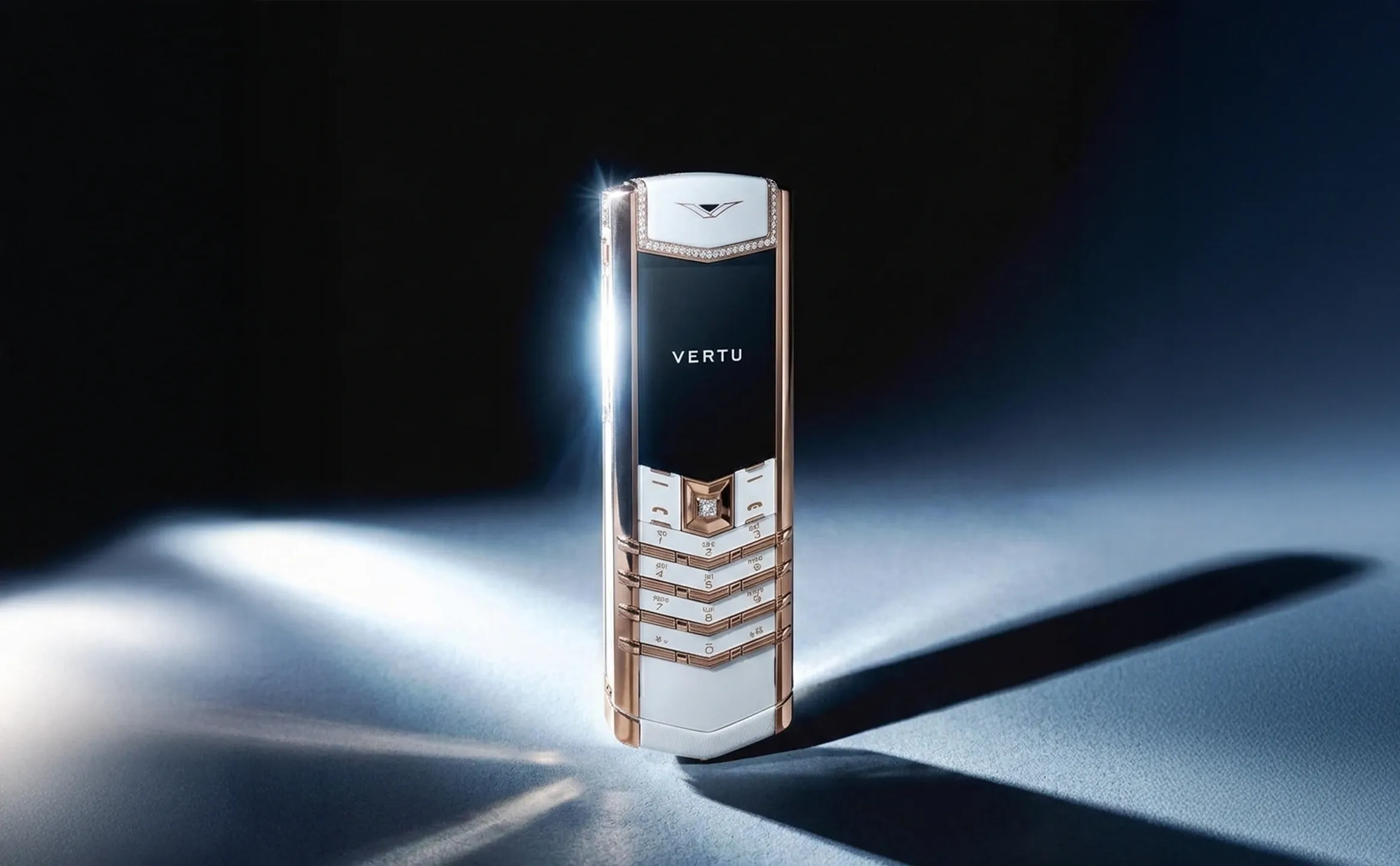
The earliest Vertu identity is tied to touch: weight, buttons, edges, the click and return of keys. When you look at Signature-era design language, it’s closer to an instrument panel than a smartphone slab.
That’s why collectors still talk about the early keypad generations with a level of affection that feels almost out of place in tech.
3) A phone as an ownership ritual
Luxury works when the object carries a story: where it came from, who made it, what it’s meant to signal.
VERTU’s own brand storytelling frames its origin around the idea that a phone could be “more than a tool” and treated as an object of desire, with an accessible timeline in The Journey of Vertu Luxury Smartphones from 1998 to 2025.
Concierge: the feature you couldn’t spec-sheet
If you want to understand what separated the Vertu mobile company from “a luxury finish on Android,” start here.
Vertu’s concierge concept is widely described as a core part of Vertu ownership: a 24/7 lifestyle management program historically accessed via a dedicated hardware button (often called a “Ruby Key”). In modern brand language, VERTU still frames concierge as a defining layer of ownership (see Vertu Concierge Service: Beyond Luxury Hotels for Unmatched Journeys).
Here’s the founder-era insight: concierge wasn’t a bolt-on perk. It was part of the category invention.
A normal phone sells you hardware.
The Vertu company was trying to sell you continuity.
A number can be cloned. A service relationship is harder to counterfeit.
The early icon models that shaped the Vertu company identity
Vertu’s model history gets complex quickly. For a founder-era understanding, you only need the first three pillars.
Vertu Signature (launched 2002)
Signature is the original statement piece, launched in 2002.
It’s the model that locked in Vertu’s “instrument” identity: a phone you notice when you pick it up.
Vertu Ascent (launched 2004)
Ascent followed in 2004 and is often described as a tougher, more performance‑coded interpretation of the early Vertu idea.
Even if you’re not a collector, Ascent matters because it shows Vertu was building a range, not a one-off novelty.
Vertu Constellation (launched 2006)
Constellation arrived in 2006 and broadened the line toward a jet-set, world‑clock, global‑lifestyle framing.
From a brand perspective, this is where Vertu started looking less like “the luxury keypad phone” and more like “the luxury travel companion.”
A brief note on ownership changes (and why it confuses search results)
People search vertu mobile company and get tangled in two different problems:
Vertu’s own ownership changes.
Other businesses that share the name “Vertu.”
On the first: Nokia announced the sale of a majority stake to EQT in 2012 (with Nokia retaining a minority stake), documented in EQT’s 2012 announcement.
Then, after further ownership changes, Vertu’s UK manufacturing arm collapsed in 2017. The most widely cited mainstream report remains the BBC report on Vertu collapse (2017).
Two practical takeaways for readers:
If a timeline claim doesn’t name the owner or the year, treat it as opinion.
If a page seems to mix “Vertu phones” with unrelated business histories, you’re probably looking at a name collision.
How to spot an authentic Vertu (a short checklist)
Counterfeits exist because luxury value attracts imitation. If you’re buying pre-owned, treat authenticity like a workflow, not a vibe.
1) Verify identity before you pay
Ask for the IMEI and serial number before money moves. If a seller won’t provide identifiers in advance, that’s your answer.
Use VERTU’s official verification tool: VERTU Check authenticity.
2) Match the identifiers everywhere
When the device arrives, confirm the identifiers match across:
device settings
packaging
warranty documentation
A mismatch is more than a mistake. It breaks the chain of trust.
3) Ask for provenance, not just photos
For a serious purchase, request a basic provenance packet:
proof of purchase (invoice/receipt)
warranty documentation
service history (if available)
The point is to reduce downside risk. In luxury, paperwork isn’t bureaucracy. It’s part of ownership.
If you want a deeper buyer workflow, VERTU lays out a conservative process in Buy a VERTU phone safely.
What the origin story means if you’re buying today
Most modern smartphones compete in one way: faster, thinner, brighter.
Vertu competes in a different lane. The founder-era bet was that a certain buyer values discretion, craft, private service, and a sense that the object was made, not churned.
If you’ve ever felt that your phone is the noisiest object you own, that’s the opening Vertu was originally built for.
To see how the brand expresses that idea in its current storytelling, here’s a short official video from the VERTU channel:
If you’re exploring VERTU’s own description of its heritage and product philosophy, start with About Vertu – Phones | Watches | Rings.
FAQ
Is Vertu a Nokia company?
Vertu began inside Nokia in 1998, and later changed ownership. If you want one clean reference point for the 2012 transaction, start with the EQT announcement linked above.
What made the Vertu phone company different from other luxury phones?
The early difference was category design: premium materials and tactile identity, plus a concierge-style service model that treated ownership as an ongoing relationship, not a one-time hardware purchase.
Did Vertu really invent the luxury phone category?
VERTU presents itself as the first dedicated luxury phone brand and explains that framing in its brand history. Whether you accept the claim depends on how strictly you define “luxury phone” (finish vs. purpose-built category). What’s less debatable is that Vertu made the category legible to the market.
How do I avoid fakes when buying pre-owned?
Use official verification (IMEI/serial), match identifiers across device and documents, and insist on provenance.
Next steps
If you’re still researching whether VERTU fits your style of ownership, read the brand’s own timeline alongside the third‑party timeline, then compare the dates and language.
Disclosure: This article references VERTU pages. Editorial judgment remains the priority.