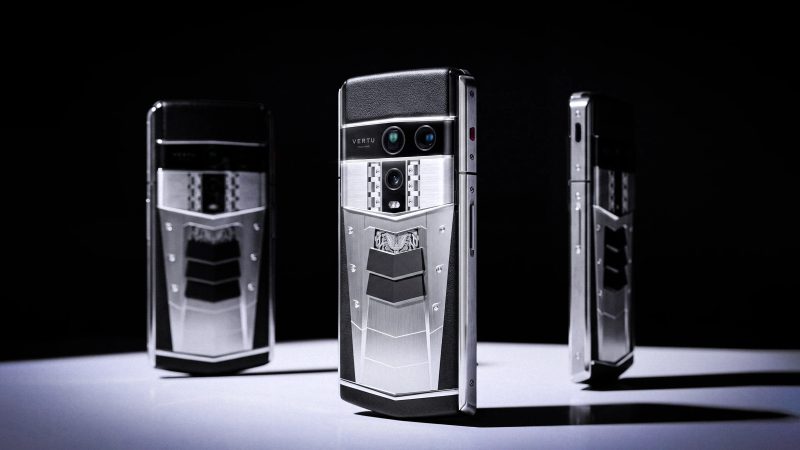
Key TakeawayVERTU’s latest foldable launch is less about “new phone” excitement and more about a shift toward controlled execution, privacy boundaries, and a maintained service relationship.
When people search “VERTU new phone,” they’re usually trying to answer a simple question: is this just a new device, or a new way to run life and work from your pocket?
With VERTU AlphaFold, VERTU’s answer is clear. The story is not primarily about a hinge or a bigger screen. It’s about a phone designed around an agent—one that’s meant to move from intent to action while staying inside boundaries you can actually trust.
The short version: what VERTU is launching
VERTU has announced ALPHAFOLD as a luxury AI foldable engineered for “elite decision-makers,” with Hermes Agent built into the core of the experience. The positioning is set out in VERTU’s ALPHAFOLD launch announcement (May 2026).
A useful way to read this launch is as a statement of priorities:
Execution over entertainment
Boundaries over novelty
Ownership + service relationship over a one-time hardware purchase
If that sounds abstract, translate it into outcomes:
fewer “loose threads” across messaging, documents, calendar, and travel
fewer moments where sensitive context ends up in the wrong place
fewer situations where you need to trust an AI system you can’t inspect
In other words: VERTU AlphaFold is aiming to be a command surface, not a toy.
What a “Hermes Agent phone” actually means (in plain language)
“Agent” is an overloaded word. Most people have already seen “AI” turned into a button, a chat box, or a list of features.
VERTU is making a more specific claim with VERTU AlphaFold: the phone is built around Hermes Agent as a system-level layer—designed to move from a request to a proposed set of actions across your workflow.
Two concrete details are worth noting because they’re specific enough to be tested:
VERTU states Hermes Agent “connects 70+ supported apps” and turns “voice commands into actions” on the VERTU ALPHAFOLD product page.
VERTU also claims voice control for “64 phone settings,” described in Hermes Agent inside AlphaFold.
Those numbers are not “magic.” They’re useful because they prompt the right questions.
The four questions that separate promise from practice
What does “supported” mean?
Is the app integrated deeply (read/write actions), or is it a shallow shortcut? Does it vary by region, language, or configuration?
Where do approvals happen?
For a privacy-sensitive owner, the friction is the feature. The best agent systems don’t “do things”; they prepare actions, then stop.
What does it remember—and where?
Memory is convenient until it’s careless. You should be able to define what is stored, how it is cleared, and how it is scoped.
What happens when it fails?
The most important workflow is the fallback workflow. When a meeting changes or a booking fails, does the system degrade gracefully, or create chaos?
If you evaluate VERTU AlphaFold through that lens, you’ll understand what VERTU is trying to build: an execution layer where boundaries are part of the design.
Why a foldable matters here (and it’s not about novelty)
Foldables are often sold as lifestyle hardware: bigger screen, different format, new vibe.
VERTU’s AlphaFold pitch is closer to an operations argument: you can’t review a contract, scan an itinerary, compare numbers, and approve steps comfortably on a cramped screen.
VERTU leans into this “executive workspace” posture in VERTU’s AlphaFold productivity guide, positioning the device as a place where documents, dashboards, and meeting preparation become realistic on mobile.
This is where VERTU AlphaFold starts to make sense for the right owner. Not because foldables are fashionable, but because some decisions require surface area.
The real use case: a larger working canvas under your control
Think about the moments you can’t delegate:
signing off on travel changes when timing is tight
reviewing a contract clause before you approve it
scanning a threaded message history before you reply
making a call that includes context you don’t want floating around
A larger canvas lets you see the whole situation at once. That reduces errors—and, for privacy-sensitive owners, errors are often the real enemy.
Privacy and security: what’s stated, and what to verify
In luxury technology, privacy claims can become theatre. The only responsible way to talk about them is to separate what is stated from what is proven.
VERTU describes a “privacy-first architecture” and emphasizes a principle that AI can assist execution but should not execute sensitive actions without boundaries and control (per VERTU’s May 2026 launch announcement).
Here’s how to turn that promise into a practical checklist.
How to verify: Ask (1) what data is processed locally vs. sent off-device, (2) what actions require explicit approval every time, (3) how permissions are audited and revoked, and (4) what the security update/support policy is.
A discreet caution about “security features” language
A strong security posture is defined by how a system behaves over time: updates, controls, and operational discipline.
So when you hear impressive phrases, don’t argue with them. Just do what serious buyers do:
request the exact explanation in writing
ask what is configurable and what is fixed
ask what is verifiable today versus “planned”
That’s not skepticism. That’s professionalism.
The ownership model: device + service relationship
A VERTU phone has historically been about more than hardware. The device is the object; the relationship is the product.
AlphaFold sits in that lineage. If the promise is “private execution,” then onboarding, configuration, and long-term support are not optional extras. They are how the device stays aligned with your boundaries.
Collector’s note: The most valuable luxury objects are the ones that stay usable for years. When you evaluate any “new phone,” ask how the brand handles longevity: software support, service access, and repair pathways.
In practice, this is also why the conversation matters as much as the device. A serious owner will want clarity on:
how identity, authentication, and approvals are managed
how data is segmented when you travel or use multiple numbers
how privacy controls behave when an assistant, PA, or team member is involved
Who VERTU AlphaFold is for (and who should skip it)
AlphaFold is easiest to understand when you look at intent.
It’s likely a fit if you want:
a phone that is deliberately not optimized for mass-market behavior
privacy boundaries you can explain to your team (and insist on)
an execution layer that can connect across the tools you already use
a device that feels like a crafted object—because taste and tactility still matter
You should skip it if you’re primarily looking for:
a benchmark trophy
a “best value” flagship
a playful AI feature set with minimal friction
This isn’t a mainstream upgrade story. It’s a category story: luxury mobile becoming an operational tool again—only now with agentic workflows.
The question most buyers should ask first
Not: “Is it new?”
Ask: What does it allow you to do with less risk?
If you’re privacy-sensitive, the real costs of a phone aren’t just financial. They’re reputational, legal, and operational:
what ends up in the wrong inbox
what gets forwarded without context
what sits unencrypted in a forgotten app
what gets synced to a consumer cloud by default
A device designed for controlled execution, used well, should reduce those failure modes. Used poorly, it can amplify them.
Watch: a closer look
FAQ: “VERTU AlphaFold” questions people actually mean
Is VERTU AlphaFold the same as ALPHAFOLD?
Yes. VERTU uses ALPHAFOLD as the product name in its launch materials; “VERTU AlphaFold” is how many buyers search for it. The important thing is consistency: treat them as the same model name, not separate product lines.
Does the “Hermes Agent phone” idea mean the phone will act without asking?
It shouldn’t.
In privacy-sensitive workflows, the correct default is: prepare actions, then stop. If you are evaluating the device, ask where approvals live, what requires confirmation, and how you review and revoke permissions.
How should you evaluate privacy claims without turning it into paranoia?
Use a due-diligence mindset, not a mood.
Ask what is local vs. remote, ask what is logged, and ask what is controllable. A good privacy posture can be explained simply—by the brand and by the advisor supporting your configuration.
What’s the simplest way to decide if you’re the target buyer?
If you value a phone as an object, you can buy almost anything.
If you value a phone as an operational perimeter—where privacy boundaries, approvals, and service support matter—then VERTU AlphaFold is at least worth understanding on its own terms.
Next steps (discreet and practical)
If you want the cleanest, most accurate starting point, go directly to the official materials and read the language carefully.
Start with the launch announcement, then the product page, then the Hermes Agent guide.
If you’re considering ownership, treat it like any serious acquisition: ask for the details that determine longevity—support, updates, configuration, and how privacy controls behave in daily use.
Disclosure: This article references VERTU pages. Editorial judgment remains the priority.