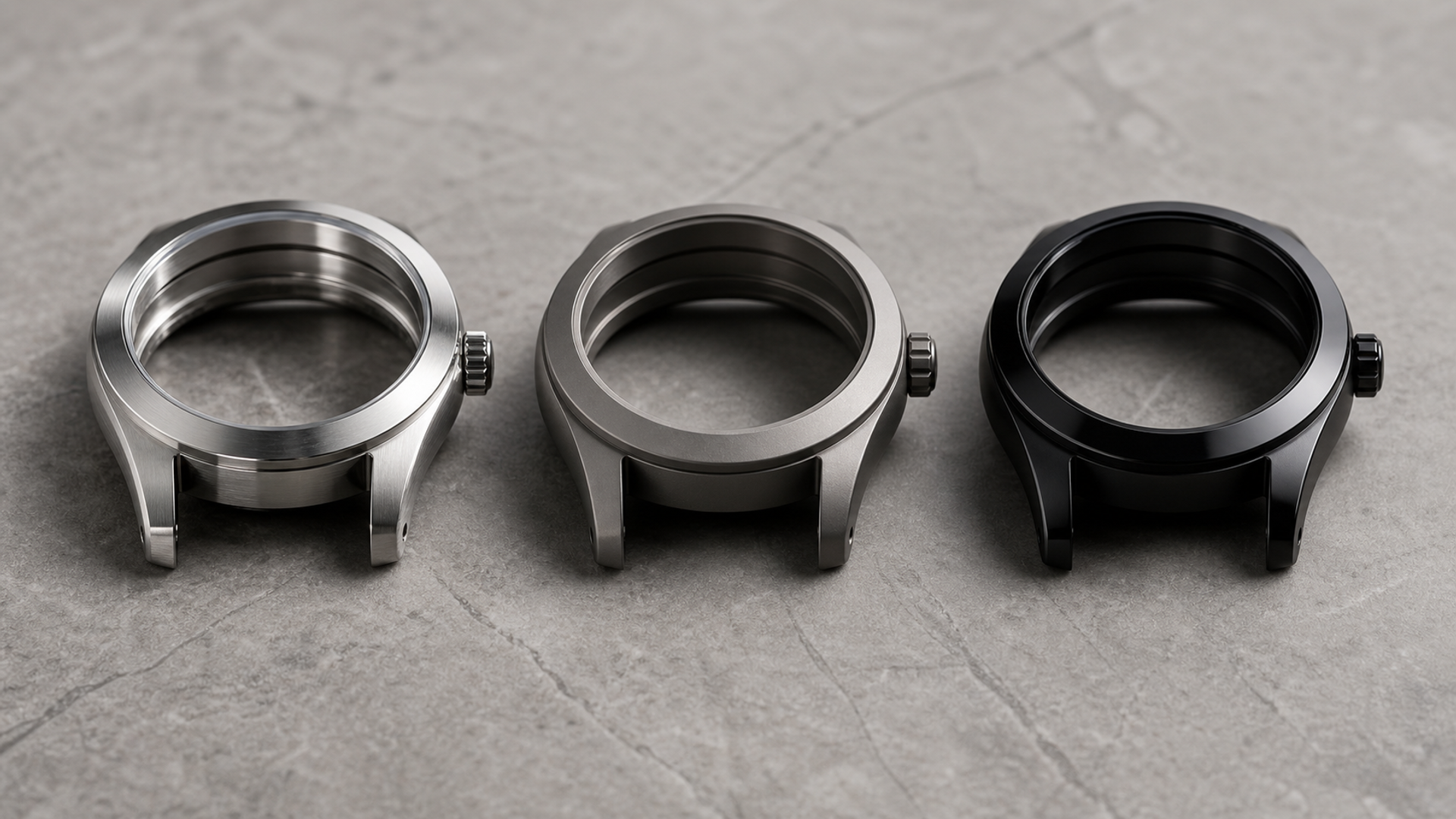
Choose stainless steel if you want the most familiar balance of weight, finish and long-term serviceability. Choose titanium if low weight, corrosion resistance and all-day comfort matter more than traditional heft. Choose high-tech ceramic if preserving a clean surface appearance is the priority and you accept that impact behaviour and repair options differ from metal.
That is the short answer. The more important answer is that “titanium”, “ceramic” and “steel” are categories, not guarantees. Alloy, surface treatment, case construction, finishing and the manufacturer’s service capability can matter as much as the base material.
The best case material is therefore not the one that wins a hardness contest. It is the one whose ageing pattern you will still appreciate after five years of your actual life.
The ownership matrix
| Decision factor | Stainless steel | Titanium | High-tech ceramic |
|---|---|---|---|
| Wrist feel | Substantial, familiar | Light; often warmer and less conspicuous | Smooth, light, distinctive |
| Everyday scratches | Can show hairlines; finish-dependent | Untreated surfaces can mark; hardened treatments differ | Strong resistance to surface scratching |
| Sharp impact | Generally forgiving and repairable | Strong for its weight; construction matters | Hard surface but impact behaviour differs from ductile metal |
| Corrosion | Strong with suitable watch-grade alloy | Excellent | Excellent |
| Refinishing | Often possible through authorised service | Depends heavily on finish and treatment | Usually not refinished like metal |
| Visual character | Classic and versatile | Technical, muted or polished depending on grade | Colour and finish can be integral to material |
| Best fit | One-watch collection, traditional luxury | Travel, sport, larger cases, all-day wear | Owners who prioritise lasting surface appearance |
This is a general decision framework. A coated steel case can age differently from bare steel; Citizen’s proprietary Super Titanium is not equivalent to untreated titanium; and one brand’s ceramic recipe and construction should not be assumed to represent all ceramics.
Stainless steel: the versatile default
Steel remains popular because it is familiar to makers, service centres and owners. It can carry brushed, polished and mixed finishing clearly. Its mass gives a compact watch presence, and ordinary wear can often be addressed during authorised servicing when the case design permits it.
Rado’s material guide describes its chosen stainless steel as corrosion- and temperature-resistant, durable and robust. Other brands may use different alloys, treatments and finishing standards, so buyers should ask what is actually specified rather than accepting “stainless” as a complete description.
Steel is best when
you want one watch to move from office to evening wear;
traditional weight feels reassuring rather than tiring;
you value the possibility of future refinishing;
the bracelet and case need to share a consistent visual language;
you prefer a material understood by a broad service network.
Steel’s hidden trade-off
Polished surfaces can reveal fine marks quickly. That is not necessarily failure. Many collectors accept a network of honest wear as part of ownership. The problem arises when the owner expects a mirror finish to remain visually untouched.
Before buying, inspect how the case divides polished and brushed surfaces. A large polished flank will advertise wear more readily than a fine brushed plane. Complex edges can also be softened by careless polishing, so “refinishable” does not mean “polish frequently”. Authorised, conservative work matters.
Titanium: comfort without the usual mass
Titanium’s clearest advantage is not prestige. It is density. A large case can become much easier to wear when the material is substantially lighter than steel.
Rado describes titanium as light, corrosion-resistant and hypoallergenic, while distinguishing grade 2 from grade 5 applications. Citizen’s Super Titanium page states that its proprietary treated material is 40 per cent lighter than stainless steel and uses a surface-hardening process. Those performance claims belong to Citizen’s treated material; they should not be copied onto every titanium watch.
Titanium is best when
you travel often and notice every gram;
the watch has a large case or integrated bracelet;
you wear it through long working days;
salt air, perspiration or humid climates are normal conditions;
you like a darker, more technical visual character.
Why some titanium looks “soft” and some does not
Untreated titanium can pick up visible surface marks, especially on uniform matte finishes. Hardened coatings or proprietary treatments may improve scratch behaviour, but they also change future refinishing options. Ask three questions:
Which titanium grade is used?
Is the surface untreated, coated or hardened?
What can the authorised service centre restore after damage?
The answer may be more useful than a generic claim that titanium is stronger or softer than steel. Strength, hardness and scratch resistance are different properties.
High-tech ceramic: surface preservation with a different risk profile
Modern watch ceramic is not household pottery. Rado describes its high-tech ceramic as a dense engineered material produced through controlled powder preparation, injection moulding and high-temperature sintering. Its current ceramic documentation cites approximately 1,250 Vickers hardness, around 30 per cent less weight than steel and strong resistance to everyday scratching.
Those are brand-specific figures, but they explain ceramic’s ownership appeal: a well-made ceramic surface can retain colour and finish exceptionally well.
Ceramic is best when
surface scratches bother you more than the possibility of a rarer impact event;
you want deep colour that is part of the material rather than a thin surface coating;
a smooth, low-weight feel appeals to you;
you do not expect routine metal-style refinishing;
the manufacturer has a clear replacement and service policy.
Hardness is not invulnerability
Hard materials resist indentation and scratching; they do not become immune to every impact. Metals tend to deform before they fracture. Ceramics behave differently. Case architecture, wall thickness and the nature of a strike all matter.
That does not make ceramic fragile in ordinary use. It means buyers should avoid converting a hardness figure into an absolute durability claim. The practical question is whether your risks are mostly desk scratches and bracelet rub, or sharp impacts against stone, gym equipment and luggage hardware.
What each material looks like after five years
Imagine three owners wearing their watches three days a week.
The steel owner
The polished surfaces develop hairlines. Brushed areas show directional marks. The watch looks used, but its character remains conventional and a careful service may improve the finish. The owner either accepts the patina or becomes trapped in unnecessary polishing.
The titanium owner
The watch still feels unusually comfortable. Its surface appearance depends heavily on treatment: bare matte titanium may show bright rub marks, while a proprietary hardened finish may remain cleaner. The owner values low weight enough that visible wear feels secondary.
The ceramic owner
The broad surfaces may look remarkably fresh. Contact points and non-ceramic components—clasp, bezel edge, caseback or hardware—can still show wear. The owner remains mindful of sharp impacts and relies on replacement rather than conventional refinishing if a ceramic component is damaged.
None is objectively superior. Each concentrates wear in a different place.
Smartwatch considerations are slightly different
A mechanical watch case protects a movement designed around long service intervals. A connected watch surrounds batteries, sensors, antennas, displays and seals whose service life may be shorter than the case’s cosmetic life.
That changes the value equation:
a pristine ceramic case can outlast the desirability of its electronics;
a very light titanium case can make sleep and fitness wear more comfortable;
steel can create a luxury feel but add noticeable mass to an already large connected watch;
sensor windows, display glass, coatings and straps may age faster than the case material.
The case should therefore be chosen alongside software support, battery service, strap availability and the manufacturer’s repair route.
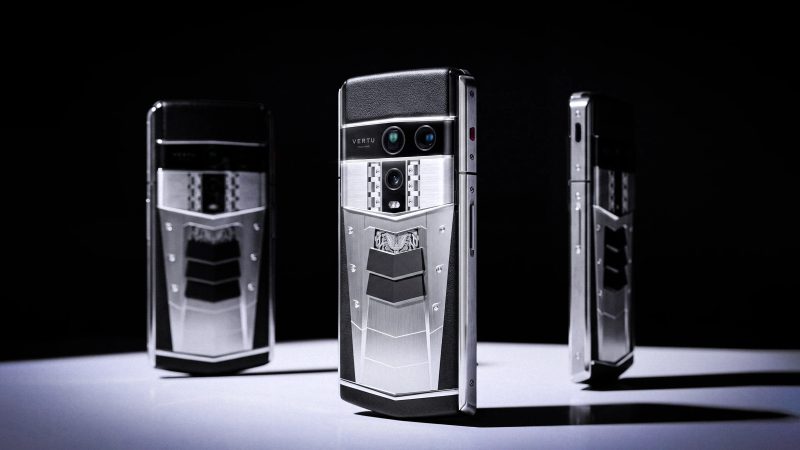
VERTU’s current knowledge base describes the Grand Watch collection with a tonneau-shaped case using microcrystalline black ceramic and filament-coloured carbon, plus a sapphire mirror. That combination shows how brands mix materials to assign different jobs to different components. It should not be reduced to “ceramic is best”; construction is the product.
The seven questions to ask before buying
What exact grade or formulation is used? “Steel” or “titanium” alone is incomplete.
Is there a coating or surface-hardening treatment? Ask how it changes service options.
Which components are made from the headline material? A ceramic bezel is not a full ceramic case.
Can the authorised service centre refinish or replace the case and bracelet? Obtain a current answer.
How does the watch balance on your wrist? Low case weight can be undermined by a heavy bracelet or top-heavy geometry.
Which surface will touch desks, luggage and door frames? Your routine predicts wear better than a brochure.
Will you enjoy the ageing pattern? A luxury object should not make ordinary ownership anxious.
Choose by scenario
| Your priority | Best starting point | What to verify |
|---|---|---|
| One versatile luxury watch | Steel | Alloy, finish, bracelet comfort, refinishing policy |
| Large watch for daily travel | Titanium | Grade, treatment, clasp weight, scratch behaviour |
| Clean appearance with minimal hairlines | Ceramic | Case construction, impact policy, replacement cost |
| Sensitive skin | Titanium or ceramic may suit | Manufacturer material disclosure and personal tolerance |
| Active ownership | Treated titanium or robust steel | Crown, crystal, water resistance and service—not case alone |
| Connected watch worn overnight | Titanium/ceramic often compelling | Battery service, sensor comfort, strap and software support |
The final decision
Steel is the safest recommendation because it is versatile and widely understood. Titanium is the intelligent choice for people who repeatedly remove heavy watches before the end of the day. Ceramic is the aesthetic choice for owners who want a surface that resists ordinary scratching and are comfortable with its different impact and repair profile.
Do not buy a material. Buy a complete case, finish and service proposition. The watch you will still like in five years is the one whose weight, wear and maintenance feel natural rather than precious.