Introduction
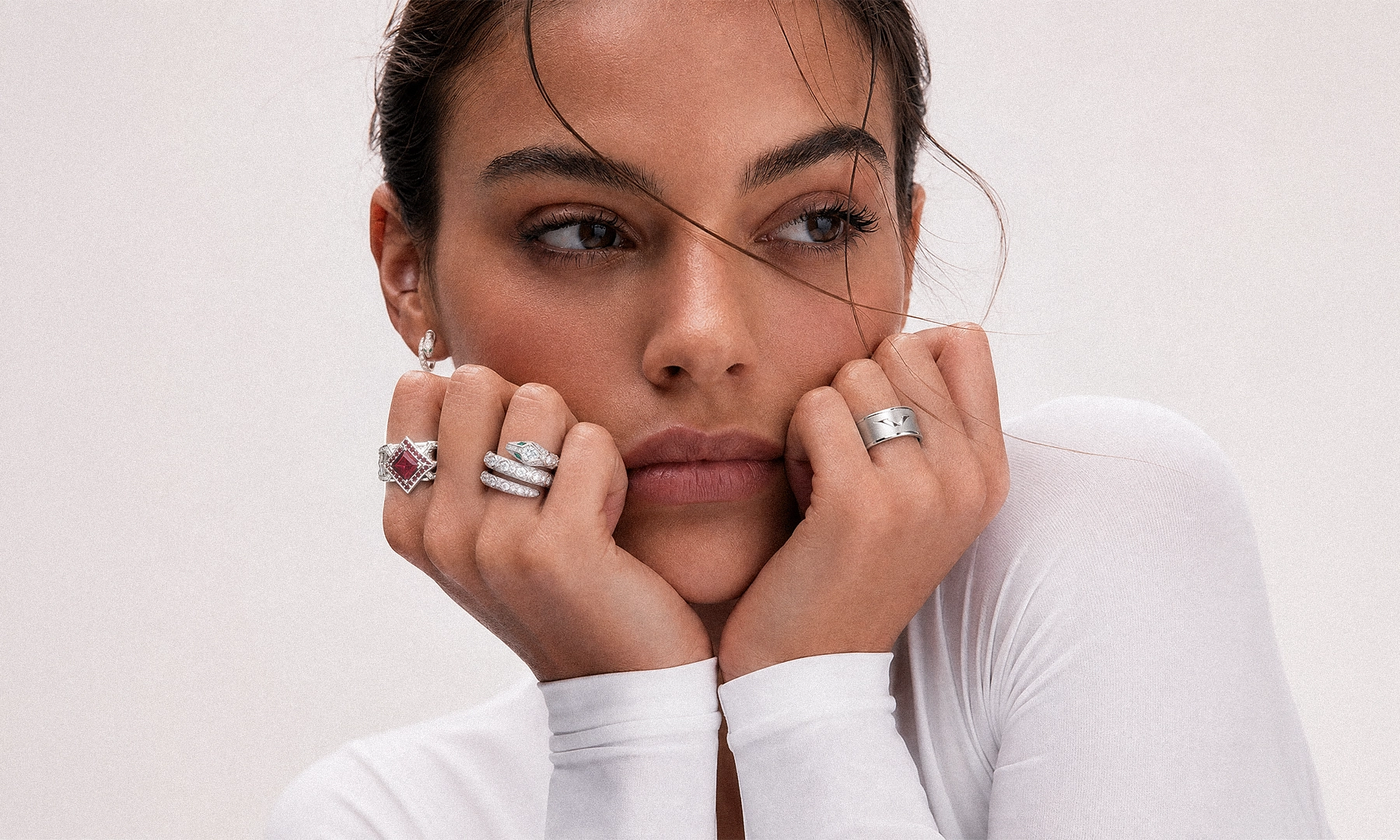
Smart rings for sleep tracking measure a surprisingly small set of signals — and then do a great deal of interpretation. Most rings rely on optical heart-rate sensing (PPG), motion sensors, and skin temperature trends. Some add blood oxygen estimates overnight. The point is not to “see sleep” directly, but to infer patterns that usually move with sleep.
If you’re comparing devices, the question to keep in mind is smart ring sleep tracking accuracy: not as a marketing claim, but as a practical question about how often the ring’s estimates are close enough to guide decisions.
Finger placement matters because it’s a better place to read those signals quietly, for hours, without you thinking about it. The arteries in your fingers are close to the skin, and the ring can stay stable through the night — which can translate into cleaner readings than a loose wrist strap.
Accuracy matters because sleep tracking is only useful if it improves decisions. A ring isn’t diagnosing sleep apnea or writing a prescription. But it can help you answer practical questions: Did my sleep shift when I stopped late caffeine? Do I sleep worse after a red‑eye? Is my bedtime drifting?
In this guide you’ll learn how smart rings work, what real-world accuracy looks like, what the 2026 market offers, and how to choose a ring that’s reliable enough to live with every night.
This is written for U.S. readers who want discreet, high-quality sleep insights — and who care about comfort, build quality, and data stewardship as much as features.
How smart rings work
Finger vs wrist signal quality
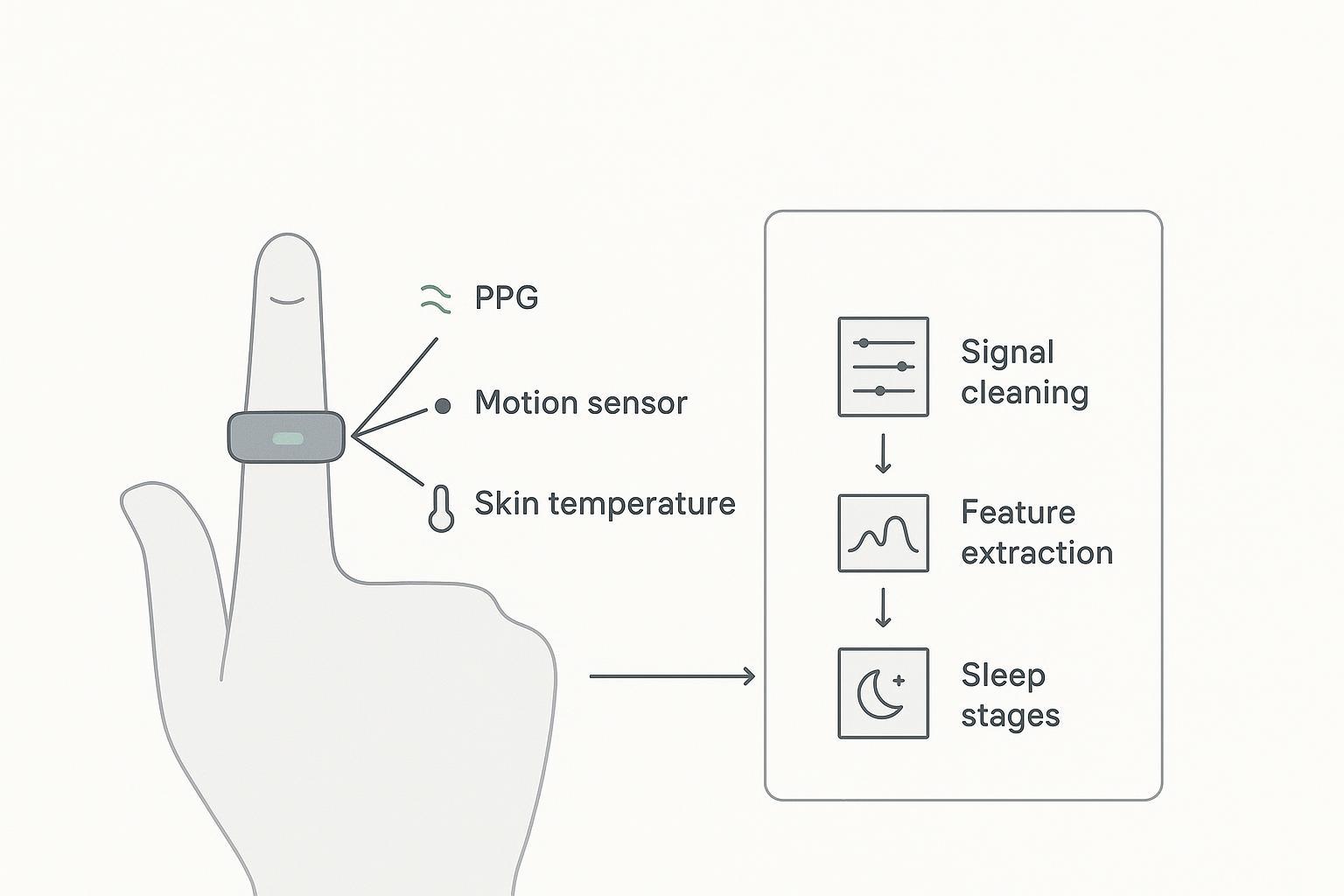
Most smart rings use photoplethysmography (PPG) — tiny LEDs and light sensors that estimate heart rate (and sometimes breathing-related patterns) by measuring changes in blood volume under the skin.
The finger is an unusually good place to do this at rest. A consumer-friendly explainer from Live Science notes that fingers can offer more accurate heart-rate measurements than wrists, citing a 2022 review that attributes the difference to vascular anatomy — more vessels closer to the skin — plus the practical stability of a ring during sleep (Live Science explainer on ring vs watch accuracy).
That doesn’t mean the finger is “perfect.” Fit still matters. Cold hands can reduce blood flow. And movement is still movement — when the ring shifts, the optical signal shifts with it. The key point is simpler: during sleep, when your hands are mostly still, the finger is a strong place to capture a steady baseline.
From signals to sleep stages
At a high level, rings turn signals into sleep insights in three layers:
Detect sleep vs. wake using a combination of motion (actigraphy) and physiological slowdown (heart rate patterns).
Estimate sleep phases by looking at changes in heart rate variability (HRV), movement patterns, and timing regularities across the night.
Summarize trends across nights: bedtime consistency, recovery patterns, temperature shifts, and “what changed” compared to your baseline.
It’s important to be clear about what’s missing: consumer wearables don’t record EEG brain waves. They infer sleep stages without the direct signals a sleep lab uses.
What accuracy can and can’t mean
When people ask, “Is this ring accurate?”, they often mean three different things:
Sleep detection accuracy (sleep vs. wake): Did it correctly recognize that you were asleep?
Macro sleep accuracy: Total sleep time, sleep onset latency (how long it took to fall asleep), wake after sleep onset.
Sleep staging accuracy: How well it distinguishes light vs deep vs REM.
Consumer devices tend to do best at the first two. Sleep staging is harder — not because companies are careless, but because the inputs are indirect.
A useful way to think about it:
Collector’s note: A ring can be “accurate enough” for trend decisions (your normal bedtime, your consistent wake time, your sleep debt building across a week) while still being imperfect at stage-by-stage truth on any single night.
Why accuracy matters
What the studies show (2023–2026)
The best reality check is comparison against polysomnography (PSG) — the overnight sleep lab standard.
On macro sleep metrics, evidence suggests rings can be close on average. A 2025 meta-analysis comparing Oura Ring against PSG across six studies (n=388; studies from 2019–2024) found no statistically significant differences for common sleep parameters — for example, total sleep time had a pooled mean difference of −2.97 minutes (“The Oura Ring Versus Medical‑Grade Sleep Studies” meta-analysis).
But “on average” is not the same as “for you, every night.” A 2025 Scientific Reports paper evaluating finger-ring trackers against PSG in a sleep-lab patient population emphasizes that individual-level discrepancies can remain large even when group-level averages look acceptable — and that four-stage sleep staging accuracy was limited (Oura reported as 53.18% overall in that study) (Scientific Reports sleep-lab evaluation of finger-ring trackers).
If you prefer a quick label for what’s being validated here, it’s sleep tracking ring accuracy vs polysomnography — and the headline is consistent: sleep detection and total sleep time are typically stronger than stage-by-stage precision.
For a practical buyer, the takeaway is not that rings are “bad.” It’s that the most reliable use case is longitudinal — patterns across nights — not precision sleep staging on a single night.
Rings vs smartwatches at night
Smartwatches and smart rings can both track sleep well enough to be useful. The difference is usually nighttime compliance and signal stability.
If you’ve been debating smart ring vs smartwatch sleep tracking, focus on the context you care about most: overnight comfort, battery continuity, and whether you want a ring dedicated to recovery or a watch that does everything.
Rings are easier to wear to bed. No screen, no bulky case, fewer reasons to take it off.
Finger PPG can be cleaner at rest. The finger is a strong measurement site when motion is low.
Watches often offer broader sensors. ECG (on some models), richer fitness features, and more interactive health prompts.
In a 2024 study comparing Oura Ring Gen3, Apple Watch Series 8, and Fitbit Sense 2 to PSG in healthy adults, all devices showed high sensitivity for sleep/wake detection, and Oura performed strongly on stage metrics in that sample (2024 PSG comparison in Sensors).
If your primary goal is sleep insights with minimal friction, the ring form factor has a clear advantage. If your goal is one device for workouts, notifications, and heart features, a watch can make more sense.
Limits in clinical contexts
If you suspect a sleep disorder, treat a consumer wearable as a prompt — not a diagnosis.
Clinical guidance has been consistent: consumer sleep trackers can offer valuable longitudinal data, but they should not be used to diagnose sleep disorders or replace formal testing. CHEST Physician frames their best role as providing “ecologically valid” trends that can support behavioral care, while still requiring clinical confirmation when a disorder is suspected (CHEST Physician on consumer sleep trackers in clinical practice).
The 2025 systematic review on smart rings in clinical medicine also highlights real-world barriers: proprietary algorithms, limited transparency, and challenges integrating wearable data into clinical workflows (Smart Ring in Clinical Medicine: a systematic review).
How to verify: If a ring flags something concerning (frequent awakenings, unusual breathing-related signals, consistently poor sleep efficiency), confirm it with a clinician — and bring trend screenshots across weeks, not a single “bad night.”
2026 market snapshot
Oura, Samsung, RingConn at a glance
In 2026, the market is no longer “Oura and everyone else.” The category is clearer.
If you want a shorthand comparison, think Oura vs Samsung Galaxy Ring vs RingConn — three different philosophies:
Oura is still the reference point for sleep-focused rings and insight depth.
Samsung Galaxy Ring is most compelling if you live inside Samsung Health.
RingConn competes on battery life and no-subscription positioning.
This is less about which ring is “best” and more about which ecosystem you want to live with daily.
Subscriptions and total cost
For many buyers, the real cost is not the ring. It’s the ongoing relationship with the app.
Ask yourself:
Do you want full insights without a subscription?
Are you comfortable paying monthly for software updates and deeper analytics?
How long do you realistically keep wearables before upgrading?
Reputable reviewers regularly flag subscription as the key differentiator in 2026, alongside battery life and ecosystem fit (for example, Wareable’s comparison of Galaxy Ring vs RingConn Gen 2).
Ecosystem compatibility
Compatibility sounds basic until it fails.
If you’re on iPhone: avoid any ring that’s Android-only.
If you’re on Android: confirm whether features require a specific brand’s phone.
If you want your data to travel: check Apple Health / Health Connect support, and whether exports are usable.
The most polished experience often happens when your ring and your primary health app belong to the same ecosystem — but you should still verify what happens if you switch phones later.
Privacy and data stewardship
What to verify before you buy
Sleep data is intimate. It’s also easy to underestimate how widely it can travel: ring → phone → cloud → integrations → “partners.” The safest buyer mindset is simple: assume any data you don’t explicitly control can be copied, retained, or repurposed.
Answer 2025 “living” systematic review evaluating privacy policies across wearable manufacturers underscores that practices vary widely — and that it’s reasonable to judge vendors against a clear rubric (transparency, minimization, user control, third‑party sharing, security, breach notification) (systematic review of wearable privacy policies).
Here’s what to verify before you commit:
Account model: Can you use the device without handing over unnecessary personal details?
Retention and deletion: Can you delete your account and have data purged on a defined timeline?
Sharing defaults: Are third‑party integrations opt‑in, granular, and reversible?
Export options: Can you export your raw or detailed data in a usable format?
Policy change behavior: Will the company notify you before meaningful privacy changes?
This is also where luxury expectations can be rational — not indulgent. A privacy‑first luxury ecosystem is, at its best, built around the idea that discretion is a feature. In that spirit, brands like VERTU have historically emphasized a concierge-like relationship and a privacy-aware stance in how digital experiences are designed. The practical takeaway for a ring buyer isn’t “choose a luxury brand”; it’s borrow the luxury standard: demand clear data boundaries, minimal collection, and ownership you can verify.
Data control and exports
A useful rule: if you can’t export your data, you don’t fully own it.
Exports matter for three reasons:
You may switch ecosystems.
You may want a second opinion (coach, clinician, researcher).
You may want to keep long-range trend history beyond an app’s defaults.
Look for exports that are:
Structured (CSV/JSON), not just pretty PDF reports.
Granular (nightly and, ideally, epoch-level or raw-derived metrics).
Consistent (the same fields over time).
On-device vs cloud processing
Most consumer rings involve some cloud processing — partly to sync across devices and partly to improve algorithms over time.
The question isn’t “cloud or no cloud.” It’s:
What is processed locally vs uploaded?
Is cloud sync optional?
Is data encrypted in transit and at rest?
Can you disable nonessential sharing?
If a company can’t explain those flows in plain English, that’s a red flag.
Buyer’s checklist
Fit and sizing for accuracy
For rings, sizing is accuracy.
A ring that rotates, slides, or feels loose will degrade the PPG signal — and the errors will show up as “bad sleep,” “missing data,” or noisy HRV.
Look for:
A sizing kit (and use it for at least a day).
A fit that’s snug but not constricting.
Stable placement on the finger you’ll actually sleep with.
If you’re between sizes, resist vanity sizing. Choose the size that stays stable through the night.
Sensor suite and app quality
Two rings can have similar sensors and still feel completely different.
What matters:
Does the app explain why it thinks your sleep changed?
Does it help you run small experiments (earlier dinner, light exposure, travel days)?
Does it separate “you slept less” from “your sleep was restless”?
A strong app also tells you what it can’t know — and doesn’t pretend that a sleep stage chart is clinical truth.
Battery, charging, durability
Battery life is more than convenience. It is continuity.
If you charge at unpredictable times, you’ll create gaps — and gaps make trend interpretation harder.
Consider:
Can the ring last through travel?
Is the charger (or case) practical for your routine?
Is the ring water-resistant enough for real life?
A ring you wear every night for months is more valuable than a “better” ring that lives on a charger.
Conclusion
Accuracy is not a trophy metric. It’s the difference between a sleep tracker that nudges you toward better habits — and one that floods you with plausible-looking noise.
Consumer rings are not diagnostic tools. But when they are accurate enough at the fundamentals (sleep detection, nightly duration, and consistent baselines), they can help you see trends and act on them.
Choose fit, sensors, ecosystem, and privacy you can live with every day. Then do one thing this week: pick a single variable — caffeine cutoff, bedtime, alcohol, late workouts, screen exposure — and test it for seven nights. Your ring’s most valuable output isn’t a sleep-stage chart. It’s a clearer relationship between your choices and your recovery.
Disclosure: This article references VERTU pages. Editorial judgment remains the priority.