Samsung says its next Galaxy Watch will become a more proactive, AI-powered health companion. That is a meaningful direction for wearables—but it is not yet a reason to treat the device as reviewed, medically validated or ready to buy sight unseen.
In a 14 July preview, Samsung said the upcoming watch would use new internal components, enhanced battery life and AI-driven health insights. The full introduction is scheduled for 22 July. As of 15 July, Samsung had not supplied the evidence needed for an independent judgement about real-world battery endurance, measurement accuracy, pricing or the complete model range.
The disciplined buyer response is therefore neither hype nor dismissal. It is a verification plan: identify the claims that matter, define what proof would satisfy them, and wait for the evidence that can only exist after launch.
What Samsung has actually disclosed
The July preview is brief, but Samsung published a more detailed description of upcoming Samsung Health features on 4 June. According to that official feature announcement, the software is intended to move from passive measurement towards guidance. Announced features include:
Vitals, which compares five overnight signals—heart rate, heart-rate variability, respiratory rate, skin temperature and blood oxygen—with a resting baseline, then flags meaningful deviations.
Heart Health Score, which combines sleep, stress, activity and body-composition information into a daily score.
Daily Cardio Load, which estimates accumulated cardiovascular strain and suggests training and recovery targets.
Fitness Index, which uses heart rate, estimated VO₂ max and daily steps to compare progress and shape goals.
Hearing Health, which monitors ambient noise through the watch and presents personalised analysis.
These descriptions establish the intended experience. They do not establish how consistently the features perform across different wrists, skin conditions, activities, sleep patterns or markets. Samsung itself says the new features are for wellness rather than diagnosis or treatment, may require data accumulation, and can vary by market, model and rollout timing.
That distinction should determine how the launch is evaluated.
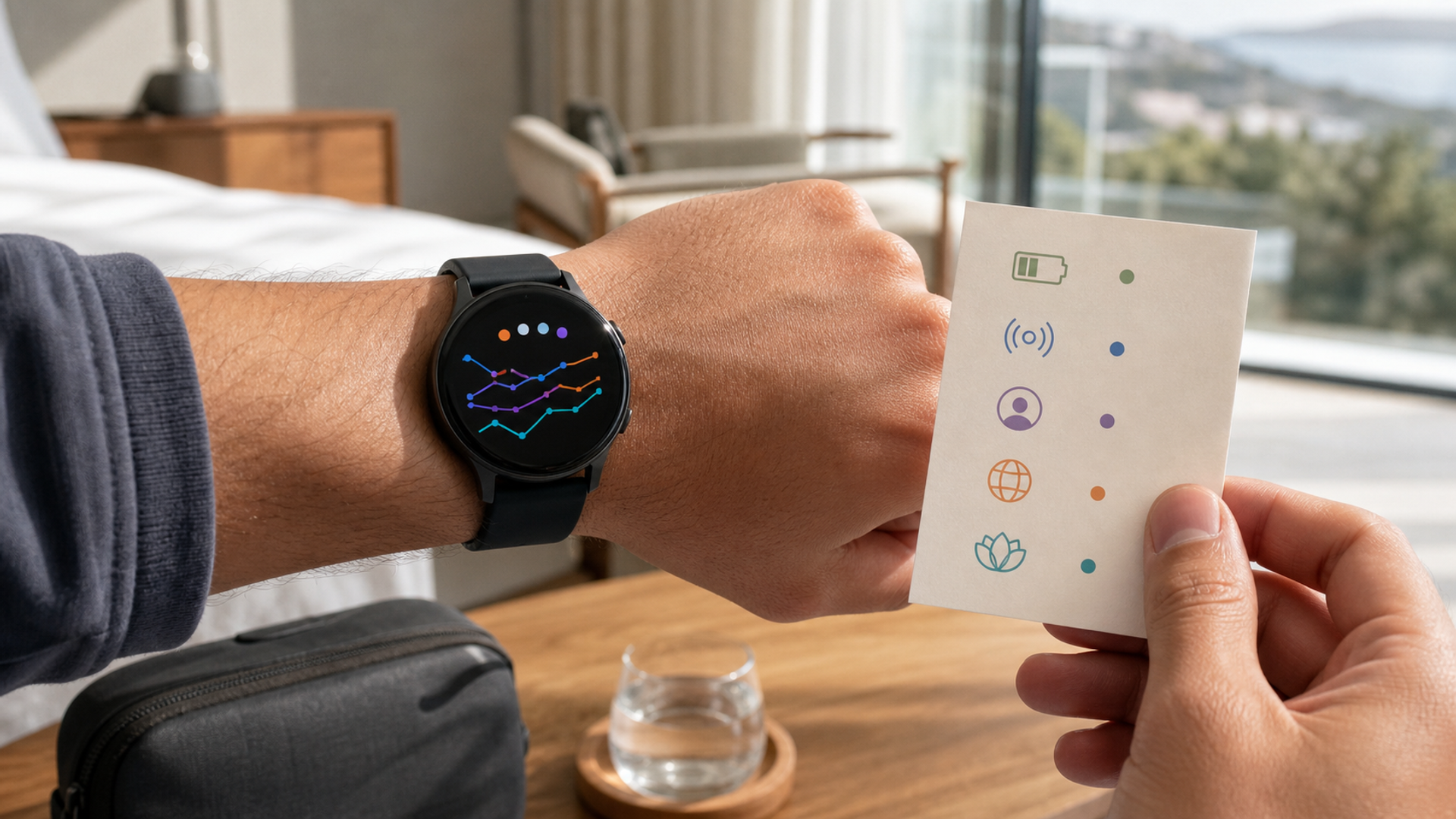
The five-claim buyer scorecard
The scorecard below deliberately leaves the verdict open. It is a post-launch test plan, not a prediction.
| Claim to verify | Evidence available before launch | What to test after launch | A credible pass would look like | Pre-launch verdict |
|---|---|---|---|---|
| 1. “Enhanced battery life” improves daily use | Samsung has announced enhanced battery life and new internal components | Official rated conditions; always-on display and GPS settings; independent mixed-use tests; recharge time; endurance with overnight tracking enabled | Clear improvement under disclosed, repeatable settings—not just a larger capacity or an ideal laboratory scenario | Unverified |
| 2. Health tracking is more accurate | Samsung says the watch is built to track for longer and with greater accuracy | Sensor configuration; measurement exclusions; comparison with appropriate reference equipment; consistency across rest, sleep and exercise; missing-data rate | Transparent methodology and repeatable performance for each claimed metric | Unverified |
| 3. AI insights are genuinely useful | Samsung has described Vitals, Heart Health Score, Daily Cardio Load and Fitness Index | Time needed to form a baseline; frequency and clarity of alerts; ability to inspect contributing data; handling of travel, illness and unusual routines | Guidance is explainable, actionable and no more confident than the underlying data | Partly specified, not validated |
| 4. Features are available to the intended buyer | Samsung says availability can vary by market, model and other factors; Android and Samsung Health requirements apply | Exact supported watches and phones; region; account requirements; language; subscription or connectivity conditions; rollout date | Buyer can confirm eligibility before purchase from a country-specific support page | Unverified by market |
| 5. “Health companion” stays within a safe wellness boundary | Samsung labels the announced features as wellness tools, not diagnosis or treatment | In-product wording; escalation messages; handling of abnormal readings; links to professional care; regulatory status of any disease-specific function | The watch supports habits and awareness without presenting a wellness score as a clinical conclusion | Boundary declared; implementation pending |
Wellness guidance is not a medical conclusion
The US Food and Drug Administration’s January 2026 general-wellness guidance distinguishes low-risk products that encourage a healthy lifestyle from functions intended to diagnose, cure, mitigate, prevent or treat a disease. The exact regulatory position of a feature depends on its intended use and claims; a consumer should not infer medical validation merely because a watch measures physiological signals.
| A wellness function may help with | It should not be assumed to provide |
|---|---|
| Showing trends in sleep, activity or recovery | A diagnosis of a sleep, heart or respiratory condition |
| Encouraging consistent exercise and rest habits | A treatment plan or instruction to change medication |
| Noticing a change from an individual baseline | Proof that the change is harmless—or proof that it is a disease |
| Prompting the wearer to pay attention or seek advice | A substitute for a clinician, validated medical test or emergency service |
Composite scores can make complex data easier to read, but they also compress uncertainty. Until Samsung discloses how a score is calculated and it is independently evaluated, it should not be read as a clinical assessment.
If a wearer has concerning symptoms or receives a reading that causes concern, the appropriate response is professional medical advice—not repeated measurements in search of a reassuring number.
How to test the watch after launch
Start with eligibility, not features
Before comparing hardware, confirm whether the functions exist in the buyer’s country, language, phone and account configuration. Samsung’s June disclosure says the features require an Android phone running Android 10 or later, Samsung Health version 7.0 or later and a Samsung account; it also warns that availability may vary.
Look for a defined baseline period
Personalised insights need enough consistent data to define an individual baseline. Ask how many nights or days are required, which measurements must be available, and what happens when routine changes because of travel, illness or a new training programme.
The watch should make missing or low-confidence data visible. A score that looks precise while hiding poor sensor contact or an incomplete night is less useful than a cautious message explaining that no conclusion can be drawn.
For a broader explanation of why fit, motion and individual physiology can alter readings, see VERTU’s guide to factors that hurt wearable health-tracking accuracy.
Test the battery with the intended routine
Battery claims should be tested with the features that justify buying the watch. If continuous monitoring, overnight tracking, GPS exercise, LTE, an always-on display or frequent notifications are central to the use case, the test should include them.
A headline endurance figure under light settings is not enough. Buyers should look for the test configuration, remaining charge after a representative day and night, recharge time, and whether battery-saving modes disable valued health functions.
Judge explanations, not just scores
An AI health companion should show why it reached a suggestion. For each alert or score, check whether the interface reveals contributing signals, the comparison period, missing data and the action being recommended. “Take it easy today” is more useful when the wearer can see whether the recommendation reflects sleep, training load or an unusual resting signal.
VERTU’s comparison of smart rings and smartwatches for health tracking explains why comfort, screen interaction and sensor placement can matter as much as the number of metrics.
Check claims feature by feature
One validated or regulated function does not automatically validate every other score generated by the same watch. Blood-pressure, ECG, sleep, training and wellness features can have different intended uses, evidence and regional restrictions. VERTU’s analysis of whether smartwatches really monitor blood pressure accurately illustrates why the method and intended use must be examined separately.
The right question is not “Is this a health watch?” It is “What does this specific feature claim, under which conditions, and what evidence supports that claim?”
Who should wait—and who can keep watching
Anyone buying primarily for medical reassurance should wait for feature-specific regulatory and clinical evidence, and should discuss appropriate monitoring with a clinician. Buyers whose decision depends on a full day and night of intensive use should wait for independent battery tests with the relevant settings enabled. Travellers should confirm regional availability before relying on any alert or score abroad.
Existing Galaxy Watch users should also wait for the final compatibility list. Some announced value may come from Samsung Health software rather than exclusive new hardware; without the final rollout details, an upgrade recommendation would be premature.
A better way to buy an AI wearable
The luxury-wearable buyer should demand more than a dramatic launch and a long feature list. Materials, comfort and design still matter, but an always-on health companion also asks for evidence: transparent measurement conditions, understandable uncertainty, market-specific availability and a clear boundary between wellness advice and medicine.
Samsung’s next watch may advance all of those areas. On 15 July, the public evidence is not sufficient to say that it has. Keep the five-claim scorecard open through the 22 July launch, official support documentation and independent testing. Buy when the claims important to your routine have moved from “promised” to “demonstrated”.