If you’re choosing a foldable for serious work, the decision rarely comes down to “Which one has the best specs?”
It comes down to four questions:
Will the screen genuinely reduce friction in your day—or just look impressive?
Is the AI helping you finish work, or only helping you write about work?
Where does your sensitive data go when you use that AI?
What happens when you need setup help, privacy assurance, or urgent human support?
This is where the comparison between a mainstream flagship like Samsung Galaxy Z Fold and a luxury AI foldable like VERTU AlphaFold becomes clear.
Key takeaways
A Samsung foldable phone (Galaxy Z Fold class) is a strong choice when you want a big screen, mature multitasking, and an enterprise-friendly security stack—inside the mainstream Android ecosystem.
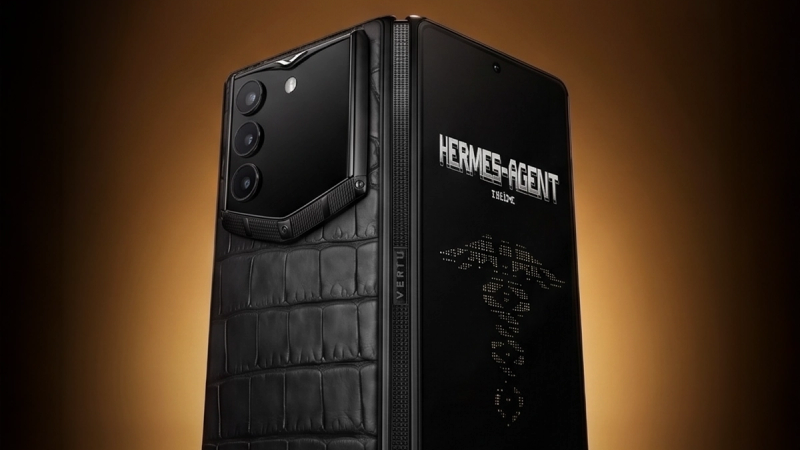
AlphaFold is positioned differently: it treats the foldable as a private executive workspace, with Hermes Agent designed to turn voice intent into cross-app actions, plus a luxury service layer.
Device security (Knox, Secure Folder, Knox Vault) and AI data security are related but not identical. For decision-makers, the difference matters.
If you’re buying for a principal, the “ownership experience” (setup, support, concierge) becomes part of the product.
Quick comparison (what changes the decision)
Criteria | Samsung Galaxy Z Fold (mainstream flagship) | VERTU AlphaFold (luxury AI foldable) |
|---|---|---|
Screen for real work | Large inner display; optimized One UI experience; productivity-first positioning | Large inner display positioned as a “mobile boardroom” for documents, dashboards, approvals |
AI | Strong assistive AI for writing, summaries, translation, and context | Hermes Agent framed as agentic AI: “turns voice commands into actions,” cross-app execution |
Security posture | Knox platform + enterprise controls; strong device-level protections | “AI data security” and “hardware privacy protection” framing; private spaces + isolation claims |
Service & onboarding | Mature ecosystem; IT/EMM support; user self-serve typical | Dedicated adviser support and concierge positioning as part of the experience |
Best for | Teams and individuals who want a powerful foldable inside the mainstream Android stack | Executives who want a luxury device plus a private AI workflow layer and white-glove ownership |
Screen and multitasking: when a foldable actually replaces friction
A foldable phone Samsung makes sense when the unfolded screen changes how you work, not just what you can watch.
On Samsung’s side, the current Z Fold line is positioned as a “pocketable workstation,” built around a large main display and an interface optimized for both cover and main screens. On its US product page, Samsung highlights the Galaxy Z Fold7’s 8.0-inch main display and 6.5-inch cover display, paired with foldable-optimized One UI and productivity tools.Samsung Galaxy Z Fold7 (US)
In practice, that screen advantage shows up in a few high-value workflows:
Reading and marking up PDFs or contracts while keeping email/chat visible
Reviewing dashboards and slides without constant zooming
Splitting “input” (notes) and “source” (browser) side-by-side
VERTU’s AlphaFold messaging is more explicit about executive work. On the official product materials, it’s framed as an ERP phone and a large-screen decision surface for business use.VERTU ALPHAFOLD
Collector’s note: Most comparisons treat “screen size” as entertainment. For principals, screen size matters because it reduces the number of times you need to stop, forward to a laptop, or ask someone else to “send it later.” That’s the real ROI.
AI: assistive features vs Hermes Agent workflows
This is the sharpest difference between a galaxy foldable phone and a luxury AI foldable.
Samsung: AI that helps you communicate and summarize
Samsung’s Galaxy AI positioning emphasizes assistive tools—writing help, transcript summaries, and contextual features. Samsung’s Fold7 page calls out tools like Writing Assist and Transcript Assist as part of the productivity story.Samsung Galaxy Z Fold7 (US)
For many business users, this is enough:
Turn meeting audio into a summary you can forward
Draft cleaner emails faster
Translate and interpret content in the moment
AlphaFold: AI that’s framed to execute, not just suggest
AlphaFold’s pitch is that the phone is not only large—it’s agent-forward.
VERTU states that Hermes Agent “connects 70+ supported apps and turns voice commands into actions,” and that it “learns your habits” and “remembers your preferences.”VERTU ALPHAFOLD
That framing matters because executives don’t need another place to write text. They need a way to:
capture intent quickly (voice)
translate it into a workflow
keep sensitive context constrained
If you want a deeper look at how VERTU describes Hermes Agent as a private workflow layer, see: Hermes Agent on AlphaFold.
Security and privacy: device security vs AI data security
A Samsung foldable phone can be extremely well-secured at the device level—especially in a managed fleet.
Samsung describes Samsung Knox as an enterprise mobility security platform integrated from the hardware layer up, with integrity checks, secure boot concepts, and managed containers for work data.Samsung Knox (Samsung Business)
Samsung also describes Secure Folder as an additional data separation container for personal apps and content, and it publishes detailed material on Knox Vault as an isolated subsystem with its own processor and memory for sensitive data.Samsung Knox Vault (docs)
That’s a serious baseline.
But decision-makers should add one more layer of thinking: AI data security.
When an AI feature runs fully on-device, the exposure surface is different.
When it relies on cloud services (or sends content to external services), the trust boundary expands.
Samsung’s own privacy messaging around Galaxy AI explicitly discusses Knox Vault and on-device protection in the AI context—useful framing for what “protected” means when AI enters the workflow.How Galaxy AI Protects Privacy with Samsung Knox Vault (Samsung Newsroom)
VERTU’s AlphaFold material leans directly into this boundary question by positioning “AI Data Security” and “Hardware Privacy Protection” as named pillars, plus features like Private Space, end-to-end encryption, encrypted V-Talk, and triple-system isolation.VERTU ALPHAFOLD
How to verify: Whatever you choose, ask one operational question: Which AI features are fully on-device, and which require sending data off-device? Even the best hardware security can’t change the fact that cloud processing is a different trust model.
For a practical way to reason about AI-enabled phone risk, VERTU’s guide is a useful starting point: Mobile AI security: protect data on AI-enabled phones.
Luxury (done properly): craft, service, and assurance
In a mainstream buyer’s guide, “luxury” is usually shorthand for price.
In real executive ownership, luxury is closer to assurance:
the device feels considered and durable
the setup is discreet
support is immediate
someone competent can solve problems without exposing your life to an IT queue
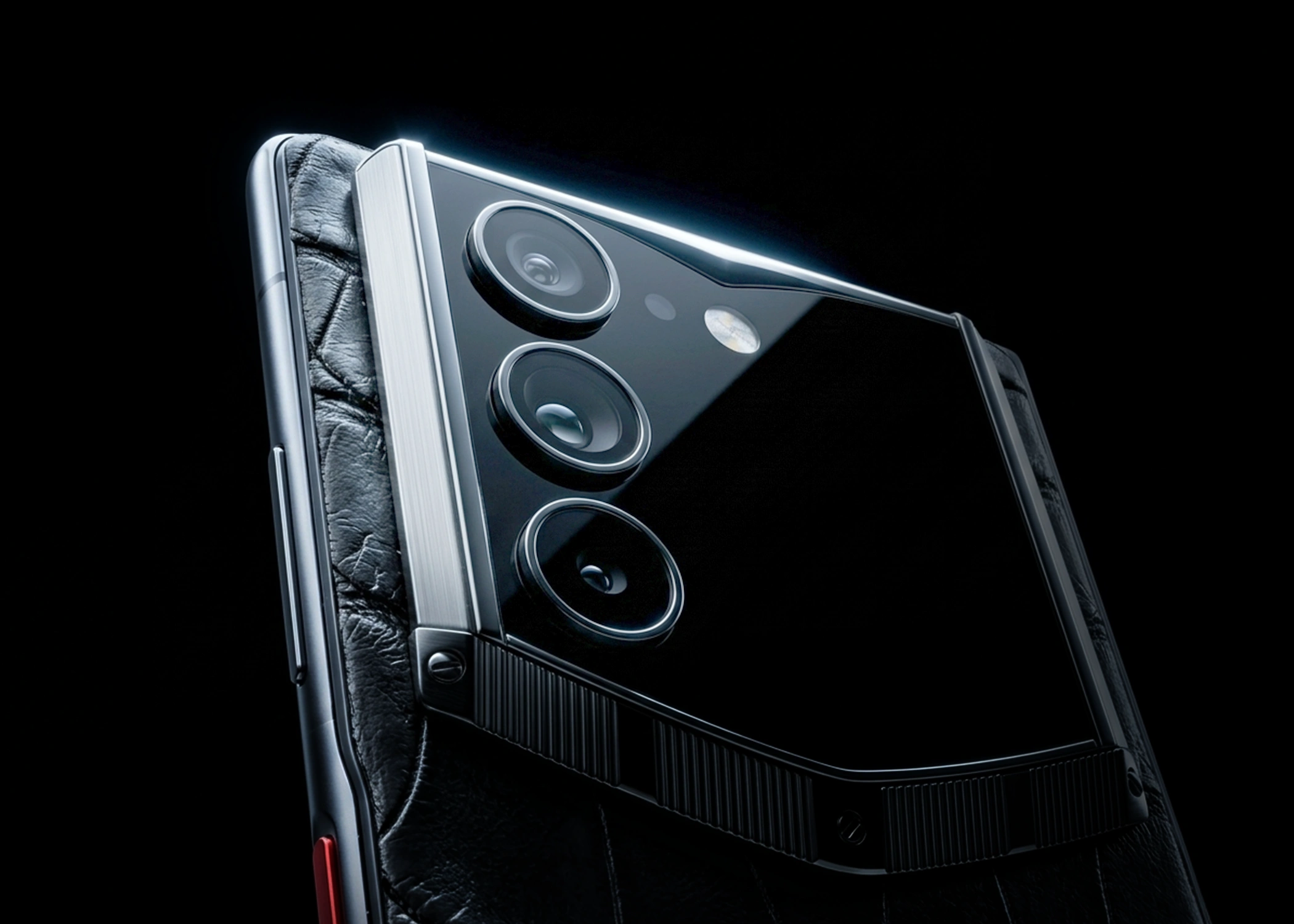
VERTU leans into this with “hand-crafted by master artisans” language, “rare materials,” and white-glove support such as one-to-one adviser assistance as part of the purchase experience.VERTU AlphaFold official page
And when your calendar is global, a human service layer is not a gimmick. It’s time returned.
If you want a clear overview of how VERTU frames concierge as part of the product, see: VERTU local guide and concierge services.
The “price” question: what you should compare instead of numbers
Many people search samsung foldable phone price because they want a clean value comparison.
For a decision-stage buyer, the better comparison is:
What does it cost you when confidential work leaks into the wrong tool?
What does it cost you when you need support immediately and can’t get it?
What is the time value of faster approvals, fewer handoffs, and fewer “I’ll do it when I’m back at my desk” moments?
A mainstream samsung foldable phone can be an outstanding value. A luxury AI foldable is not trying to win that contest.
It’s competing on a different axis: trust, workflow compression, and ownership experience.
Where Z Flip fits (and why it’s usually not the executive work choice)
Your keyword set includes samsung galaxy z flip foldable phone. It’s worth addressing briefly.
Flip-style foldables optimize for compactness and lifestyle carry. Book-style foldables (Z Fold class) optimize for a larger working surface.
If your work involves documents, dashboards, approvals, and multi-app coordination, the Z Fold form factor is usually the relevant comparison—not Z Flip.
Who should choose which
Choose Samsung Galaxy Z Fold if…
You want a top-tier mainstream foldable with strong productivity features and broad ecosystem compatibility.
Your organization already uses enterprise mobility management and wants a well-documented security stack (Knox).
You prefer assistive AI features that improve writing, summaries, and translation inside familiar apps.
Choose VERTU AlphaFold if…
You want a foldable that’s positioned as a private executive workspace, not a mainstream gadget.
You care about the AI boundary as much as the device boundary—and you want “AI data security” to be part of the purchase conversation.
You value a luxury ownership model: craft, discretion, and dedicated support/concierge as part of the product experience.
Next steps
If you’re deciding between a mainstream Samsung foldable phone and a luxury AI foldable, the fastest path is to test your real workflows:
One week of documents + approvals + travel logistics
One week of sensitive calls, notes, and summaries
One week of cross-app tasks you normally delegate
Then choose the device that reduces friction without expanding your trust boundary.
For AlphaFold specifics and a private consultation route, start with the official page: VERTU AlphaFold official page
Disclosure: This article references VERTU pages. Editorial judgment remains the priority.