

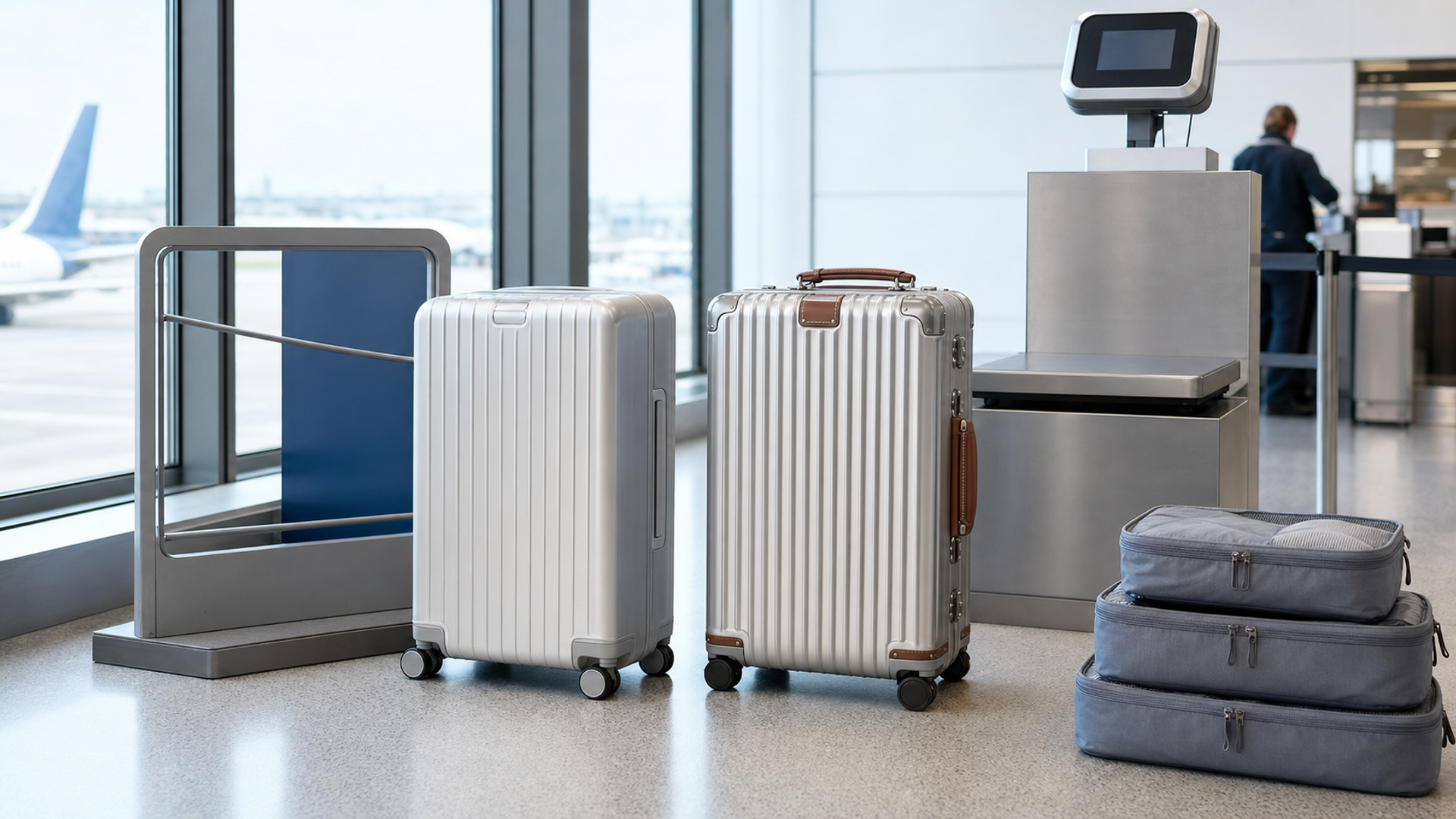
Choose the RIMOWA Original if you want the brand’s more streamlined aluminium design, recessed hardware and a broad range of sizes for frequent modern travel. Choose the Classic if you prefer heritage styling, leather handles and more visible external hardware and are willing to maintain those details. Both aluminium lines will acquire dents and scratches. The real decision is whether you want a technical travel tool or a more traditional object—and whether the exact dimensions work with your airlines.
Original vs Classic in one table
| Decision factor | RIMOWA Original | RIMOWA Classic |
|---|---|---|
| Design language | Streamlined, industrial, modern | Heritage-inspired and more decorative |
| Handle character | Integrated modern hardware | Leather handles are a defining feature |
| External details | Cleaner, more recessed appearance | More visible corners and hardware |
| Best use | High-frequency travel and broad size choice | Style-led travel and owners who enjoy patina |
| Care sensitivity | Aluminium still dents and scratches | Aluminium plus leather needs thoughtful care |
| Main buying risk | Assuming iconic aluminium is lightweight | Choosing appearance before airline fit |
The same material does not create the same experience
RIMOWA identifies both the Original collection and the Classic collection as aluminium luggage. The shared grooved shell means both develop visible travel history. They are not hard cases that remain showroom-perfect after baggage handling.
Original presents the aluminium icon in a more contemporary way. Classic deliberately foregrounds heritage details, including leather handles and prominent hardware. In a cabin size, those differences affect how the case feels in a hotel, train and airport queue. In a checked size, baggage handling and total mass may matter more than the subtleties of the handle.
Look beyond campaign photographs. Compare the exact product pages for weight, external dimensions, capacity, lock design, handle construction and interior dividers. Collections evolve, and a description of an older model may not match the current one.
Airline fit is the first hard gate
No premium suitcase is useful if it repeatedly exceeds the cabin allowance on your routes. Airlines set limits by external dimensions, including wheels and handles, and some impose low weight caps. A metal cabin case can consume a meaningful portion of that allowance before packing.
Build a route table:
| Airline used | Cabin dimensions | Cabin weight cap | Original model fit | Classic model fit |
|---|---|---|---|---|
| Primary long-haul airline | Check current policy | Check current policy | Measure exact product | Measure exact product |
| Regional connection | Check current policy | Check current policy | Pay attention to depth | Pay attention to weight |
| Low-cost backup | Check current policy | Check current policy | May require checked bag | May require checked bag |
Do not rely on the word “Cabin.” It describes the product category, not universal compliance. Policies change and staff may enforce them differently. Use the airline’s current page immediately before travel.
For checked luggage, consider total loaded weight. Aluminium’s strength and repairable structure are appealing, but a heavy case can reduce the contents you carry before excess-baggage charges apply.
What aluminium patina really looks like
Aluminium dents rather than flexing like polycarbonate. Small dents and scratches become part of the surface. Some owners value that record of travel; others find the first mark distressing. If you want a case to remain visually pristine, neither Original nor Classic is the safest choice.
The shell’s rigidity can protect against crushing, but it cannot make contents invulnerable. Pack fragile items in the centre with soft material around them. Do not treat the case as a shipping crate. Latches, wheels, handles and frames remain functional components that can be damaged.
Colour affects the way marks appear. Silver makes bare-metal scratches less chromatically obvious, while dark finishes can show contrast. Surface changes vary, so inspect aged examples in the same colour rather than assuming every patina is attractive.
Handles and high-touch components
Classic’s leather handles provide warmth and a tactile contrast to aluminium. They also add an organic material that can darken, mark and respond to moisture. That ageing can be beautiful when expected and frustrating when it is not.
Original’s modern handle system looks more technical and visually integrated. It may suit a traveller who wants fewer heritage cues and an easier transition between business environments. Comfort still depends on hand size, bag weight and how often the case is lifted.
Test the telescopic handle at several heights. Pull the case on carpet, smooth floor and a threshold. Check whether your personal item sits securely on top. A suitcase spends more time being wheeled and lifted than being admired from the front.
Interior organisation
RIMOWA’s aluminium collections use divider systems rather than the zip-around compression panels common in some soft or polycarbonate luggage. The exact system and included accessories can vary. Pack a realistic trip before deciding:
two pairs of shoes;
jacket or dress;
three days of clothing;
wash bag;
compact technology pouch;
laundry or document folder.
Observe whether the divider keeps contents stable when the case is vertical. A perfectly arranged flat case can collapse internally after several curb transitions.
The right size should leave a little flexibility without inviting chronic overpacking. An overfilled aluminium case places stress on latches and frame alignment.
Cabin, check-in or trunk shape?
Collection choice comes after format. Cabin cases maximise control because the traveller keeps them close, but weight limits can make aluminium inefficient. Conventional check-in cases suit folded clothing and broad hotel storage. Trunk proportions are deeper and can be effective for shoes, structured garments and longer stays, yet the depth may be awkward in small rooms, train racks and some car boots.
Measure the storage space at home and the transport you use after landing. A suitcase that rolls beautifully through an airport can become inconvenient on stairs, ferries or compact taxis. If two smaller cases replace one very large trunk, consider whether the extra item creates more handling friction than the packing flexibility is worth.
The most attractive format is not always the most resilient itinerary choice. Select the shape that can move through the entire journey, not only the airline segment.
Repair and guarantee: read the scope
RIMOWA advertises a lifetime guarantee for new suitcases covering functional damage under its stated terms. “Lifetime” does not mean every scratch, cosmetic dent, misuse or normal wear is repaired free. Read the policy applicable to the purchase date and country, retain proof of purchase and register the product where appropriate.
Repair-network access matters for frequent travellers. Ask:
where the nearest service point is;
whether common wheels and handles can be repaired locally;
what qualifies as cosmetic rather than functional damage;
whether third-party repair affects coverage;
how long a typical assessment takes.
A good warranty is only as useful as the service path available before the next trip.
Original vs Classic ownership matrix
| Your priority | Better starting point | Why |
|---|---|---|
| Contemporary business travel | Original | Cleaner hardware and modern visual language |
| Heritage and tactile detail | Classic | Leather handles and traditional styling |
| Broad model and colour search | Original | Typically extensive current range |
| Low-maintenance appearance | Neither by default | Both aluminium shells show use |
| Frequent cabin use | Exact lighter/smaller model | Airline compliance overrides collection |
| Checked luggage | Exact weight and service access | Handling risk and allowance dominate |
| Long-term patina | Either | Choose the ageing character you welcome |
Security and identification
Latches and locks deter casual opening but do not make a suitcase a safe. Keep passports, medication, valuables and critical electronics with you where rules allow. Photograph the case and contents before a significant trip, keep receipts for high-value items and use an identification method that does not expose your home address to casual view.
A tracking device may help locate a delayed bag, subject to airline and battery rules, but it does not compel an airline to release or deliver the case. Treat tracking data as supporting information in the official baggage process.
Record the suitcase serial number and photograph distinctive marks after each major trip. If the exterior changes through normal use, current images are more useful than the pristine purchase photograph when identifying a delayed bag.
Our RIMOWA vs TUMI business-travel comparison contrasts aluminium hard cases with a broader luggage system. The long-haul business travel accessories guide helps decide what must stay accessible rather than buried inside the case.
Pre-purchase checklist
Verify exact external dimensions and empty weight.
Compare them with the strictest airline you use regularly.
Lift a realistically loaded sample.
Test telescopic and side handles at your natural height.
Roll the case over mixed surfaces.
Inspect how the colour looks with existing dents and scratches.
Confirm local repair access and guarantee terms.
Decide whether leather-handle ageing is a benefit or burden.
Final verdict
Original is the rational default for travellers who want RIMOWA aluminium in its cleaner modern form. Classic is the emotional choice for owners who value heritage hardware and leather touchpoints. Neither escapes weight, airline limits or patina. Buy the exact size that fits your routes and the design whose wear you will regard as history rather than damage.
![How to Scan Receipts and Documents with Your Phone [Full Guide]](https://cdn.sanity.io/images/e0gp1l2g/production/0db13feec1d5e72b8a8a5f976d1f3e86619c9228-3840x1860.webp?w=180&h=180&q=78&auto=format&fit=crop)
![How to Scan Receipts and Documents with Your Phone [Full Guide]](https://cdn.sanity.io/images/e0gp1l2g/production/0db13feec1d5e72b8a8a5f976d1f3e86619c9228-3840x1860.webp?w=800&h=450&q=82&auto=format&fit=crop)
![Top 10 Two-Tone Carbon-Fibre Watches for Men [2026 List]](https://cdn.sanity.io/images/e0gp1l2g/production/18870799ba33fab0e038968359cd5772d7d7db30-1024x576.webp?w=800&h=450&q=82&auto=format&fit=crop)
![Top 10 Luxury Watches with Digital Complication Displays for Men [Latest]](https://cdn.sanity.io/images/e0gp1l2g/production/c4f6bf8c080f291c39f7cc85c7344ecff2fd3799-1024x553.webp?w=800&h=450&q=82&auto=format&fit=crop)