Introduction
Luxury phone design is often described as materials and appearance. In practice, the designs that truly last are built on three pillars: enduring materials, disciplined craftsmanship, and secure intelligence that protects your life as much as it assists it.
For discerning U.S. buyers, the evaluation is less about novelty and more about proof. Where did the materials come from? How will the device age under daily wear? What does service look like two or five years in? And, in an era of on-device assistants and always-on connectivity, what privacy and security architecture stands behind the experience?
This guide follows a simple structure: first the principles that separate “premium” from luxury phone design, then the materials, the craft and service model, the security and AI stack, 2025–2026 trends, and a final checklist you can use before you commit.
Core principles
Quiet luxury ethos
Quiet luxury in a phone is restraint with intent. It shows up in balanced proportions, low-glare finishes, and details you feel more than you see: the edge radius that sits comfortably in hand, the tactile transition between frame and back, the consistency of buttons over time.
It also shows up in what the device does not do. No visual noise, no forced branding, no gimmicks that trade longevity for attention.
Longevity by design
A lasting phone is engineered for the slow variables: friction, heat cycles, micro-scratches, seal fatigue, battery aging, and software support.
That means thinking beyond “durable” as a marketing word and asking how durability is achieved. Some materials resist abrasion but chip on impact. Some frames feel lighter but dent easily. Some devices are secure today but lack the architecture to stay trustworthy after years of updates.
How to verify: Ask what parts are serviceable (battery, display, buttons, seals), what the realistic repair pathway is, and whether the brand treats service as a lifecycle commitment or a one-time warranty event.
Provenance and scarcity
Scarcity matters in luxury, but provenance matters more. A numbered edition means little if authenticity is hard to verify, if materials are ambiguous, or if the aftercare model is unclear.
In the U.S. market especially, you want transparent sourcing claims, clear serial or ownership documentation, and an approach that anticipates resale, gifting, and long-term stewardship.
Premium materials for luxury phone design
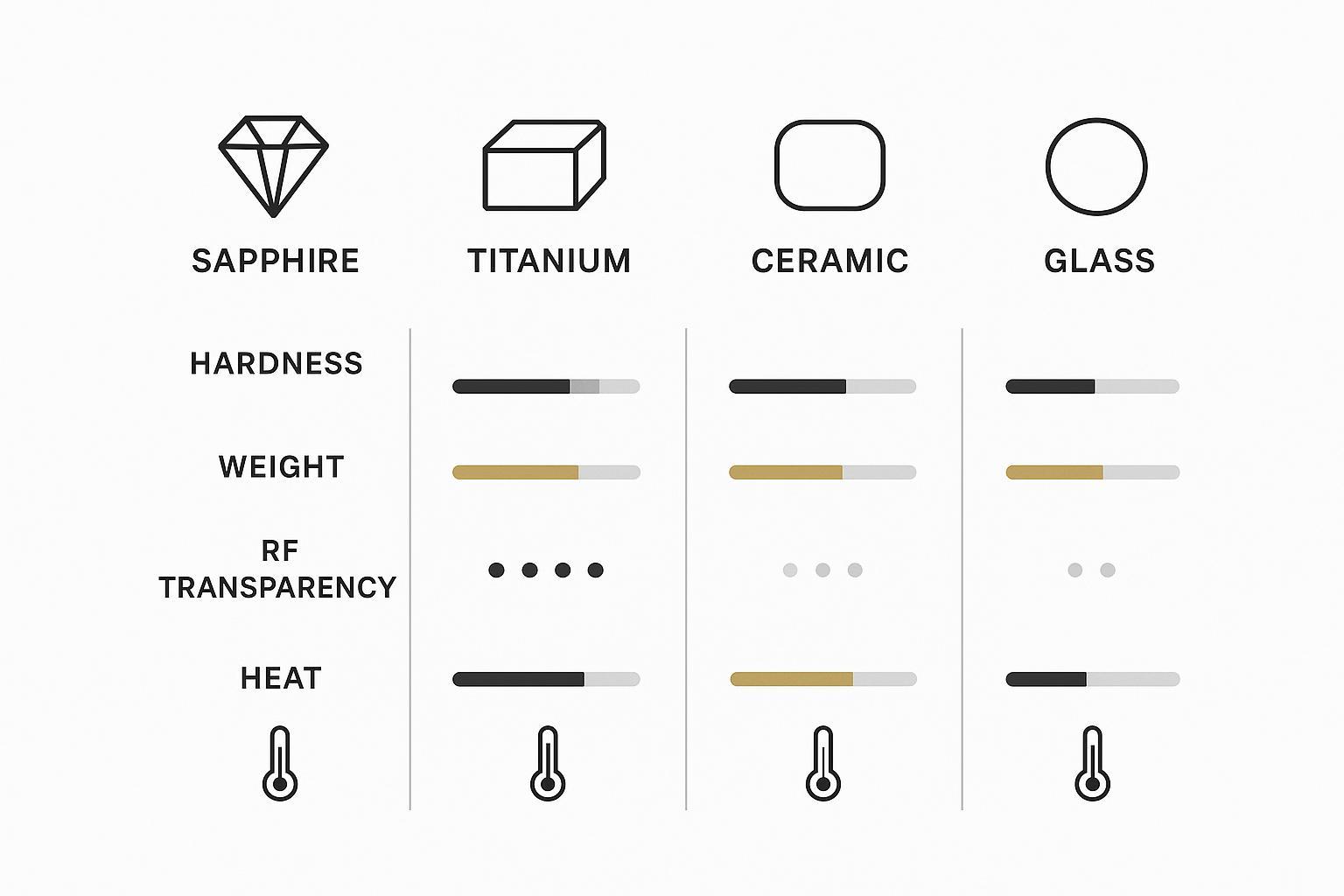
Materials decide how a phone ages: how it resists scratches, how it handles a knock against stone, how it feels in hand after months of use, and whether it interferes with antennas.
Sapphire vs advanced glass
Sapphire crystal has a reputation for permanence, and for good reason: its hardness and scratch resistance are materially higher than conventional glass. But the buying decision is not “sapphire is better.” It is “sapphire is better for the specific failure mode you want to avoid.”
According to Ceramics.org’s review “Cover screens for personal electronic devices: Strengthened glass or sapphire”, sapphire offers substantially higher hardness and scratch resistance than strengthened glass. The same piece also points out important trade-offs, including higher reflectivity (which can reduce readability in bright ambient light) and manufacturing realities that affect cost and consistency.
A practical way to think about sapphire vs glass:
If you prioritize keeping the surface pristine over years of daily handling, sapphire can be rational.
If your biggest risk is impact and drops, advanced strengthened glass may be the smarter design choice, because the system can be tuned for toughness rather than surface hardness.
Key Takeaway: The best luxury smartphone materials aren’t the “hardest” ones. They’re the materials whose trade-offs match how you actually live.
Titanium, steel, aluminum
Frames decide stiffness, weight, and how well a device keeps its shape after stress.
Titanium earns its place when you want strength without the mass of steel, and when long-term corrosion resistance matters. It’s a structural material first, not a visual flourish.
Steel can feel substantial and is often used to communicate permanence, but weight accumulates quickly in a device you carry all day.
Aluminum keeps weight down and can be very well engineered, but it is more prone to visible wear and dents depending on alloy and finish.
If you are comparing a titanium phone to an aluminum-frame device, ask how each frame handles dents, edge impacts, and long-term finish wear in real use.
Ceramic, leather, composites
Ceramic and leather are often used where touch matters.
Ceramic can hold its appearance exceptionally well and can be comfortable against skin, but it is still a brittle class of material. Great ceramics are engineered, not improvised.
Leather is about patina and grip. Good leather improves with time if it’s cut, stitched, and sealed for the way you use the phone.
Composites can offer excellent strength-to-weight, but they must be executed with care so they don’t read as “technical” rather than “luxury.”
Craftsmanship and service
A luxury phone is not only built. It is maintained.
Hand assembly and tolerances
Craft matters when it shows up as consistency: tight seams, predictable button feel, stable alignment, and parts that don’t rattle after a year in a pocket.
In practical terms, you are looking for a brand that treats assembly as a controlled process, not a cosmetic story. The evidence is in fit, finish, and the lack of “tolerance drift” over time.
Personalization and limited runs
Personalization should be more than initials. The best limited runs are coherent: a material choice that makes structural sense, a finish that ages well, and a colorway that will not feel dated when the trend cycle moves on.
If the edition is genuinely limited, provenance should be verifiable. Serial identification, documentation, and a clear aftercare path matter as much as the design itself.
Concierge and lifecycle care
For a U.S. buyer, service is often the real luxury: not just access, but response time, discretion, and competence.
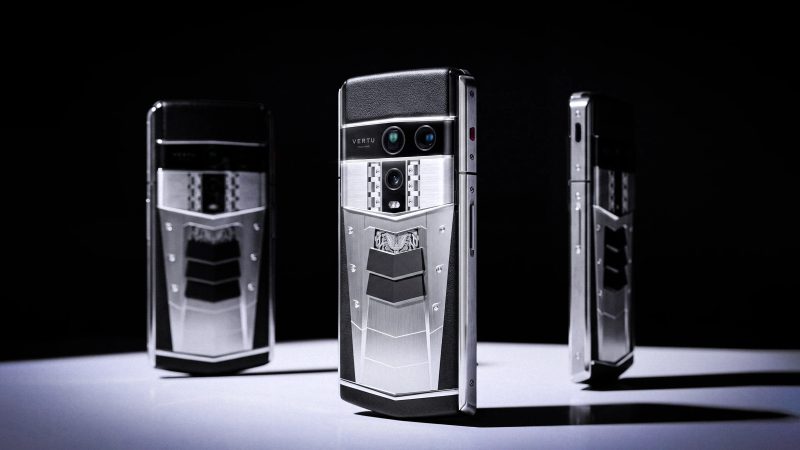
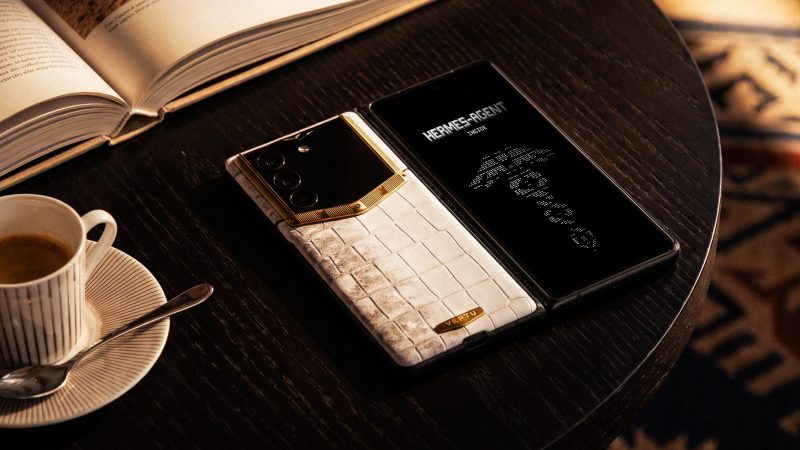
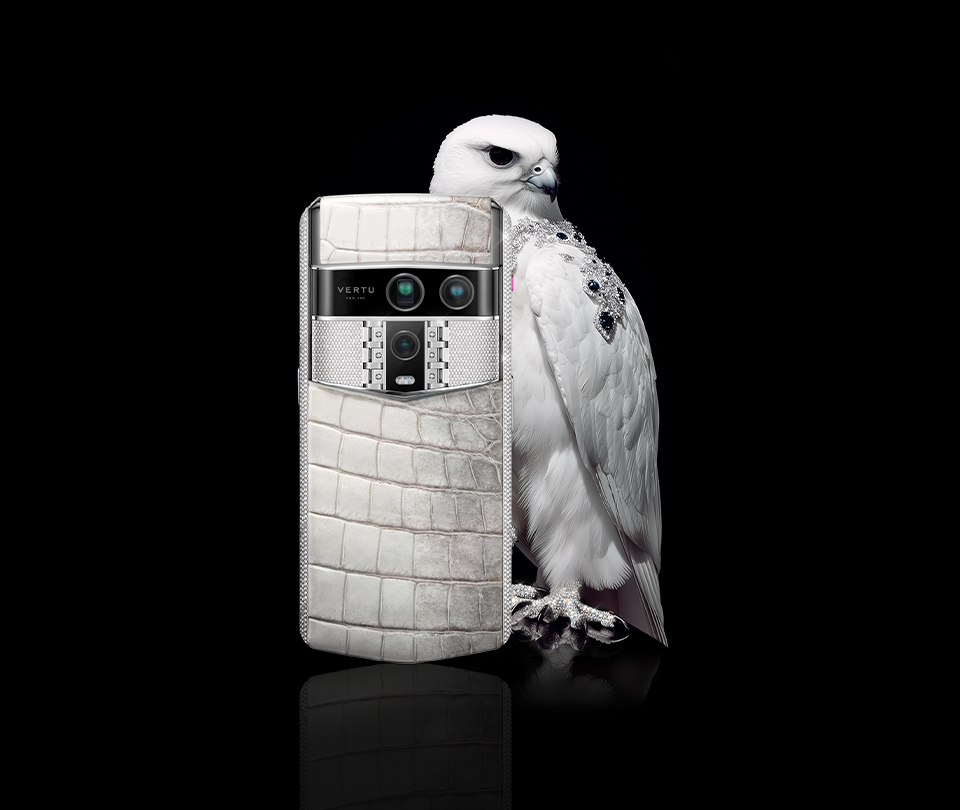
This is where VERTU is a useful case study to understand what “lifecycle care” can look like when it’s designed as part of the product experience. VERTU’s brand story places its devices in a broader ownership model that blends handcrafted construction with a 24/7 concierge layer. The most important point, from a buyer’s perspective, is not the promise of privilege. It is the operational idea: a phone that is supported by a human service pathway when travel, scheduling, reservations, or sensitive logistics become complex.
If you want to see how VERTU frames that ecosystem, you can start at the official VERTU site and read the experience as a service design pattern: privacy-sensitive, relationship-led, and meant to reduce friction in high-travel lives.
Security and AI
Luxury in 2026 includes something less visible than materials: the confidence that the device is not quietly leaking your communications, location, or business context.
On-device intelligence
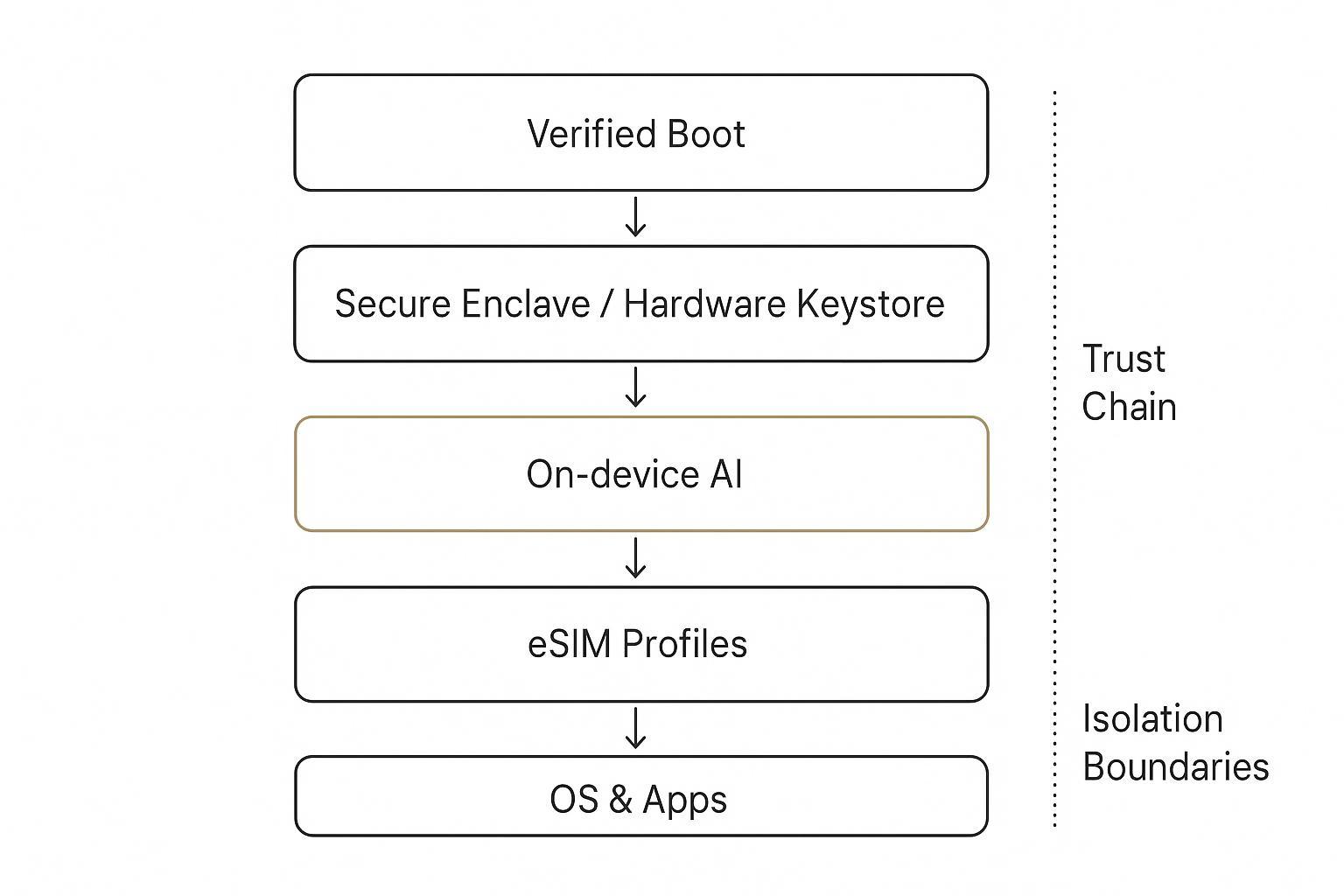
On-device AI is a meaningful design choice because it changes where sensitive data is processed. When intelligence runs locally, you can limit what is transmitted to third parties, reduce dependence on network conditions, and keep private context closer to the device.
But “on-device” is not a magic phrase. You still need to evaluate what the assistant can access, what it stores, how it is isolated from the rest of the system, and how updates are verified.
Hardware isolation and eSIM
Two design features matter here: hardware-backed security and eSIM.
On modern platforms, sensitive keys can be stored in a hardware-backed keystore, isolated from the main operating system. Android’s official documentation explains that the availability of a Trusted Execution Environment enables devices to provide hardware-backed security services via “Hardware-backed Keystore” (Android Open Source Project).
For connectivity, eSIM has a security architecture behind the convenience. The GSMA’s documentation on Remote SIM Provisioning describes the interoperability and compliance framework for remote provisioning between operators.
From a buyer’s perspective, eSIM security means you should ask how profiles are managed, what happens during travel or carrier changes, and how the device protects credentials stored on the embedded secure element.
Provenance and PQ readiness
Security longevity is also about what happens next: how updates are delivered, verified, and rolled back (or not rolled back).
Android’s “Verified Boot” documentation describes a chain of trust that starts from a hardware-protected root of trust and verifies key software components during startup. In plain terms: the device should refuse to quietly boot into a compromised state.
For buyers, “post-quantum readiness” is less about demanding a specific algorithm name and more about demanding an approach: a platform that treats cryptography as maintainable, supports upgrades, and has an update discipline that does not break the chain of trust.
2025–2026 trends
Aesthetics and editions
The aesthetic trend is directionally clear: calmer surfaces, fewer reflective treatments, and more emphasis on touch. Finishes are moving toward matte metals, low-contrast colorways, and tactile backs that reduce slips and fingerprints.
Edition strategy is also maturing. The better limited runs are less about maximal decoration and more about coherent themes: a specific material story, a specific cultural reference, or a specific craft technique carried through consistently.
Sustainability and traceability
Sustainability in luxury phones is shifting from slogans to traceability.
You will see more attention to:
material provenance and documentation
repairability as a sustainability practice
longer support windows that reduce replacement cycles
If a brand claims sustainability, ask for what can be verified: sourcing statements, repair pathways, and how the device is supported over time.
Market exemplars
In the 2025–2026 market, the most credible exemplars share a family resemblance even when their aesthetics differ:
they treat materials as engineering decisions, not decoration
they pair craftsmanship with a service pathway
they treat security architecture as a first-class design feature
The practical implication: you can compare luxury phones across brands without reducing the decision to a spec sheet. Use the principles and the checklist below.
Conclusion
Luxury phone design today is a fusion: materials that age well, craftsmanship that holds tolerances over time, and secure intelligence that respects privacy.
To evaluate lasting value, focus on what you can verify:
confirm the material story (and the trade-offs you’re accepting)
understand the real service pathway, not just the warranty headline
ask for the security architecture in plain terms: verified boot, hardware-backed key protection, and a clear approach to updates
Key takeaways
The best luxury phone design is restraint plus engineering: quiet surfaces, durable structures, and disciplined service.
Materials are trade-offs. Sapphire can protect against wear and scratches, while advanced glass can better absorb impact; frames should be judged by how they age, not how they photograph.
Craftsmanship only matters if it is backed by lifecycle care: repairs, parts, and a clear service model.
Security and AI belong in the same conversation now. On-device intelligence is valuable only when the security stack is strong and the update chain is trustworthy.
Traceability and repairability are becoming status signals in their own right.
Action cues
Verify materials: ask what is sapphire (and where), what is coated, and how surfaces are finished.
Verify service: map the repair process, typical turnaround expectations, and long-term support commitments.
Verify security: look for a coherent chain of trust (verified boot), hardware key isolation, and standards-based eSIM provisioning.
Disclosure: This article references VERTU pages. Editorial judgment remains the priority.