A slim leather wallet is worth buying when it stays comfortable with your real daily contents, lets you retrieve a card without a struggle and holds its shape after repeated use. Judge it while filled, rather than by an empty product photograph. The seven checks below turn a broad style choice into a practical purchase decision.
1. What do you actually need to carry?
Start by putting every item from your current wallet on a table. Separate daily payment cards and identification from receipts, expired cards, loyalty cards you can leave at home and emergency items you rarely use. Count the pieces you genuinely reach for in an ordinary week. Then note whether you need folded notes, full-length bills, coins or business cards. This inventory is more useful than choosing a wallet by its advertised number of slots.
A card holder can be elegant for someone who carries only a few cards and no cash. A compact bifold may suit a person who occasionally needs notes or an additional identification card. Neither format is inherently better. The right one is the smallest shape that accommodates your own routine without stretching every compartment to its limit. Leatherology's guide to wallet formats illustrates how capacity and layout vary even among compact designs.
2. How slim is the wallet when it is filled?
Ask for a photograph or measurement with cards inserted if you cannot examine the wallet in person. An empty wallet can look almost flat, while a loaded one may form a thick ridge at the fold. If shopping in a store, insert the same number of cards you intend to carry, close the wallet and set it on a flat surface. Notice whether it closes naturally or springs open. A sharp crease, bulging edges or a strained closure is a sign that the layout is being pushed beyond its comfortable capacity.
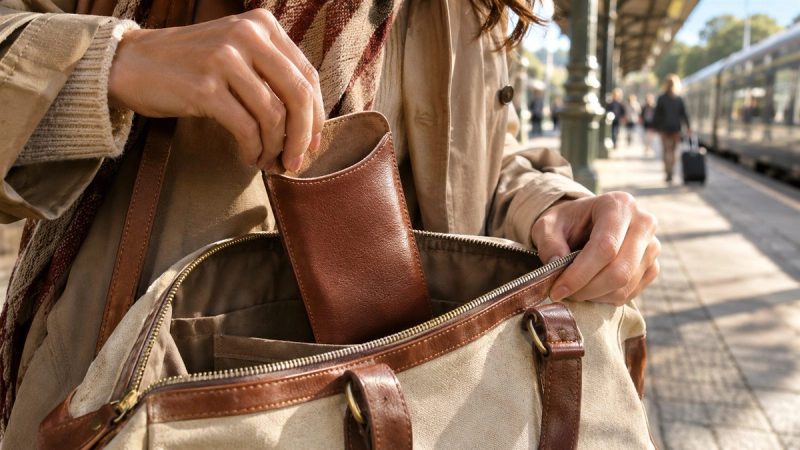
Test the filled wallet in the pocket or bag where it will usually live. For a front trouser pocket, check whether you can sit and bend comfortably and whether the outline is conspicuous under the fabric. For a jacket or small bag, check whether the wallet catches on the opening. The goal is a usable profile in your real clothing, not an arbitrary millimetre target that ignores how the wallet is carried.
3. Can you get the right card out quickly?
Card access matters as much as card count. Place your most-used card in the slot you would naturally choose. Try removing it with one hand while the remaining slots are occupied. If a tight lip makes you pinch and bend the card, the attractive compact shape may become frustrating at a busy checkout. If a pocket is so loose that cards shift when the wallet is inverted, it deserves another look.
Some buyers prefer a quick-access outer slot; others want every card concealed inside a fold. Think about where you use the wallet: at a transit gate, in a restaurant, at a hotel desk or only occasionally. Test the task you perform most often. A wallet that saves a fraction of pocket space but slows every transaction is not necessarily the more functional choice.
4. Does the layout work for cash and identification?
Look beyond the number of card slots. A wallet may fit payment cards but leave no sensible place for an identification card, a parking ticket or folded notes. If you carry cash, determine whether the bills sit flat, fold once or need several folds. Repeated folding can make a small wallet thicker than expected and makes notes slower to retrieve. If you regularly carry coins, a dedicated compact coin pouch may be more honest than forcing them into a thin card wallet.
International travel adds another constraint. Note sizes differ, so test the currencies you actually use instead of assuming that a bill compartment will suit every market. A slim design should simplify what you carry, not require an awkward folding ritual each time you pay.
5. What should you inspect in the leather and stitching?
Check that the maker identifies the material clearly and that the finish feels suitable for your routine. Smooth leather may show scratches more readily; a textured finish may disguise some handling marks. Neither appearance is a universal sign of quality. Inspect the edges, the fold, the alignment of the pockets and any areas that will take repeated pulling. Even stitching, secure thread ends and cleanly finished edges are more useful observations than a vague claim of luxury.
Gently open and close the wallet several times. The fold should move without an alarming crackle or a seam that appears to pull apart. Look inside each slot for loose lining or rough adhesive. If buying online, ask for close photographs of the interior and edges, and check the retailer's return terms for your market. Surface variations can be a normal feature of leather, but unclear construction information should still be resolved before purchase.
6. Should you pay extra for card protection claims?
Treat any protective feature as a feature to verify, not a blanket promise of security. Ask which compartments have the claimed material, what test supports the claim and whether that construction makes the wallet stiffer or thicker. A label alone cannot tell you how the wallet will behave in every real-world setting. Ordinary account alerts, careful handling and prompt reporting of a missing card remain relevant regardless of the wallet chosen.
Do not allow a technical-sounding claim to distract from basic fit. A buyer who needs quick access, enough room for identification and a comfortable fold should resolve those needs first. Compare products on demonstrable construction and practical use, then consider any additional feature on its own evidence.
7. How will the wallet age and how should you care for it?
Think about daily exposure to moisture, friction, ink and heat. A wallet stored next to keys or loose metal objects may mark faster than one in a separate pocket. Avoid overfilling it simply to make use of every slot; prolonged pressure can distort leather and seams. If it becomes wet, blot moisture with a soft cloth and allow it to dry away from direct heat. Hermès' leather-care instructions discuss the sensitivity of leather to water, oil, heat and light. Always follow the particular maker's care directions for your own item.
Consider the finish you will still enjoy after months of handling. A pristine photograph may be appealing, but a useful everyday object will acquire some signs of use. Choose a texture and colour whose likely wear pattern suits you rather than expecting an untouched appearance forever. For a gift, find out whether the recipient prefers a card holder, a bifold or a roomier wallet before selecting a style on aesthetics alone.
Where does the VERTU Neo-Vault Wallet fit?
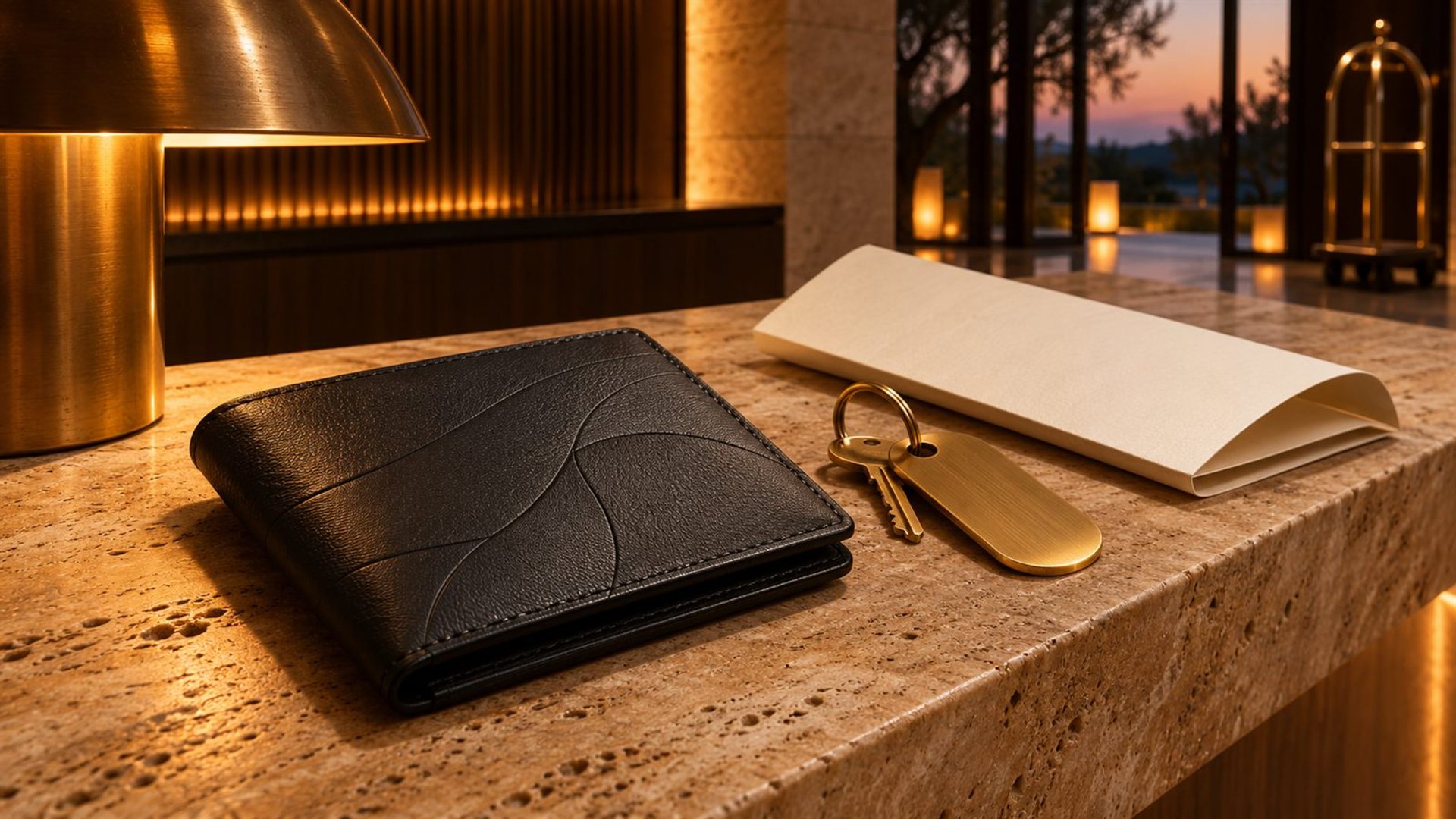
The current VERTU Neo-Vault Wallet page presents a compact black leather design with a patterned surface. Its visual character may appeal if you want a distinctive accessory alongside a restrained daily carry. The English product page does not give a detailed slot count or measured filled thickness, so confirm those points directly before treating it as the solution to your inventory. The wider VERTU Life collection also provides a useful place to compare accessory styles.
A practical short list includes two or three candidates with clearly different layouts. For each, write down your daily card count, cash need, pocket location and one-handed access preference. Then compare the filled profile, construction photographs, care requirements and market-specific return terms. This is a more reliable way to choose than ranking wallets by price or by the thinness of an empty sample.
Frequently asked questions
Is a card holder better than a slim bifold?
Choose a card holder if your regular carry is cards only and you value the smallest footprint. Choose a slim bifold if you need a little more organisation or occasional notes. Load both with your actual contents before deciding; product format alone does not determine comfort.
Will leather stretch to fit more cards?
Leather can change with use, but stretching is not a sound capacity plan. Forcing extra cards into narrow slots can strain stitching and make access worse. Buy for the number of items you expect to carry now, with a little room for ordinary variation.
Can a slim wallet carry coins?
Only if its design provides an appropriate coin compartment and remains comfortable when loaded. Loose coins add local bulk and may mark the interior. If coins are a daily necessity, choose a wallet built for them or carry a separate small pouch.
How do I check a wallet when shopping online?
Ask for interior, edge and filled-profile photographs; confirm the dimensions, material, usable card capacity and return policy. Compare those details with a quick inventory of your own contents. A product image of an empty closed wallet is insufficient evidence of everyday fit.
Conclusion
The right slim leather wallet is the one that carries your real essentials without a strained fold, gives you easy access and suits the way you actually dress and travel. Start with your contents, test the loaded shape, inspect the construction and verify any product-specific claims before you buy.