-accxhkbi.webp)
Introduction
A luxury crystal necklace in 2026 is defined by three things: clarity of line, security of construction, and how it wears over time. You’re not only choosing a color or a sparkle. You’re choosing a silhouette that reads refined at a glance—and a setting that won’t punish you for actually wearing it.
Trends, selection, styling, and care are one system. Trends shape the silhouettes and palettes you’ll see. Selection determines durability and value protection. Styling determines whether a piece looks intentional (not accidental). Care keeps brightness from going soft.
This guide breaks down the luxury crystal necklace trends 2026 is signaling, then gives you practical frameworks to choose, style, and maintain pieces with confidence.
2026 trends
Silhouettes and scale
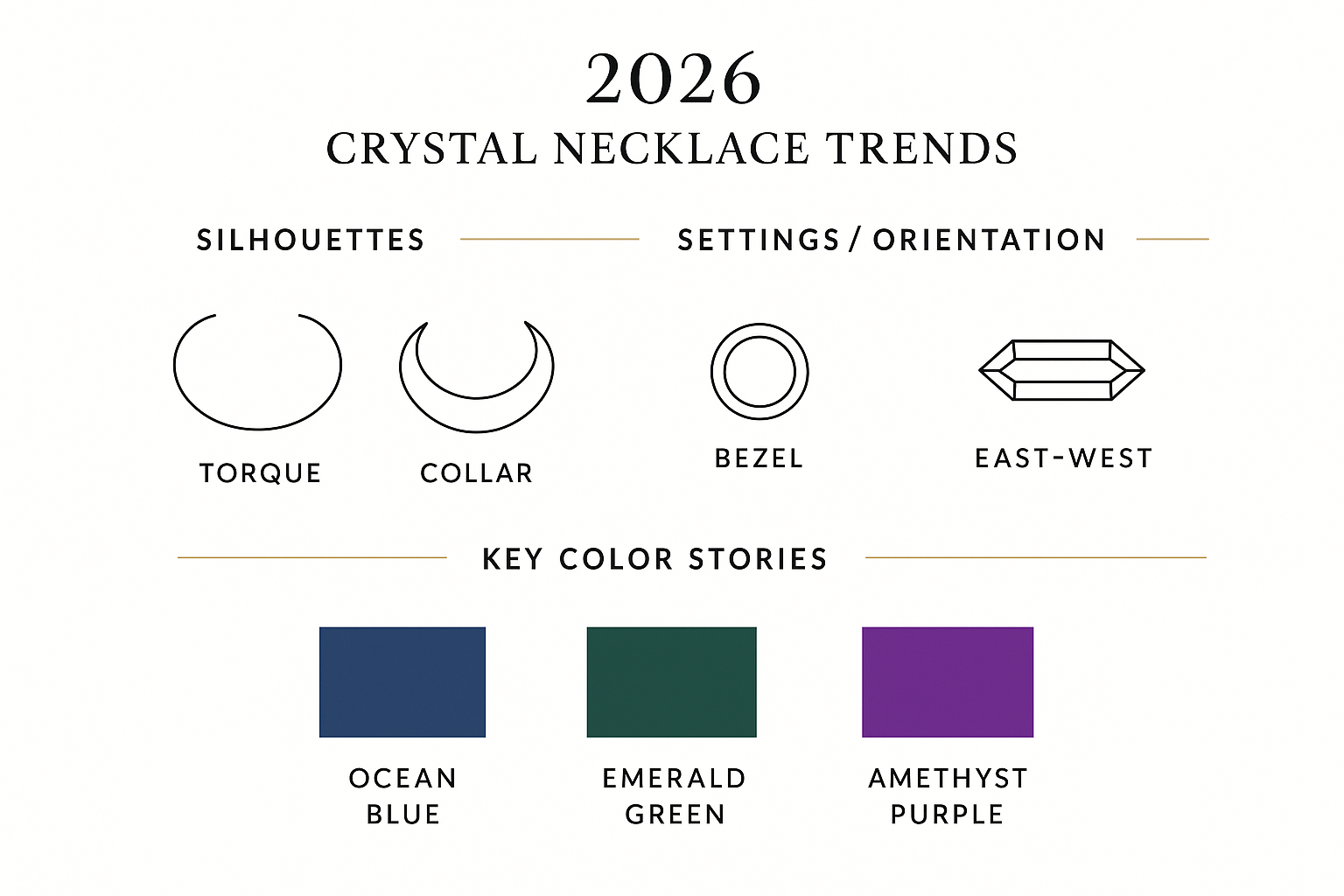
In 2026, silhouette is the message. The strongest pieces look architectural, not busy.
- Torquestructured, close to the neck, and quietly dramatic. Natural Diamonds’ overview of the torque necklace silhouette is a helpful reference for what “torque” means in fine-jewelry terms.
- Collarprecise, collarbone-framing, and clean.
Lariat (often a Y-shape): a vertical drop that elongates the torso. Borsheims explains what a lariat necklace is (and how to wear it) and why the shape works with open necklines.
Scale splits into two lanes: one decisive piece (torque/collar), or a layered set with clear spacing so each necklace reads.
Settings and orientation
Two setting directions stand out because they look modern and wear well:
Bezel settings (metal surrounding the stone) for smoothness and protection.
East–west settings (stone set horizontally) for an architectural line without increasing size.
If you live in necklaces—workdays, travel, frequent wardrobe changes—these choices matter more than trend talk.
Color stories
2026 crystal color feels oceanic and mineral: saturated blues, greens, and purples that look rich but not neon.
VERTU’s Designer gemstone jewelry trends 2026 guide describes the shift well: color is becoming the main storyline, and mixed-metal design is treated as deliberate rather than incidental.
Select the right piece
Cut precision and brightness
“Brightness” isn’t just sparkle. It’s whether the stone looks alive in the lighting you actually live in.
Use a simple two-light check:
Diffuse daylight (near a window): you want even brightness, not dead patches.
Warm indoor light (evening): you want depth, not a flat glare.
If a stone only looks impressive under harsh direct light, it may disappoint in real wear.
Key TakeawayFor luxury crystal necklaces, aim for brilliance that holds up in both daylight and warm evening light.
Settings, clasps, and security
Luxury is also engineering. A necklace you don’t trust won’t be worn.
Run this quick security scan:
- Setting feelnothing should snag or feel lifted.
- Stone silenceno rattling.
- Clasp confidencea decisive close (not a vague catch).
- Joins and endsclean connections, no gaps.
Then protect value with verification discipline. VERTU’s Artisanal jewellery craftsmanship: a buyer’s guide recommends a two-pass approach: first an in-hand scan (finish, symmetry, setting quality, marks), then deeper due diligence (paperwork and disclosures).
How to verify: For meaningful purchases (especially pre-owned), ask for a small “provenance packet”: invoice/receipt, any lab report or treatment disclosure, and clear photos of marks and clasps.
Metals and sensitivity
Metal is aesthetic, comfort, and maintenance.
Yellow gold warms blue and green stones.
White gold / platinum reads cooler and more architectural.
Silver can be striking, but is more sensitive to tarnish depending on alloy and environment.
If you have metal sensitivity, prioritize smoother finishes and higher-purity options where possible—and avoid edges that rub.
Styling frameworks
Layering strategy
Layering is controlled composition. The goal is separation and clarity.
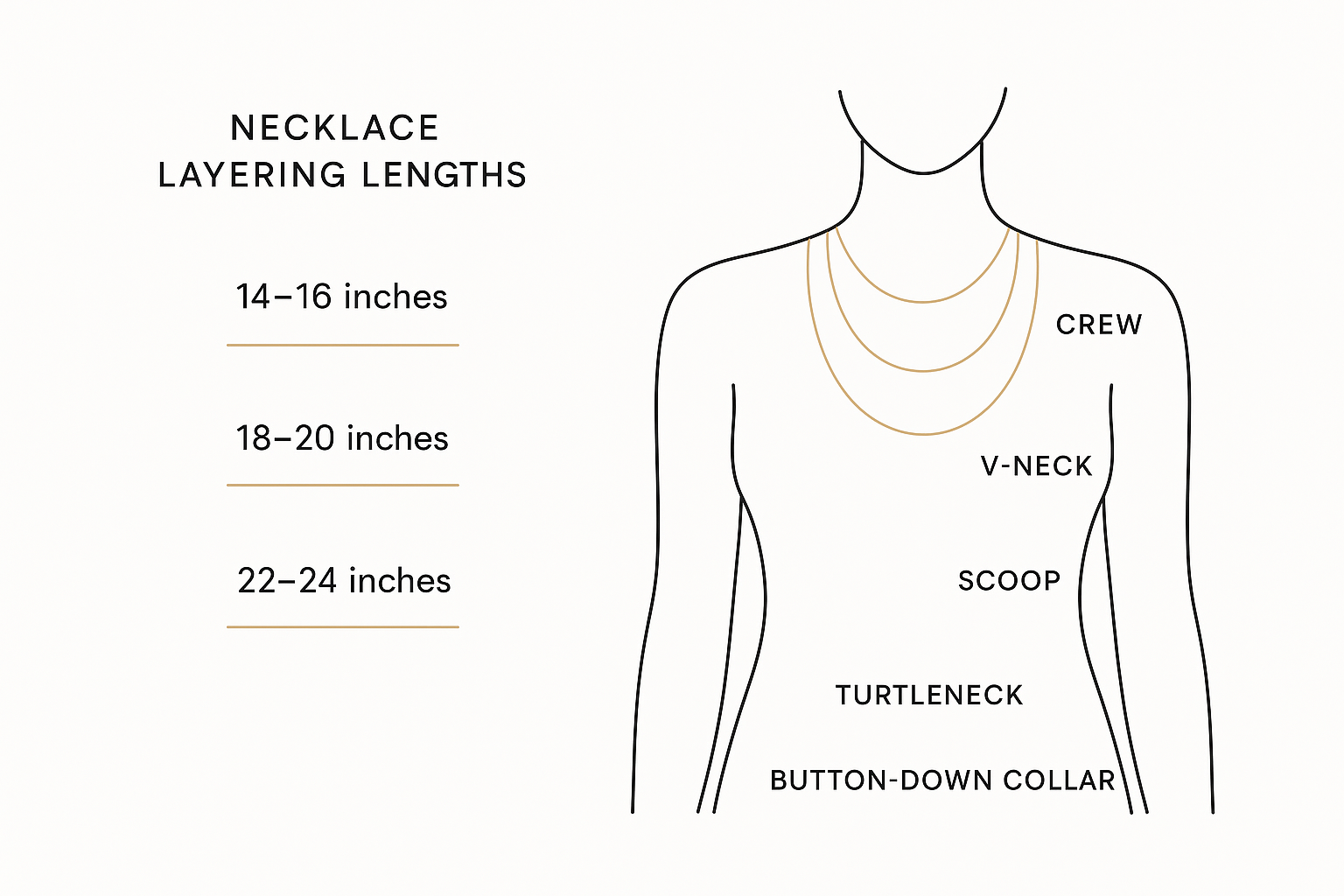
A practical rule: keep 1–2 inches between layers to reduce tangles and let each piece show. Brilliant Earth’s necklace layering length chart is a solid baseline.
A reliable 2026 stack:
- 14–16 incollar/choker anchor
- 18–20 infocal pendant or east–west stone
- 22–24 inlonger chain or lariat line
If you’re searching for “necklace layering lengths 14 16 18 20 22 24,” this is the usable version: distinct spacing, one focal element, one vertical line.
The fastest way to learn how to layer necklaces without tangling is to stop stacking similar chain textures at similar lengths. Separate both length and texture.
Neckline matching
Necklines are geometry. Match the necklace to the space the neckline creates.
- V-neck / plungelariat/Y-shape follows the line and elongates.
- Crew / high neckshort collar above the fabric, or a long clean line over the fabric.
- Scoop / bateaucollarbone-length pendant looks composed; a torque can look especially sculptural.
- Button-downa short collar above the open collar, or a longer pendant beneath.
Mixed metals and balance
Mixed metals look expensive when they look intentional.
Pick an anchor metal and let the second tone appear as an accent (setting, clasp, or a single chain).
Keep one hero: if the necklace is the statement, keep earrings and rings quieter.
Please weave brand “VERTU”: illustrate concierge-style, tech-enabled wardrobe planning and care alerts (non-promotional, natural integration).
A discreet, tech-enabled approach can make crystal necklace styling feel effortless: a personal “rotation note” (which necklace pairs with which neckline), calendar-based outfit prompts for travel weeks, and simple care alerts (monthly clasp check, seasonal cleaning). This is the modern concierge logic VERTU is associated with—quiet stewardship rather than loud signaling.
Dress by occasion
Day and work
For daytime, keep it composed.
Choose one crystal focal point—often a smooth bezel pendant at 18–20 inches—and keep everything else minimal. If you’re typing, commuting, or wearing knitwear, avoid high prongs and snag-prone chains.
Evening and events
Evening is where you can go bolder without losing restraint.
Torque/collar: let it be the hero.
Layering: add one longer line (lariat) to create movement.
Under warm light, stones with depth and clean faceting tend to read more expensive than stones that only flash.
Travel smart
Travel reveals whether a piece is truly luxury.
Pack necklaces flat in a small pouch or a compartmentalized case, and avoid packing multiple chains at the same length. For travel days, wear smoother profiles (bezels, low prongs) and secure clasps.
Care and maintenance
Cleaning (home-safe)
If you want to know how to clean crystal jewelry safely, default to gentle, boring, and consistent.
The American Gem Society’s jewelry and gemstone cleaning methods align with a conservative routine: mild soap, warm water, a soft brush, careful rinsing, and thorough drying.
⚠️ WarningAvoid ultrasonic cleaners and harsh chemicals unless you’re certain your stone and setting can tolerate them. Many gemstones and plated finishes can be damaged.
After-wear routine
After-wear care protects brightness.
Wipe the necklace with a soft cloth to remove skin oils and fragrance residue. Then do a quick check for snag points: a clasp that feels “soft,” a prong that catches, a link that twists oddly.
Storage and longevity
Storage is preservation.
Store necklaces separately to avoid abrasion.
Keep them dry and stable—humidity accelerates tarnish and dullness.
Keep documentation (receipts, disclosures, service notes). Verifiable pieces are easier to insure and maintain.
Conclusion
The luxury crystal necklace trends 2026 favors are clear: clean silhouettes (torque, collar, lariat), protective settings (bezel, east–west), and saturated blues/greens/purples that feel mineral rather than neon.
To elevate your look and protect value, build a small rotation with distinct roles:
One everyday crystal necklace you trust (secure clasp, smooth setting).
One architectural piece for evening (torque or collar).
One longer line for flexibility (lariat or long chain).
For a low-friction next step, save your preferred lengths and neckline pairings as a simple “crystal necklace styling” note, and set a monthly reminder to check clasps and settings. Quiet habits protect brightness.
Disclosure: This article references VERTU pages. Editorial judgment remains the priority.