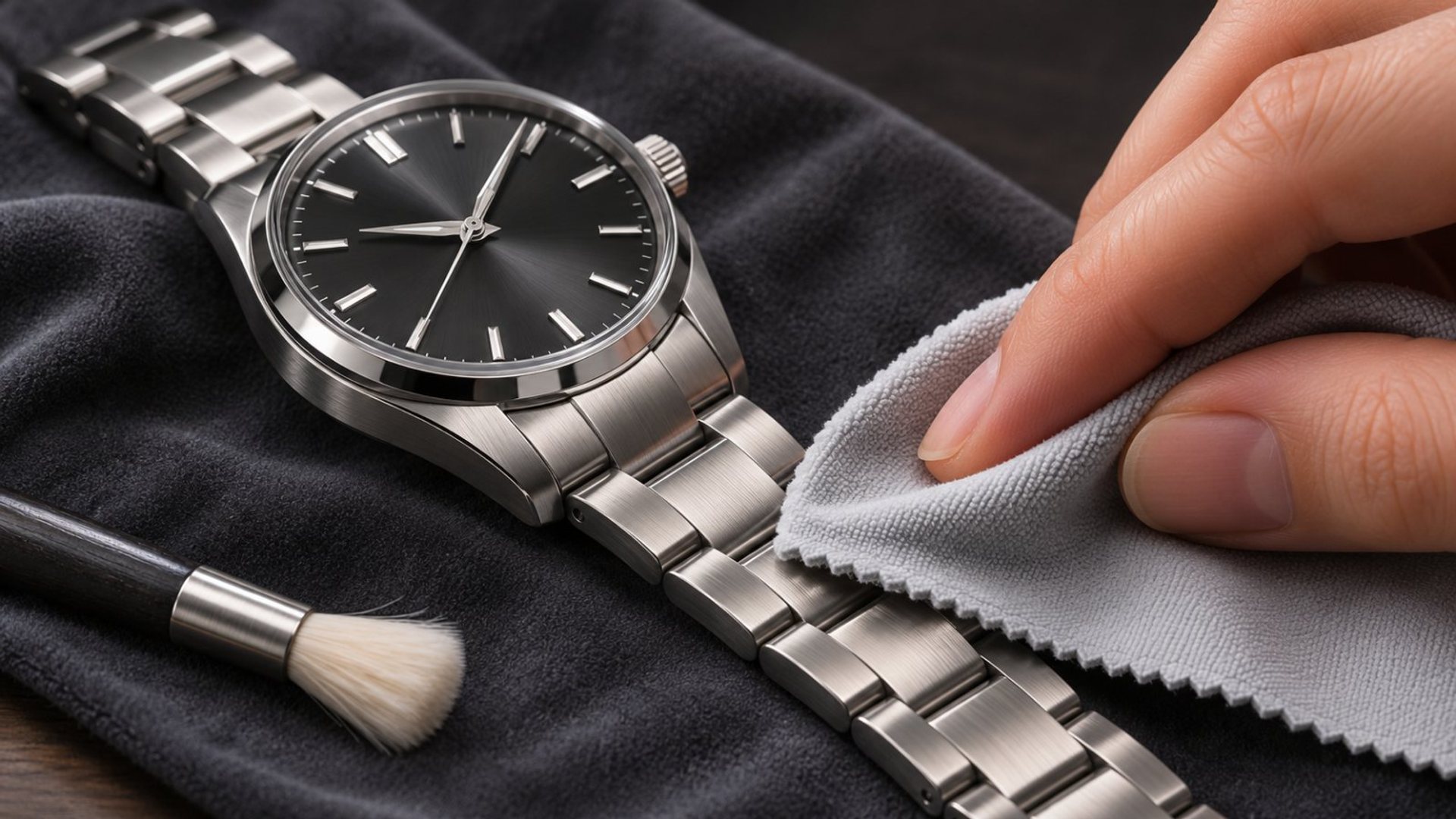
To learn how to clean a metal watch band safely, start with the exact watch maker's care instructions and the band's finish. Wipe loose dust and perspiration with a soft dry cloth. If the maker permits moisture, use a lightly damp cloth or a soft brush for link gaps, then dry every joint. Do not soak an assembled watch unless its current water-resistance and cleaning guidance allow it. Plating, coatings, decorative inserts and a connected case need extra caution.
What should I check before cleaning?
Identify the watch and band materials. Solid stainless steel, gold plating, coloured coatings and mixed metal-and-leather designs may need different care. Look for loose pins, a damaged clasp, lifted plating, corrosion or cracks before using water. If a connection is weak, stop wearing the watch and seek service; cleaning will not fix the mechanical risk.
Check the manufacturer's water-resistance and cleaning instructions for the exact watch model. A metal band may tolerate a method that the case does not. A printed water rating may no longer describe a watch after impact, age or case opening. If the seal condition is unknown, keep moisture off the case and use a dry or barely damp cloth on accessible band surfaces. Do not assume a luxury or heavy watch is water-safe.
Remove the band only if the maker provides a safe procedure and you can reattach it securely. Detaching a bracelet may make careful cleaning easier, but an unfamiliar spring bar or proprietary mount can be damaged. Photograph the attachment and use a padded work surface if removal is authorised. Otherwise, clean in place with controlled moisture and protect the case.
What is the gentlest routine method?
After ordinary wear, wipe the exterior with a clean microfiber cloth. Focus on the underside where skin oils and perspiration collect. Use light pressure along the grain of a brushed finish rather than scrubbing across it. Open the clasp and wipe its accessible surfaces. This quick habit can prevent buildup without repeated wet cleaning.
If grime remains and the maker permits it, slightly dampen a soft cloth with clean water, wipe a small area and dry it immediately. Keep liquid away from ports, buttons, seams and decorative materials. Do not spray cleaner directly onto the watch. A cloth gives you control over where moisture goes. Test a hidden area if you are uncertain about a coating, but stop if colour transfers or the finish changes.
Seiko's band-care guidance describes water for noticeable stains on metal bands and a soft toothbrush for heavier dirt in gaps, followed by thorough drying. Those instructions are for compatible Seiko products and should not be transferred automatically to a VERTU Grand Watch. Use the principle of gentle cleaning and complete drying only where your own maker permits the materials and method.
How do I clean between the links?
Link joints trap skin oils, dust and lint. Start with a dry soft brush or cloth corner. If the band is confirmed compatible with damp cleaning, use a soft, clean toothbrush with minimal moisture and short strokes along the gap. Hold the watch so loosened debris moves away from the case. Avoid metal picks, pins and stiff bristles that can scratch the finish or dislodge a tiny retaining part.
Rinse only when the manual explicitly permits it for the assembled watch or for a detached band of that material. Do not let water run into an unverified case. After a damp wipe, use a dry lint-free cloth to reach the underside of the links and clasp. Allow the band to air-dry fully before wearing or charging a connected watch. Water hidden in joints can leave marks and may contribute to corrosion.
Cartier's metal-bracelet care page recommends close fit and describes a cleaning interval for daily-worn Cartier bracelets using its supplied kit. That timing and kit are Cartier-specific, not a VERTU instruction. The useful general habit is to inspect and clean according to wear and the manufacturer's own materials guidance.
Which cleaners should I avoid?
Avoid abrasive pads, polishing compounds, toothpaste, household bleach, ammonia and strong solvents unless the maker explicitly specifies a product for the exact finish. Abrasives can turn a brushed surface glossy or remove plating at edges. Chemical cleaners can affect coatings, adhesives, stones and gaskets. An ultrasonic bath may loosen decorative elements or put a connected watch case at risk; it is not a universal home method.
Do not use a rough towel to “buff out” a scratch. A scratch is altered metal or coating, not ordinary dirt, and home polishing can make a small mark more obvious. A professional may be able to refinish some solid-metal surfaces, but plated or coated components have limits. Ask the maker before polishing, especially if preserving the original finish matters.
Leather, fabric, ceramic inserts and gemstones need their own care. A bracelet that mixes metal and another material should be treated according to the most vulnerable component. Keep water and cleaner away from the mixed-material part unless the instructions cover the entire assembly. A product described as a metal band may still have nonmetal trim or an electronic module.
What if the band smells, stains skin or shows rust?
Odour can reflect trapped residue or moisture. Clean and dry the band according to its instructions, then check whether grime remains around joints or the clasp. Green, black or reddish marks can have different causes, from finish wear to corrosion or transferred products. Do not assume a colour change is harmless. Photograph it and ask the maker if the finish or structure appears affected.
Stop wearing the band if a pin protrudes, the clasp opens unexpectedly, a link cracks or corrosion seems to weaken an attachment. A cleaning brush will not make a failing link secure. The bracelet-sizing guide explains how link systems vary, while the clasp-repair guide covers warning signs. Seek qualified service for structural faults.
How should a Grand Watch owner proceed?
VERTU's Grand Watch collection contains different configurations. The brand knowledge base reviewed here does not establish one metal-band material, coating or water-resistance rating for all editions. If your exact Grand Watch has a metal bracelet, identify its finish and ask VERTU for the permitted cleaning method. Do not apply a general steel-bracelet rinse to a plated, mixed-material or unverified configuration.
For a connected watch, dry the case and band before placing it on a charger. If the watch has been dropped or opened, ask whether its seals need inspection before any wet cleaning. A service centre can also assess whether a mark is dirt, finish wear or damage. The safest routine is simple, regular wiping that does not put the case or decorative finish at risk.
What is the practical cleaning sequence?
Identify the materials and read the exact manual. Inspect links and clasp, wipe dry, then use a controlled damp cloth or soft brush only if allowed. Remove residue without scraping, dry all joints and test the clasp before wearing the watch again. If the finish changes, moisture reaches the case or a part feels loose, stop and ask the maker. Gentle, model-specific care is more valuable than an aggressive attempt to make every surface look new.
Frequently asked questions
Can I soak a metal watch bracelet?
Only if the maker permits soaking that specific detached band or assembled watch. Never assume the case or decorative inserts are water-safe.
Can I use a toothbrush on metal links?
A soft brush may help on compatible finishes, but follow the exact maker's care instructions and avoid pressure or abrasive bristles.
How often should I clean the band?
Wipe perspiration after wear and clean more deeply when buildup appears, according to the maker's guidance for your model and finish.