Bracelet clasp repair starts with a simple safety step: stop wearing the piece if it can open unexpectedly. A failing clasp can lead to the loss of the whole bracelet, and bending it back by hand may worsen a tiny fracture. Identify whether the problem is the hook, spring, jump ring, chain or adjustment piece, then ask the maker or a qualified jeweller for a model-specific fix. For a connected bracelet, preserve the electronics and finish during service.
What signs mean a clasp is unsafe?
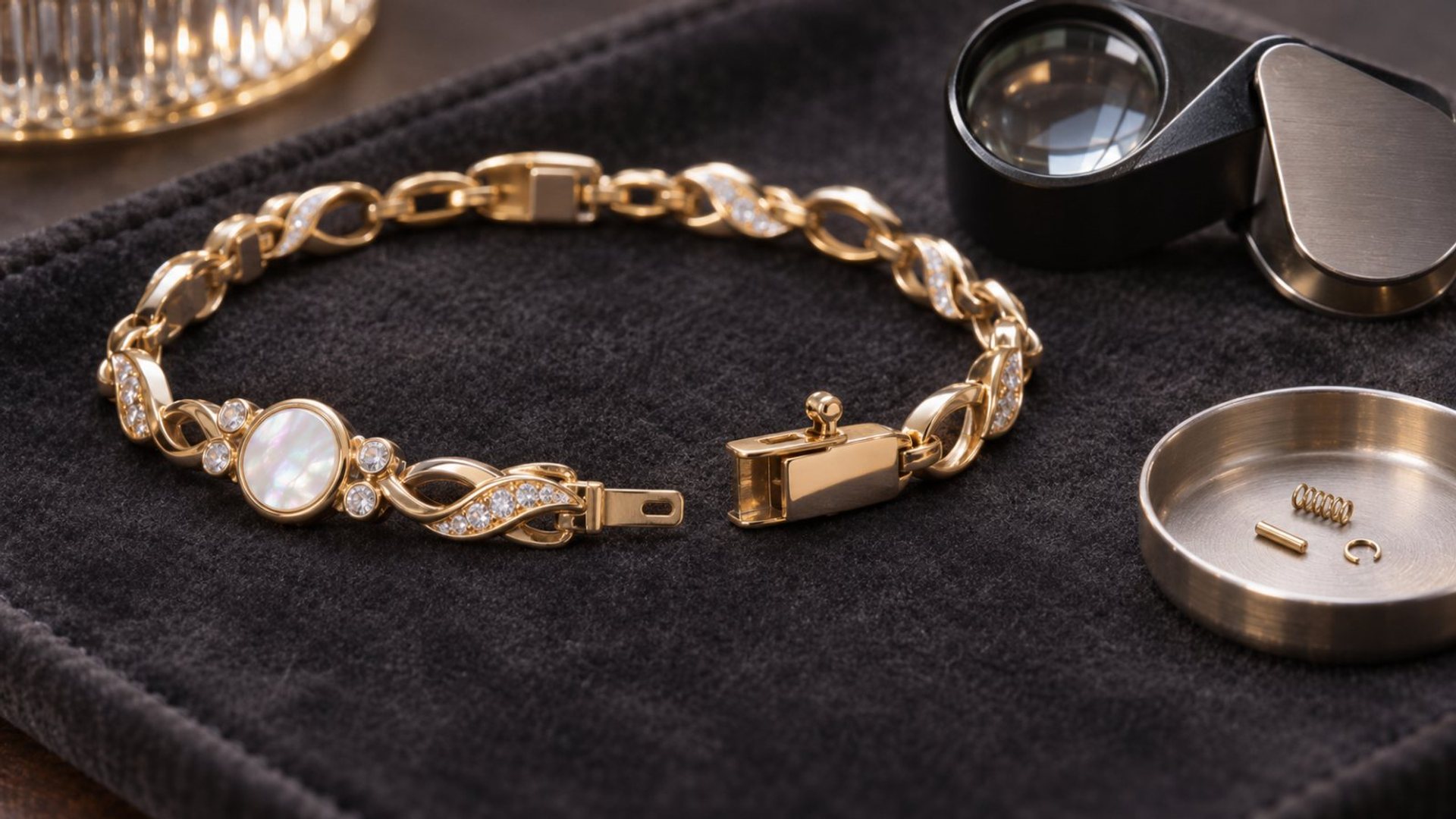
A clasp that opens with a light tug, does not click or seat as designed, has a visible gap or feels different from its normal action needs attention. Look for a bent tongue, weak spring, loose hinge pin, stretched jump ring or damaged chain link. A worn adjustment hole can also make a bracelet slip. Do not keep testing it over a hard floor; use a soft surface so the piece is protected if it releases.
Examine the bracelet in good light and compare the suspect side with photographs of the original design. Do not force a closing action to “make it catch.” A clasp may appear shut while the retaining part is outside its intended slot. If the bracelet contains a safety catch, check that separately. Even a working safety catch is not a permanent substitute for a failed primary closure.
Tiffany & Co.'s jewellery-care guidance notes that worn prongs and clasps can result in loss of a stone or entire piece and advises checking clasps and joinings. That is a general caution from another maker, not a repair procedure for VERTU or a guarantee of any service outcome.
Can I fix a loose clasp myself?
Only a clearly documented, low-risk adjustment should be attempted at home. For example, a manufacturer may provide a user-adjustable length setting. That is different from repairing a bent metal component or re-tensioning a spring. Pliers can mark plating, deform a tiny hinge or weaken a jump ring. Adhesive can lock moving parts and make a later repair difficult. Soldering near gemstones, mother-of-pearl or electronics creates additional risk.
If the problem is debris, follow the maker's cleaning instructions. Avoid needles, harsh solvents, ultrasonic cleaners or soaking a connected bracelet unless the manufacturer explicitly permits them. Gently inspect whether the clasp is fully clear and dry. If normal operation does not return, stop. A hidden spring or hinge failure cannot be diagnosed by repeated opening and closing.
Do not install a generic clasp simply because it matches the colour. Metal type, plating, load, link geometry and attachment method determine whether a replacement will hold. A near-fit clasp can look correct in a photograph but release during movement. Keep loose parts in a labelled pouch and bring them to a professional.
What information should I bring to a repair visit?
Bring the bracelet, any detached components, proof of purchase if available and clear photographs of the fault. Note when it began and whether the piece was pulled, dropped or exposed to a chemical. Identify the model and finish. Ask the service provider to inspect the whole connection chain, not only the visible clasp: the adjacent ring, solder joint or link may be the actual weak point.
Request a written explanation of whether the clasp will be adjusted, repaired or replaced. Ask which parts will be used, whether the finish will match, whether polishing is proposed and what warranty applies to the work. A plating repair may look different from a mechanical replacement. If the bracelet contains stones or electronics, ask how those components will be protected and tested after service.
Cartier's boutique service description says its experts evaluate repair options for Cartier creations. The practical lesson is to seek assessment for the specific piece before assuming the repair method. Cartier's service terms do not apply to VERTU; contact VERTU for a VERTU item.
What is different about a connected bracelet?
A connected bracelet has design and electronic elements that a standard chain may not. Avoid heat, immersion, magnetic fixtures or aggressive polishing near a sealed module unless the maker authorises the method. An independent jeweller may be skilled with a metal clasp but unfamiliar with the device's construction. Ask whether work on the clasp could affect charging, water protection, sensors or coverage. The answer depends on the exact design.
The current VERTU LUMINA AI Bracelet listing describes a gold-plated steel build with mother-of-pearl and zircon and an adjustable 140–200 mm wearing range. Those material and size details matter when discussing a matching part, but the public description reviewed here does not give a clasp repair procedure. Ask VERTU support which closure and service route applies to your exact LUMINA edition.
Do not infer from the adjustable range that a loose clasp is simply set to the wrong length. The closure may be defective even when the chain length is right. Photograph how it closes before removing the bracelet, if safe to do so. If it repeatedly releases, stop wearing it and seek model-specific support.
When is replacement better than adjustment?
A component with a crack, persistent loss of spring tension or visibly distorted metal may require replacement rather than bending. Repeated adjustment can work-harden or weaken metal. A professional can judge whether the original part is serviceable and whether matching hardware exists. Ask for an estimate that separates labour and part cost before authorising work.
Sometimes the clasp is sound but the adjacent jump ring or chain link has opened. Replacing only the clasp would not solve that failure. Conversely, a clasp that is worn inside may not become reliable through cleaning. Request a test of the complete closure under gentle normal use after repair, and check the result yourself over a padded surface.
If the bracelet has sentimental or high replacement value, preserve removed original parts and service documentation. A change of clasp can alter appearance or resale description. Discuss these consequences before work begins. An authorised maker may also have a more consistent finish match than a generic component.
How can I avoid another loss?
Check the clasp before each wear with a light, controlled tug over a soft surface. Make sure a safety latch, if present, is engaged. Keep the bracelet away from snagging cuffs or bag straps. Store it closed and separately so the chain does not twist or stress the hinge. Review fit: a bracelet that is much too loose can catch on objects more often, while one that is too tight can strain the attachment.
Our VERTU guides cover broader jewellery and wearable care. For a connected piece, follow the maker's cleaning and charging directions as well. The immediate rule remains simple: if the closure is unreliable, remove the bracelet and arrange an assessment before wearing it outside again.
Frequently asked questions
Can I bend a loose clasp tighter with pliers?
That can deform or mark it and may hide a fracture. Ask a jeweller or the maker to identify the fault first.
Is a broken clasp always replaceable?
No. Parts and attachment vary. A professional can advise whether repair or a matching replacement is available.
Where should I take a LUMINA AI Bracelet?
Start with VERTU support for the exact edition, especially because the bracelet combines decorative materials with electronics.