Watch bracelet sizing at home is possible when you can identify the exact link system and follow its maker's instructions. First test the clasp adjustment and the complete watch on your wrist; only then decide whether links must come out. Remove an even, sensible distribution of links where the design allows, keep every pin and spring bar, and stop if a part resists. A jeweler or authorised service centre is the right choice for an unfamiliar or valuable bracelet.
How should a metal bracelet fit?
The case should sit generally centered and remain secure when you move your arm. The bracelet should not dig into the skin, create numbness or slide far enough that the watch turns under the wrist. There is no universal finger-gap rule that works across all case shapes and clasp designs. Try the watch while sitting, walking and moving your hand normally. Your wrist may change slightly through the day, so a fit judged at one moment can be misleading.
Begin with the clasp. Some bracelets offer micro-adjustment holes or a built-in extension that changes circumference without removing a link. Other clasps have no such feature. Inspect the official instructions before moving a spring bar. If a small adjustment makes the watch stable and comfortable, leave the links alone. Every unnecessary removal introduces a chance of scratching the finish or losing a small retaining part.
For a watch with sensors, consult its own wearing guidance. Apple's Apple Watch fit instructions describe snug but comfortable contact for its sensors; that does not mean overtightening a metal bracelet. Comfort and secure attachment remain the essential checks. If you experience pain, tingling or skin irritation, take the watch off and reassess the fit.
How do I identify the removable links?
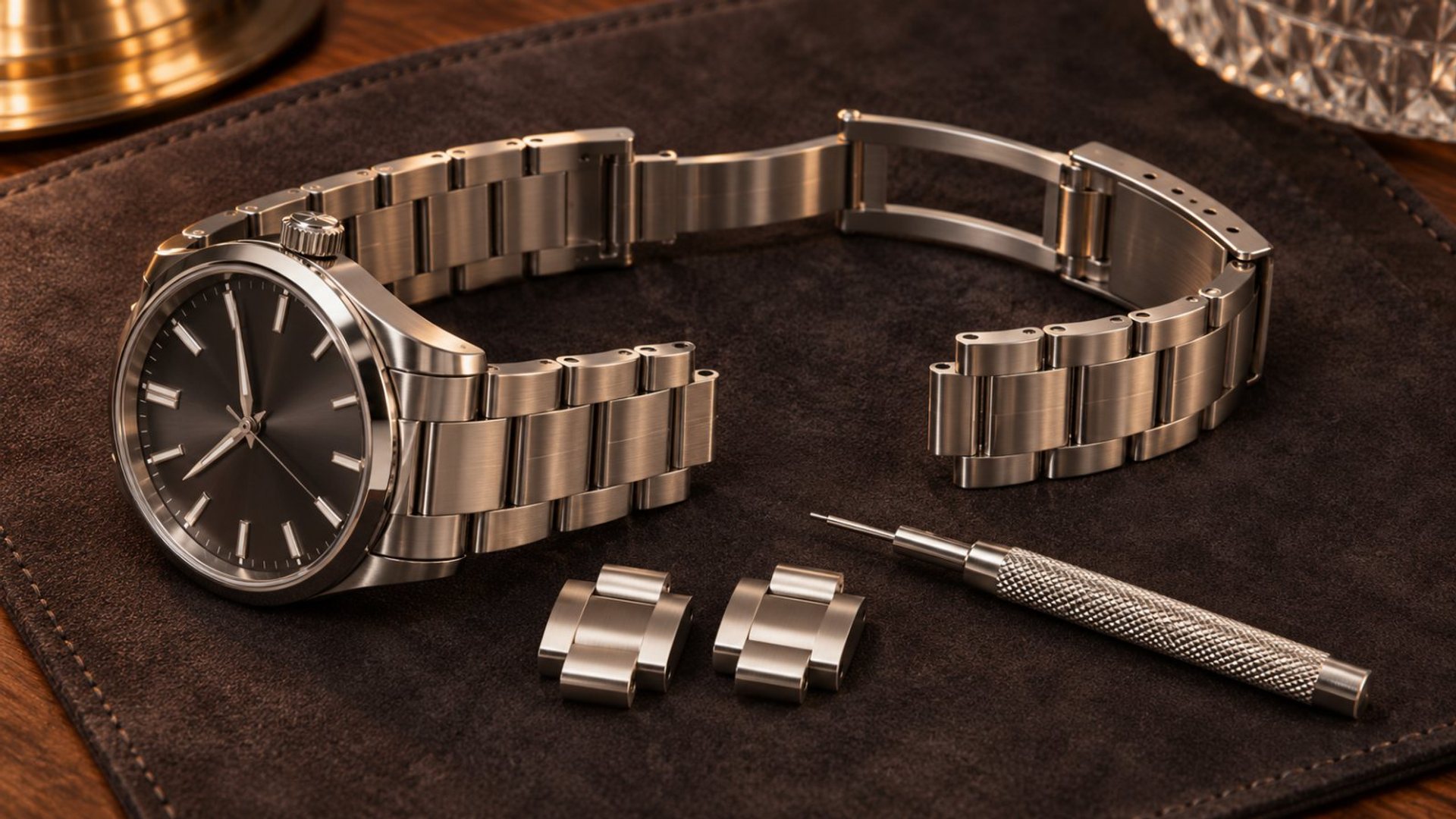
Look at the inside of the bracelet for arrows, screw heads, pin holes or manufacturer markings. Arrows may indicate the direction in which a pin should move, but not every bracelet uses the same fastener. A screw-link bracelet needs a correctly sized driver and may have a separate retaining method. A pin-and-collar design can lose a tiny sleeve. A spring-bar system has yet another procedure. Do not assume two similar-looking bracelets are mechanically identical.
Seiko's official link-removal guide for one specific system says only links marked by an arrow are removable and warns that pins and spring bars are small. It recommends a soft cloth and saving the removed pieces. Those instructions apply to the illustrated Seiko system, not automatically to a VERTU bracelet or another brand. Use them as an example of why model-specific diagrams matter.
If the bracelet's construction is unclear, photograph both sides and ask the maker or retailer for the correct manual. A generic online video may show a different pin direction or a missing collar. Do not push on decorative links or pry a clasp that appears fixed. A clear picture and model number can prevent damage before tools touch the watch.
What tools and workspace do I need?
Use the tools specified for your bracelet. Depending on its design, that may include a support block, correct-size pin pusher, precision driver or spring-bar tool. Avoid a household needle, knife or oversized screwdriver. Set a clean, bright table with a soft cloth to protect the finish and keep small parts from bouncing away. A shallow parts tray and a phone photograph of the original arrangement make reassembly easier.
Keep children and pets away from pins, collars and spring bars. The Seiko manual explicitly warns about small parts and the risk if they are swallowed. Work with one link at a time and store removed links with their fasteners. If a part flies off or deforms, stop rather than closing the bracelet with an uncertain connection. A loose connection can release the watch unexpectedly.
Protect the case from tools. Set it on a padded surface and avoid pressure on the screen, crown or pushers. If the bracelet is made of a specialty finish, ask whether home adjustment could mark it. Some work is inexpensive for a qualified retailer compared with the cost of repairing a scratched or damaged premium watch.
How many links should I remove?
Estimate conservatively. Close the bracelet around the wrist and pinch the excess, then compare that gap with the length of one removable link. Remove one link, test again and repeat only if necessary. The number depends on link dimensions, clasp range and wrist shape; a simple circumference formula cannot decide the final fit. If two links need removal, consider one from each side so the clasp stays approximately centered, provided the maker permits that distribution.
Clasp placement matters as much as total length. A bracelet shortened entirely from one side can pull the case toward the opposite side, making the watch feel heavy or unstable. Check the watch from above and underneath after each change. The watch-weight and wrist-fatigue guide explains why balance can change the feel of a long workday. If centering cannot be achieved with the available link sizes, ask a professional about half-links or compatible clasp adjustments.
Do not keep removing links until the watch feels locked in place. A bracelet should allow natural movement and changes in wrist size. A tight fit may be especially noticeable after walking or in warm weather. If it feels secure only when it is uncomfortable, the case or bracelet shape may be wrong for your wrist.
What is the safe adjustment sequence?
Read the exact maker's guide from start to finish before beginning. Confirm the bracelet model and link type, then document the original arrangement. Try any authorised micro-adjustment first. If links must be removed, support the correct link, use the specified tool in the specified direction and capture all fasteners. Reassemble exactly as directed, then gently check each connection before wearing the watch.
The sequence is deliberately general because a universal “push the pin this way” instruction would be wrong for some bracelets. Some screws can be damaged by the wrong blade, and some pins rely on a collar that is easily lost. If the component does not move with the controlled force described by the manufacturer, do not increase force. Take the watch to a qualified technician with the manual or product identifier.
After adjustment, close the clasp several times over a soft surface. Check that it engages positively and that every link sits flush. Wear the watch indoors first, then recheck after a short walk and later in the day. Keep the removed parts labelled for future resizing or resale. A successful adjustment is one that remains secure and comfortable beyond the workbench.
What about a VERTU Grand Watch?
VERTU's Grand Watch collection includes multiple variants. The current brand knowledge base does not establish a universal metal-bracelet configuration or a link-removal method for the collection. If your particular Grand Watch has a metal bracelet, identify its exact edition and obtain VERTU's instructions or authorised sizing service before removing links. Do not infer a clasp or pin system from another watch with a similar case.
If the watch instead has a leather or other flexible strap, this link-removal procedure is irrelevant. Confirm strap compatibility and buckle sizing separately. For a broader daily fit assessment, use the VERTU guides and try the exact configuration you own.
When should a professional size it?
Seek professional help if you cannot identify the fasteners, the links resist, the clasp will not close confidently, a part is missing or the finish is unusually delicate. A technician can assess link balance and verify that the watch is secure. Do not wear a bracelet with a doubtful connection just to see whether it holds. The risk of dropping a valuable watch outweighs the small convenience of continuing an uncertain home repair.
Frequently asked questions
Can I remove any link with an arrow?
Only when the exact bracelet manual confirms what its arrows mean. Follow that model's procedure and preserve every retaining part.
Should the clasp sit exactly in the middle?
Approximate centering often improves balance, but wrist shape and link sizes vary. Prioritise secure, comfortable wear.
Can I size a Grand Watch bracelet myself?
Only if your exact variant has an adjustable metal bracelet and VERTU provides a matching procedure. Otherwise seek authorised sizing.