How to choose a mother-of-pearl bracelet: confirm that the inlay is natural shell rather than an imitation finish, inspect its lustre and setting, measure how the bracelet sits on your wrist, and check the care instructions for every material in the assembled piece. Mother-of-pearl varies naturally, so compare the actual item or exact product photographs instead of expecting two bracelets to match perfectly.
What is mother-of-pearl in a bracelet?
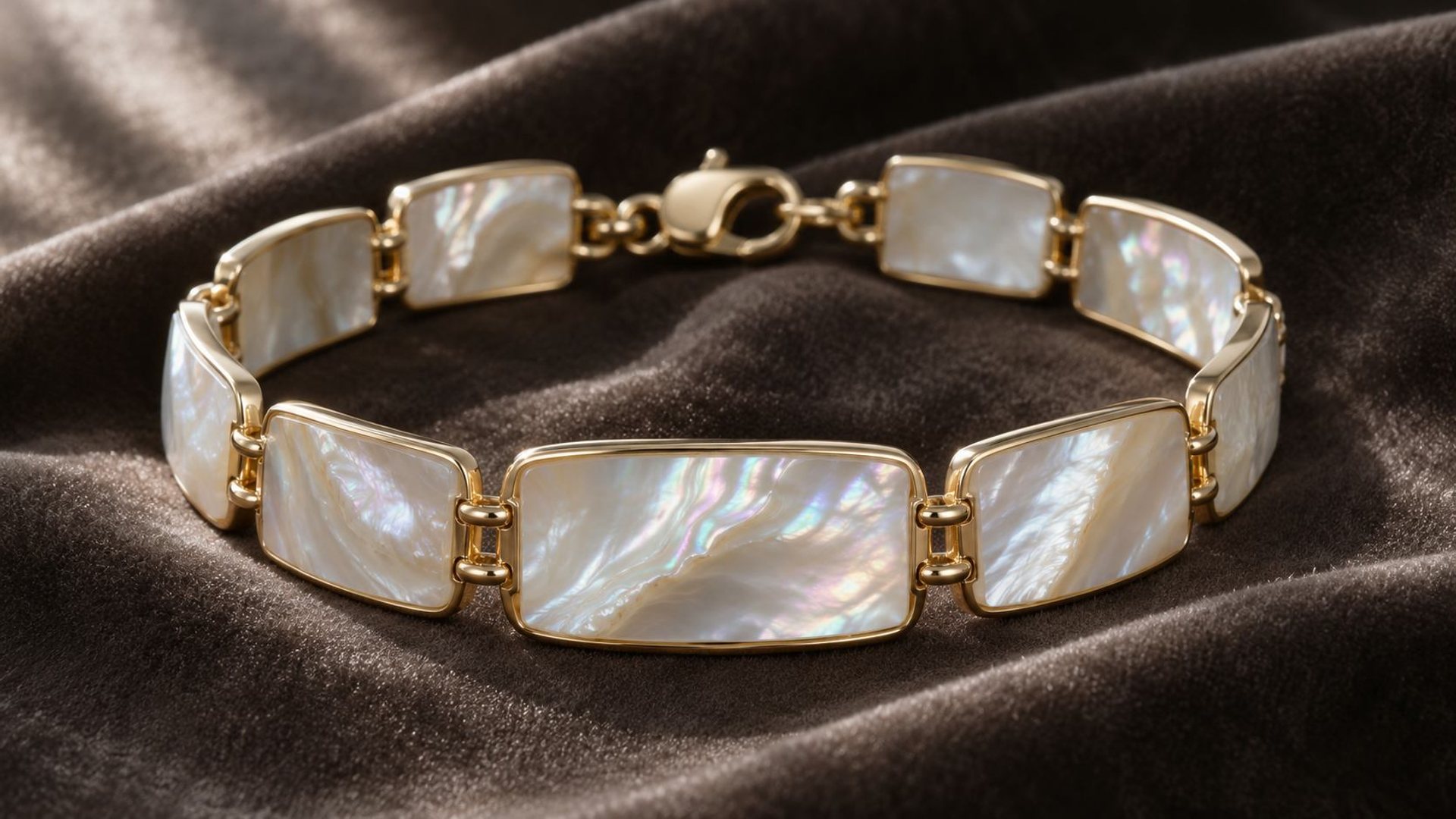
Mother-of-pearl is nacre from the inner surface of certain mollusc shells. It can be cut into flat or shaped inlays with a soft, shifting reflection. It is not the same object as a whole pearl, although both involve nacre. A listing should identify whether the visible panel is natural mother-of-pearl, a treated material or an imitation. The Gemological Institute of America describes shell material as a long-used jewellery component; the origin of the specific inlay still needs a seller's disclosure.
How can you judge the inlay in person?
- Move it in diffuse light. Look for the way colour and depth change rather than judging a single bright studio reflection.
- Inspect the edges. The inlay should sit securely without a sharp corner catching a sleeve or skin.
- Check the surface. Note cracks, lifting, glue marks or a cloudy patch that is not part of the expected natural variation.
- Compare all panels. Natural pieces need not be identical, but their overall balance should suit the design.
- Ask for the exact item. If buying online, request current images of the SKU or accept that the pattern may differ from a sample photograph.
A perfectly uniform printed pattern is not proof of a natural shell inlay. Equally, variation by itself does not prove authenticity. Use the seller's material description and return terms, and seek a qualified appraisal for a high-value or disputed piece. A home scratch test risks damaging the bracelet and is not a reliable buying method.
What should you check in the clasp and fit?
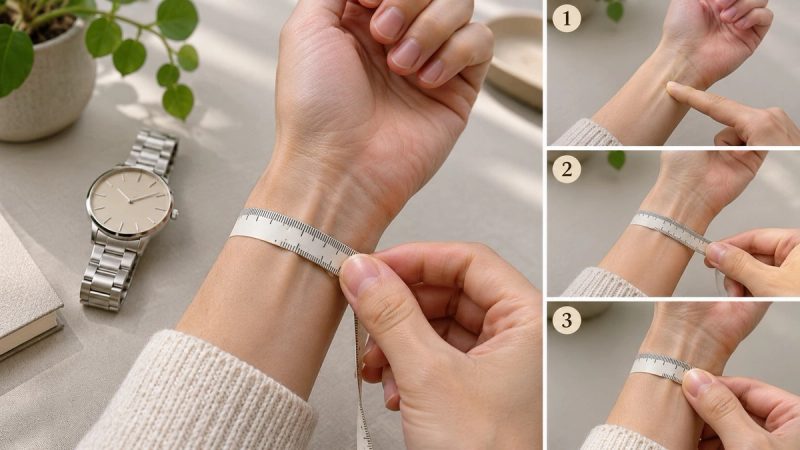
Measure the circumference of your wrist at the position where you will wear the bracelet. Compare that figure with the maker's stated wearing range, then consider how much movement you prefer. A bracelet that rotates excessively can strike hard surfaces; one that is too tight can press the inlay or clasp into skin. Open and close the clasp a few times when trying it on. Check that it holds securely, that links articulate smoothly and that the decorative centre stays where you want it.
| Decision point | Question to ask | Why it matters |
|---|---|---|
| Material | Is the inlay natural mother-of-pearl? | Separates shell from an imitation look |
| Setting | Is the panel secure and smooth at the edge? | Reduces snagging and loss risk |
| Fit | Does the actual adjustable range suit my wrist? | Controls drape and impact during wear |
| Other materials | What metal, plating and stones are present? | Determines care and potential surface wear |
| Service | Can the maker repair the clasp or inlay? | Clarifies the path after damage |
How does the VERTU LUMINA AI Bracelet compare?
The VERTU LUMINA AI Bracelet product page specifies natural white mother-of-pearl, zircon and 14K gold-plated stainless steel. It lists a 200 mm flexible chain with an adjustable wearing range of 140–200 mm. The product page explicitly says the natural inlay varies in pattern and iridescence. Those facts make the fit and exact SKU more useful purchase checks than a promise of identical colour in every piece.
LUMINA also offers connected wellness references through a compatible app, but it remains a mixed-material jewellery piece when choosing and caring for it. The readings are for general lifestyle awareness, not medical diagnosis. Confirm current app compatibility, finish and service terms for the configuration on sale. Do not assume that an electronic bracelet can be immersed or ultrasonically cleaned because an ordinary metal bracelet can be.
How should you care for the bracelet?
Put it on after perfume and cosmetics have dried, avoid hard knocks and store it separately in a soft pouch or case. GIA's pearl-care guidance warns that harsh chemicals and intense heat can harm nacre. For a bracelet containing plating, stones or electronics, follow the maker's assembled-product guidance rather than applying a general pearl-cleaning method to the whole item. If an inlay becomes loose, stop wearing it and seek service.
Frequently asked questions
Will every mother-of-pearl bracelet have the same colour?
No. Natural shell can vary in pattern, tone and iridescence. Ask to see the actual item if an exact appearance matters.
Is mother-of-pearl the same as a pearl?
No. Mother-of-pearl is shell nacre used as an inlay; a pearl is a separate formed object. Check which material the listing names.
Can I wear one every day?
Possibly, if the fit and setting are secure and you are comfortable with the care it requires. Repeated knocks, chemicals and friction increase risk.
Should I clean it in an ultrasonic machine?
Do not assume that is safe. Follow the exact maker's instructions for the assembled bracelet, especially when it includes natural shell or electronics.
To choose a mother-of-pearl bracelet, verify the actual inlay, smooth setting, measured fit and complete material list. The best choice is one whose natural variation you like and whose care requirements suit how you will wear it.