The iPhone Duo 451,000-fold test is a report about one handset in an ongoing automated stress test. The device remained operational after more than 451,000 cycles, while the hinge showed changes. It is a useful observation—not a guaranteed lifespan, a retail-wide result or a direct comparison with another model.
What did the test observe?
CNET's syndicated report says the tested phone remained functional beyond 451,000 cycles. Its team noticed the hinge feeling looser around 390,000 cycles and a change in opening behaviour around 440,300 cycles, as MacRumors reported. These are observations during an ongoing stress test, not a formal manufacturer durability rating.
Does 451,000 folds equal years of ownership?
No reliable conversion follows from that number. A machine repeats one motion; a person adds pocket pressure, debris, heat, accidental impact and variable opening angles. The test does not represent a sample of retail phones. Apple had not publicly provided an estimated hinge lifespan in the cited reporting. Check the latest official support and warranty language before buying.
What should a foldable buyer inspect?
- Open and close the phone several times without forcing it.
- Check whether the display opens evenly and the crease changes under normal lighting.
- Inspect the hinge edge and screen protector for damage.
- Ask what repair is available locally and what the warranty excludes.
- Keep proof of purchase and note any change in feel or sound over time.
Can you compare that test with VERTU ALPHAFOLD?
Only on like-for-like evidence. VERTU's ALPHAFOLD page describes a titanium and liquid-metal hinge structure and an 8.05-inch inner display, but it does not provide a directly comparable public 451,000-cycle test in the cited material. Do not turn one independent test into a ranking of the two devices. Compare handling, service and written support terms instead.
What should you ask before paying for a luxury foldable?
Ask the seller for the exact model's current screen and hinge warranty, the repair route in your country, the likely turnaround process and whether damage to the flexible screen protector is covered. A device can remain usable after hinge wear; it can also require service for reasons a cycle test never measured.
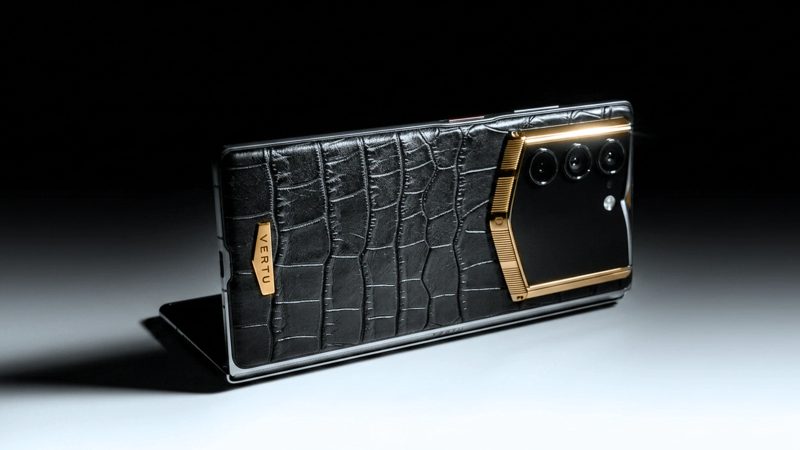
Image note: The cover shows VERTU ALPHAFOLD as an illustrative foldable phone; it is not the iPhone Duo used in the reported test.
Image note: The cover shows VERTU ALPHAFOLD as an illustrative foldable phone; it is not the iPhone Duo used in the reported test.
What did the automated fold test observe?
CNET’s reported test used a machine to repeatedly open and close one iPhone Duo while documenting its behaviour. In the reporting, changes in hinge force and motion were noticed at around 390,000 folds. At approximately 440,300 cycles, the phone reportedly no longer opened fully before the machine began the next cycle and the familiar snap had changed. At more than 451,000 folds, the phone was still functioning and the test was continuing. See the MacRumors summary of CNET’s observations and the syndicated report.
| Reported point | Observation | What it does not prove |
|---|---|---|
| Around 390,000 folds | Hinge force or motion began to feel different | A failure threshold for every unit |
| Around 440,300 folds | Opening behaviour changed; the device did not fully open in the reported cycle | That ordinary users will see the same change at this count |
| Beyond 451,000 folds | The tested phone remained operational; testing continued | A manufacturer-rated service life |
What are the test’s limits?
The sample is one device and the method repeats a controlled movement. It does not reproduce pocket pressure, dust, drops, temperature changes, uneven hand force, daily charging or repairs. Nor does it establish how the display, hinge or water resistance would behave across a representative retail sample. Apple has not published a fold-lifespan rating for iPhone Duo in the cited coverage.
It is tempting to divide 451,000 by a daily fold count and call the result “years of use.” That arithmetic assumes every real-world fold matches the machine’s movement and that wear is linear. Neither assumption is established by this test, so a years-of-use claim would overstate the evidence.
What should a foldable buyer inspect?
Open and close the device gently, check whether it lies flat as intended and look at the display under ordinary indoor light. Pay attention to new sounds, uneven resistance, visible damage and changes in the crease. Ask for the written hinge and flexible-display warranty, local repair route, expected service process and exclusions for impact or debris. Compare those terms across models rather than using one test count as a durability ranking.
The test is valuable because it records how one device changed under repeated cycling. Its strongest takeaway is to ask better questions about hinge behaviour and after-sales support—not to assume that 451,000 folds guarantees a particular ownership period.
What should a fold-cycle test record besides the final count?
A useful report should document the device condition before testing, how the hinge is actuated, the movement speed, any pauses, room conditions and the inspection schedule. It should also distinguish a successful cycle from a complete inspection: a phone can still power on while showing changes in alignment, resistance, sound or display behaviour. Without a published protocol and repeated sample size, readers cannot estimate how consistently another retail unit would behave.
For a practical assessment, log the hinge feel at regular intervals and inspect the inner display under the same lighting each time. Record whether the phone lies flat, whether the crease changes visibly, and whether the protective layer lifts. These observations do not substitute for laboratory measurements, but they make the test easier to interpret and reproduce.
Conclusion
The iPhone Duo 451,000-fold test shows that one unit kept working after extensive mechanical cycling while its hinge changed. It helps frame questions for a foldable purchase, but everyday durability still depends on use, maintenance and support.