| Model | Battery Capacity | Main Camera | Special Feature |
|---|---|---|---|
| AGM G2 Guardian | 7,000 mAh | 108MP | 500m Thermal Monocular |
| UleFone Armor 26 Ultra | 15,600 mAh | 200MP | 121db Speaker & 3.2x Optical Zoom |
| Oukitel WP33 Pro | 22,000 mAh | 64MP | 136db 8D Stereo Speaker |
| 8849 Tank 3 Pro | 23,800 mAh | 200MP | DLP Projector & 1200-lumen Light |
| Doogee V Max Pro | 22,000 mAh | 108MP | 512GB Storage (Exp. to 2TB) |
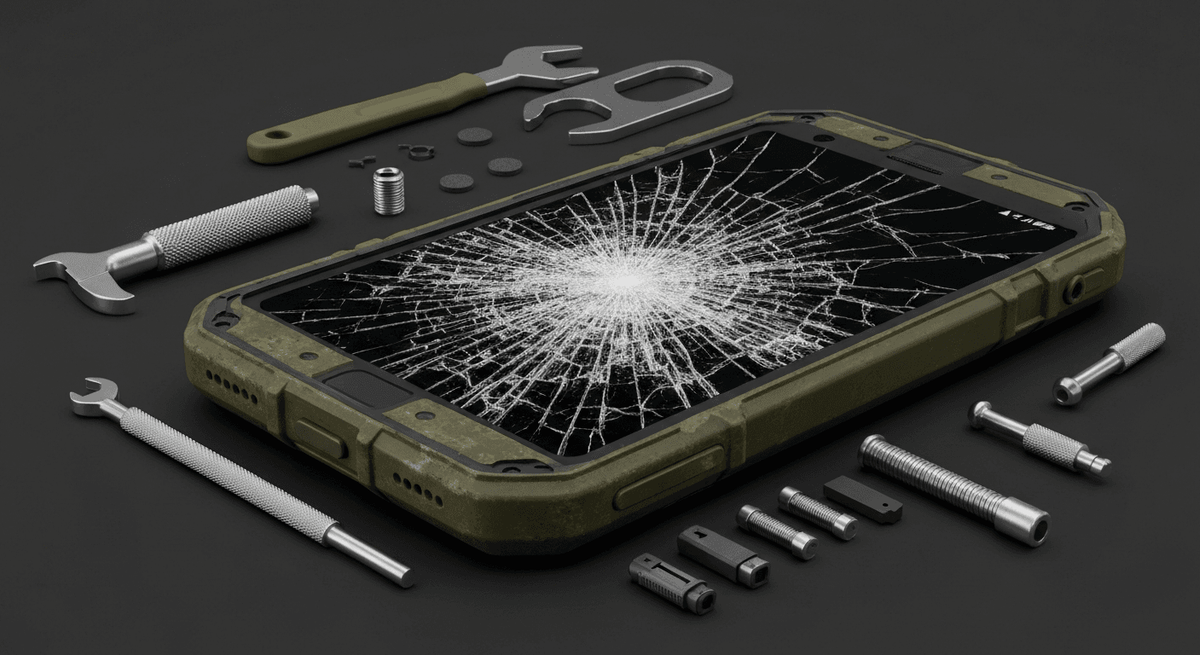
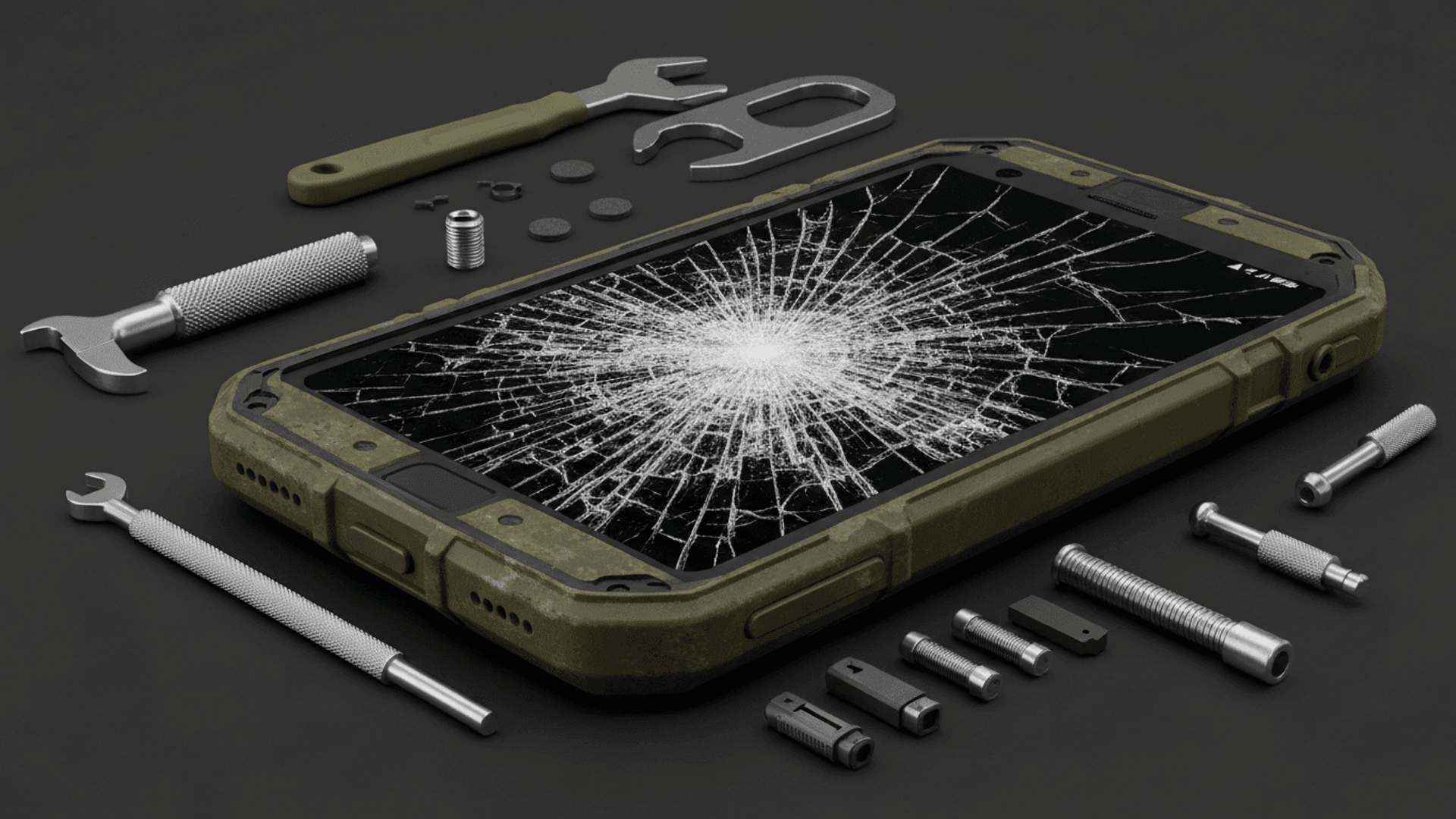
Imagine standing on a chaotic construction site or navigating a torrential downpour during a remote expedition. Suddenly, your device slips from your grip and crashes onto the unforgiving terrain. For a standard mobile device, this moment often spells disaster, resulting in a shattered screen or total system failure. However, in environments where extreme temperatures, water, and heavy impacts are daily realities, fragility is not an option.
This is exactly where the search for the hardest phone becomes critical for your safety and productivity. These devices are more than just communication tools; they are lifelines engineered to withstand challenges that would destroy ordinary electronics. From military-standard durability to advanced features like thermal imaging, rugged smartphones are built to perform when you need them most. In this guide, we will explore why a truly unbreakable phone is an essential investment, delving into the specific capabilities and top models that define the future of resilient mobile technology in 2026.
Top 7 Best Hardest Phone Models for Extreme Environments in 2026
In 2026, the demand for mobile technology that can withstand the rigors of industrial work and outdoor exploration is higher than ever. Professionals and adventurers alike are no longer satisfied with standard fragility; they require the hardest phone available—devices that merge military-grade durability with flagship performance. The following models represent the pinnacle of rugged engineering, designed to survive where others fail.
1. AGM G2 Guardian
The AGM G2 Guardian is not merely a smartphone; it is a specialized tool engineered for the most demanding situations. Its defining characteristic is the long-range autofocus thermal monocular , capable of detecting heat signatures up to 500 meters away. This makes it indispensable for search and rescue or night hunting. Beyond thermal imaging, it features a robust 108MP main camera and a 20MP infrared night vision camera.
Durability: Fully certified with IP68, IP69K, and MIL-STD-810H standards.
Utility: A 7,000mAh battery ensures reliability, while the 109db loudspeaker allows for clear communication in noisy critical scenarios.
2. UleFone Armor 26 Ultra
Designed for resilience, the UleFone Armor 26 Ultra bridges the gap between a rugged device and a photography powerhouse. It boasts a massive 200MP main camera , supported by a 3.2x optical zoom 8MP telephoto lens and a 64MP infrared night vision lens. The experience is viewed through a 6.78-inch IPS LCD display with a smooth 120Hz refresh rate.
Endurance: A staggering 15,600mAh battery provides exceptional longevity.
Audio: Features a powerful 121db speaker , ensuring alerts are heard in heavy industrial environments.
3. Oukitel WP33 Pro
The Oukitel WP33 Pro is a reliable rugged phone built for extreme conditions where power access is non-existent. Its standout specification is the colossal 22,000mAh battery , offering days of operation without a recharge. It effectively doubles as a public address system with an 8D stereo speaker capable of reaching 136 decibels.
Performance: Powered by the Dimensity 6100+ SoC with 8GB RAM and 256GB storage.
Protection: Fully IP68/69K water and dust proof.
4. Doogee S110
Embodying the characteristics of an unbreakable phone, the Doogee S110 offers versatility through its advanced imaging. It features a high-resolution 100MP AI Quad Camera using Sony sensors and supports 4K video recording. Its unique underwater mode allows for operation while submerged, a feature critical for marine professionals.
Build: MIL-STD-810H compliant and IP68/IP69K resistant.
Tech: Integrates advanced night vision capabilities for low-light operations.
5. Samsung Galaxy XCover7 Pro
While many rugged phones focus on battery bulk, the Samsung Galaxy XCover7 Pro focuses on enterprise efficiency. As a leading 5G phone , it offers a user-friendly interface designed for productivity and enhanced security features suitable for corporate networks.
Design: Built to take a beating with MIL-STD-810H compliance and an IP68 rating .
Experience: It balances durable construction with a slim form factor that remains manageable for daily business tasks.
6. 8849 Tank 3 Pro
The 8849 Tank 3 Pro is the ultimate camping and emergency tool. It distinguishes itself with an integrated DLP projector and a blindingly bright 1,200-lumen camping light, making it exceptionally useful for outdoor adventures. It does not compromise on imaging, featuring a 200MP main camera.
Power: A massive 23,800 mAh battery ensures the projector runs for hours.
Rating: Adheres to MIL-STD-810H standards and IP68 certification.
7. Doogee V Max Pro
A true powerhouse for extreme environments, the Doogee V Max Pro is designed for users who need massive storage and power. It pairs an enormous 22,000 mAh battery with 512GB of internal storage (expandable to 2TB), ensuring you never run out of space or energy.
Display: Large 6.58-inch FHD+ screen.
Charging: Supports 33W fast charging to replenish its massive cell.
Comparative Specs: The Heavyweights
To help identify the hardest phone for your specific needs, compare the top battery and camera specifications below:
In conclusion, choosing the right device depends on whether your priority is thermal detection, massive battery life, or enterprise integration. Each of these models represents the peak of durability technology in 2026.
Why You Need a Phone That Can Take a Beating in 2026
In the fast-paced operational landscape of 2026, the demand for mobile devices that can withstand the rigors of extreme environments is higher than ever. For professionals such as first responders, construction managers, and outdoor enthusiasts, relying on a standard, fragile smartphone is effectively carrying a liability. To maintain communication and safety in critical moments, users are increasingly turning to the hardest phone options on the market—devices engineered not just to function, but to survive.
Rugged smartphones in 2026 are defined by their industrial-grade construction. Unlike the glass-heavy designs of consumer tech, these devices feature reinforced frames, shock-absorbent corners, and scratch-resistant screens capable of surviving significant drops and impacts.
"In hazardous environments, durability is not a luxury; it is a prerequisite for safety and efficiency."
Beyond physical resilience, these devices offer superior environmental sealing. With IP68 and IP69K ratings , they provide complete protection against water and dust ingress. This makes them indispensable for tasks in muddy, wet, or dusty conditions where ordinary electronics would fail immediately. The adherence to MIL-STD-810H military standards further assures users that the device can handle extreme temperature shocks and vibrations.
For professionals requiring advanced utility, these phones integrate specialized hardware that goes beyond communication:
Thermal Imaging: Allows for inspections in low-light or hazardous conditions.
Extended Battery Life: Ensures operation for days, not hours, essential for remote locations without charging access.
Comparison: Standard vs. Rugged Devices in 2026
| Feature | Standard Smartphone | Rugged Smartphone |
|---|---|---|
| Durability Standard | Consumer Grade | MIL-STD-810H (Military Standard) |
| Ingress Protection | IP67 (Splash Resistant) | IP68 / IP69K (High-Pressure Water/Dust) |
| Battery Endurance | 1 Day (Average) | Multi-day (Remote Operation) |
| Specialized Tech | Standard Optics | Thermal Imaging Cameras |
| Chassis | Glass & Aluminum | Reinforced Shock-Absorbent Frame |
Ultimately, choosing a rugged device in 2026 is about ensuring reliability when conditions are at their worst.
Key Features to Look For in a Rugged Smartphone in 2026
When selecting the hardest phone for your needs in 2026, the criteria extend far beyond simple impact resistance. The ideal device must represent a synergy of industrial-grade durability and flagship-level performance, ensuring reliability in the most hostile environments.
Build Quality and Certifications
Prioritize build quality verified by stringent standards. Look for MIL-STD-810H compliance , a military-grade specification that guarantees resistance to drops, shocks, vibrations, and temperature extremes. Equally critical are the Ingress Protection (IP) ratings. While IP68 is standard for water and dustproofing, you should seek IP69K certification . This rating ensures the device can withstand high-pressure, high-temperature washdowns, protecting it against liquids and fine particles in industrial settings.
"A truly rugged device in 2026 does not compromise; it withstands the elements while keeping you connected."
Display, Camera, and Connectivity
A durable smartphone should feature a toughened screen, often protected by Corning Gorilla Glass , to resist scratches and cracks during field use. Beyond durability, look for functional utility. For specialized tasks, a thermal imaging camera or advanced night vision capabilities can be invaluable for diagnostics and safety. Furthermore, ensure the device offers robust connectivity, including reliable 5G phone performance, to guarantee communication in remote or shielded areas.
Performance and Power
Battery life and processor performance are crucial for extended shifts. Rugged phones typically come with larger batteries designed for extended use, often paired with fast-charging technology to minimize downtime. A capable processor ensures the smooth operation of demanding applications, even under heavy load. Brands like Samsung, Oukitel, and AGM are known for offering models that excel in these specific areas, balancing raw power with extreme protection.
| Feature Category | Standard Device Specs | Rugged Device Requirements (2026) |
|---|---|---|
| Ingress Protection | IP68 (Submersion) | IP69K (High-Pressure/Steam) |
| Impact Standard | None/Basic Drop Test | MIL-STD-810H |
| Camera Utility | Portrait/Zoom Focus | Thermal Imaging / Night Vision |
| Screen Tech | Standard Glass | Reinforced Corning Gorilla Glass |
FAQ (Frequently Asked Questions)
Q1: What exactly makes a device the "hardest phone" on the market?
A1: The hardest phones are defined by their adherence to military-grade certifications, specifically MIL-STD-810H or MIL-STD-810G. This means they are rigorously tested against drops, extreme temperatures, humidity, and vibrations. Additionally, they carry IP68 and IP69K ratings, ensuring they are not just waterproof, but can withstand high-pressure steam cleaning and complete submersion.
Q2: Can rugged phones support modern 5G networks and apps?
A2: Absolutely. In 2026, rugged phones like the Samsung Galaxy XCover7 Pro and Oukitel models are equipped with modern 5G chipsets. They run full versions of Android operating systems, allowing you to use all standard enterprise apps, navigation tools, and communication platforms just as you would on a standard flagship device.
Q3: Is a rugged phone better than a standard phone with a heavy-duty case?
A3: Yes. While a case adds protection, it cannot prevent internal component damage from vibrations or extreme temperature fluctuations. A true rugged phone is engineered from the inside out with shock-mounted components, reinforced soldering, and specialized seals that a simple external case cannot replicate.
Q4: Are the cameras on rugged phones good enough for professional photography?
A4: Rugged phone cameras have evolved significantly. Models like the UleFone Armor 26 Ultra now feature 200MP sensors that rival mainstream flagships. Furthermore, they offer specialized utility that standard phones lack, such as integrated thermal imaging sensors (FLIR) and infrared night vision, which are essential for specific industrial and outdoor professions.
Conclusion
In the rapidly evolving landscape of 2026, the importance of possessing a mobile device engineered for extreme environments cannot be overstated. The hardest phone models currently on the market deliver unparalleled durability, merging nearly indestructible build quality with advanced utility features like thermal imaging and night vision. These devices provide the essential reliability needed to perform in the most challenging conditions, proving that investing in a rugged phone is truly an investment in both peace of mind and total operational continuity. You simply cannot afford downtime or hardware failure when working in the field.
When selecting your next device, take the time to evaluate your specific environmental needs against the hardware capabilities. It is vital to prioritize features such as military-grade MIL-STD-810H certification , top-tier IP ratings for water and dust protection, and massive battery capacities that endure for days. Consider reputable models from industry leaders like AGM, Ulefone, Oukitel, and Samsung to find the perfect durable smartphone tailored to your demanding use case.
Ready to upgrade your gear? Do not settle for fragility when resilience is within reach. Review the specifications listed above and choose the model that best fits your operational requirements. Make the switch to a rugged device today and ensure your connection remains strong and reliable, no matter where your critical work or breathtaking adventures take you throughout 2026!
![Top 10 Smartwatches for On-Wrist Voice Notes for Men [New]](https://cdn.sanity.io/images/e0gp1l2g/production/e7630bbd3f3a13378c868abfa960bb193c73b8f1-3840x1860.webp?w=180&h=180&q=78&auto=format&fit=crop)
![Top 10 Smartwatches for On-Wrist Voice Notes for Men [New]](https://cdn.sanity.io/images/e0gp1l2g/production/e7630bbd3f3a13378c868abfa960bb193c73b8f1-3840x1860.webp?w=800&h=450&q=82&auto=format&fit=crop)