

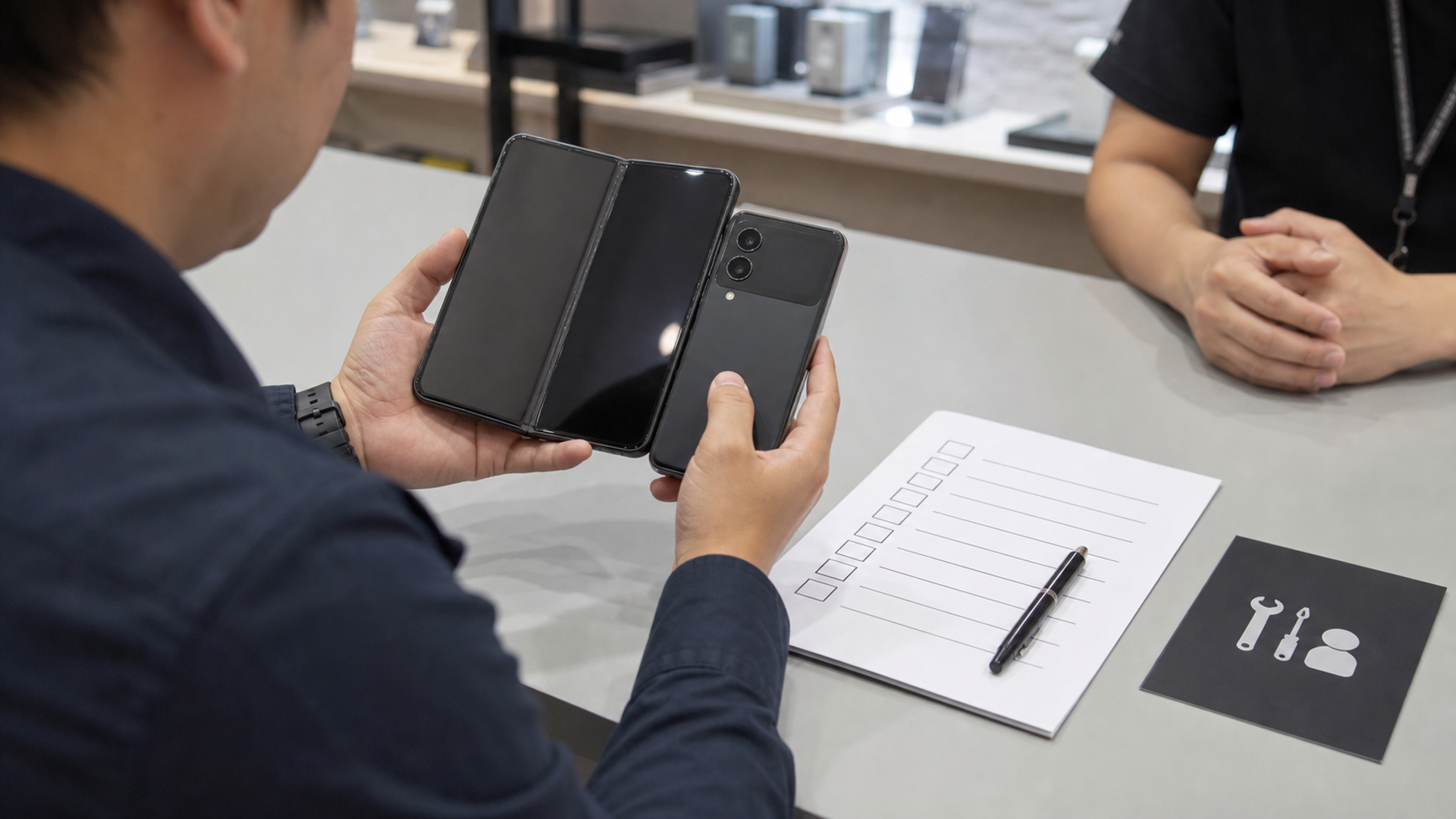
Samsung has confirmed that Galaxy Unpacked will take place in London on 22 July 2026 and that the event will introduce new additions to its foldable portfolio. It has not yet confirmed the final models, specifications or prices in the invitation. Buyers should therefore resist treating rumours as a shopping list. The useful work before the event is to define what evidence would make a new foldable worth buying. This analysis is supported by Samsung Galaxy Z Fold7 specifications and durability.
What Samsung has actually confirmed
| Confirmed by Samsung | Not confirmed in the invitation |
|---|---|
| Event date: 22 July 2026 | Product names and complete model range |
| Location: London | Screen, hinge and camera specifications |
| New Galaxy portfolio additions | Prices and regional configurations |
| Continued focus on foldable form factors | Battery life and charging figures |
| More personal and adaptive intelligent experiences | Exact AI features, languages and availability |
Samsung's official invitation is the source for those facts. Everything else should wait for the launch, product pages and independent testing.
1. Has the closed-phone experience improved?
A foldable is used closed more often than demonstrations imply. Buyers should test typing, maps, camera controls, one-handed reach and notification management on the outer display. A larger inner screen has limited value if routine tasks feel compromised before the device is opened.
Record outer-screen width, aspect ratio and keyboard comfort, but do not judge from numbers alone. Ten minutes of one-handed use can reveal more than a diagonal measurement.
2. What changed in the hinge and crease?
Ask for construction evidence, not adjectives. What ingress rating is published? What conditions apply to fold-cycle claims? Is the hinge easier to hold at intermediate angles? Does the display crease affect reading, pen input or reflections under strong light?
Durability claims should be read with test conditions. Laboratory cycles do not reproduce pocket debris, drops, temperature changes and years of uneven handling. Warranty wording and local repair arrangements matter as much as the launch demonstration.
3. Is battery life measured open, closed or mixed?
Foldables serve two displays and invite multitasking. A single capacity number cannot explain endurance. Look for mixed-use testing that includes camera, navigation, mobile data, outer-screen messaging and inner-screen video. Compare charging speed, heat and battery protection settings.
The relevant question is whether the phone survives the buyer's longest day with margin. A frequent flyer should model airport navigation, boarding documents, roaming, photography and a delayed connection—not a controlled video loop.
4. Are the cameras flagship cameras or foldable compromises?
Thin bodies create optical constraints. Verify sensor, aperture, stabilisation and real focal lengths on official specifications, then wait for full-resolution samples. Pay attention to moving subjects, indoor skin tones and telephoto detail rather than bright daylight alone.
Foldables offer one genuine camera advantage: the outer display can help a subject preview the frame, and the device can stand partly folded. Decide whether that changes your photography enough to compensate for any hardware trade-off.
5. Which AI features work where you travel?
“AI” can describe on-device tools, cloud services, third-party models or simple interface automation. For every announced feature, ask five things: supported languages, supported countries, network requirement, account requirement and data path. Also ask whether the feature is included permanently or may later require payment.
An executive buyer should separate convenience from authorisation. Summaries, translation and cross-app actions can touch private material. Review permission controls and whether sensitive actions require confirmation.
6. How long will software and parts be supported?
Confirm the update policy for the exact model and region. Then ask about inner-screen protectors, hinge repair, battery replacement, loan devices and turnaround time. A foldable's ownership quality is partly a service-network question because its distinctive parts are less interchangeable than those of a conventional slab phone. For the adjacent decision, see our best phone for business and personal use.
Trade-in value should not be treated as guaranteed. Read condition rules, especially for display marks and hinge damage.
7. Does the larger canvas change your work?
The best reason to buy a book-style foldable is not novelty; it is a repeated task improved by the larger display. Documents beside messages, remote desktops, dashboards, reading, markup and video calls can justify the form. If the device is opened mainly to watch occasional video, a conventional flagship and a tablet may be a better allocation.
Before pre-ordering, write down three weekly tasks that require the inner screen. If none is specific, wait for retail demonstrations and long-term reviews.
The post-launch verification card
On 22 July, fill in this card from official pages:
Exact model and regional SKU
Outer and inner display dimensions
Ingress rating and hinge claim conditions
Battery and charging specifications
Camera sensors, stabilisation and focal lengths
AI language, region, network and account requirements
Update policy and local repair terms
Price, storage and pre-order conditions
Then wait for evidence on heat, endurance, camera consistency and hinge behaviour. A launch establishes what a company promises; ownership begins with what the object repeatedly does.
Who should wait beyond pre-orders
Wait for full reviews if the phone will replace a primary work device, if inner-screen repair would require international shipping, or if camera performance is a central buying reason. Also wait if a trade-in is needed to make the price acceptable: condition assessments can alter the effective cost, and launch credits can encourage a decision before ownership evidence exists.
Early ordering is more rational for a buyer who already uses a recent Galaxy foldable, understands the form's compromises, has local Samsung support and receives a clear return window. Even then, preserve screenshots of the exact regional offer and terms. Reservation credits, storage upgrades and trade-in estimates are separate from the long-term value of the device. This analysis is supported by Samsung foldable software-support policy.
The disciplined buyer can enjoy launch day without converting every announcement into urgency. Use the event to close evidence gaps, not to suspend the questions formed before it.
![How to Scan Receipts and Documents with Your Phone [Full Guide]](https://cdn.sanity.io/images/e0gp1l2g/production/0db13feec1d5e72b8a8a5f976d1f3e86619c9228-3840x1860.webp?w=180&h=180&q=78&auto=format&fit=crop)
![How to Scan Receipts and Documents with Your Phone [Full Guide]](https://cdn.sanity.io/images/e0gp1l2g/production/0db13feec1d5e72b8a8a5f976d1f3e86619c9228-3840x1860.webp?w=800&h=450&q=82&auto=format&fit=crop)
![Top 10 Two-Tone Carbon-Fibre Watches for Men [2026 List]](https://cdn.sanity.io/images/e0gp1l2g/production/18870799ba33fab0e038968359cd5772d7d7db30-1024x576.webp?w=800&h=450&q=82&auto=format&fit=crop)
![Top 10 Luxury Watches with Digital Complication Displays for Men [Latest]](https://cdn.sanity.io/images/e0gp1l2g/production/c4f6bf8c080f291c39f7cc85c7344ecff2fd3799-1024x553.webp?w=800&h=450&q=82&auto=format&fit=crop)