You’ve seen the lists. You’ve heard the arguments. And you’ve probably noticed the uncomfortable truth:
If there were a single best phone in the world, reviewers would stop disagreeing.
They don’t—because “best” is not a model name. It’s a definition problem.
For most buyers, the definition is practical: camera, battery, software updates, and how the phone feels in your hand after week three.
For luxury buyers, the definition expands. The phone isn’t only a tool—it’s an object you live with, and sometimes a service relationship you rely on when timing matters.
Key takeaways
There’s no universal “best phone in the world.” There’s the best phone for your weighting of criteria.
A serious scorecard includes camera, battery, performance, software support, and durability.
A luxury scorecard adds what most lists ignore: materials you can verify, craftsmanship you can inspect, service you can test, and privacy posture you can understand.
The trap in asking for the “best phone in the world”
Most “best phone” content tries to do two jobs at once:
rank devices for everyone, and
help you choose.
Those goals conflict.
A universal ranking rewards whatever looks strongest on paper today. A good choice rewards what fits your life for the next two or three years.
So before you chase another ranking, treat this as a buyer question: how to choose a smartphone for the way you actually live.
Start with your weighting: what do you actually do on your phone?
Ask yourself one blunt question:
When your phone is genuinely useful, what is it doing?
Not what it can do. What it does—on a normal Wednesday.
Here are four common “best” definitions. Pick one as your primary, then treat the others as constraints.
1) The camera-first definition
You should weight:
low-light consistency
shutter speed
video stabilization
lens versatility (wide/ultrawide/tele)
If photos and video are the point, don’t let battery benchmarks distract you.
2) The battery-and-reliability definition
You should weight:
real autonomy (does it last your day?)
charging behavior (does fast charging actually help?)
long-term battery health
Battery has become a dominant purchase driver in recent consumer reporting—TechRadar noted that battery life has overtaken price as a key driver for many buyers in 2026 (TechRadar’s 2026 battery-life trend).
3) The “I keep phones” definition
You should weight:
update policy and security patches
repairability and parts access
storage headroom (so the device doesn’t feel tight in year two)
A durability-oriented technical review of smartphone reliability frames longevity as resistance to mechanical stresses, durable batteries, and adaptability to future use conditions like software/firmware updates and storage (a technical analysis of smartphone durability).
4) The luxury definition
You should weight:
how the device feels and ages (materials and finishing)
craftsmanship quality you can inspect
service and ownership support
privacy posture (what happens to your data, and where?)
Luxury is not a price tag. Luxury is the part you can verify.
The mainstream scorecard: what top reviewers test (and why)
The reason mainstream flagships are so hard to “beat” is simple: they are optimized for predictable daily use, at scale.
Serious reviewers don’t just read a spec sheet. They test:
performance in daily navigation, multitasking, and heavy tasks
camera results in varied lighting
battery through real use (calls, video, streaming, navigation)
build quality and durability signals
software and update reliability
Wirecutter’s buyer guidance explicitly emphasizes performance, display, camera, battery life, and build quality—plus the importance of software support for security and longevity (Wirecutter’s criteria for Android phones).
CNET describes a similar real-world testing approach: design, performance, cameras, battery life, and overall value, with attention to software support windows (CNET’s real‑world phone testing).
A simple “mainstream” rubric you can actually use
Score each category 1–5. Multiply by your weight.
Category | Weight (you choose) | Score (1–5) | Notes you can verify |
|---|---|---|---|
Camera | Low light, skin tones, video stabilization | ||
Battery & charging | End-of-day %, fast-charge usefulness | ||
Performance | App switching, heat, sustained speed | ||
Software support | Years of updates, patch cadence | ||
Build & durability | Materials, IP rating, drop confidence | ||
Ecosystem fit | Laptop, car, earbuds, messaging |
Collector’s note: If you can’t explain why you gave a score, the score is marketing—not judgment.
Battery: stop reading mAh numbers like they mean something
mAh is not useless. It’s just incomplete.
DXOMARK’s battery methodology captures a better truth: battery experience is a combination of autonomy, charging, and efficiency—how long it lasts, how it recharges, and how intelligently it uses power (DXOMARK’s battery experience scoring).
So when a brand promises “all-day battery,” ask:
All day doing what?
How fast does it recover during a 15-minute charge?
Does it stay cool enough to remain efficient?
The luxury scorecard: what changes when the phone is also an object
Luxury buyers often make one mistake: they argue luxury phones like they’re competing in the same league as mainstream flagships.
They’re not.
A flagship is judged like a sports car you lease.
A luxury smartphone is judged like a watch you live with.
That changes the scorecard.
Materials you can verify
Don’t accept vague phrases.
Ask what is structural versus decorative:
Where is the sapphire (if any)?
What is solid, what is plated, what is coated?
Which surfaces will actually touch your hand every day?
A luxury device should come with a material story you can repeat back without embarrassment.
Craftsmanship you can inspect
Craftsmanship is not an Instagram macro shot.
It’s tolerances, seams, consistency, and how a device ages.
Look for:
clean transitions between materials
consistent button feel
no uneven gaps at joints
Service that exists when plans change
For luxury, “support” isn’t a call center.
It’s a service layer you can rely on.
If you’re considering a concierge smartphone, test the basics:
how you initiate a request
what identity verification looks like
how privacy is handled (what gets stored, what doesn’t)
what happens when you’re traveling
Privacy posture you can understand
You don’t need paranoia. You need clarity.
If a brand claims privacy, you should be able to ask:
where sensitive requests and data are handled
what’s protected at the hardware level
what you can remotely lock or erase
A practical framework for evaluating an encrypted phone with concierge service emphasizes encryption level, hardware security, concierge scope, software integrity, and remote management (how to choose an encrypted phone with 24/7 concierge).
How to verify a luxury phone before you buy
This is where expensive regret is prevented.
Step 1: Write your “deal-breakers” on one line
Examples:
“Must last a full day of heavy use.”
“Must have a repair path I can explain.”
“Must feel discreet and durable in hand.”
Step 2: Demand proof, not adjectives
Ask for:
update policy in years (and what that means in practice)
warranty scope (what’s actually covered)
service pathway (how repairs and concierge requests work)
How to verify: If the seller can’t explain the service path and update policy plainly, you’re not buying luxury—you’re buying uncertainty.
Step 3: Run a 10-minute “ownership test”
In-store (or during a private demo), try:
one-handed use
typing for two minutes (comfort matters)
camera launch speed
whether the device feels balanced, not just expensive
Luxury should feel calm—not fussy.
Where VERTU fits (and who it’s not for)
If your definition of “best smartphone” is “the best camera benchmark” or “the best value,” a mainstream flagship will usually win.
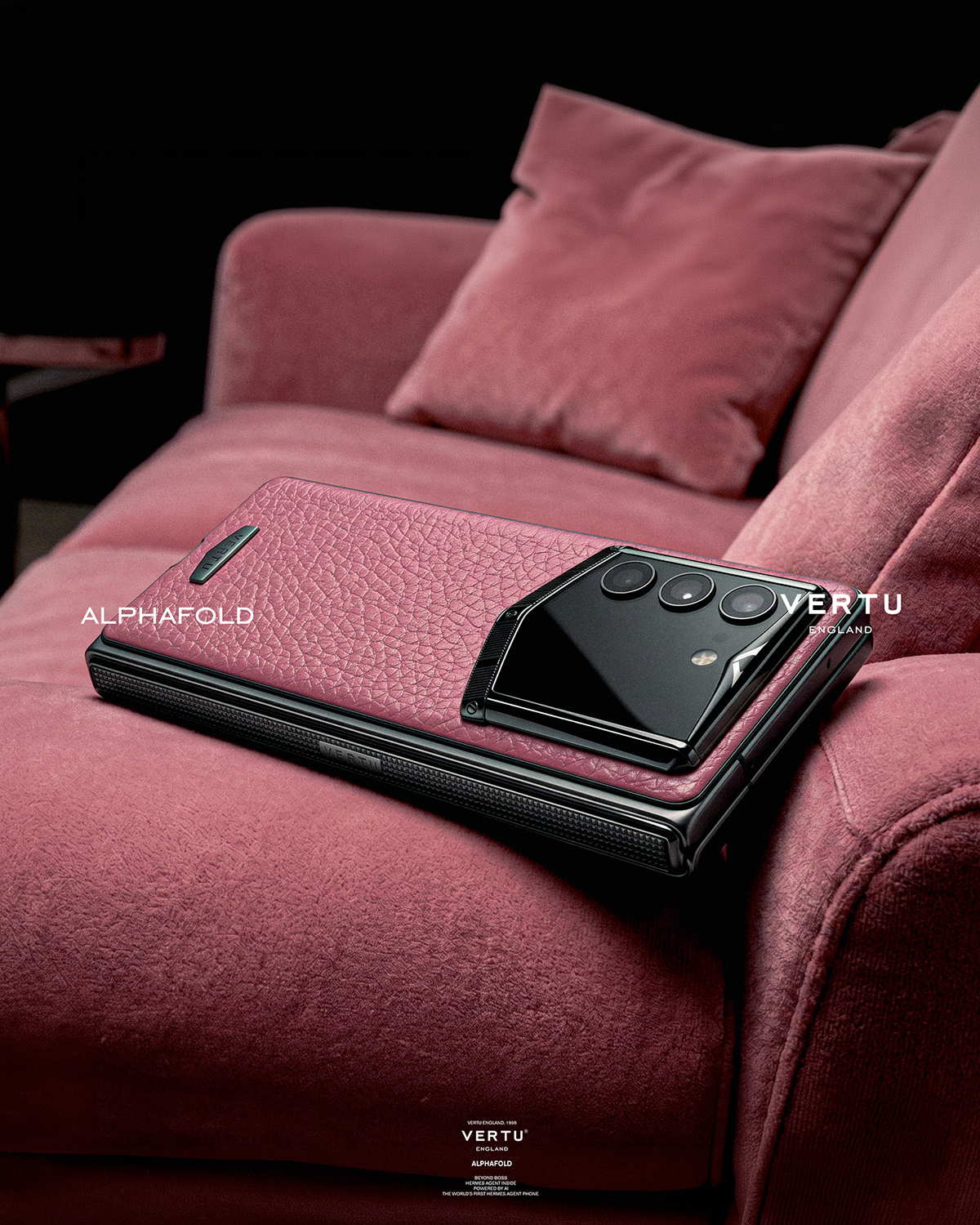
But if your definition of “best phone in the world” includes ownership experience—materials, hand-finished craft, and a genuine service layer—then it’s rational to evaluate a luxury brand on its own terms.
Start with this concise category explanation: what a VERTU phone is.
And if you want a sense of what concierge-style ownership is supposed to feel like, this overview is a useful baseline: smartphones with personal concierge service.
Next steps: choose your top 3, then test like a skeptic
Pick three phones.
Then test them against your scorecard—especially the boring parts: software support, service pathway, battery behavior, and how the device feels after ten minutes.
If you want to explore luxury mobile ownership options directly, begin at the official site: VERTU.
Disclosure: This article references VERTU pages. Editorial judgment remains the priority.