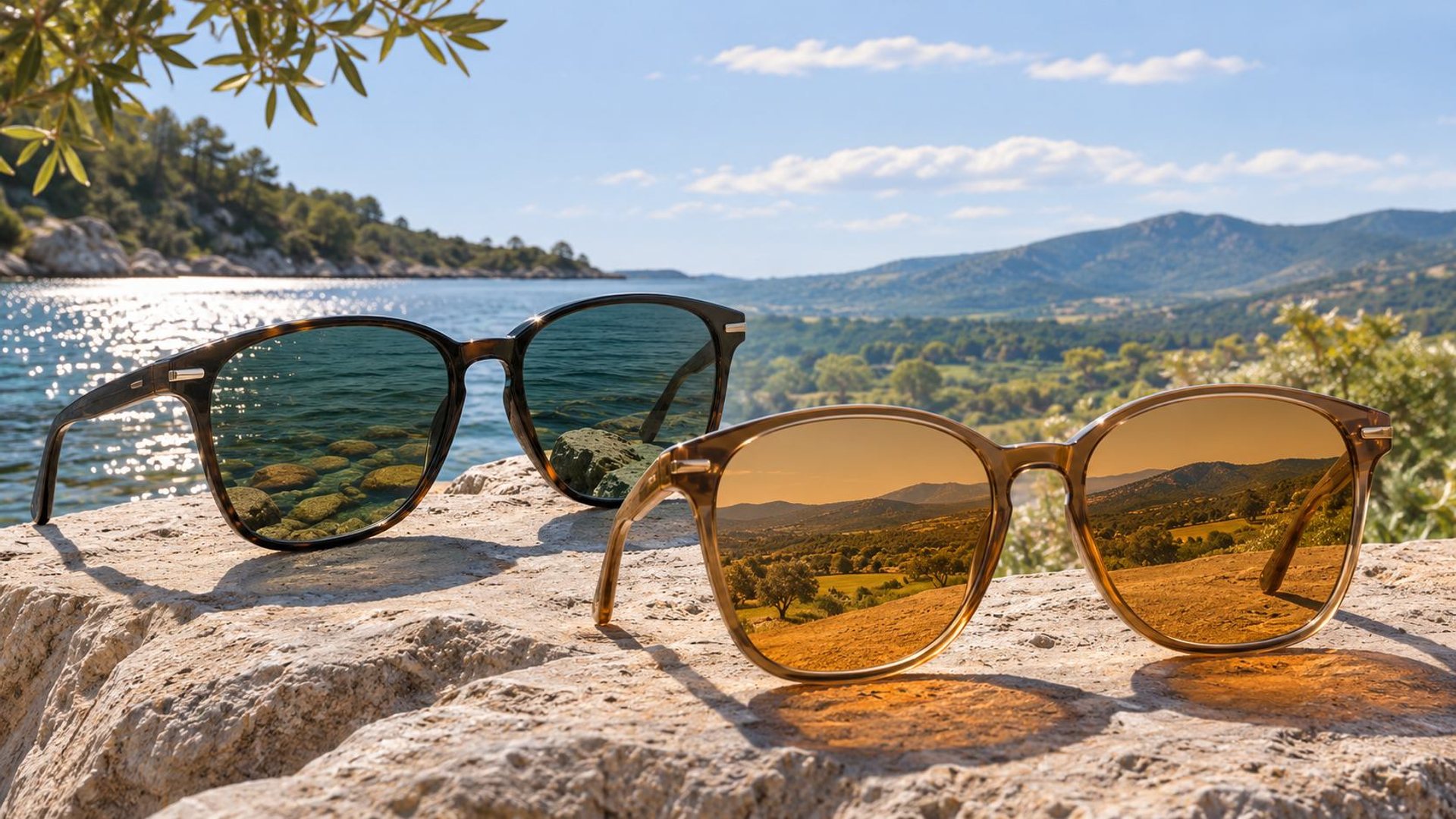
Polarized vs tinted sunglasses is a comparison of two different lens properties. Tint reduces the amount of visible light and changes its color; polarization filters much of the glare reflected from flat surfaces such as water or pavement. A lens can have both. Neither a dark tint nor a polarized label proves ultraviolet protection, so first verify a clear 99–100% UVA/UVB or UV400 claim for the exact pair, then choose the glare and tint characteristics that suit your use.
Key Takeaways
- Tint controls visible brightness and color; polarization targets reflected glare.
- Polarized lenses can also be tinted, so the terms are not mutually exclusive.
- UV protection is a separate specification; darkness is not evidence of it.
- Test polarized lenses against the screens and displays you must read.
- A daytime driving choice may be unsuitable for night driving or low light.
What does a tinted lens do?
A tint absorbs or transmits selected portions of visible light, reducing perceived brightness and changing how colors appear. Gray is often chosen for a relatively neutral color impression, while brown or amber can change contrast. The result depends on the exact lens material, darkness and coatings, not just a color name. A very dark lens may be comfortable on a bright beach but too dim under clouds or inside a parking structure. A light tint may help with mild brightness while offering little relief from strong reflection off a road.
The American Academy of Ophthalmology explains that tint color and darkness do not establish UV protection. That distinction matters because a shopper can mistake a visually dark pair for a protective pair. Check the maker's documented UV claim separately. If you need prescription sunglasses, ask the optician whether the chosen tint and coating can be made in your prescription and whether the finished lens still carries the stated protection.
What does polarization do?
A polarizing filter reduces a portion of the reflected light that creates harsh glare, especially from relatively flat surfaces. This can make the water surface, wet pavement or a car hood easier to look at in bright conditions. It does not simply make every scene darker by the same amount. The effect changes with the angle of the light and the surface. An ordinary tinted lens may darken the scene while leaving the bright reflection conspicuous; a polarized lens can selectively reduce that reflection.
The American Academy of Ophthalmology identifies water, roads and snow as situations where polarization may be useful. It also warns that the same filter can interfere with viewing some LCD or LED displays and can make icy patches harder to see in some circumstances. The point is to choose polarization for an actual glare problem, not because it sounds more premium. If your day is spent moving between a car dashboard, phone and outdoor light, test those displays before you commit to a pair.
How do the two compare at a glance?
| Question | Tinted lens | Polarized lens |
|---|---|---|
| What is the main effect? | Changes visible light level and color | Reduces much reflected glare |
| Can it be dark? | Yes, depending on tint | Yes; polarization can be combined with tint |
| Does it prove UV protection? | No | No |
| Likely display issue? | Usually brightness/color shift | Some screens may darken or become hard to read |
| Best reason to choose? | Control overall brightness and look | Reduce glare from water or pavement |
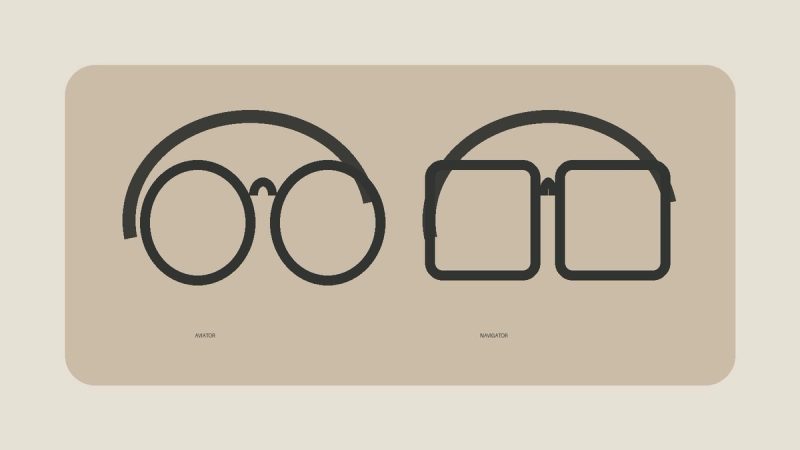
This table compares functions, not brands or measured performance. Two polarized lenses can differ in optical quality, tint, UV filtering and fit. Similarly, two gray-tinted lenses can transmit very different amounts of light. Ask for the exact model's specification and try it outdoors if possible. A broad label like “aviator” describes frame style, not how the lens behaves. Even the same frame can be sold with different lenses in different markets or seasons.
Can polarized sunglasses also be tinted?
Yes. Most polarized sunglasses have a visible tint as well as the polarizing filter. This is why “polarized versus tinted” can be misleading when treated as an either-or choice. The better buying question is whether you need polarization in addition to a tint, and how dark that combination should be. Read each property on the product listing: polarization, visible-light transmission or lens category if supplied, UV protection, prescription availability and any mirror or gradient treatment.
Do not assume a mirrored surface is polarized. Mirror coatings affect the amount of light entering the lens and its appearance, while polarization is a different filtering property. A gradient tint may be darker at the top and lighter below, which some people find useful for reading a dashboard. Yet the effect still depends on the exact lens and your seating position. Test a real pair rather than inferring performance from a product photograph.
Which is better for driving?
For bright daytime driving, polarization can reduce reflected glare from pavement and other vehicles, provided you can still read every essential dashboard display. Some digital screens become dim or patchy when viewed through polarized lenses. Check the center display, instrument cluster, head-up display if fitted, navigation screen and your phone while the car is parked. Rotate your head slightly to see whether the image changes. If it does, compare a non-polarized tint that provides enough comfort without compromising the information you need.
Neither dark tinted nor polarized sunglasses should be treated as a solution for night driving. Reduced visible light can make hazards harder to detect. The Academy cautions against polarized “night driving” claims. For daytime use, fit also matters: a frame that lets strong light enter from the sides can be uncomfortable even with a sophisticated lens. If you experience persistent glare, halos or difficulty seeing while driving, an eye-care professional can assess the cause rather than relying on a lens marketing claim.
Which is better around water, snow and screens?
Water and snow can create strong reflected glare, making polarization attractive for boating, beach walks and some snow activities. However, the ability to see surface detail may matter for specific sports or safety tasks. The Academy notes that polarized lenses can make ice harder to detect in some situations. If you are skiing, driving on winter roads or working on water, test the lens in the relevant conditions and follow any sport-specific safety guidance. Glare reduction should not come at the expense of seeing a critical surface feature.
Screen use is the clearest reason to compare both options before purchase. Some LCD screens can become difficult to see through a polarizer, particularly at certain angles. A tinted non-polarized pair may avoid that particular effect while still reducing overall brightness. Try your own phone, watch, payment terminal and camera screen. If the sunglasses are for a job that depends on electronic displays outdoors, the practical screen test may outweigh a theoretical glare advantage.
How do you verify UV protection?
Look for a clear label or manufacturer statement of 99–100% protection from UVA and UVB or a UV400 rating. The National Eye Institute recommends these claims and cautions against assuming designer price means better protection. If documentation is absent, ask a reputable optical shop to test the lenses rather than guessing from shade. Large or wraparound frames can also reduce UV light entering around the edges, a factor separate from the lens material itself.
Do not confuse polarization with UV absorption. A polarized filter can reduce glare while the lens has inadequate UV protection unless UV blocking is separately built in or applied. Conversely, a non-polarized lens may provide excellent UV protection. If you have light-sensitive eyes or a medical eye condition, ask your clinician about appropriate lens characteristics for your situation. General product guidance cannot replace personalized care.
What should you check on the VERTU x BYWP aviator?
The official VERTU x BYWP Modern Aviator Sunglasses listing identifies the collaboration and frame style. The product description available for this review does not, by itself, establish that every version has polarized lenses. Confirm the exact SKU's lens specification, UV claim, tint and return terms with the seller before describing it as polarized. VERTU also lists other aviator eyewear, so avoid transferring a specification from one pair to another because the frames share a name.
When comparing a luxury frame, evaluate fit, hinge feel, nose pads and serviceability alongside the lens. A beautiful pair that slides down your nose can let in more stray light and become uncomfortable. Ask whether replacement lenses can be fitted and whether prescription work changes the original optical specifications. The brand association is a design consideration; the UV and polarization claims remain technical checks for the precise lens you will wear.
What is a practical buying test?
- Read the exact pair's UV-protection statement.
- Confirm whether it is polarized, tinted, or both.
- Try the lens in bright outdoor light and notice reflected glare.
- While parked, inspect every screen and control you use when driving.
- Check clarity at the edges and whether colors remain usable for your tasks.
- Wear the frame for several minutes to assess pressure and slipping.
This sequence prioritizes eye protection first, then day-to-day usefulness. It is more reliable than judging the darkness of the lens on a white store shelf. If an online seller cannot provide the lens specification or a reasonable return window, consider a pair with clearer documentation. Keep the packaging and specification card with the receipt, especially if you later replace the lenses.
Frequently asked questions
Are polarized sunglasses darker than tinted sunglasses?
Not necessarily. Polarization and tint are separate properties. A polarized pair can be light or dark depending on its tint and light transmission.
Do polarized lenses block UV rays?
Polarization alone does not establish UV protection. Look for a separate 99–100% UVA/UVB or UV400 claim on the exact pair.
Can I wear polarized sunglasses while driving?
Many people use them for bright daytime glare, but some car displays can be difficult to read and winter surface detail may change. Test the pair in your parked vehicle first.
Is a dark tint safer for my eyes?
Darkness is not a measure of UV blocking. Choose documented UV protection and a visible-light level appropriate for the conditions.
Conclusion
Polarized vs tinted sunglasses is best decided by the job you need the lenses to do. Choose a documented UV-protective pair first, then use tint to manage overall brightness and polarization when reflected glare is the main problem. Check screens, driving conditions and the exact VERTU or other product variant before buying, because lens labels and frame styling do not substitute for a real-use test.