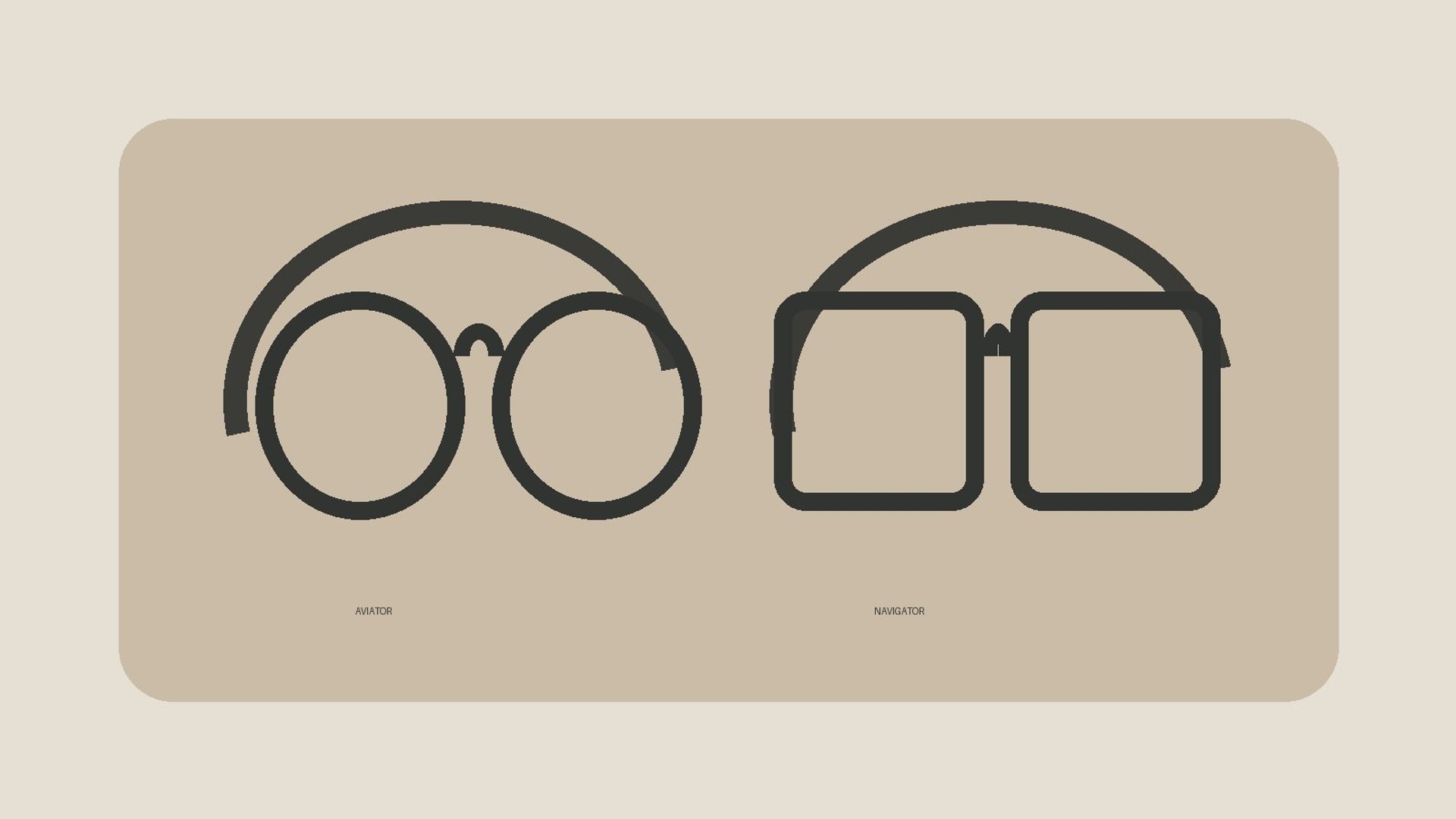
In an aviator vs navigator sunglasses comparison, the clearest visual difference is usually the lens outline. Classic aviators taper toward a rounded teardrop bottom, while navigators tend toward a straighter, squarer or more rectangular outline. Names are not standardized across every brand, so compare the actual frame dimensions, fit and verified UV protection before choosing by label alone.
Key Takeaways
- Aviator commonly describes a rounded, tapered teardrop; navigator often describes a more angular pilot-inspired shape.
- Both can have metal frames, double bridges and similar lens colors; those features alone do not identify the shape.
- Frame width, bridge fit and temple length matter more for comfort than the style name.
- Check for 99–100% UV protection independently of lens darkness or polarization.
- Try each frame while looking down, smiling and moving to assess slipping and cheek contact.
What is the visible difference between aviator and navigator frames?
A traditional aviator has a wide upper lens that narrows into a soft, rounded lower point. The overall impression is a teardrop. A navigator keeps the pilot-style scale but uses a flatter bottom, straighter side or more squared corner. Designers reinterpret both, so a “square aviator” may overlap with a “soft navigator.” The most reliable comparison is side-by-side photos or a try-on, not a category filter.
Look at the lower half of each lens first. A rounded drop draws the eye downward; a squared bottom creates a more level horizontal line. Then compare the upper edge and bridge. A brow bar can appear on either shape, and an oversized lens can make either look dramatic. Color, material and branding are separate choices that should not obscure the basic geometry.
Are navigator sunglasses simply square aviators?
Sometimes the terms overlap, but treating them as identical can hide a meaningful fit difference. One brand may call a softly rectangular frame a navigator, while another may market a similar design as a squared aviator. Retailers also apply their own filters. Use the label as a search starting point, then inspect the actual lens outline and measurements. A frame that looks square in a product shot may have rounded lower corners in person.
When comparing two models, record lens width, bridge width, temple length and total frame width if available. These numbers tell you more about fit than a category name. The same 58 mm lens width can feel different depending on bridge geometry, nose pads and the angle of the temples. A particularly tall aviator lens may touch your cheeks even when its width is correct; a navigator with a shallow lens may avoid that contact.
Which shape suits your face proportions?
Use shape as a visual preference, not a rigid rule tied to a face-shape chart. The teardrop aviator often adds softness and vertical length. A navigator’s straighter lower line can add definition and read more architectural. Warby Parker’s small-face guide describes the aviator’s wider top and tapered bottom, but any effect depends on the frame’s scale relative to your face. An oversized aviator can overwhelm a smaller face; a modest navigator can look understated.
Take front and side photos in even light. Check whether the frame extends far beyond the temples, whether the lenses sit too low on the cheeks, and whether the brow line feels balanced with your eyebrows. Personal style also matters: some people prefer a softer outline with tailoring, others like the structure of a navigator with casual clothes. There is no universal face shape that “must” wear one of the two.
How do you test fit before buying?
- Put the frames on without pushing them hard against your face.
- Look forward and check that the bridge rests comfortably and symmetrically.
- Smile and speak; the lower rims should not be pushed upward by your cheeks.
- Look down and turn your head gently to check for sliding.
- Inspect temple pressure behind the ears after several minutes.
- If available, compare the listed dimensions with a pair you already wear comfortably.
Adjustable nose pads can help refine fit on some metal frames, but professional adjustment is safer than bending an expensive frame at home. A comfortable bridge should hold the lenses without leaving a painful mark. If the lenses sit too close to your eyelashes, an optician can assess whether adjustment is possible. Frames that pinch at the temples or move whenever you look down are not solved by picking a different lens tint.
Does lens size change coverage?
Yes. A tall aviator lens may cover more area below the eye, while a broad navigator may protect more toward the sides, depending on its exact geometry. Neither label guarantees coverage. Check how much light enters around the top, bottom and sides when worn. For long outdoor use, a well-fitting wraparound or larger frame may provide better practical coverage than a fashionable open-sided design, regardless of whether it is called aviator or navigator.
Lens dimensions should be considered with facial fit. A large frame that slips down can leave the eyes less well covered than a smaller stable one. Sunglasses worn for driving should not block peripheral vision or collide with a hat or helmet. If you need prescription lenses, ask an optician whether the chosen curve and size work with your prescription and intended use.
Is a darker lens more protective?
No. Tint darkness and UV protection are separate. The American Academy of Ophthalmology recommends sunglasses that block 99% or 100% of UV light and notes that “UV absorption up to 400 nm” indicates the same full-UV target. Verify that claim on the product or with a reputable seller. Do not assume a dark aviator or navigator lens has adequate protection merely because it looks opaque.
Polarization is another separate feature. It reduces certain reflected glare, which may help near water or on bright roads, but it is not a substitute for UV protection. Polarized lenses can also change how some screens appear. The Academy’s prescription-sunglasses guidance explains both the tint distinction and potential screen-viewing limitation. Test your car display and phone if you rely on them while wearing sunglasses.
What do bridge and frame materials change?
A double bridge is a common pilot-style detail but not a quality guarantee. Metal frames may allow nose-pad adjustment; acetate frames may distribute contact differently and have a stronger visual presence. Materials also influence weight and maintenance, but construction and fit matter more than an unverified claim that one material is inherently superior. Check hinge movement, screw security and how the frame rests when placed on a flat surface.
For sensitive skin, ask about the exact frame material and nose-pad composition. If you wear glasses all day, the points of pressure may become apparent only after a longer try-on. A lightweight frame can still pinch if its geometry is wrong. Likewise, a heavier frame may feel stable if its load is distributed well. Do not buy solely from a fashion photo without checking the dimensions or return terms.
Which style fits different wardrobes?
An aviator’s soft teardrop can feel relaxed and familiar with denim, knitwear and travel clothing. A navigator’s straighter outline can look more precise with a jacket or sharply cut shirt. These are style observations, not rules. Thin gold-tone metal, dark acetate, gradient lenses and mirror finishes can change the impression more than the underlying shape. Choose a finish you will actually wear, rather than a dramatic option that stays in its case.
Try the frame with the clothes and accessories you use most often. A cap can interfere with a tall top bar; large earrings can compete with oversized lenses. If you own one pair already, consider whether the new shape adds a distinct wearing option or duplicates what you have. For a single everyday pair, comfort and verified lens protection outrank novelty.
How do the choices compare at a glance?
| Decision point | Classic aviator tendency | Navigator tendency |
|---|---|---|
| Lower lens outline | Rounded teardrop taper | Straighter, squarer edge |
| Visual impression | Soft, flowing | More angular, structured |
| Common bridge detail | Single or double | Single or double |
| Fit risk to test | Tall lens touching cheeks | Wide frame or shallow fit |
| UV protection | Must be verified | Must be verified |
These are tendencies, not definitions enforced by an industry standard. Some frames sit between categories. The right choice is the specific pair that remains comfortable and provides the lens protection you need.
What buying mistakes should you avoid?
Do not treat “aviator” as proof of a teardrop or “navigator” as proof of a perfect rectangle. Do not infer UV performance from price, tint or polarization. Do not choose the widest frame simply because it looks bold in a photograph. Check the bridge and temple measurements, especially when ordering online. A return policy matters because product photos can hide how the lower rim meets your cheeks.
If a brand lists several sizes of the same style, compare their measurements carefully. A small change in lens width and bridge can alter total frame width. Ask an optician for help with prescription fit or professional adjustment. Keep the original case and clean lenses with the maker-approved method, since scratched lenses can undermine an otherwise good purchase.
Frequently asked questions
Are aviator and navigator sunglasses the same?
They are related pilot-inspired shapes, but classic aviators usually have rounded teardrop lenses and navigators usually have a more angular outline. Brand naming overlaps, so compare actual frames rather than relying on labels.
Which is better for a small face?
Neither category is automatically better. Choose a frame whose total width, bridge and temple fit your face without slipping or crowding it. A scaled-down aviator or navigator can both work.
Do polarized navigator sunglasses protect better than nonpolarized aviators?
Polarization addresses glare; UV protection is a separate specification. Verify that either pair blocks 99–100% of UV light. Choose polarization for relevant glare conditions and test screen visibility.
Can an optician adjust a loose metal frame?
Often, depending on the construction. Ask a qualified optician to assess nose pads and temples. Adjustment cannot make a fundamentally oversized lens or unsuitable bridge geometry into the right frame.
What is the final choice?
For aviator vs navigator sunglasses, start with the outline you prefer, then let real fit, lens coverage and verified UV protection decide. The teardrop and angular versions can both be stylish and functional. A pair that stays comfortable through a normal day is the better choice than one that wins only in a product photo.