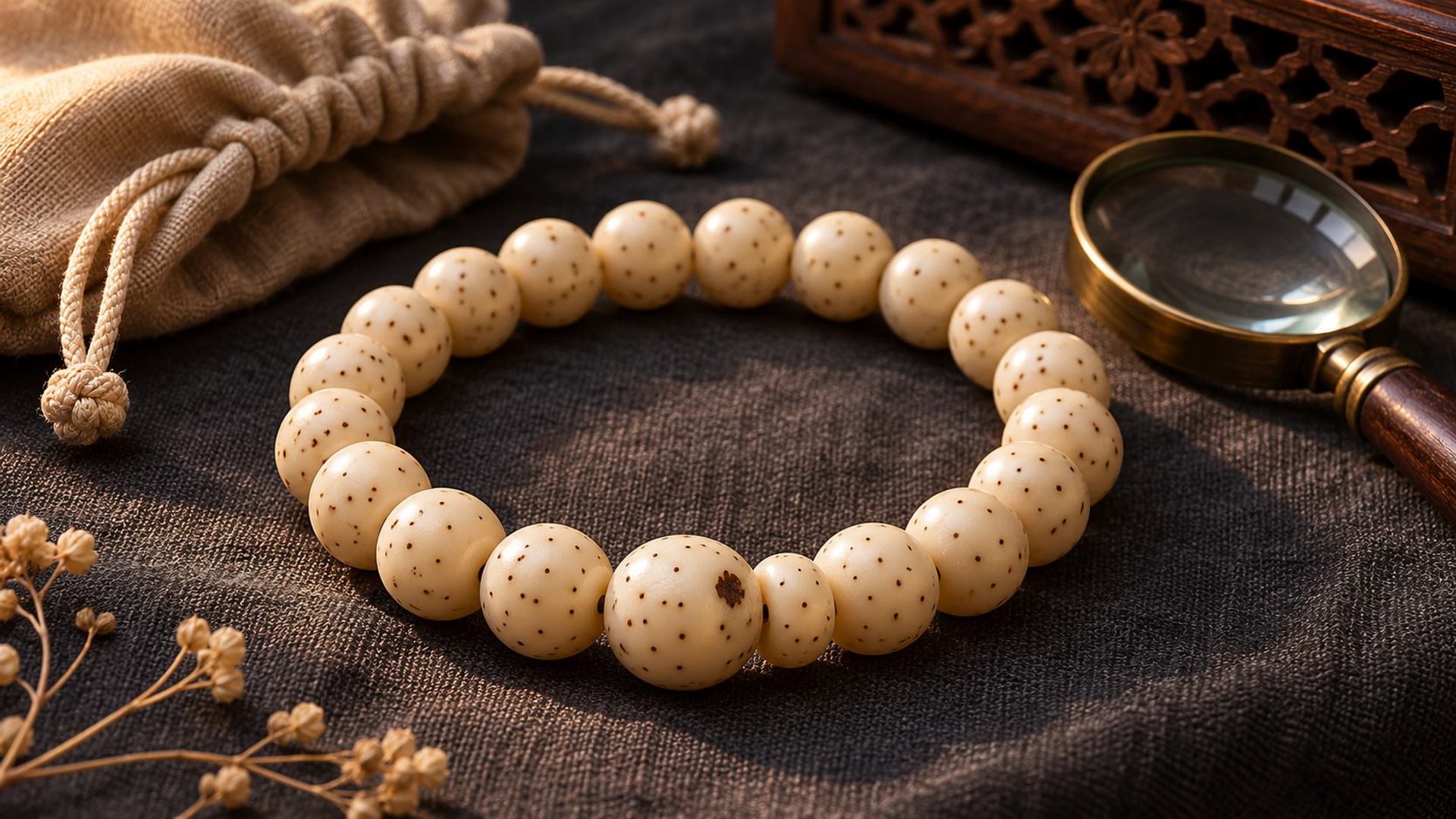
A bodhi seed bracelet is worth evaluating by the named bead type, workmanship, wrist fit and seller documentation. “Bodhi seed” is a broad trade term rather than a guarantee that the beads came from the sacred fig tree. Ask what material the seller means, inspect every drilled hole and the cord, and compare the finished wrist measurement with your own. If you are considering a connected bracelet such as VERTU COR CHAIN, assess its electronic module and phone support separately from the beads.
Key Takeaways
- Request the specific bead name and material description; “bodhi” alone is not a botanical identification.
- Check consistency of bead size, drilling, surface condition, cord and clasp before paying.
- Measure the completed bracelet around the wrist, including the module or spacer beads.
- Ask how the natural beads should be cleaned and whether replacement restringing is available.
- For a smart version, verify the exact app, charging, warranty and service terms as a separate purchase decision.
What does “bodhi seed bracelet” mean in a listing?
It often refers to a category of plant-based beads used in jewelry and devotional objects, not one standardized seed. A peer-reviewed ethnobotanical survey of Chinese bodhi-bead traditions documented 52 bead types from 47 plant species and noted that the commercial term does not mean they are all seeds of Ficus religiosa, the sacred fig. That research is useful because it prevents a common buying mistake: treating a spiritual or stylistic name as a precise botanical claim. Read the seller's description of the actual bead type, origin and processing method instead of inferring species from a photograph.
“Star and moon” is a recognizable trade description for beads with a pattern of small dots and a larger feature, but pattern alone does not authenticate a product. Natural materials vary. A sample photograph may not match the tone, markings or exact diameter of the piece shipped to you. If a listing uses exceptional claims such as rare origin or antique age, request documentation and ask what, precisely, has been verified. A seller may know its supplier without being able to establish the history of an individual bead.
How do you check bead quality in person?
Lay the bracelet on a clean, light-colored surface and inspect it in diffuse light. Compare the bead sizes and finish, allowing for the natural variation that gives seed jewelry character. Look for chips, cracks radiating from drill holes, rough edges that catch fabric, and gaps revealing weak threading. Roll each bead gently between finger and thumb. It should move as intended without exposing a frayed cord or forcing a neighboring bead apart. A uniform machine-like appearance is not automatically proof of a fake, and variation is not automatically proof of authenticity; construction matters more than a simplistic visual test.
Ask whether the beads have been dyed, coated, polished or treated with oil. Such treatments can be legitimate, but they change both appearance and care. If you want a natural patina over time, a heavily sealed finish may not develop in the way you expect. If you prefer a consistent color, you may value a treated piece. Inspect a bead at a cord opening for signs of uneven color, but do not damage the jewelry in the process. The seller's written description remains more reliable than an improvised scratch or water test.
How should a bracelet fit your wrist?
Measure where you intend to wear the bracelet with a flexible tape, then compare that circumference with the finished bracelet's inside circumference, not just its overall length laid flat. Bead diameter changes how a bracelet sits; large beads take up more inside space than a flat chain of the same external length. If the design includes a metal module, charm or large spacer, those elements also influence comfort and balance. The goal is a bracelet that can move slightly but will not slip over the hand during normal movement.
Ask for the bracelet's bead diameter, count and completed inside circumference. “One size” is too vague if your wrist falls near the ends of a size range. If the cord is elastic, check how much it stretches and whether the seller can restring it when it relaxes. If it has a clasp, test opening and closing it with one hand and check that it cannot snag clothing. During a brief try-on, bend your wrist and rest your hand on a desk: a tight string of beads can press into the skin even when it seems acceptable while standing.
What construction details predict everyday wear?
| Detail | What to examine | Question for the seller |
|---|---|---|
| Drill holes | Smooth edges, no visible cracking | Are damaged beads replaceable? |
| Cord or wire | No fraying or sharp exposed ends | Is restringing offered? |
| Clasp or knot | Secure closure that you can operate | What parts are covered by warranty? |
| Surface finish | Even treatment consistent with listing | Is it dyed, oiled or sealed? |
| Metal components | Clear material specification | Is the finish solid metal or plating? |
Give extra attention to the points that carry load: the cord near a knot, the loop at a clasp and any bead with an off-center hole. A beautifully polished bracelet can still fail at a single weak connection. Ask whether the seller provides a repair service and what happens if a bead is lost. If the item is a gift, keeping a spare bead or a note of the exact bead size can make future restringing easier. If it is a devotional object, respectful handling and the wearer's own tradition may matter as much as the commercial finish.
How should you care for natural seed beads?
Follow the specific seller's instructions because plant-based beads and surface treatments differ. In general, avoid soaking, harsh cleaners, prolonged direct sun and storing a damp bracelet in a sealed pouch. Remove it before swimming, showering or applying fragrances and lotions directly to the beads. Wipe light surface dust with a dry, soft cloth. If a stain remains, ask the seller about the permitted cleaning method before introducing water or solvent. The surrounding metal may tolerate something that the bead, adhesive or elastic cord does not.
Patina is a gradual appearance change, not a reason to force the process. Online “quick aging” recipes involving oil, heat or chemicals can stain the beads unevenly and weaken the cord. Store the bracelet where it will not be crushed by watches or keys. Check the string periodically for abrasion. If you wear it daily, arrange restringing at the first sign of fraying rather than waiting for a break. This preserves both the beads and the chance of recovering them all.
Where does VERTU COR CHAIN fit in this category?
The VERTU COR CHAIN is a smart wearable styled as a bead bracelet. VERTU lists a Star-Moon Bodhi Seed version alongside other botanical bead options. Its product context adds an electronic module to the usual material and fit questions. The metal module, sensors, battery, app and charging accessory should be checked against the exact version being sold. A buyer seeking an unconnected traditional bracelet may not need those features; a buyer wanting discreet wellness information may find them central.
Do not generalize a product claim from one COR CHAIN material or bead count to another. Check the current official SKU for bead count, wrist sizing, module material and supported phones. Ask whether the decorative strand can be repaired without affecting the electronic warranty, and whether the module can be serviced independently. Health features are for general wellness reference, not a diagnosis. The product's value proposition is a combination of natural beads and connected functions, so both should meet your expectations before you pay.
How can you evaluate authenticity and seller trust?
Buy from a seller who can identify the exact item, explain its material and provide a clear return policy. Photograph the product label, invoice and any claims about bead origin or treatment. If the price relies heavily on alleged rarity, ask for the evidence behind that premium and compare it with other documented examples. Avoid a destructive “authenticity test” from social media; burning, soaking or scratching can ruin a legitimate bracelet and rarely proves the botanical species. The most useful evidence is traceable sourcing, consistent description and a seller willing to answer specific questions.
For a VERTU wearable, use the official site or an authorized seller so the model, warranty and app path can be checked. Verify the domain and the SKU before following a discount link. Ask what happens if the bracelet arrives with a different bead tone from the photographs, as natural variation may be part of the terms. A credible return policy should tell you whether a worn, resized or personalized item can be returned and who pays for shipping. Save the product page at checkout because specifications and offers can change.
What is a practical pre-purchase checklist?
- Write down the bead type and any claimed origin or treatment.
- Inspect sample or detailed photographs of all beads, drill holes and fastening points.
- Measure your wrist and compare the completed inside circumference.
- Confirm whether the cord, clasp or damaged beads can be repaired.
- Read cleaning instructions for both beads and any metal parts.
- For a smart bracelet, check phone compatibility, charging, app, data and warranty.
- Keep the seller's written return and authenticity terms with the receipt.
This sequence helps separate three decisions that are often conflated: whether you like the bead material, whether the bracelet fits, and whether the seller's claims are credible. A low-priced piece can be a satisfying daily accessory when those points are clear. An expensive piece should withstand more detailed scrutiny, particularly if it is advertised as rare or technologically advanced. Do not let an appealing close-up photograph replace fit measurements and service information.
An ethnobotanical study of bodhi beads in China documented 52 named bead types made from seeds of 47 species. This describes that study’s sample, not the species of any bracelet on sale. It is a reason to ask the seller for a botanical name or specific bead identification rather than treating “bodhi” as proof of one plant.
Frequently asked questions
Are bodhi beads always from the bodhi tree?
No. Ethnobotanical research documents many plant sources used under the bodhi-bead name. Ask for the specific bead type or botanical identification when that matters to your purchase.
Should all seed beads look identical?
No. Natural variation in color and markings is expected, though a well-made bracelet should have a coherent design and sound drilling, finish and threading.
Can a bodhi seed bracelet get wet?
Care depends on the bead and its finish. As a cautious default, avoid soaking and follow the seller's instructions for the exact material and cord.
Is VERTU COR CHAIN a traditional bead bracelet?
It uses a bead-bracelet form but includes a smart module. Compare its botanical material and wearability alongside its electronics, compatible phone and after-sales terms.
Conclusion
A bodhi seed bracelet is a better purchase when the seller names the bead type, the stringing is sound and the finished size fits your wrist. The word “bodhi” alone cannot prove a plant species or exceptional origin. Inspect construction, document care and returns, and make a separate technology decision if you choose VERTU COR CHAIN or another connected design.