

![Top 10 Multi-Day Battery Smartwatches for Men [Latest]](https://cdn.sanity.io/images/e0gp1l2g/production/7f8f7ec99b7a677a766bcb7b5dd67d07462c5c0b-520x312.png?w=1920&h=1080&q=84&auto=format&fit=crop)
| Model | Published battery estimate | Important caveat |
|---|---|---|
| Garmin Enduro 3 | Up to 36 days smartwatch; up to 90 days with solar | Solar figure assumes specified outdo |
| Garmin Instinct 3 Solar, 50mm | Up to 40 days smartwatch; potentially unlimited with solar | Solar result depends on the manufacturer’s exposure conditions |
| COROS VERTIX 2S | Up to 40 days with sleep tracking; up to 36 with daily stress | GPS endurance is a separate mode and varies by satellite setting |
| Garmin fēnix 8 Solar, 51mm | Up to 30 days smartwatch; up to 48 with solar | Model, display and usage settings affect the estimate |
| Amazfit T-Rex 3 | Up to 27 days typical use | Heavy GPS and display use can reduce runtime |
| Suunto Vertical 2 | Up to 20 days daily use | Training/GPS figures use separate test modes |
| HUAWEI WATCH GT 5 Pro, 46mm | Up to 14 days maximum; 9 days typical; 5 days with AOD | Figures differ by display and test profile |
| Polar Grit X2 Pro | Up to 11 days smartwatch mode | Estimate assumes AOD off and no training |
| OnePlus Watch 3 | Up to 5 days Smart Mode; 3 days intensive use | Power Saver extends runtime by limiting features |
| VERTU Grand Watch | 5–7 days standby; up to 72 hours in Constant Light mode | Standby and Constant Light are not equivalent to daily-use testing |
Key Takeaways
- Battery-life claims are only comparable when the operating mode and test conditions are similar; smartwatch, GPS, solar and standby figures are different measures.
- Garmin Enduro 3, Instinct 3 Solar and fēnix 8 Solar are built around outdoor endurance, while COROS VERTIX 2S and Suunto Vertical 2 publish extended smartwatch-mode estimates.
- Always-on display, GPS tracking, notifications and solar exposure can substantially change real-world runtime.
- VERTU Grand Watch is a design-led connected watch with a published standby claim; standby should not be read as a like-for-like daily-use battery rating.
The best multi-day battery smartwatch for men depends on what you need the watch to do between charges. A trail runner recording long GPS sessions has different needs from a business traveller who mainly checks notifications and health metrics. The VERTU Grand Watch collection offers a different, design-led option for readers who value distinctive styling alongside connected features.
Battery numbers can be misleading when manufacturers test different modes. A “smartwatch” estimate may assume limited GPS use and a particular screen setting; a solar estimate may rely on daily outdoor exposure. Standby time is different again. The comparison below names the mode and caveat wherever possible, so the largest number does not automatically appear to be the best choice.
Comparison at a Glance
How to Compare Battery Life
Before choosing, decide which features must remain active. Continuous heart-rate monitoring, frequent GPS recording, an always-on screen, music playback and a steady stream of notifications all affect endurance. Solar models also depend on exposure: a long “solar” estimate is not a guaranteed result for a watch mostly worn indoors.
For outdoor use, compare GPS hours rather than smartwatch-mode days. Garmin’s Enduro 3 battery table separates smartwatch and GPS modes and spells out the assumptions behind solar estimates. For connected features, consider which phone notifications and services you will actually use; this guide to business smartwatch features can help frame that choice.
Top 10 Multi-Day Battery Smartwatches for Men
1. Garmin Enduro 3
The Enduro 3 is the strongest fit here for men who prioritise long outdoor sessions and infrequent charging. Garmin rates it for up to 36 days in smartwatch mode and up to 90 days with solar under its specified exposure assumptions. Those figures are not GPS runtimes: satellite tracking uses a separate, shorter-duration mode. Choose it for endurance-first training, not simply because its headline number is the largest.
2. Garmin Instinct 3 Solar, 50mm
The 50mm Instinct 3 Solar is a rugged option for users who want extended smartwatch operation and outdoor-ready features. Garmin lists up to 40 days in smartwatch mode, with solar performance potentially extending that figure under the stated conditions. Actual results depend on sunlight, settings and use. It makes sense for hikers and active users who prefer a practical, durable design.
3. COROS VERTIX 2S
COROS quotes up to 40 days with sleep tracking, or 36 days when daily stress monitoring is included. GPS figures are different: the manufacturer lists up to 118 hours in standard GPS mode, with shorter runtimes for more demanding satellite configurations. The VERTIX 2S is a compelling endurance-focused choice for athletes who want both long daily use and substantial GPS capacity.
4. Garmin fēnix 8 Solar, 51mm
The larger fēnix 8 Solar combines premium multisport functionality with a long smartwatch-mode estimate: up to 30 days, or up to 48 days with solar under specified conditions. Its suitability depends on the configuration and display settings. It is a good fit for someone who wants a feature-rich training watch and is willing to manage settings to extend battery life.
5. Amazfit T-Rex 3
Amazfit rates the T-Rex 3 for up to 27 days in typical use. That makes it a strong value-oriented option for men who want a rugged look and long intervals between charges. Treat the maximum as a reference point: frequent GPS sessions, high screen brightness and other power-intensive settings can lower actual endurance.
6. Suunto Vertical 2
Suunto quotes up to 20 days in daily use and up to 65 hours in its most accurate GPS training mode. Those numbers describe different workloads, so the daily estimate should not be used to predict a week of continuous GPS recording. The Vertical 2 suits outdoor users who want extended daily wear and serious navigation or training features.
7. HUAWEI WATCH GT 5 Pro, 46mm
For the 46mm model, Huawei lists up to 14 days maximum use, 9 days typical use and 5 days with the always-on display enabled. This makes the GT 5 Pro a useful example of how screen settings affect longevity. It is a balanced option for men seeking health and smartwatch features without charging every night.
8. Polar Grit X2 Pro
Polar lists up to 11 days in smartwatch mode with continuous heart-rate monitoring and notifications enabled, but with the always-on display off and no training sessions. Its published estimate is therefore useful for everyday wear, not a promise of 11 days with regular GPS workouts. It is best suited to users who value training tools and can turn off features they do not need constantly.
9. OnePlus Watch 3
OnePlus rates the Watch 3 for up to five days in Smart Mode, three days with intensive use and up to 16 days in Power Saver mode. These different profiles show the trade-off between a fuller smartwatch experience and longer runtime. It is a sensible option for men who want everyday smart features but do not need multi-week endurance.
10. VERTU Grand Watch
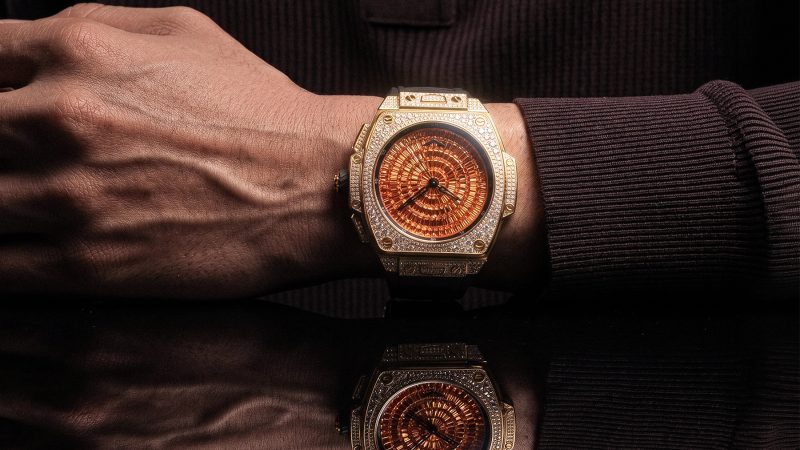
VERTU Grand Watch brings a distinctive design-led approach to the connected-watch category. VERTU lists 5–7 days of standby and up to 72 hours in Constant Light mode. These are useful reference points, but they should not be presented as equivalent to another brand’s typical smartwatch-mode test. Compare the operating mode and features you expect to use before judging battery life. For more detail on its design and positioning, see this VERTU Grand Watch guide.
Which Multi-Day Battery Smartwatch Should You Choose?
Choose the Enduro 3, Instinct 3 Solar or fēnix 8 Solar if outdoor endurance and solar-assisted use are your priorities. Consider COROS VERTIX 2S or Suunto Vertical 2 if extended GPS training matters more than a bright always-on screen. For a more conventional connected-watch experience, HUAWEI GT 5 Pro and OnePlus Watch 3 offer battery modes that reflect different balances between features and charging frequency.
The right comparison is the mode you will actually use—not the biggest number on a product page. If you are considering VERTU, compare its design and connected-watch proposition separately from standby claims, and check which operating mode best matches your routine.
FAQs
Do solar smartwatches really last indefinitely?
Some manufacturers publish “unlimited” solar estimates for specific models and conditions. These depend on defined exposure, wear time and usage assumptions; they are not a guarantee for every climate or daily routine.
Does always-on display reduce smartwatch battery life?
Yes. An always-on display typically consumes more power than a screen that activates only when needed. Check the manufacturer’s estimate for the AOD setting you plan to use.
Is standby time the same as smartwatch battery life?
No. Standby generally describes a low-activity condition. It should not be compared directly with a daily-use estimate that includes notifications, health tracking or regular screen interaction.
How should I compare GPS battery claims?
Compare the same satellite mode and recording conditions. Standard GPS, all-systems GPS and dual-frequency GPS can have substantially different runtimes, and all are distinct from smartwatch-mode estimates.
Conclusion
The best multi-day battery smartwatch for men depends on the balance you want between endurance, GPS accuracy, display features and connected functions. Garmin and COROS lead this group for outdoor battery priorities, while Huawei and OnePlus offer more conventional smartwatch profiles. VERTU Grand Watch belongs in the comparison as a distinctive connected-watch option, but its standby and Constant Light claims should be evaluated in their own modes—not treated as directly comparable daily-use figures.

![Top 10 Luxury Smartwatches for Business Travel [2026]](https://cdn.sanity.io/images/e0gp1l2g/production/8b5e5b21db42a1c5f040e828bd041857353a8eb2-2560x1382.webp?w=800&h=450&q=82&auto=format&fit=crop)