A quilted leather handbag is worth buying when its stitched pattern stays even around curves, the leather and padding feel consistent, the bag holds its shape when filled, and the strap, closure and lining work for your actual routine. Quilting is a design and construction choice, not proof of durability by itself. Before deciding, inspect the whole bag in ordinary light and test it with the items you carry.
What makes quilting worth examining?
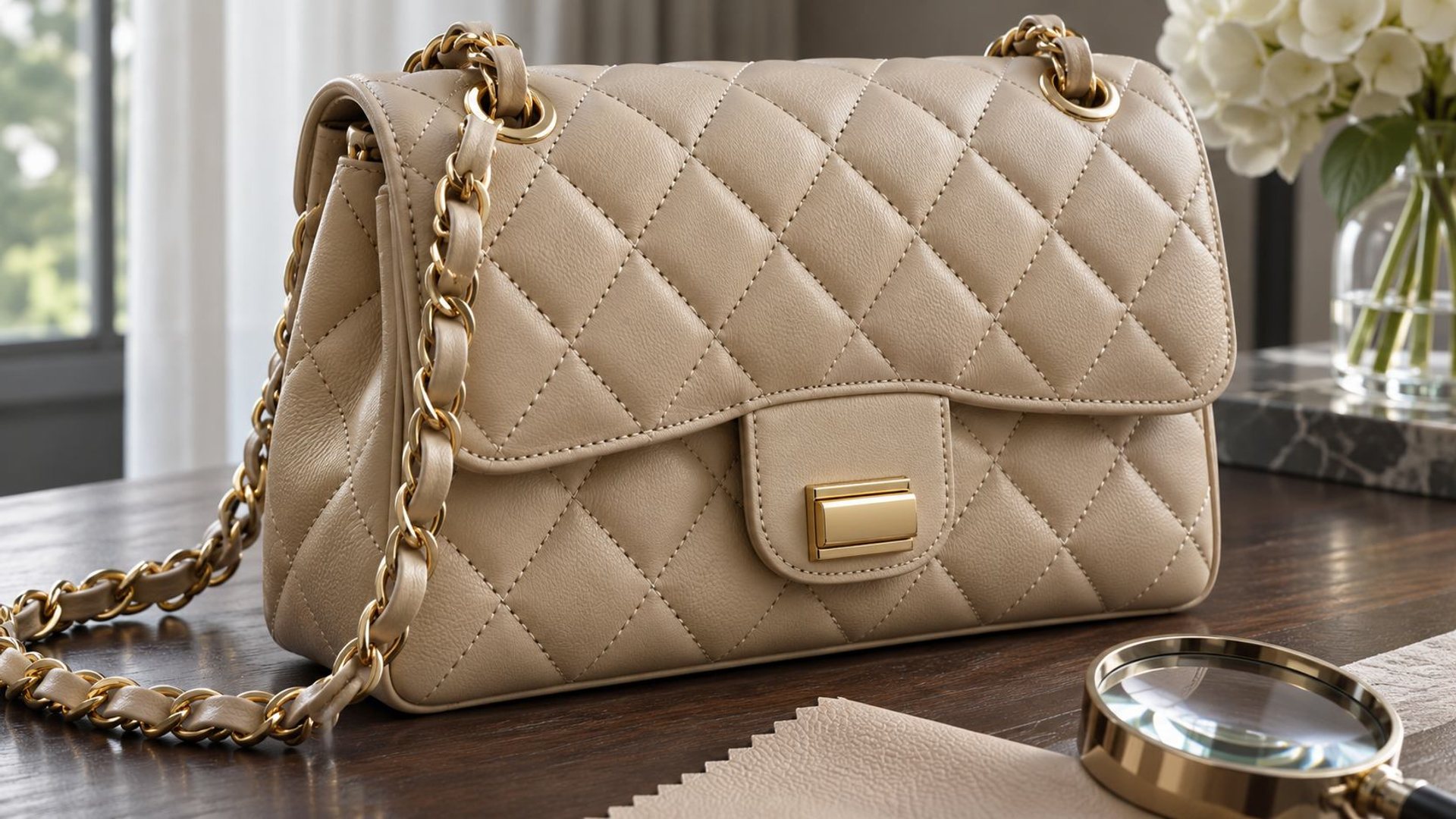
Quilting usually holds a patterned leather surface over padding or another layer. It creates depth, but it also adds seams and raised points that can show wear. Look at how the pattern meets the side panels, corners, flap and hardware. The lines need not be mathematically perfect on a soft handmade bag, but an abrupt mismatch, puckering or loose thread deserves a closer look. Ask whether the surface is leather and how the pattern is constructed; a photograph alone cannot establish the material beneath it.
How do you inspect the stitching?
- Hold the bag at eye level and follow each line across the front and flap. Note uneven spacing or a line that stops unexpectedly.
- Look at the corners and bottom, where handling and resting surfaces create friction. Check for broken threads or flattening.
- Open the bag and inspect interior seam allowances without pulling the lining apart. Check that the stitching does not snag contents.
- Run a finger gently along the raised pattern. It should not expose a sharp edge or feel as if the padding has shifted.
- Compare both sides of the bag and the exact item you will receive, especially when buying a display piece.
A small cosmetic irregularity is different from a structural problem. A loose stitch near the strap anchor, closure or flap hinge can affect function. If a seller calls the variation a feature of hand finishing, ask what tolerance and repair policy apply to the actual piece.
What should the leather and structure feel like?
Check the material disclosure rather than assuming “premium leather” specifies a grade or finish. The bag should feel consistent at corresponding points, and the corners should not already show peeling or a split finish. Put a phone, wallet, keys and the other items you normally carry inside. Close the bag, lift it by its intended strap and see whether the quilted face collapses or twists. A soft silhouette may be intentional, but it should still suit how you use the bag.
| Part | Buyer check | Possible concern |
|---|---|---|
| Quilted face | Pattern alignment, even padding, secure thread | Puckering or exposed stitch |
| Corners and base | Shape after loading, surface finish | Early rubbing or sagging |
| Strap attachment | Stitching and hardware under normal load | Twist or loose joint |
| Closure | One-handed opening and positive fastening | Misalignment when the bag is full |
| Lining | Clean seams and practical pocket placement | Snags or unusable compartment |
How should the strap and closure work?
Try the bag at your usual strap length with a coat or jacket. A chain strap can be elegant but may feel different over a thin top and a winter layer. Check whether its links rotate freely and whether the connection to the body is stable. Open and close the bag several times while it carries your real essentials. A closure that aligns only while empty is a poor fit for everyday use. Ask for the bag's dimensions and compare them with a cardboard template or an existing bag you own if an in-person trial is unavailable.
How does VERTU's Catena Crossbody fit this decision?
The official VERTU Folded V Catena Crossbody Bag listing describes a V-shaped silhouette, quilted leather and a chain strap. Those are useful starting facts, but they do not establish padding thickness, stitch count, internal capacity or wear life. Inspect the exact colour and configuration, confirm current availability and return terms, and test whether the chain and closure suit your carrying habits. The crossbody should be compared as a quilted bag, while VERTU's separate Catena top-handle handbag serves a different carrying role.
How should you care for quilted leather?
Follow the maker's guidance for the particular leather and finish. The Leather Working Group recommends asking the retailer or brand for product-specific care when instructions are absent. Keep the bag away from prolonged moisture, pressure and rough contact, and store it so the quilted face is not crushed. Do not test a leather cleaner on a visible panel without approval. If a stitch or strap joint loosens, ask for service before repeated loading worsens it.
Frequently asked questions
Does quilting make leather stronger?
Not automatically. The result depends on leather, stitching, padding and construction. Inspect the bag rather than treating the pattern as a durability guarantee.
Should every quilted line match perfectly?
Soft materials can show modest variation. Focus on deliberate alignment, secure thread and no functional defect at corners, anchors or the closure.
Is a chain strap comfortable for daily use?
It depends on bag weight, chain design and clothing. Try it with a realistic load and the layers you normally wear.
Can I clean a quilted leather bag with water?
Use only the method approved for that leather and assembled bag. Water may affect finish, padding, lining or metal hardware.
A quilted leather handbag should earn its place through sound stitching, a practical loaded shape and a strap and closure that suit your day. Check the exact piece and its care terms before the visual pattern makes the decision for you.